Source White Polypropylene Honeycomb Board for Packaging, Aviation, and Air Purifiers
Find and compare 30 listings for White Polypropylene Honeycomb Board, featuring customizable dimensions, high-intensity performance, and eco-friendly properties. Evaluate options for cushioning, aviation manufacturing, and air purification applications with varying densities and surface finishes.
Key considerations
Products List


$7.00 - $15.00
MOQ: 100 Square Meters


PP Honeycomb Panel Polypropylene Honeycomb Panel Honeycomb Board Honeycomb Plate
$6.00 - $100.00
MOQ: 300 Square Meters

PP Honeycomb Panel Honeycomb Panel Plastic Honeycomb Panel Polypropylene Honeycomb Panel
$6.00 - $100.00
MOQ: 300 Square Meters

PP Honeycomb Core Plastic Honeycomb Core Polypropylene Honeycomb Core
$6.00 - $100.00
MOQ: 300 Square Meters


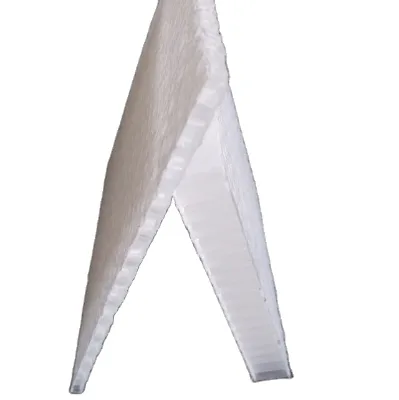

Strong Pressure Resistance Polypropylene PP Honeycomb Board, PC Honeycomb Board
$1.62 - $8.95
MOQ: 10 Square Meters


Comprehensive Sourcing Guide
White Polypropylene Honeycomb Board Sourcing Guide
Sourcing White Polypropylene Honeycomb Board requires a nuanced understanding of both the material’s structural properties and the specific manufacturing variations found in the global market. This material is primarily recognized for its lightweight nature and high intensity, making it a preferred alternative to traditional wood or metal panels in applications demanding weight reduction without significant loss of rigidity. Buyers must navigate a landscape where product attributes vary significantly, from core cell diameters to surface finishes, ensuring that the selected board aligns precisely with the mechanical and aesthetic requirements of the end product. The following guide provides evidence-based procurement strategies to help buyers evaluate suppliers, verify technical specifications, and mitigate risks associated with material inconsistency.
The procurement process for this specialized plastic sheeting involves distinguishing between generic polypropylene sheets and engineered honeycomb structures. While some listings may refer to simple white plastic sheets, the core keyword implies a cellular structure designed for cushioning, insulation, or structural reinforcement. Buyers should focus on suppliers who explicitly define their product as a honeycomb panel or sheet, as this indicates a specific manufacturing process that creates the characteristic 8mm to 16mm core cells. Understanding these distinctions is critical for ensuring that the purchased material meets the intended functional goals, whether that be air purification filtration support, aviation manufacturing components, or general packaging solutions.
Product Scope and Observed Listing Signals
The market for white polypropylene honeycomb boards presents a wide range of product variations, which can be observed through listing signals such as model numbers, density ratings, and surface treatments. Common model identifiers include PP8T40F and PP8-80, which often correlate with specific core cell sizes and thickness profiles. Listings frequently highlight a density range of 1000-2000GSM, a critical metric for determining the board’s stiffness and load-bearing capacity. Buyers should scrutinize these numerical values to ensure they match the structural demands of their application, as lower density boards may lack the necessary rigidity for heavy-duty uses, while higher density options may incur unnecessary cost and weight penalties.
Color and surface finish are also significant differentiators in product listings, with options ranging from standard white and opal white to customized colors like blue, grey, or black. The surface treatment is often described as matte, which can influence adhesion properties for subsequent printing or bonding processes. Some suppliers offer silk screen printing capabilities, indicating that the board can serve as a direct substrate for branding or informational graphics. Buyers must verify if the white color is intrinsic to the material or a surface coating, as this affects durability and resistance to UV degradation, particularly for outdoor or long-term indoor applications.
Technical Specifications to Verify
Thickness is a primary technical specification that directly impacts the performance and cost of the honeycomb board. Observed listings indicate a thickness range of 3-30mm, with some specific references to 2.7-30mm, suggesting that manufacturers can produce boards across a broad spectrum of structural depths. Buyers must confirm the exact thickness tolerance, as variations can affect the fit and function of assembled components. Additionally, the width of the board is typically capped at a maximum of 2000mm, with common dimensions such as 1220x2440mm and 1150x2300mm being standard. Verifying these dimensional constraints is essential for optimizing material usage and minimizing waste during the cutting and fabrication stages.
Mechanical properties such as tensile strength, contraction percentage, and water absorption are vital for assessing the board’s durability and environmental resistance. Typical values for tensile strength may hover around 3.9MPa, while contraction percentages can range from 2.0% to 5.0%, indicating how the material behaves under thermal stress. Water absorption rates between 1.5% and 3.5% suggest a degree of moisture resistance, but buyers should verify if these values are consistent across batches. The aperture size, often cited as 8mm, defines the core cell diameter, which influences airflow and cushioning characteristics. Ensuring that these mechanical parameters are documented and consistent is crucial for maintaining product quality in high-performance applications.
Compliance and Safety Documentation
While specific certification statuses may not be universally listed, buyers should prioritize suppliers who adhere to recognized quality management standards such as ISO9001. This standard indicates a systematic approach to quality control and continuous improvement, which is essential for maintaining consistency in material properties like density and thickness. Buyers should request evidence of such certifications to ensure that the supplier has robust processes in place to monitor production variables. Additionally, verifying that the material is eco-friendly is important for sustainability goals, as polypropylene is a recyclable thermoplastic. Buyers should inquire about the recyclability of the waste generated during production and the end-of-life options for the finished board.
Safety documentation should include material safety data sheets (MSDS) that detail the chemical composition and handling requirements of the polypropylene honeycomb board. Although the material is generally considered safe, buyers must ensure that no harmful additives are used in the production process, especially if the board is intended for applications involving food contact or sensitive environments. The surface finish, described as matte, should be evaluated for its resistance to scratching and abrasion, which can affect the board’s longevity and appearance. Buyers should also verify if the material meets any industry-specific safety standards, particularly for applications in aviation manufacturing or air purification systems, where regulatory compliance is stringent.
Cost Drivers and Commercial Terms
The cost of White Polypropylene Honeycomb Board is influenced by several factors, including material density, thickness, and customization requirements. Higher density boards and thicker profiles generally command higher prices due to increased material usage and processing complexity. Customization options, such as specific colors, logos, or shapes, can also add to the cost, as they require additional setup and production time. Buyers should request detailed quotes that break down these costs to understand the price drivers and identify opportunities for cost savings. Additionally, the minimum order quantity (MOQ) can range from 10 to 1000 units, affecting the overall cost per unit for smaller orders.
Packaging and shipping terms are another significant component of the total cost. Boards are typically packed on wooden pallets or in cartons, with some suppliers offering safe package options to prevent damage during transit. Buyers should verify the packaging method to ensure that the boards are protected from moisture and physical impact, which can compromise their structural integrity. Lead times and delivery schedules should also be clarified, as delays can impact production timelines. Buyers should negotiate clear terms for payment, returns, and warranties to mitigate financial risks associated with defective or non-conforming materials.
Supplier Qualification and Quality Control
Supplier qualification is a critical step in ensuring the reliability of the White Polypropylene Honeycomb Board supply chain. Buyers should assess the supplier’s manufacturing capabilities, including their ability to produce boards with consistent density, thickness, and core cell diameter. Suppliers located in regions like Shandong, China, often have established infrastructure for plastic manufacturing, but buyers should verify their production capacity and quality control processes. Requesting samples is a practical way to evaluate the material’s physical properties and surface finish before committing to a larger order. Buyers should test these samples for tensile strength, water absorption, and dimensional stability to ensure they meet the required specifications.
Quality control measures should include regular inspections of raw materials, production processes, and finished products. Buyers should inquire about the supplier’s testing protocols and whether they conduct internal quality checks at various stages of production. Documentation of these checks, such as batch records and test reports, can provide valuable insights into the supplier’s commitment to quality. Additionally, buyers should establish clear communication channels with the supplier to address any issues that arise during production or delivery. Building a strong relationship with the supplier can facilitate better collaboration and problem-solving, ultimately leading to a more reliable supply chain.
Long-Term Procurement Checks
Long-term procurement success depends on the ability to monitor and adapt to changes in the market and supplier performance. Buyers should regularly review supplier performance metrics, such as on-time delivery rates, defect rates, and responsiveness to issues. This ongoing evaluation helps identify potential risks and opportunities for improvement in the supply chain. Buyers should also stay informed about advancements in polypropylene technology and manufacturing processes, which may offer new benefits in terms of performance, cost, or sustainability. Engaging with industry forums and attending trade shows can provide valuable insights into emerging trends and best practices.
Sustainability and regulatory changes are also important considerations for long-term procurement. Buyers should monitor developments in environmental regulations and industry standards that may affect the production and use of polypropylene honeycomb boards. Ensuring that the supplier remains compliant with these regulations is essential for avoiding disruptions and maintaining the brand’s reputation. Additionally, buyers should consider the end-of-life options for the board, such as recycling or disposal, to align with corporate sustainability goals. By proactively addressing these long-term factors, buyers can build a resilient and responsible supply chain for white polypropylene honeycomb boards.
FAQs
What is the thickness range for White Polypropylene Honeycomb Board?
The thickness ranges from 3 to 30 millimeters or 2.7 to 30 millimeters depending on the specific model. This dimension allows for versatile structural applications while maintaining a lightweight profile suitable for various industrial needs.
Can I request custom colors for the White Polypropylene Honeycomb Board?
Yes, customization is available for colors including blue, grey, black, and opal white. Buyers can also request specific custom colors to match their branding or design requirements for the final product application.
What is the maximum width available for this honeycomb panel?
The maximum width available is 2000 millimeters. Standard dimensions often include 1220 by 2440 millimeters, but custom sizes can be requested to fit specific project requirements and installation constraints.
How is the White Polypropylene Honeycomb Board packaged for shipping?
The product is typically packed on wooden pallets or in safe packages to ensure secure transport. Some variants may also be shipped in cartons, providing robust protection against damage during international logistics.
What is the density range of the White Polypropylene Honeycomb Board?
The density ranges from 1000 to 2000 grams per square meter. This high-density specification contributes to the high intensity and good long durability observed in the material performance characteristics.
Is the White Polypropylene Honeycomb Board suitable for aviation manufacturing?
Yes, the product is explicitly listed for use in aviation manufacturing applications. Its lightweight nature and high intensity make it a suitable candidate for structural components requiring durability and weight reduction in aerospace contexts.
Can I get a sample of the White Polypropylene Honeycomb Board?
Samples are available for potential buyers to evaluate the material quality before placing a bulk order. This allows clients to verify specifications such as tensile strength and water absorption before committing to larger quantities.