Find White Sublimation Transfer Paper for Clothing Bags and Leather
Source 30 listings of White Sublimation Transfer Paper from suppliers in China. Buyers can compare GSM weights, widths, and packing options for garment and textile applications.
Key considerations
Products List

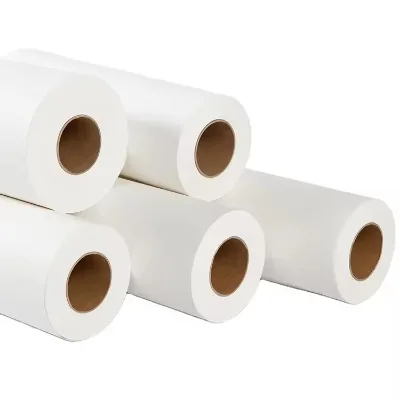


Wholesale of High-Quality Sublimation Heat Inkjet Heat Transfer Paper with Optional Specifications
$1.15 - $1.45
MOQ: 3000 Square Meters


Sublimation 29GSM Printing Paper Roll and Customized High Quality Sublimation Paper
$0.05 - $0.06
MOQ: 1 Square Meters


29GSM Printing Paper Roll and Customized High Quality Sublimation Paper with CE
$0.05 - $0.06
MOQ: 1 Square Meters


Sublimation Heat Inkjet Transfer Printing Release Paper for Dark Fabrics
$0.30 - $0.50
MOQ: 10000 Square Meters

Environmentally Friendly High Stiffness Heat Transfer Sublimation Paper
$1250.00 - $1300.00
MOQ: 5 Tons


Advanced Quality Sublimation Paper for Textile Digital Transfer Printing
$0.17 - $0.29
MOQ: 80000 Square Meters

High Quality 70g/90g/100g Heat Transfer Printing Sublimation Paper
$0.17 - $0.29
MOQ: 80000 Square Meters


70GSM Fast Dry Sublimation Transfer Paper Heat Transfer Paper for Digital Sublimation Printer
$0.12 - $0.20
MOQ: 6000 Square Meters
Comprehensive Sourcing Guide
Strategic Sourcing Guide for White Sublimation Transfer Paper
The global market for White Sublimation Transfer Paper has expanded significantly as digital printing capabilities have matured, enabling high-volume customization in the textile and promotional product sectors. For procurement professionals, identifying the correct White Sublimation Transfer Paper requires a granular understanding of material composition, coating chemistry, and machine compatibility. This guide synthesizes observed market data and technical attributes to provide a disciplined framework for sourcing decisions. Buyers must navigate a landscape where product specifications vary by manufacturer, with critical differences in weight, coating release mechanisms, and packaging standards that directly impact production efficiency and final print quality.
Technical Specifications and Material Composition
The foundational element of any sublimation transfer paper is the base material and the functional coating. Market observations indicate that the primary substrate for these products is white paper, selected for its opacity and ability to hold ink without bleeding. The weight of the paper is a critical specification that influences ink absorption and release properties. Available data points reveal a specific range of grammage, with standard weights observed at 35, 50, 60, 70, 90, and 100 GSM. Some suppliers also list alternative standard weights including 30, 33, and 36 GSM, suggesting that the optimal weight depends heavily on the specific application and the desired transfer density.
The coating process is equally vital. The product attributes consistently identify the coating type as a "Heat Release" mechanism, which is essential for the sublimation process where solid ink turns directly into gas under heat. This coating must allow for the rapid release of the dye sublimation ink from the paper to the target fabric or material. The surface effect is described as "Light," indicating a finish that facilitates smooth ink distribution. Furthermore, the transfer method is defined as "Indirect Printing," where the image is first printed onto the paper and then transferred via heat. The ink used must be specifically formulated for sublimation, as standard inks will not sublimate effectively. Buyers should verify that the paper is compatible with the specific ink chemistry they intend to use, as mismatches can lead to poor color vibrancy or coating damage.
Machine Compatibility and Operational Parameters
Selecting the correct paper is not merely a matter of weight and coating; it requires strict alignment with the printing and transfer machinery. The data highlights that this product is specifically designed for use with "Roller Transfer Machines." This distinction is crucial because roller machines operate differently from flat-bed heat presses, often requiring paper with specific tensile strength and surface friction characteristics to feed smoothly through rollers without jamming or tearing.
The transfer mechanism is further characterized by "Forward" rotary hot stamping and a "Hot Tear" transfer method. These terms suggest that the paper is engineered to withstand the mechanical stress of high-speed rotary applications while ensuring the ink releases cleanly under high temperatures. The temperature requirement is explicitly noted as "High Temperature," which aligns with the standard sublimation process typically occurring between 180°C and 220°C. Procurement teams must ensure that the paper's thermal stability matches the operating parameters of their specific heat press or roller equipment. Additionally, the product is available in customizable sizes, with observed width specifications ranging from 0.914m to 1.60m, and standard lengths of 100m. This flexibility allows buyers to match the paper roll dimensions to their specific machine bed widths, minimizing waste and maximizing production throughput.
Application Scope and Versatility
The versatility of White Sublimation Transfer Paper is one of its primary value propositions. The observed application fields are broad, encompassing clothing, textiles, bags, leather, and various other substrates. Specific usage cases include garments, fabric, cups, cotton, leather, plates, and bags. This wide range of applications stems from the paper's ability to transfer high-resolution images onto both porous and non-porous surfaces, provided the surface is coated with a polymer or is a polyester blend.
For textile applications, the paper is ideal for printing on polyester fabrics where the sublimation ink bonds chemically with the fibers. For hard substrates like cups, plates, and leather, the paper serves as the medium to transfer the design onto a polymer-coated surface. The "Light" surface effect and "Heat Release" coating ensure that the transfer is clean and precise, minimizing ghosting or residue on the paper after the transfer is complete. Buyers should note that while the paper is suitable for these diverse applications, the specific transfer time and temperature may need to be adjusted based on the target material's composition. For instance, transferring to cotton may require a different approach than transferring to a coated ceramic mug, even though the same paper is used.
Supplier Evaluation and Origin Verification
When evaluating potential suppliers, buyers must scrutinize the origin and standardization of the product. The data indicates that the primary places of origin for these products are in China, specifically in regions such as Guangdong and Dongguan, with some listings pointing to Yiwu. These regions are known for their manufacturing clusters in paper and printing materials. However, the origin alone does not guarantee quality; buyers must verify the specific production standards.
Several product models are identified in the market data, including HCM-P100, SP001, SP002, SP003, and EJPDS003. The existence of multiple model numbers suggests that different manufacturers or product lines offer varying specifications. Buyers should request detailed technical data sheets for each model to confirm the exact GSM, width, and coating type. Brand names such as HCM and Rjsign appear in the listings, but buyers should not rely on brand recognition alone. Instead, they should focus on the consistency of the product standard, which is often listed as matching the weight specifications (e.g., 35/50/60/70/90/100gsm).
Packaging is another critical factor in supplier evaluation. The observed packaging methods include wooden boxes, cartons, and Kraft paper with PE film and hard tube packing. The choice of packaging affects the protection of the paper rolls during transit. Hard tube packing is generally preferred for long rolls to prevent crushing and moisture damage, which can degrade the coating. Buyers should specify their packaging requirements based on their logistics chain and storage conditions to ensure the product arrives in "New" condition, as listed in the product attributes.
Cost Drivers and Procurement Considerations
The cost of White Sublimation Transfer Paper is influenced by several variables, including the weight of the paper, the complexity of the coating, and the packaging method. The observed price range in the market is extensive, spanning from $0.05 to $31,429. This wide disparity likely reflects the difference between single-item purchases of small rolls and bulk orders of large industrial rolls. The Minimum Order Quantity (MOQ) also varies significantly, ranging from 1 to 80,000 units. This flexibility allows buyers to start with small test orders before committing to large volumes, but it also requires careful planning to optimize shipping costs.
Lead times are another cost driver. The data indicates a delivery time of 3-7 working days for some suppliers, which is relatively fast. However, this may vary based on the supplier's location, current production capacity, and the specific customization requirements. Customization is listed as "Available," which can add to the lead time and cost. Buyers should clarify the scope of customization, such as specific roll widths or branding, before placing an order.
Quality Control and Long-Term Procurement Strategy
To ensure consistent quality, buyers must implement a robust quality control protocol. The product attributes list "Excellent" as a quality descriptor, but this is a subjective claim. Objective verification should include testing the paper for ink absorption, coating adhesion, and release efficiency. Buyers should request sample rolls to test the "Hot Tear" and "Forward" transfer characteristics on their own equipment. It is also essential to verify the "Condition" of the product upon receipt, ensuring it is "New" and free from moisture damage or coating defects.
For long-term procurement, establishing a relationship with suppliers who offer consistent standards is key. The data shows that some suppliers offer standard weights like 35/50/60/70/90/100gsm, while others offer 30/33/36/50/60/70/90/100gsm. Consistency in these standards ensures that production processes do not need to be frequently adjusted. Additionally, buyers should monitor the supply chain for any changes in the "Place of Origin" or "Product Origin," as shifts in manufacturing locations can sometimes affect quality consistency.
In conclusion, sourcing White Sublimation Transfer Paper requires a detailed understanding of technical specifications, machine compatibility, and supplier reliability. By focusing on the specific attributes such as weight, coating type, and packaging, buyers can make informed decisions that align with their production needs. The market offers a wide range of options, from single-item purchases to large industrial orders, but success depends on rigorous verification of product standards and performance on the buyer's specific equipment.
FAQs
What is the standard weight range for White Sublimation Transfer Paper?
The standard weight range spans from 30 to 100 GSM, with common options including 35, 50, 60, 70, 90, and 100 GSM. Some suppliers also offer lighter variants like 33 and 36 GSM to suit specific printing densities and machine requirements.
Which machines are compatible with this sublimation transfer paper?
This paper is specifically designed for use with roller transfer machines. It features a heat release coating and forward rotary hot stamping capability to ensure smooth feeding and clean ink transfer under high temperatures.
Can I customize the size and packaging for this product?
Yes, customization is available for roll widths ranging from 0.914m to 1.60m and standard lengths of 100m. Packaging options include wooden boxes, cartons, or Kraft paper with PE film and hard tube packing for protection.
What is the typical delivery time for orders of this paper?
The standard delivery time is 3 to 7 working days for most suppliers. This lead time may vary depending on the specific customization requirements and the current production capacity of the manufacturer in Guangdong or Dongguan.
How does the coating on this paper facilitate the transfer process?
The coating uses a heat release mechanism that allows sublimation ink to turn directly into gas under high temperatures. This ensures the image transfers cleanly from the white paper to textiles, bags, or coated hard substrates.
Where are the primary manufacturing locations for this paper?
The primary places of origin are in China, specifically in Guangdong, Dongguan, and Yiwu. These regions host manufacturing clusters known for producing high-quality paper and printing materials with consistent standards.