Source Wire Stripping Pliers with Crimping for Electrical, Building, and Industrial
Compare 30 Wire Stripping Pliers with Crimping functions from verified Chinese manufacturers. These tools support cutting, twisting, and stripping tasks for building decoration and industrial applications with customizable options; compare the available evidence and request quotations based on your requirements.
Key considerations
Products List


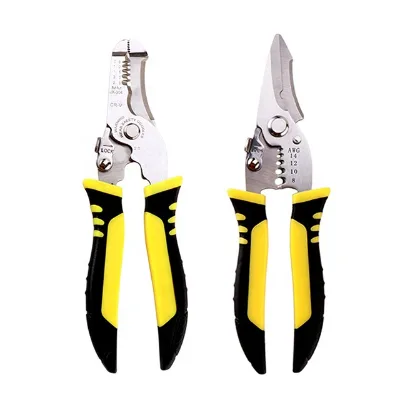


Multifunctional Wire Stripper Pliers Cable Cutter Manual Wire Stripper Pliers
$0.98 - $1.36
MOQ: 1000 Pieces

Crimping Pliers Combination Pliers Cable Cutter Enamel Wire Stripping Tool
$1.28 - $1.96
MOQ: 1000 Pieces


Comprehensive Sourcing Guide
Wire Stripping Pliers with Crimping Sourcing Guide
Procuring Wire Stripping Pliers with Crimping capabilities requires a clear understanding of the tool’s dual functionality and structural integrity. These hand tools are engineered to strip insulation and crimp connectors in a single operation, making them essential for electrical installations and building decoration projects. Buyers must distinguish between general-purpose models and specialized industrial-grade variants, as the latter often feature reinforced joints and higher-grade steel for durability. The observed market includes tools with half-box and box joint structures, which directly impact the tool’s leverage and long-term resistance to deformation under heavy use.
The selection process should also account for the specific shaft style and handle design, which influence ergonomics and precision. Common configurations include crooked or arched shafts, which allow access to tight spaces, while pure or colorful handles provide visual identification and grip comfort. It is critical to verify the tool’s performance claims, such as twisting and cutting capabilities, against actual user requirements. Sourcing guides indicate that models like the HHY-400A and FLP-039 represent different structural approaches, so buyers should align their choice with the specific mechanical demands of their assembly lines or field operations.
Product Scope and Observed Listing Signals
The current market landscape for Wire Stripping Pliers with Crimping functions shows a wide range of product models and packaging options. Listings frequently highlight models such as MT-8928, MT-8307, and BK50-105, each potentially serving distinct niche applications within the electrical and hardware sectors. Packaging varies significantly, with options ranging from individual polybags to double blister packs and plastic boxes, which affects both retail presentation and bulk shipping efficiency. Buyers should note that some suppliers offer customization support, including OEM services, allowing for branded handles or specialized packaging requirements that align with corporate identity or specific distribution channels.
Observed listing signals also reveal variations in material composition and finish, which are critical for tool longevity. High carbon steel is a common material choice, often treated with a blackened finish to resist corrosion and enhance grip. The weight of these tools can vary, with some lightweight models weighing around 0.36g, though this figure may refer to specific components rather than the entire tool. Additionally, the presence of certifications like CE, RoHS, and ISO 9001:2008 suggests a baseline for quality management and environmental compliance. Buyers must carefully cross-reference these signals with their specific technical requirements to avoid mismatches in performance expectations.
Technical Specifications to Verify
Verifying technical specifications is paramount to ensuring the selected pliers meet operational demands. Key attributes to confirm include the pliers handle length, which influences leverage and user fatigue, with some models specified at 210mm. The overall length of the tool, often ranging from 10-20cm, determines its suitability for different workspace constraints. Buyers should also inspect the shaft style, choosing between crooked or arched designs based on the accessibility needs of their work environment. The structure of the joint, whether half-box or full box, directly impacts the tool’s ability to withstand high crimping forces without loosening or breaking over time.
Performance capabilities must be explicitly defined, as some tools offer multi-functions such as cutting, crimping, wire stripping, and punching. It is essential to verify the grade of the steel used, with industrial-grade materials preferred for heavy-duty applications. The finish, such as blackened surfaces, should be checked for uniformity and adherence to anti-corrosion standards. Additionally, buyers should confirm the condition of the product, ensuring that new tools are delivered without manufacturing defects. Understanding these technical nuances helps in selecting a tool that balances precision, durability, and ergonomic efficiency for specific electrical tasks.
Compliance and Safety Documentation
Compliance with international standards is a critical factor in sourcing wire stripping pliers, particularly for export markets. Certifications such as CE and RoHS indicate adherence to European health, safety, and environmental protection standards, which are often mandatory for products sold in the EU. ISO 9001:2008 certification demonstrates that the supplier follows a robust quality management system, ensuring consistent product quality and process control. Buyers should request valid certification documents from suppliers to verify their authenticity and ensure that the tools meet the regulatory requirements of their target markets.
Safety documentation should also include material safety data sheets and user manuals that outline proper usage and maintenance procedures. These documents help prevent workplace injuries and extend the lifespan of the tools by providing clear instructions on handling high-carbon steel components. Buyers must ensure that the tools are labeled correctly with model numbers and origin information, such as Zhejiang, China, to facilitate traceability. Additionally, verifying that the products are in new condition and free from defects is essential for maintaining safety standards. Proper documentation not only ensures compliance but also builds trust with end-users and regulatory bodies.
Cost Drivers and Commercial Terms
Cost drivers for Wire Stripping Pliers with Crimping functions include material quality, manufacturing complexity, and packaging requirements. High carbon steel and specialized finishes like blackening increase production costs but offer superior durability and performance. Customization options, such as OEM branding or unique packaging, can also impact pricing, as they require additional setup and processing time. Buyers should consider the total cost of ownership, including maintenance and replacement frequency, rather than focusing solely on the initial purchase price. Understanding these factors helps in negotiating better terms and selecting cost-effective solutions that meet quality standards.
Commercial terms such as MOQ, lead times, and payment conditions vary among suppliers and should be clearly defined in contracts. MOQs can range from small quantities for testing to large volumes for bulk orders, affecting inventory management and cash flow. Lead times depend on production capacity and customization requirements, so buyers should plan accordingly to avoid delays. Payment terms, such as deposits or letters of credit, should be negotiated to balance risk and cash flow. Clear communication of these terms ensures a smooth procurement process and minimizes the potential for disputes or unexpected costs during the supply chain.
Supplier Qualification and Quality Control
Supplier qualification is a critical step in ensuring the reliability and consistency of Wire Stripping Pliers with Crimping functions. Buyers should assess suppliers based on their production capabilities, quality control processes, and track record in the industry. Suppliers with ISO 9001:2008 certification are generally more reliable, as they adhere to standardized quality management practices. It is also important to verify the supplier’s ability to meet specific customization requests, such as OEM branding or unique packaging, without compromising product quality. Conducting factory audits or requesting sample products can provide valuable insights into the supplier’s operational efficiency and commitment to quality.
Quality control measures should be implemented throughout the production process to ensure that each tool meets specified standards. This includes inspecting materials, monitoring manufacturing processes, and performing final quality checks before shipment. Buyers should establish clear acceptance criteria and inspection protocols to identify and address defects early in the production cycle. Regular communication with suppliers regarding quality issues and feedback can help improve product consistency and reduce the risk of receiving substandard goods. By prioritizing supplier qualification and rigorous quality control, buyers can mitigate risks and ensure a steady supply of high-quality wire stripping pliers.
Long-Term Procurement Checks
Long-term procurement checks are essential for maintaining a stable and efficient supply chain for Wire Stripping Pliers with Crimping functions. Regular performance evaluations of the tools in real-world applications help identify any issues related to durability, ergonomics, or functionality. Buyers should monitor feedback from end-users and maintenance teams to assess the tools’ performance over time. This feedback can inform future purchasing decisions and help in selecting more suitable models or suppliers. Additionally, tracking market trends and technological advancements in tool design can provide insights into potential improvements or new features that may benefit operations.
Supply chain resilience should also be a key focus, with buyers diversifying their supplier base to mitigate risks associated with single-source dependencies. Regularly reviewing supplier performance metrics, such as delivery times, quality consistency, and responsiveness, helps in identifying potential issues early. Building strong relationships with suppliers through open communication and collaborative problem-solving can enhance supply chain stability. Furthermore, staying informed about regulatory changes and industry standards ensures that the procured tools remain compliant and relevant. By implementing these long-term checks, buyers can optimize their procurement strategy and ensure a reliable supply of high-quality wire stripping pliers.
FAQs
What certifications do Wire Stripping Pliers with Crimping have?
These tools often carry CE, RoHS, and ISO certifications to ensure safety and quality compliance. Some models specifically meet ISO9001:2008 standards for manufacturing processes. Buyers should verify the specific certification list for each product model before placing bulk orders to ensure regulatory alignment.
Can I request custom packaging for these pliers?
Yes, customization is available for packaging requirements including plastic boxes, double blister packs, or cartons on pallets. Suppliers offer flexible packaging solutions to meet specific buyer needs. This service allows for branding or logistical adjustments while maintaining the core product integrity and safety standards.
Which materials are used for industrial wire stripping pliers?
Industrial-grade tools are typically constructed from high carbon steel to ensure durability and precision. The finish is often blackened to resist corrosion and improve grip during heavy use. This material selection supports long-term performance in demanding environments like building decoration and electrical work.
What is the typical MOQ for these pliers?
The minimum order quantity ranges from 1 to 5000 units depending on the supplier and product model. Buyers can often start with small quantities for sampling purposes before committing to larger production runs. Specific MOQs vary by customization level and packaging requirements selected for the order.
How are these pliers packaged for shipment?
Packaging options include individual plastic boxes, double blister packs, or bulk cartons on pallets. Some items are shipped in single polybags for smaller orders. The packaging method is selected based on buyer requirements to ensure safe transport and easy inventory management upon arrival.
Where are these pliers manufactured?
Most products originate from manufacturing facilities in Zhejiang, China, known for producing high-quality hand tools. The region offers a robust supply chain for industrial-grade steel and finishing processes. Buyers can expect consistent quality standards aligned with international certifications like CE and ISO.
What functions do these pliers perform?
These tools are designed for cutting, crimping, wire stripping, and punching operations. Some models also feature twisting capabilities for enhanced versatility in electrical applications. The multi-function design allows users to handle various tasks efficiently without needing multiple separate tools.