Source Wireless Electricity Power Monitoring System for Industry, Home, Prepayment
Find 30 Wireless Electricity Power Monitoring System options including models RH560, RH570, and PM5350P. Buyers can compare specifications like IP ratings, communication interfaces, and sensor support across suppliers in China and France.
Key considerations
Products List


Intelligent Wireless Condition Monitoring System for Mining Industry
$3099.00 - $6100.00
MOQ: 100 Pieces


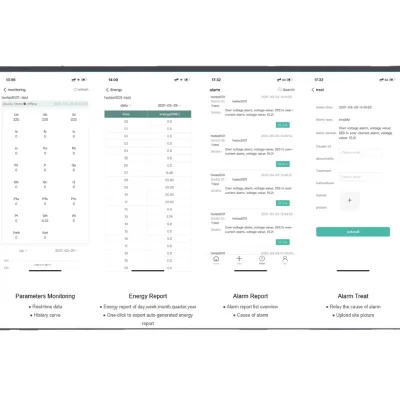


Data Center Power Monitoring Energy Management System RS485 Power Quality Analyzer
$50.00 - $105.00
MOQ: 1 Pieces

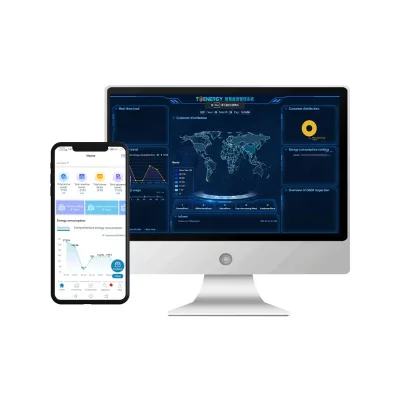


Advanced Network Equipment Power and Environmental Monitoring System
$2500.00 - $2600.00
MOQ: 1 Pieces

Advanced Computer Room Power Monitoring System for Environmental Safety
$2500.00 - $2600.00
MOQ: 1 Pieces


Advanced Lightning-Proof Power Monitoring System for Extreme Conditions
$2500.00 - $2600.00
MOQ: 1 Pieces


Comprehensive Sourcing Guide
Strategic Sourcing Guide for Wireless Electricity Power Monitoring Systems
The global transition toward smart grid infrastructure and industrial energy management has elevated the demand for wireless electricity power monitoring systems. These systems are critical for real-time data acquisition, predictive maintenance, and optimizing energy consumption across diverse sectors. For procurement professionals, navigating the market requires a disciplined approach that distinguishes between generic energy meters and comprehensive wireless monitoring solutions. This guide synthesizes available product attributes and industry standards to provide a framework for evaluating suppliers, verifying technical capabilities, and ensuring long-term operational reliability without relying on unverified marketing claims.
Technical Architecture and Communication Protocols
The core functionality of a Wireless Electricity Power Monitoring System relies on its ability to transmit data from the point of measurement to a central management unit without physical cabling constraints. When evaluating potential solutions, buyers must scrutinize the communication architecture. The market offers a variety of transmission media, including Ethernet, optical fiber, WiFi, 4G, and 5G, often with options to customize based on site conditions. For industrial environments where electromagnetic interference is prevalent, the selection of a robust communication interface is paramount.
A critical component of the technical specification is the interface used to connect with sensors. Systems utilizing Zigbee technology operating at 2.4GHz under the IEEE 802.15.4 standard are common for short-range, low-power mesh networking. This protocol allows for the connection of multiple sensors to a single gateway. Buyers should verify the maximum number of supported sensors per unit, as scalability is a key differentiator. Some advanced units support up to 60 sensors, which significantly impacts the system's ability to cover large industrial facilities. Furthermore, the physical durability of the communication hardware must be assessed. An IP66 rating indicates that the device is dust-tight and protected against powerful water jets, making it suitable for harsh outdoor or washdown environments. The shell material, often cast aluminum, provides the necessary mechanical strength and thermal dissipation for these rugged applications.
Performance Specifications and Environmental Resilience
Operational reliability is contingent upon the system's ability to withstand extreme environmental conditions. Procurement specifications must account for the ambient temperature range in which the device will operate. A standard operating range of -40°C to 70°C is often cited for industrial-grade equipment, ensuring functionality in both arctic and desert climates. Additionally, storage conditions must be considered for logistics and warehousing. Devices should be capable of being stored in temperatures ranging from -50°C to 85°C with humidity levels up to 95% Rh without condensation, preventing damage during transit or seasonal storage.
The accuracy of the monitoring system is another non-negotiable metric. In high-stakes energy management, an accuracy grade of 0.1g or similar high-precision classifications is often required for billing and compliance purposes. The output signal type is equally important; digital output signals are preferred for modern integration with Building Management Systems (BMS) and SCADA systems, as they reduce noise interference compared to analog signals. The physical dimensions of the unit also play a role in installation logistics. While some compact units measure approximately 15cm x 15cm x 15cm, larger industrial gateways may have dimensions around 260mm x 203mm x 87mm. Buyers must ensure that the physical footprint aligns with the available space in electrical panels or mounting locations.
Compliance, Certification, and Regulatory Standards
Navigating the regulatory landscape is a primary responsibility for B2B buyers. Compliance with international standards ensures that the equipment meets safety and performance benchmarks. The presence of CE certification is a fundamental requirement for products entering the European market, indicating conformity with health, safety, and environmental protection standards. For global procurement, a broader certification suite including ISO and RoHS (Restriction of Hazardous Substances) is highly desirable. These certifications verify that the manufacturing process adheres to quality management systems and that the product does not contain restricted hazardous materials.
When evaluating suppliers, buyers should request documentation for these certifications rather than accepting them as marketing assertions. The origin of the product is also a factor in compliance; while many high-quality components are manufactured in China, including specific regions like Hefei, other products may originate from different manufacturing hubs such as France. The country of origin can influence shipping costs, lead times, and the applicability of specific trade agreements or tariffs. Additionally, the packaging standards, such as the use of corrugated cartons with styrofoam inserts or standard cardboard boxes, must be verified to ensure the product arrives without damage. Proper packaging is a proxy for the supplier's attention to detail and quality control processes.
Cost Drivers and Procurement Economics
The pricing structure for wireless electricity power monitoring systems is highly variable, reflecting the complexity of the technology and the volume of the order. Market observations indicate a wide price range, spanning from approximately $50 to $150,000 USD. This disparity is driven by several factors, including the number of supported sensors, the sophistication of the communication protocol, and the inclusion of software platforms for data visualization. Systems that offer real-time data reading and report exporting capabilities via mobile apps and websites often command a premium due to the added value of software integration.
Minimum Order Quantity (MOQ) is another critical economic factor. Suppliers may have MOQs ranging from a single unit to 100 units. For pilot projects or small-scale deployments, buyers should seek suppliers with flexible MOQs to minimize initial capital expenditure. Conversely, for large-scale industrial rollouts, negotiating volume discounts based on higher MOQs can significantly reduce the cost per unit. The customization options also impact pricing. While some models are non-customized and off-the-shelf, others offer full customization for specific industrial applications. Customization typically involves higher unit costs and longer lead times but ensures the system fits the unique requirements of the facility.
Supplier Evaluation and Operational Capabilities
Selecting the right supplier requires a thorough evaluation of their manufacturing capabilities and support infrastructure. Buyers should assess whether the supplier supports Original Design Manufacturing (ODM) services, which allows for tailoring the hardware to specific needs. The installation method is another key consideration; systems that offer direct connection capabilities simplify the deployment process and reduce labor costs. The type of energy metering technology employed, such as piezoelectric sensors or electronic meter theories, should align with the specific measurement requirements, such as pulse peak signal detection.
The display interface is a user-centric feature that should not be overlooked. Modern systems often feature digital displays or are designed to interface seamlessly with external applications, providing a user-friendly experience for monitoring energy data. The supplier's ability to provide a comprehensive solution that includes the meter, the wireless gateway, and the software platform is essential. A fragmented approach, where the hardware and software come from different vendors, can lead to integration challenges and increased maintenance costs. Buyers should also verify the condition of the products, ensuring they are brand new and not refurbished units, unless explicitly agreed upon for cost-saving measures.
Quality Control and Long-Term Procurement Strategy
Ensuring the longevity of the investment requires a robust quality control strategy. The theoretical basis of the meter, whether it is an electronic meter or a standard electric energy meter, dictates its maintenance requirements. For multi-functional energy meters used in both industrial and home settings, the ability to handle reactive energy, multi-rate watt-hour measurements, and maximum demand monitoring is crucial. The power meter connection method, typically via terminals, must be compatible with the existing electrical infrastructure, which is often three-phase four-wire in industrial applications.
Long-term procurement considerations involve looking beyond the initial purchase price to the total cost of ownership. This includes the reliability of the communication link, the durability of the shell material, and the availability of spare parts. Suppliers that offer a wide range of usage scenarios, from prepayment meters to standard electric energy meters, demonstrate versatility and a deeper understanding of the market. Buyers should also consider the storage and ambient temperature limits when planning for future expansion into different geographic locations. A system that performs well in a controlled indoor environment may fail if deployed in an unheated warehouse during winter.
Comparative Analysis of System Attributes
To facilitate decision-making, buyers can compare key attributes of available systems. The following table summarizes the critical specifications observed in the market, highlighting the diversity of options available.
| Attribute | Observation A | Observation B | Observation C |
|---|---|---|---|
| Model Reference | RH560 | RH570 | RH505 |
| Communication | Ethernet, WiFi, 4G/5G | Zigbee (2.4GHz) | Digital Output |
| IP Rating | IP66 | IP67 | N/A |
| Material | Cast Aluminum | N/A | N/A |
| Weight | ~2.5kg | N/A | N/A |
| Certification | N/A | CE | CE, ISO, RoHS |
| Origin | China | Hefei, China | France |
| Customization | Optional | Non-Customized | Available |
| Sensor Capacity | Up to 60 PCS | Single Shaft | N/A |
| Display | N/A | N/A | Digital |
This comparison illustrates that no single product fits all scenarios. The RH560 model, for instance, excels in high-distance transmission (up to 300m) and rugged outdoor use, while the RH505 model offers broader certification coverage and customization options. The RH570 model focuses on specific mechanical dimensions and single-shaft measurement. Buyers must align these attributes with their specific project requirements rather than assuming a single product will satisfy all needs.
Conclusion
Sourcing a Wireless Electricity Power Monitoring System is a complex process that demands a balance between technical specifications, regulatory compliance, and economic efficiency. By rigorously evaluating communication protocols, environmental resilience, and certification status, buyers can mitigate the risks associated with equipment failure and non-compliance. The wide range of available options, from compact digital meters to robust industrial gateways, offers flexibility for various applications. However, the success of the procurement lies in the ability to match the specific attributes of the product to the unique demands of the facility. Buyers must remain vigilant against unverified claims and insist on documented evidence for all performance metrics. Through a disciplined approach to supplier evaluation and quality control, organizations can secure reliable energy monitoring solutions that support their sustainability and operational efficiency goals for years to come.
FAQs
What communication protocols are supported by these systems?
Systems support Ethernet, optical fiber, WiFi, 4G, and 5G with optional configurations. Some units also utilize Zigbee technology at 2.4GHz IEEE 802.15.4 for connecting multiple sensors to a single gateway.
Which certification standards do the products meet?
Products commonly hold CE certification, with some models also meeting ISO and RoHS standards. These certifications ensure compliance with health, safety, and environmental protection requirements for international markets.
How many sensors can a single unit support?
Advanced units can support up to 60 sensors per device. This capacity allows for scalable deployment across large industrial facilities without requiring additional gateways for every measurement point.
What is the operating temperature range for these devices?
The standard operating range spans from -40°C to 70°C. Storage conditions must also be considered, with devices capable of withstanding temperatures between -50°C and 85°C without condensation.
Can these systems be customized for specific needs?
Customization is available for certain models, while others are non-customized and sold as standard units. Buyers should verify specific product attributes to determine if tailored solutions are possible for their project.
What is the typical price range for these systems?
Market prices range widely from approximately 50 to 150,000 USD depending on complexity. The final cost is influenced by sensor capacity, communication protocols, and software integration features included in the package.
What materials are used for the device housing?
Housings are typically constructed from cast aluminum to ensure mechanical strength and thermal dissipation. This material choice supports durability in harsh environments while maintaining an IP66 or IP67 protection rating.