Source with built-in signal source desktop oscilloscope for power, impedance, and voltage measurement
Find 30 models of with built-in signal source desktop oscilloscope suitable for electric power, impedance, and voltage measurement applications. Buyers can compare specifications like sampling rates, memory depth, and channel counts to select the right instrument for their needs.
Key considerations
Products List


$3000.00 - $3180.00
MOQ: 1 Pieces

Automatic 2 Channel Handheld Portable Digital Storage Oscilloscope Sample Rate 2.5 Ga/S 500MHz
$2980.00 - $3200.00
MOQ: 1 Pieces

Automatic Oscilloscope 2 in 1 Dual Channel Analog Bandwidth 1gsa/S Portable Digital Storage
$175.00 - $215.00
MOQ: 1 Pieces

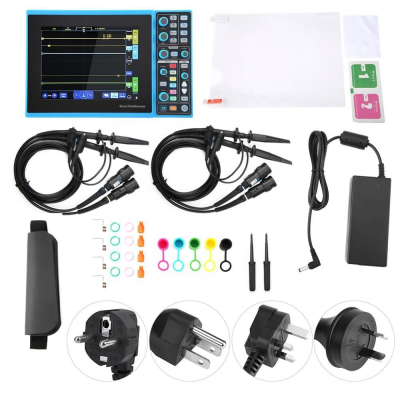
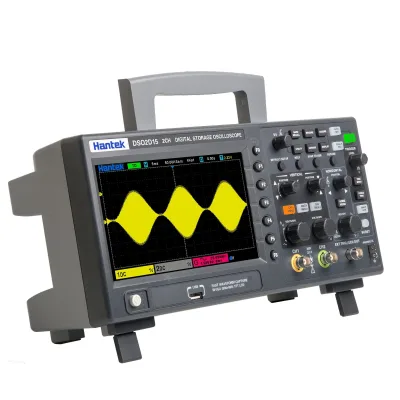


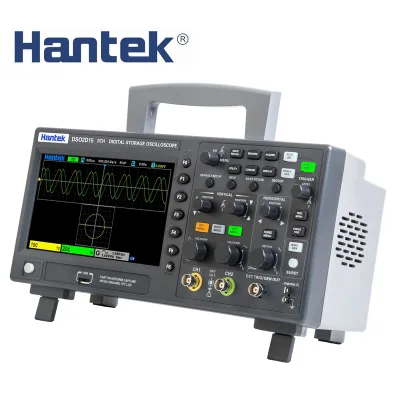
DSO2D15 Mixed Signal Oscilloscope with Protocol Analysis and PC Software Support
$222.00 - $277.00
MOQ: 1 pieces
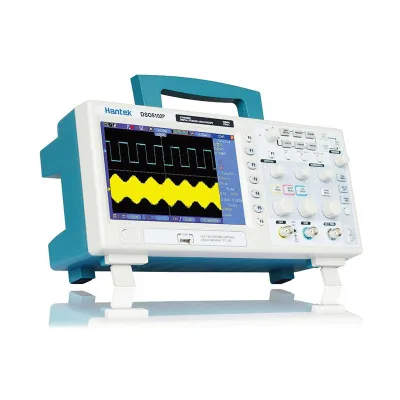

Comprehensive Sourcing Guide
Strategic Sourcing Guide for Desktop Oscilloscopes with Built-in Signal Sources
Selecting the right test and measurement equipment is a critical decision for engineering teams, procurement officers, and laboratory managers. When the specific requirement is a desktop oscilloscope with a built-in signal source, the procurement process must balance technical performance, application versatility, and long-term reliability. This guide provides a structured approach to sourcing these instruments, grounded in verified product attributes and industry-standard evaluation criteria. The focus remains on identifying the correct specifications to ensure the instrument meets the rigorous demands of modern electrical and electronic testing environments.
Understanding the Core Technical Architecture
The primary differentiator for the target category is the integration of a built-in signal source within a desktop form factor. This configuration allows for comprehensive system testing without the need for external function generators, streamlining the workflow for engineers. When evaluating potential units, buyers must first distinguish between the sampling modes available in the market. The observed product data indicates a diverse landscape where Real-time Sampling and Sequential Sampling coexist, alongside Random Sampling options.
Real-time sampling is often preferred for capturing single-shot events and transient signals, making it essential for debugging complex digital circuits. In contrast, sequential sampling is typically utilized for repetitive waveforms where the signal can be reconstructed over time. A specific observation from the product data highlights a unit with a Sample Rate of 5GS/s and a Waveform Capture Rate of 85000wfms/s, which are critical metrics for high-frequency analysis. Buyers should verify if the specific model under consideration supports the necessary sampling mode for their application.
Furthermore, the channel architecture varies significantly. Some units are configured as Analog Oscilloscopes with 2 Input Channels, while others are Mixed-signal Oscilloscopes offering 4 Input Channels. The presence of a built-in signal source is not universal across all models; some units are explicitly listed as "Without Built-in Signal Source," while others are confirmed to have this feature. Procurement teams must rigorously filter their search results to ensure the "With Built-in Signal Source" attribute is present, as this is a non-negotiable requirement for the core keyword.
Application Scope and Functional Versatility
The utility of a desktop oscilloscope with a built-in signal source extends across a wide spectrum of engineering disciplines. The observed product attributes list a comprehensive range of applications, including Electric Power Measurement, Impedance Measurement, Temperature Measurement, Displacement Measurement, Pressure Measurement, Magnetic Field Measurement, Voltage Measurement, Frequency Measurement, Time Measurement, and Phase Measurements. This breadth of capability suggests that these instruments are not limited to simple voltage monitoring but are designed for complex system characterization.
For instance, in power electronics, the ability to measure impedance and phase simultaneously is vital for stability analysis. In telecommunications and high-speed digital design, the Waveform Capture Rate becomes a key performance indicator. A capture rate of 50000 wfms/s or higher ensures that rare glitches and intermittent faults are not missed during testing. The Maximum Memory Depth is another critical factor; observed data shows configurations offering 4 Mpts Half Channels and 2 Mpts All Channels. Deeper memory allows for the capture of longer signal sequences at high resolution, which is indispensable for analyzing long data bursts or complex modulation schemes.
The Trigger Modes also play a pivotal role in application success. While Automatic triggering is standard for general observation, Conventional triggering modes are often required for precise synchronization with specific signal events. Buyers should ensure that the selected oscilloscope supports the specific trigger logic required for their testing protocols, whether it involves edge triggering, pulse width triggering, or pattern matching for mixed-signal environments.
Compliance, Standards, and Physical Specifications
When sourcing industrial-grade test equipment, physical dimensions and packaging standards are often overlooked until the delivery phase. However, for desktop units, the physical footprint and weight are critical for laboratory benchtop organization. The observed product data provides specific standard dimensions, such as 378mm x 218mm x 120mm and 330mm x 300mm x 48mm. These measurements indicate that while the devices are desktop-oriented, their sizes vary significantly based on the internal architecture and channel count.
Packaging is another area requiring attention. Products are observed to come in Carton or Box packaging, with specific single package sizes noted, such as 40x30x15 cm. The Single Gross Weight of some units is recorded at 3kg, which influences shipping logistics and handling requirements. Buyers must verify that the physical specifications of the chosen model align with the available bench space and weight-bearing capacity of their workstations.
Regarding standards, the product data references specific numerical values like 40 and 30cm under the "prod_standard" attribute. While these values appear in the context of specific models, they may refer to compliance metrics, dimensional tolerances, or internal product codes rather than universal industry standards. Procurement teams should not assume these numbers represent a global certification standard without further verification from the supplier. Instead, buyers should request explicit documentation regarding compliance with international safety and electromagnetic compatibility (EMC) standards relevant to their region, such as IEC or UL certifications, to ensure the equipment is safe for operation in their specific facility.
Cost Drivers and Pricing Dynamics
The pricing for desktop oscilloscopes with built-in signal sources exhibits a wide range, with observed values spanning from 70 USD to 88,989 USD. This massive disparity reflects the diversity in specifications, brand positioning, and technological maturity. The lower end of the spectrum likely corresponds to basic analog models or entry-level digital scopes with limited bandwidth and memory. Conversely, the higher price points are associated with high-performance mixed-signal oscilloscopes featuring advanced sampling rates, deep memory, and sophisticated trigger capabilities.
Several factors drive these costs. The Brand Name is a significant variable, with established manufacturers commanding a premium for reliability and support. The Model Number also dictates pricing; for example, models like MSO2000, UPO7000, DSOX6002A, and Mso5054 represent different tiers of capability. The Bandwidth is a primary cost driver, with observed specifications indicating models exceeding 1GHz. Higher bandwidth generally correlates with higher costs due to the advanced components required to maintain signal integrity at high frequencies.
Additionally, the Minimum Order Quantity (MOQ) can impact the total cost of ownership. The observed MOQ range is 1 to 100 units. For single-unit purchases, the unit price may be higher, whereas bulk procurement could offer volume discounts. Buyers should also consider the Customization aspect. While some products offer Customization support, others explicitly state No Customization Support. Customized units often incur additional costs and longer lead times. The Place of Origin is another consideration; products originating from China or America may have different pricing structures based on manufacturing costs, tariffs, and logistics.
Supplier Evaluation and Customization Capabilities
Evaluating suppliers requires a deep dive into their customization capabilities and origin transparency. The product data reveals a split in customization support: some listings indicate OEM (Original Equipment Manufacturer) support, while others state No Customization Support. This distinction is crucial for buyers with unique requirements, such as specific branding, custom firmware, or specialized interface modifications. If a buyer requires a tailored solution, they must prioritize suppliers that explicitly offer OEM services.
The Product Origin is another key factor in supplier evaluation. The data shows units originating from Shandong, China and America. Buyers should assess the supplier's reputation in their respective regions and their ability to provide local support. A supplier located in the same region as the buyer often provides faster response times for technical support and warranty claims. However, this does not preclude the value of international suppliers, provided they have a robust logistics network and clear communication channels.
When assessing suppliers, buyers should verify the Type of the product. While most units are classified as Oscilloscope, some are listed as Other or Mixed-signal Oscilloscope. This classification can indicate specialized functionality or a deviation from standard product lines. It is essential to confirm that the supplier's classification matches the buyer's technical needs. Additionally, the Selling Units information, such as Single Item, helps clarify the purchasing structure and ensures there are no hidden bulk requirements.
Quality Control and Long-Term Procurement Strategy
Ensuring the quality of the procured oscilloscopes involves rigorous verification of the product attributes against the buyer's specifications. The Maximum Sample Rate and Maximum Memory Depth are critical quality indicators. For high-speed applications, a sample rate of 20 Gsa/S (Half Channels) or 10 Gsa/S (Full Channels) may be required. Buyers must verify that the actual performance of the unit matches the advertised specifications, as there can be discrepancies between "Half Channels" and "Full Channels" performance.
Long-term procurement considerations include the availability of spare parts, software updates, and calibration services. The Built-in Signal Source is a complex component that may require periodic calibration. Buyers should inquire about the supplier's calibration support and the availability of certified calibration services. Furthermore, the Trigger Modes and Waveform Capture Rate capabilities should be validated through sample testing to ensure they meet the specific demands of the application over time.
The Structure of the device, typically Desktop, implies a need for durability and stability. Buyers should inspect the build quality and the robustness of the casing, which is often packaged in Carton or Box. The Single Gross Weight and Single Package Size provide insights into the shipping and handling requirements, which can affect the long-term logistics costs.
Comparative Analysis of Key Specifications
To facilitate a clearer decision-making process, the following table summarizes the key observed specifications for different model categories. This comparison highlights the diversity in sampling modes, channel counts, and memory depths, aiding buyers in selecting the most appropriate unit for their specific needs.
| Feature Category | Model Type A (Analog) | Model Type B (Mixed-Signal) | Model Type C (High Performance) |
|---|---|---|---|
| Product Model | MSO2000 / UPO7000 | DSOX6002A / DSOX6004A | Mso5054 / MSOX3104G |
| Channel Number | 2 (Analog) | 4 (Mixed-signal) | Variable (Deep Memory) |
| Built-in Signal Source | Without | With | With |
| Sampling Mode | Real-time | Sequential / Random | Real-time / High Speed |
| Max Sample Rate | 200MSa/s | 5GS/s | 20 Gsa/S (Half) |
| Max Memory Depth | 2 Mpts (All Ch) | 4 Mpts (Half) | 7 Mpts (Deep) |
| Waveform Capture | 50000 wfms/s | 85000 wfms/s | Variable |
| Origin | China | America | China |
| Trigger Mode | Automatic | Conventional | Conventional |
This table illustrates that while some models share similar origins, their performance characteristics vary drastically. The Mixed-signal Oscilloscopes often provide the best balance of channel count and built-in signal sources, making them suitable for complex digital and analog testing. However, for high-frequency applications, the High Performance models with 20 Gsa/S sampling rates are indispensable.
Final Procurement Recommendations
In conclusion, sourcing a desktop oscilloscope with a built-in signal source requires a meticulous approach that prioritizes technical specifications, supplier reliability, and application fit. Buyers must carefully navigate the wide range of available models, ensuring that the selected unit meets the specific sampling rate, memory depth, and channel requirements of their projects. The presence of a built-in signal source is a critical differentiator that should be verified in every product listing.
By adhering to the guidelines outlined in this guide, procurement teams can make informed decisions that minimize risk and maximize the value of their test and measurement investments. The focus should remain on verifying the exact attributes provided in the product data, such as Sampling Mode, Input Channels, and Trigger Modes, rather than relying on general assumptions. With a clear understanding of the cost drivers, compliance requirements, and quality control measures, buyers can successfully acquire the right equipment to support their engineering and testing objectives.
FAQs
Which oscilloscope models include a built-in signal source?
Some desktop oscilloscope models like the DSOX6004A include a built-in signal source, while others such as the MSO2000 do not. Buyers must verify the specific attribute for each model to ensure the instrument meets the requirement for integrated signal generation without external equipment.
What sampling modes are available for these oscilloscopes?
Available sampling modes include real-time, sequential, and random sampling depending on the specific model. Real-time sampling is preferred for single-shot events, while sequential and random modes serve repetitive waveform analysis or specific high-frequency reconstruction needs in different engineering applications.
Can I find oscilloscopes with 4 input channels?
Yes, certain models like the DSOX6004A offer 4 input channels, whereas others like the MSO2000 provide 2 input channels. The channel count varies by model, so procurement teams should filter results based on the specific input channel requirements for their testing setup.
What is the maximum sample rate for these devices?
Maximum sample rates vary significantly, with some models reaching up to 20 Gsa/S on half channels and 10 Gsa/S on full channels. Other units may offer lower rates like 5 GS/s or 200 MSa/s, so the specific model must be checked to match the application's speed requirements.
Where are these oscilloscopes typically manufactured?
These devices are manufactured in locations such as China, specifically Shandong, and America. The place of origin can influence logistics and support, so buyers should confirm the specific origin of the model they intend to purchase to align with their supply chain strategy.
Do these oscilloscopes support customization or OEM services?
Customization support varies, with some listings offering OEM services while others explicitly state no customization support is available. Buyers requiring tailored solutions must prioritize suppliers that explicitly confirm OEM capabilities to ensure their specific branding or functional needs can be met.
What are the standard packaging dimensions for these units?
Standard packaging dimensions vary by model, with examples including 378mm x 218mm x 120mm and 330mm x 300mm x 48mm. Some units are packed in boxes measuring 40x30x15 cm, so physical space and weight capacity of the workstation must be verified before procurement.