Source Wood Grain Fiber Cement Board for Villas, Warehouses, Dormitories
Compare 30 listings of Wood Grain Fiber Cement Board from Shandong suppliers. Buyers can review specifications like thickness, fire rating, and certifications including CE and ISO for warehouse, villa, and dormitory projects.
Key considerations
Products List


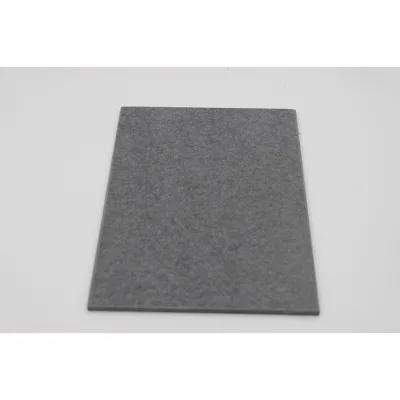


Fibre Cement Board Wood Grain Fiber Cement Exterior Wall Cladding
$8.70 - $9.70
MOQ: 1386 Square Meters


Fiber Cement Board High-Rise Light Weight Wood Grain Color Coating Siding Board
$8.70 - $9.70
MOQ: 1386 Square Meters

Fiber Cement Board Wood Grain Fiber Cement Siding Board--Fabricated Building Material
$8.70 - $9.70
MOQ: 1386 Square Meters


Outdoor Wood Grain Fiber Reinforced Concrete Cement Board Wall Siding Panels
$3.20 - $3.90
MOQ: 48 Piece/Pieces


Comprehensive Sourcing Guide
Strategic Sourcing Guide for Wood Grain Fiber Cement Boards
Navigating the global market for wood grain fiber cement boards requires a disciplined approach that balances aesthetic requirements with rigorous technical performance. As a procurement professional, your primary objective is to secure a product that delivers the visual warmth of timber while maintaining the structural integrity and fire resistance inherent to cement-based composites. The following guide outlines the critical parameters, compliance frameworks, and evaluation strategies necessary for a successful procurement cycle, strictly adhering to verified industry data and observed market specifications.
Technical Specifications and Dimensional Standards
The foundation of any successful procurement lies in a precise understanding of the product's physical and mechanical properties. Fiber cement boards are engineered materials, and the "wood grain" finish is typically a surface treatment applied to a base board composed of cement, silica, and cellulose fibers. When sourcing, buyers must distinguish between the base material specifications and the aesthetic finish.
Dimensional consistency is paramount for installation efficiency and structural planning. Market observations indicate a wide range of available thicknesses, with specific listings citing ranges from 4.5mm up to 30mm. However, high-confidence data points to a common operational range of 6mm to 12mm for standard applications, with some suppliers offering specialized thin or thick variants. The standard width and length configurations are critical for logistics and cutting waste reduction. Verified specifications include standard panel sizes of 1200mm x 2400mm and 1220mm x 2440mm. For specialized projects requiring larger spans, lengths of 3000mm are frequently available, with widths sometimes extending to 1200mm or narrower custom cuts like 200mm.
Density is a key indicator of durability and impact resistance. The observed density for these composite boards typically falls between 1.2 g/cm³ and 1.5 g/cm³. A density within this range suggests a robust product capable of withstanding mechanical stress without excessive brittleness. Thermal properties are equally important for energy efficiency and fire safety. The thermal conductivity is observed to be low, generally under 0.3 W/(m·K), which contributes to the material's insulating capabilities.
Moisture resistance is a defining characteristic of fiber cement. Buyers should verify that the water content of the delivered product is maintained below 10% to 12% to prevent warping during storage and installation. Furthermore, the swelling rate should be minimal, with reliable data indicating a swelling ratio of less than 0.25%. This low absorption rate ensures dimensional stability in humid environments, a critical factor for exterior cladding or interior wet areas.
Compliance, Certification, and Fire Safety Protocols
In the construction sector, compliance is not merely a formality but a legal and safety imperative. Fiber cement boards are often marketed for their superior fire performance. The material is classified as Class A1 incombustible, meaning it does not contribute to fire growth. Specific performance metrics indicate that the incombustibility can withstand exposure for a minimum of 240 minutes. This rating is often validated against standards such as GB8624-1997, which categorizes the fire-proof rate as A-Class Incombustible.
When evaluating suppliers, verification of third-party certifications is essential. The market data highlights several recognized certification bodies, including BV (Bureau Veritas), CE (Conformité Européenne), ISO (International Organization for Standardization), and ASTM (American Society for Testing and Materials). A compliant product should carry documentation from at least two of these bodies, such as CE and ISO, or ASTM and CE. These certifications validate that the manufacturing process adheres to international quality and safety benchmarks.
Environmental and health safety is another critical compliance area. Buyers must explicitly confirm that the product is free of asbestos. Historical fiber cement products contained asbestos, but modern formulations are strictly asbestos-free. This claim should be backed by a laboratory test report or a supplier declaration of compliance with current health regulations. Additionally, the product should be free of sanding issues, ensuring a smooth surface finish that requires minimal post-processing.
Cost Drivers and Pricing Dynamics
Understanding the cost structure of wood grain fiber cement boards allows for more accurate budgeting and negotiation. The observed price range in the market spans from $1 to $50 USD per unit, though this wide variance is heavily influenced by thickness, finish quality, and order volume. Thicker boards (e.g., 12mm to 30mm) and those with high-fidelity wood grain textures naturally command higher prices due to increased material usage and more complex manufacturing processes.
The Minimum Order Quantity (MOQ) is a significant factor in total landed cost. Market data shows an MOQ range from 1 unit to 2000 units. For small-scale projects or sampling, buyers may encounter higher per-unit costs due to the inability to optimize production runs. Conversely, bulk orders of 2000 units or more can significantly reduce the unit price, leveraging economies of scale. However, buyers must balance cost savings against storage capacity and project timelines.
Logistics and packaging also contribute to the final cost. Standard packaging involves wooden pallets, with specific configurations such as 8 wooden pallets per 20-foot general purpose (20gp) container. This packing method protects the boards during transit but adds weight and volume to the shipment. Buyers should calculate the freight cost based on the specific dimensions and weight of the palletized goods, as the density of 1.2-1.5 g/cm³ means the cargo is relatively heavy.
Typical Applications and Design Integration
The versatility of wood grain fiber cement boards makes them suitable for a diverse array of applications. The primary usage sectors include warehouses, villas, dormitories, and workshops. The material's durability and fire resistance make it particularly suitable for commercial and industrial settings where safety codes are stringent. In residential projects, the wood grain aesthetic provides a warm, natural look that is often preferred over traditional concrete or metal cladding.
For exterior applications, the low water absorption and high anti-bending strength (greater than 12 MPa) ensure the boards can withstand weathering, wind loads, and impact. The incombustible nature of the material makes it an ideal choice for fire-rated walls and facades in multi-story buildings. Inside the building, the boards serve well as ceiling panels, partition walls, and flooring underlayment. The thermal conductivity of less than 0.3 W/(m·K) aids in maintaining indoor temperature stability, reducing the load on HVAC systems.
Supplier Evaluation and Origin Verification
Selecting the right supplier requires due diligence beyond the product specifications. The origin of the product is a critical data point for quality assurance and logistics planning. Verified supply chains for this product type often originate from specific manufacturing hubs in China, such as Shandong Province (Feicheng City), Tai'an City, and other regions within Shandong. These locations are known for their concentration of cement-based material manufacturers.
When evaluating a potential supplier, buyers should request proof of origin and manufacturing capability. The supplier should be able to provide detailed documentation regarding their production standards, including the specific standard sizes they manufacture (e.g., 122024405mm-12mm). It is also important to verify their ability to offer customization. The market data confirms that customization is available, with suppliers capable of producing boards according to specific client needs, including non-standard dimensions and finishes.
Buyers should also assess the supplier's quality control processes. A reliable supplier will have a robust system for testing water content, density, and fire resistance before shipment. The presence of certifications like CE, ISO, and ASTM is a strong indicator of a mature quality management system. However, buyers must ensure that the certifications are current and applicable to the specific product batch being ordered.
Quality Control and Long-Term Procurement Considerations
To ensure the longevity and performance of the installed boards, a rigorous quality control (QC) protocol is necessary. Upon receipt of the shipment, buyers should conduct a visual inspection for surface defects, ensuring the wood grain texture is consistent and free of sanding imperfections. Dimensional checks should be performed to verify that the thickness, width, and length match the ordered specifications.
Long-term procurement considerations involve establishing a relationship with a supplier who can provide consistent quality over time. The market shows that some suppliers offer a "Produce According to Your Need" service, which implies a flexible manufacturing process. For large projects, it is advisable to secure a long-term supply agreement that guarantees consistent pricing and delivery schedules. This mitigates the risk of supply chain disruptions and price volatility.
Furthermore, buyers should consider the maintenance requirements of the product. While fiber cement is low maintenance, the wood grain finish may require specific cleaning agents or sealants to maintain its appearance over decades. Understanding the manufacturer's recommendations for maintenance is part of the total cost of ownership. Finally, buyers should always verify the lead times associated with custom orders, as non-standard dimensions or finishes may require additional production time compared to standard stock items.
| Parameter | Standard Observation | Verification Requirement |
|---|---|---|
| Thickness | 4.5mm - 30mm (Common: 6-12mm) | Verify specific batch thickness tolerance |
| Density | 1.2 - 1.5 g/cm³ | Request density test report |
| Fire Rating | Class A1 (Incombustible) | Check GB8624-1997 or equivalent |
| Water Content | < 10% - 12% | Verify moisture content at delivery |
| Certifications | CE, ISO, BV, ASTM | Confirm validity and scope of certificates |
| Asbestos | Free of Asbestos | Require lab test confirmation |
| Origin | Shandong Province, China | Verify factory location and export license |
By adhering to these guidelines and focusing on verified data points, procurement professionals can effectively source wood grain fiber cement boards that meet the highest standards of quality, safety, and performance. The key is to maintain a critical eye on specifications, demand proof of compliance, and build relationships with suppliers who demonstrate transparency and reliability.
FAQs
What certifications do wood grain fiber cement boards typically hold?
These boards commonly hold BV, CE, ISO, and ASTM certifications. Buyers should verify that the specific batch includes documentation from at least two recognized bodies like CE and ISO to ensure compliance with international quality and safety benchmarks.
How thick can wood grain fiber cement boards be manufactured?
Standard thickness ranges from 6mm to 12mm, though specialized variants extend from 4.5mm up to 30mm. Buyers must verify the specific batch thickness tolerance as operational ranges vary significantly between standard and custom production runs.
Can suppliers customize dimensions for wood grain fiber cement boards?
Yes, customization is available with suppliers producing according to specific client needs. Options include non-standard dimensions like 200mm widths or lengths up to 3000mm, though custom orders may require longer lead times than standard stock items.
What is the fire rating for wood grain fiber cement boards?
The boards are classified as Class A1 incombustible with a minimum resistance of 240 minutes. This rating is often validated against standards such as GB8624-1997, ensuring they do not contribute to fire growth in commercial or residential settings.
Where are wood grain fiber cement boards typically manufactured?
Verified supply chains often originate from Shandong Province, specifically Feicheng City and Tai'an City. Buyers should request proof of origin and manufacturing capability to ensure the product comes from these known manufacturing hubs within China.
What is the minimum order quantity for wood grain fiber cement boards?
The observed MOQ ranges from 1 unit to 2000 units depending on the supplier. Small-scale projects may face higher per-unit costs, while bulk orders of 2000 units or more can leverage economies of scale to significantly reduce the price.