Source Wooden Braille Staircase Signs for Hotels, Schools, and Offices
Compare 30 listings for Wooden Braille Staircase Signs suitable for hotels, schools, and offices. Buyers can review customization options, material details, and lead times from manufacturers in China.
Key considerations
Products List

Ada Economical Staircase Signs Braille Stairs Signage for Stairwell Safety Sign
$10.00 - $20.00
MOQ: 1 Pieces


Ezd Accessible Entrance Sign Adasigns Unisex Handicap Bathroom Signs with Braille
$20.00 - $50.00
MOQ: 1 Pieces
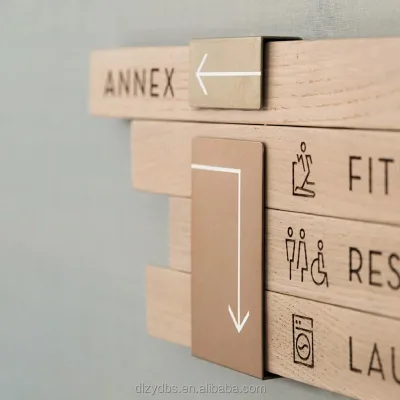


Acrylic Braille Sign Custom Tactile Accessible Restroom Sign for Building
$5.99 - $6.99
MOQ: 50 Pieces


Customized Signs Unisex Braille Restroom Sign - Bathroom Sign Lift Signage
$2.99 - $3.99
MOQ: 50 Pieces

Ada Braille and Tactile Sign Board Door Name Plaque Hotel Metal Plate Braille Signage
$20.00 - $40.00
MOQ: 1 Pieces
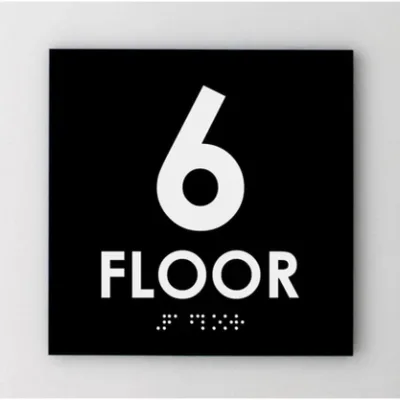
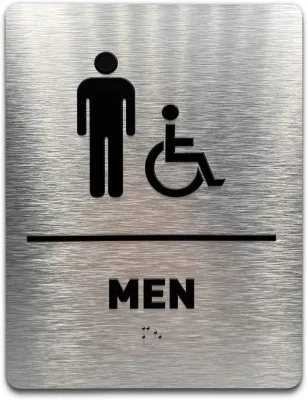

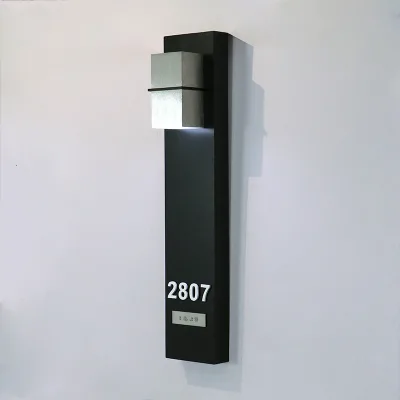


Comprehensive Sourcing Guide
Strategic Sourcing Guide for Wooden Braille Staircase Signs
Understanding Product Variants and Material Composition
When sourcing Wooden Braille Staircase Signs, buyers must first navigate the distinct material profiles available in the current market. The core keyword implies a specific aesthetic and tactile requirement, yet the supply chain offers diverse material compositions that may or may not align with the "wooden" descriptor. Based on available product data, manufacturers frequently offer signage constructed from solid wood, which provides a warm, natural aesthetic suitable for high-end hotels, apartments, and residential complexes. However, the market also contains significant inventory of stainless steel, aluminum, and acrylic variants. While these materials offer superior durability and weather resistance, they deviate from the specific request for wood.
Buyers should verify the exact material composition of any listing claiming to be a "wooden" sign. The provided data indicates that "Wood" is a confirmed material attribute for specific door plate models. These wooden units are often categorized under "Door Plate" types with "Free-Custom-Design" capabilities. It is crucial to distinguish between solid wood construction and wood-veneer or composite alternatives. The data also highlights that "Stainless Steel" and "Acrylic" are common materials for other sign types, such as luminous letters or ADA-compliant signs. A buyer seeking wooden signs must explicitly filter for the "Wood" material attribute to avoid receiving stainless steel or acrylic products that do not meet the design intent. Furthermore, the "Morden" style is a noted attribute for these products, suggesting a contemporary design language that blends well with modern interior architecture.
Technical Specifications and Functional Requirements
The technical specifications for wooden braille signs are critical for ensuring they meet both aesthetic and functional standards. A primary observation from the product data is the inclusion of "1:1 Installation Template Paper" as a standard accessory. This is a vital component for staircase applications where precise alignment is necessary to ensure braille characters are at the correct height and spacing relative to the handrail or wall. The "Easy Installation" attribute suggests that the mounting hardware is designed for straightforward integration, which reduces labor costs during the procurement and installation phases.
Regarding environmental and operational parameters, the data confirms that these products are "Environment-Friendly," a significant consideration for green building certifications. The working temperature range is specified as -20°C to 60°C, which ensures the wooden material will not warp or crack under typical indoor climate control conditions found in hotels and offices. While the data mentions a "Working Lifetime" of 500,000 hours for some electronic signage, wooden signs are generally passive and do not have an electronic lifespan; however, the durability of the wood and the permanence of the braille etching are the key longevity factors. For wooden signs, the "Indoor" usage attribute is the primary constraint, as wood is susceptible to moisture damage if used in wet environments without specific sealing treatments. Buyers should verify if the wooden signs listed have any specific waterproof ratings, as the data indicates some stainless steel and acrylic models carry an "IP65" rating, which is likely not applicable to untreated wood.
Compliance, Certification, and ADA Standards
Compliance with accessibility standards is non-negotiable for braille signage, particularly in commercial and public sectors. The product data explicitly references "Ada Door Signs" and "Door Sign with Braille" as key categories. While the data does not list specific certification bodies (such as UL or ISO) for the wooden variants, the presence of the "ADA" keyword indicates that the product line is designed to meet the Americans with Disabilities Act requirements. Buyers must verify that the specific wooden model they select adheres to the tactile character height, spacing, and placement rules mandated by local building codes.
The "Customization" attribute for color, size, and font is a double-edged sword in terms of compliance. While it allows for branding alignment, it also introduces the risk of non-compliance if the customization deviates from legal requirements. For instance, the contrast between the braille characters and the background must meet specific luminance ratios. The data mentions "Customization" as a standard, but it does not guarantee that every customized order will automatically pass ADA audits. Buyers should request a compliance statement or a sample verification from the manufacturer before placing a bulk order. The "Our Own Factory" attribute suggests that the manufacturer has direct control over the production process, which can be leveraged to ensure strict adherence to these standards. However, without explicit certification data in the provided text, buyers must treat the "ADA" keyword as a design intent rather than a guaranteed certified status.
Cost Drivers and Procurement Economics
The economics of sourcing wooden braille signs are influenced by several variables, including material sourcing, customization levels, and order volume. The observed price range in the market spans from $0.39 to $81.26 USD. This wide disparity suggests that the lower end of the spectrum may represent simple, mass-produced units or perhaps smaller components, while the higher end likely reflects complex, fully customized wooden designs with premium finishes. The "MOQ" (Minimum Order Quantity) is observed to range from 1 to 1000 units, with a specific "1PCS" MOQ noted for certain customizable models. This flexibility allows small projects to procure single units without significant financial commitment, while larger projects can negotiate better rates for bulk orders.
Production time is another significant cost driver, with a standard lead time of 7-15 days noted in the data. This timeframe includes the customization process, which is essential for wooden signs to ensure the braille is correctly embossed or carved. The "Customization" of the design, color, and font adds to the production complexity and time. Shipping costs are also a factor, with options including DHL, FedEx, air freight, and general shipping. For wooden products, packaging is critical to prevent damage during transit; the data specifies "Wooden Cases/Cartons" as the standard packing method, which adds to the overall cost but ensures product integrity. Buyers should factor in the cost of the "1:1 Installation Template Paper" and any additional mounting hardware when calculating the total landed cost.
Typical Applications and Installation Contexts
The versatility of wooden braille signs makes them suitable for a wide array of environments. The data lists applications in "Hotel, Apartment, etc.," as well as "Buildings, Shops, Schools, Bar, Bus Stations, Hospitals, Park, Office, Companies." This broad applicability indicates that wooden signs are primarily used in interior settings where aesthetics play a significant role. The "Indoor" usage attribute reinforces this, suggesting that these signs are best suited for lobbies, corridors, and room entrances in hospitality and commercial real estate.
The "Morden" style and "Free-Custom-Design" capabilities allow these signs to blend seamlessly with various interior design themes, from minimalist corporate offices to luxury boutique hotels. The "Easy Installation" feature is particularly beneficial for large-scale projects involving multiple locations, such as hotel chains or hospital networks, where rapid deployment is necessary. The inclusion of "1:1 Installation Template Paper" ensures that the signs can be installed with high precision, which is critical for accessibility compliance. Buyers should consider the specific environment when selecting the wood type; for high-traffic areas like bus stations or hospitals, a harder, more durable wood species may be required to withstand wear and tear.
Supplier Evaluation and Quality Assurance
Evaluating suppliers for wooden braille signs requires a focus on their manufacturing capabilities and quality control processes. The data indicates that the manufacturer is an "Our Own Factory," which implies direct control over the production line. This is a positive indicator for quality consistency, as it eliminates the middleman and allows for direct communication regarding material sourcing and craftsmanship. Buyers should verify the factory's experience with wooden materials and their specific expertise in braille production.
Quality control should focus on the precision of the braille characters, the smoothness of the wood finish, and the accuracy of the installation templates. Since the data mentions "Customization" as a standard, buyers must ensure that the supplier has a robust process for handling custom orders without compromising on quality. The "Environment-Friendly" attribute suggests that the supplier may use sustainable wood sources or eco-friendly finishes, which should be verified through documentation. Additionally, the "Working Lifetime" of 500,000 hours mentioned in the data likely refers to electronic components in other product lines; for wooden signs, buyers should inquire about the expected lifespan of the wood and the durability of the braille under normal use conditions.
Long-Term Procurement and Maintenance Considerations
Long-term procurement strategies for wooden braille signs should account for maintenance, replacement cycles, and supply chain reliability. While the data does not specify a warranty period for wooden signs (noting a 1-year warranty for electronic models), buyers should negotiate a warranty or guarantee for material defects. The "Environment-Friendly" nature of the product is a long-term asset, aligning with corporate sustainability goals. However, wood is a natural material that may require periodic maintenance, such as refinishing or sealing, to maintain its appearance and structural integrity.
Buyers should also consider the scalability of their orders. With an MOQ as low as 1 piece, suppliers can accommodate both small pilot projects and large-scale rollouts. The 7-15 day production time allows for relatively quick replenishment, but buyers should plan for potential delays during peak seasons. The "Shipping" options, including air freight and standard shipping, provide flexibility for urgent needs. Finally, buyers should maintain a relationship with the supplier to ensure consistent quality over time, especially when reordering custom designs. The ability to access the "1:1 Installation Template Paper" again for future installations is a critical logistical consideration that should be confirmed with the supplier.
FAQs
What materials are used for Wooden Braille Staircase Signs?
Wood is a confirmed material for specific door plate models, though stainless steel and acrylic variants also exist. Buyers must explicitly filter for the wood attribute to ensure the product matches the design intent and avoids metal or plastic alternatives.
How long does production take for custom wooden signs?
The standard production time is 7 to 15 days for custom orders. This timeframe includes the necessary customization process for design, color, and font, which is essential for ensuring the braille is correctly embossed or carved on the wood.
Can I order a single unit of wooden braille signage?
Yes, the minimum order quantity can be as low as 1 piece for certain customizable models. This flexibility allows small projects to procure single units without significant financial commitment while still accessing free custom design capabilities.
What accessories are included for easy installation?
A 1:1 installation template paper is included as a standard accessory for these products. This component ensures precise alignment of braille characters relative to handrails or walls, facilitating straightforward integration and reducing labor costs during the installation phase.
Are these signs compliant with ADA standards?
The product line is designed to meet Americans with Disabilities Act requirements as indicated by the ADA keyword. However, buyers must verify that specific customized orders adhere to local tactile character height and spacing rules before placing bulk orders.
Where are these wooden signs manufactured and shipped from?
The products originate from China, specifically Shenyang in Liaoning province. Shipping options include DHL, FedEx, air freight, and general shipping, with packaging provided in wooden cases or cartons to prevent damage during transit.