Source XCMG Flanged Yoke for Excavators, Cranes, and Dump Trucks
Compare 30 listings for XCMG Flanged Yoke components suitable for heavy machinery repair and replacement. Buyers can evaluate specifications, pricing, and supplier details to find parts for excavators, cranes, and dump trucks.
Key considerations
Products List
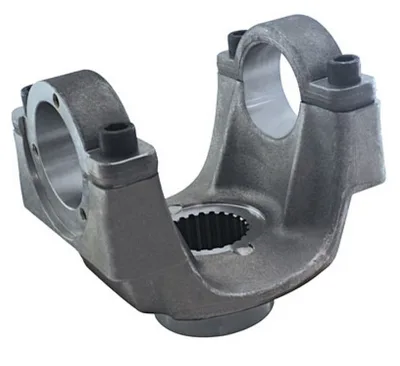


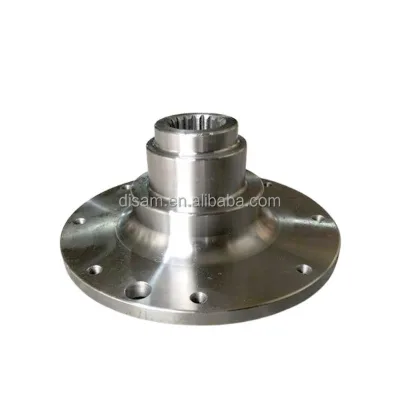




Comprehensive Sourcing Guide
Strategic Sourcing Guide for XCMG Flanged Yoke Components
Understanding the Technical Profile and Core Specifications
When sourcing flanged yokes specifically for XCMG heavy machinery, buyers must first establish a clear understanding of the component's technical architecture. A flanged yoke is a critical drivetrain element designed to transmit torque between rotating shafts while accommodating slight misalignments. In the context of XCMG equipment, these components are often subjected to high stress, making material integrity and dimensional precision non-negotiable. Based on available product data, the core material for such heavy-duty applications is frequently identified as steel, which provides the necessary tensile strength and durability required for construction and mining machinery.
The manufacturing process for these parts often involves forging, a method that aligns the grain structure of the metal to enhance its mechanical properties. This forging process is critical for ensuring that the flanged yoke can withstand the shock loads typical in earth-moving operations. The product specifications indicate that the shape is often "Customer Required," suggesting that while standard configurations exist, the market supports significant customization to fit specific XCMG model variations. The processing object is explicitly listed as metal, confirming that the raw material undergoes substantial mechanical working rather than simple casting or machining alone.
Dimensional consistency is paramount. The "Standard" model number appears frequently in product listings, indicating that a baseline specification exists for general compatibility. However, specific applications may require variations such as "500K. 3.3-1" or "OEM" designations. Buyers must verify that the specific flanged yoke they procure matches the exact model number of their XCMG machinery, as the "Standard" designation may not cover all specialized variants. The single package size is often listed as 1x1x1 cm in generic data, but this is likely a placeholder; actual packaging dimensions will vary based on the weight and size of the specific yoke, which can range significantly in mass.
Compliance, Certification, and Regulatory Verification
Navigating the compliance landscape is essential for B2B procurement, particularly when dealing with international supply chains originating from China. The product data highlights several certifications that serve as indicators of a supplier's adherence to quality management systems. The most prominent certifications observed include CE, ISO9001, and ISO. The presence of CE certification suggests that the product meets European Union safety, health, and environmental protection requirements, which is a crucial benchmark for international trade. ISO9001 certification indicates that the supplier has a documented quality management system in place, ensuring consistent production processes.
Furthermore, specific data points mention IATF 16949:2016 certification. This is a globally recognized standard for the automotive industry, focusing on quality management systems. While flanged yokes are often associated with automotive drivetrains, their application in heavy machinery like XCMG equipment also demands this level of rigor. The presence of the "2016" designation in the data suggests a specific version of the standard, which buyers should verify against current regulatory updates. It is important to note that while these certifications are listed in the product attributes, they are not guaranteed for every single SKU. Buyers must treat these as observations of the supplier's capabilities rather than automatic inclusions for every order.
The "Standard" product standard is also mentioned, alongside "According to customer requirement." This duality implies that while some items may meet general industry standards, others are produced to bespoke specifications. In such cases, the buyer must ensure that the supplier can provide documentation proving that the custom part meets the necessary performance criteria. The "Condition: New" attribute is a standard expectation for replacement parts, but it must be explicitly confirmed in the purchase order to avoid receiving refurbished or reconditioned items.
Cost Drivers and Pricing Dynamics
The pricing structure for flanged yokes is influenced by a complex interplay of factors, including material costs, manufacturing complexity, and order volume. The observed price range in the market is vast, spanning from 0.45 USD to 100,000 USD. This extreme variance indicates that the market includes everything from small, generic components to large, highly engineered assemblies or bulk industrial orders. For a specific XCMG Flanged Yoke, the price will likely fall within a mid-to-high range depending on the size and complexity of the forging process.
Material costs are a primary driver. Since the material is identified as steel, fluctuations in global steel prices will directly impact the final cost of the yoke. Additionally, the forging process is energy-intensive and requires specialized tooling, which adds to the manufacturing cost. The "Customization: Available" attribute suggests that custom orders may incur additional tooling fees or higher unit costs compared to standard stock items.
Order volume plays a significant role in pricing. The observed Minimum Order Quantity (MOQ) ranges from 1 to 2000 units. Buyers purchasing a single unit for immediate repair may face a higher per-unit cost compared to those placing a bulk order for fleet maintenance. The "Selling Units: Single item" attribute confirms that individual purchases are possible, but the economic efficiency of bulk buying cannot be ignored. Buyers should request tiered pricing structures from suppliers to understand how volume discounts apply.
Payment terms also influence the financial dynamics of the transaction. The available payment methods include L/C (Letter of Credit), T/T (Telegraphic Transfer), Western Union, and Money Gram. L/C is often preferred for large international transactions as it provides security for both parties, while T/T is common for established relationships. The choice of payment method may affect the final negotiated price, as suppliers may offer discounts for faster payment terms or secure financing methods.
Typical Applications and Operational Context
Flanged yokes are integral to the drivetrain systems of heavy machinery, and their application extends beyond simple rotation. In XCMG equipment, these components are typically found in the transmission and drive shaft assemblies of excavators, loaders, and cranes. The "Application: Machinery Parts" attribute confirms their role in industrial settings. The "Purpose: for replace/repair" designation highlights that these parts are primarily used for maintenance and restoration of existing fleets rather than initial manufacturing, although OEM production is also a possibility.
The specific application brand listed as "Toyota" in the data suggests that some suppliers may offer cross-compatible parts or that the market data aggregates components from various manufacturers. However, for XCMG-specific sourcing, the buyer must ensure the yoke is designed for the specific torque and speed requirements of XCMG models. The "Hino14B-15B" and "land cruiser 80" model numbers in the data indicate that the supplier catalog may include parts for various heavy-duty vehicles, requiring careful filtering to find the correct XCMG equivalent.
The "Center Bearing" and "Air Compressor" attributes in the data, while not directly describing the yoke, suggest that the supplier offers a comprehensive range of drivetrain and engine components. This implies that a buyer sourcing a flanged yoke might also benefit from a single-source strategy for other related parts, potentially simplifying logistics and inventory management. The "Water Pump" and "Turbo Charger" listings further reinforce the supplier's focus on heavy machinery engine and transmission systems.
Supplier Evaluation and Selection Criteria
Selecting the right supplier is a critical step in the procurement process. Buyers should evaluate suppliers based on their ability to meet the specific technical and logistical requirements of the project. The "Place of Origin: China" and "prod_origin: Quanzhou" attributes provide geographical context, indicating that the supply chain is rooted in a major manufacturing hub. Buyers should verify the specific factory location to ensure it aligns with their logistics strategy and to assess the reliability of the local infrastructure.
Quality control is a key differentiator. The "Quality Control: 100% Inspection" attribute is a strong indicator of a supplier's commitment to quality. Buyers should request evidence of this inspection process, such as test reports or quality certificates, to ensure that the flanged yokes meet the required specifications before shipment. The "Condition: New" and "Color: Original Color" attributes also suggest that the supplier maintains a standard of presentation and condition that aligns with OEM expectations.
The "Customization: Available" attribute is particularly valuable for buyers with unique requirements. Suppliers who offer customization are often more flexible and capable of adapting to specific design changes or urgent needs. However, buyers must assess the supplier's capacity to handle custom orders without compromising on quality or lead time. The "Delivery Time: 30 Days" provides a baseline for lead time expectations, but this may vary based on the complexity of the order and the supplier's current workload.
Quality Control Protocols and Inspection Standards
Ensuring the quality of flanged yokes requires a robust inspection protocol. The "100% Inspection" claim suggests that every unit undergoes a quality check, but buyers should define the specific parameters of this inspection. Key areas to verify include dimensional accuracy, surface finish, and material hardness. The "Molding Style: Forging" process requires specific attention to grain flow and potential defects such as cracks or voids.
Buyers should also verify the "Certification: CE, ISO9001: Condition:New" and "Certification_IATF16949: 2016" claims. These certifications should be valid and current, with the supplier able to provide up-to-date documentation. The "Standard: Standard" and "Standard: According to customer requirement" attributes indicate that quality standards may vary, so buyers must clearly define their acceptance criteria in the purchase order.
The "Packing: Original Packing" and "Packing: Carton" attributes suggest that the supplier uses appropriate packaging to protect the parts during transit. For heavy steel components like flanged yokes, the packaging must be robust enough to prevent damage. The "Multilayer Wooden Box with Big Plastic Bag Inside" option is particularly suitable for high-value or sensitive components, providing an extra layer of protection against moisture and physical impact.
Long-Term Procurement and Supply Chain Resilience
Sourcing flanged yokes for XCMG equipment is not just a one-time transaction but part of a long-term maintenance strategy. Buyers should consider the "Lead Time: 30 Days" as a baseline for planning future orders. Establishing a relationship with a reliable supplier can help mitigate risks associated with supply chain disruptions. The "Payment: L/C, T/T, Western Union, Money Gram" options provide flexibility, but buyers should prioritize secure payment methods for large orders to protect their financial interests.
The "Application Brand: Toyota" and other cross-brand listings in the data suggest that the market is dynamic and interconnected. Buyers should remain vigilant about the compatibility of parts across different brands and models. The "Customization: Available" feature allows for long-term adaptability, enabling buyers to source parts that evolve with their machinery needs.
Finally, the "Transportation: According to Customer Requirements" attribute highlights the importance of logistics planning. Buyers should work closely with suppliers to determine the most efficient and cost-effective shipping methods. Whether by sea, air, or land, the transportation plan must ensure that the flanged yokes arrive in pristine condition and on time to minimize equipment downtime. By focusing on these long-term considerations, buyers can build a resilient supply chain that supports the continuous operation of their XCMG fleet.
FAQs
What certifications do XCMG Flanged Yoke suppliers typically hold?
Suppliers typically hold CE, ISO9001, and IATF16949:2016 certifications. These indicate adherence to quality management systems and safety standards required for international trade in heavy machinery parts.
How long is the delivery time for custom xcmg flanged yokes?
The standard delivery time is 30 days for most orders. This duration may vary depending on the complexity of the customization and the specific production schedule of the factory.
Which materials are used to manufacture xcmg flanged yokes?
Steel is the primary material used for manufacturing these components. The forging process aligns the metal grain structure to ensure high tensile strength and durability for heavy-duty applications.
Can buyers request custom specifications for xcmg flanged yokes?
Yes, customization is available for specific model requirements. Buyers can request shapes and dimensions according to their needs, though this may involve additional tooling or higher unit costs.
What is the minimum order quantity for xcmg flanged yokes?
The minimum order quantity ranges from 1 to 2000 units depending on the supplier. Single item purchases are possible, but bulk orders often yield better economic efficiency.
Where are XCMG Flanged Yoke manufacturers located?
Manufacturers are primarily located in China, with specific origins noted in Quanzhou. This region is a major hub for heavy machinery component production and export.