Source Yellow Iron Oxide Desulfurizer Catalyst for Biogas, Oilfield, and Landfill Gas
Explore 23 listings for Yellow Iron Oxide Desulfurizer Catalyst designed for H2S removal in biogas, landfill gas, and oilfield applications. Compare specifications like sulfur capacity, bulk density, and particle size to find the right industrial grade solution for your chemical engineering needs.
Key considerations
Products List


Granular Iron Oxide Desulfurization Remove Sulfur Recovery Catalyst Agent
$195.00 - $365.00
MOQ: 1 Tons


Industrial Chemical Ferric Oxide Desulfurizer for Chemical Gas Processing
$198.00 - $395.00
MOQ: 1 Tons


Hot Sale Iron Oxide Desulfurizer Used for Biogas Plant and Gas Purification
$980.00 - $1200.00
MOQ: 1 Tons


Comprehensive Sourcing Guide
Strategic Sourcing Guide for Yellow Iron Oxide Desulfurizer Catalysts
The procurement of industrial desulfurization materials requires a disciplined approach that balances technical performance with supply chain reliability. For buyers investigating yellow iron oxide desulfurizer catalysts, the market presents a diverse array of specifications, from granular forms to powder variants, each tailored to specific gas treatment environments. This guide synthesizes available product data and industry standards to provide a framework for evaluating suppliers, verifying technical claims, and structuring long-term procurement agreements. The focus remains on evidence-based decision-making, ensuring that purchasing strategies are grounded in verifiable product attributes rather than unconfirmed marketing assertions.
Technical Specifications and Physical Characteristics
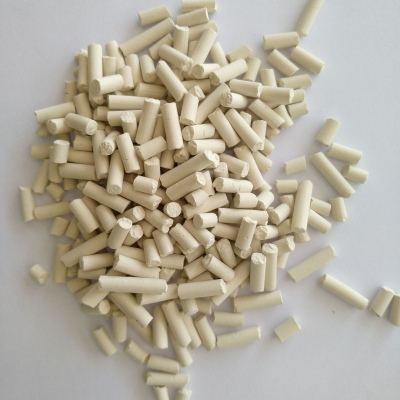
Understanding the physical and chemical properties of the catalyst is the first step in any sourcing process. The core keyword "yellow iron oxide desulfurizer" often refers to materials designed for the removal of hydrogen sulfide (H2S) from various gas streams. Based on observed product data, these materials typically appear as granules or white powders, with specific granule sizes ranging from 3 to 5 mm, 4 to 6 mm, or 5 to 8 mm. Some listings indicate a broader size range of (35) x (515) mm or even Φ3-8*3~20 mm, suggesting that buyers must verify the exact particle size distribution required for their specific reactor or bed configuration.
Bulk density is another critical parameter for logistics and reactor design. Observed values for bulk density in this category generally fall between 0.7 and 0.9 Kg/L, with specific instances noting a range of 0.75~0.9 Kg/L. This density impacts the volume of material required for a given treatment capacity and influences the structural integrity of the fixed dry bed used in the desulfurization process. The material is consistently described as a solid catalyst with a porosity factor of approximately 60%, which is essential for maximizing the surface area available for the chemical reaction.
The mechanical strength of the catalyst is equally vital to prevent attrition and dust generation during operation. Data indicates that the strength should be ≥55 N/Cm. This threshold ensures that the catalyst can withstand the pressure and flow dynamics of gas streams without crumbling, which could lead to increased pressure drop or blockage in the system. Buyers should request specific test reports confirming these strength metrics, as variations in manufacturing methods, such as mechanical mixing, can affect the final product's durability.
Application Scope and Operational Environments
The utility of yellow iron oxide desulfurizers is defined by their specific application scenarios. The primary function is H2S removal, making these catalysts indispensable in industries dealing with biogas, oilfield associated gas, landfill gas, and natural gas. The technology employed is typically a fixed dry bed process, which is well-suited for continuous operation in these environments. The sulfur capacity of the material varies significantly across different product grades, with observed ranges from 12-35% and specific high-capacity variants reaching ≥30% or 20-25%.
These variations imply that not all "yellow iron oxide" products are interchangeable. A buyer sourcing for a high-sulfur biogas stream may require a catalyst with a capacity of ≥30%, whereas a lower-sulfur application might be adequately served by a product with 12-35% capacity. The application industry is broadly categorized as "Industry," but specific use cases include sewage treatment and general chemical engineering processes. It is crucial to match the catalyst's sulfur capacity and porosity to the specific gas composition and flow rate of the intended application to ensure optimal performance and cost-efficiency.
Compliance, Certification, and Quality Standards
In the global chemical supply chain, compliance with international standards is a non-negotiable aspect of procurement. While specific certification statuses can vary by supplier, the presence of ISO9001 certification is a documented attribute for several products in this category. This certification indicates that the manufacturer has established a quality management system that meets international requirements. Buyers should verify the validity of such certifications and ensure they cover the specific manufacturing facilities supplying the catalyst.
Product standards also play a significant role in defining quality. Observed standards include diameter specifications such as 3-5mm, 4-6mm, and 5-8mm, as well as mesh sizes like 200-325mesh for powder variants. The grade standard is typically listed as "Industrial Grade," which implies the material is suitable for large-scale industrial processes but may not meet pharmaceutical or food-grade specifications unless explicitly stated. Buyers must confirm that the product meets the specific industrial standards required by their local regulations and internal quality protocols.
Additionally, the manufacturing method, such as mechanical mixing, and the form of the product (solid catalyst) should be consistent with the buyer's technical requirements. Any deviation from these parameters could affect the reaction kinetics and overall efficiency of the desulfurization process. Therefore, verifying that the supplier adheres to the stated manufacturing methods and product forms is essential for maintaining process stability.
Cost Drivers and Procurement Economics
The pricing of yellow iron oxide desulfurizer catalysts is influenced by several factors, including raw material costs, manufacturing complexity, and logistics. The observed price range for these products in the market spans from 195 to 1600 USD, reflecting the diversity in specifications, packaging, and capacity. The minimum order quantity (MOQ) is typically 1 unit, offering flexibility for small-scale trials or immediate replenishment needs. However, buyers should be aware that larger orders may yield better unit economics, though specific volume discounts are not universally guaranteed.
Packaging is a significant cost driver in the total landed cost of the product. Observed packaging options include ton bags, 800kg/25kg bags, 40kg/25kg bags, and 500kg bags, often customized according to buyer requirements. The choice of packaging affects handling costs, storage requirements, and potential material loss during transit. For instance, 800kg/Bag or 40kgs/Bag configurations are common, with some suppliers offering 800 Kg/Bag X 2 Bags/Pallet for efficient shipping. Buyers should calculate the total cost of ownership, including packaging waste and handling fees, rather than focusing solely on the unit price.
Lead times and supplier location also impact procurement costs. The origin of the products is frequently listed as Shandong, China, which suggests a specific supply chain geography. While exact lead times are not universally defined in the provided data, buyers should inquire about production schedules and shipping durations to plan their inventory effectively. The availability of free samples is another factor that can reduce the risk associated with initial procurement, allowing buyers to test the catalyst's performance before committing to large orders.
Supplier Evaluation and Verification Protocols
Evaluating potential suppliers requires a rigorous assessment of their capabilities, history, and reliability. Key attributes to verify include the supplier's factory history, which can range from 8 years to longer periods, indicating their experience and stability in the market. The ability to provide customization services is another critical factor, as many suppliers offer tailored solutions for specific particle sizes, sulfur capacities, and packaging requirements.
Buyers should prioritize suppliers who demonstrate transparency in their product attributes. For example, a supplier claiming a sulfur capacity of ≥30% should be able to provide test results or third-party verification to support this claim. Similarly, the claim of high-temperature resistance should be backed by technical data sheets that outline the operational temperature limits of the catalyst. The presence of a "Free Sample" option can be a positive indicator of supplier confidence, but it should not replace the need for a comprehensive evaluation of the supplier's quality control processes.
When assessing suppliers, buyers should also consider the breadth of their product portfolio. Some suppliers offer a range of models, such as the MT series or MT-2 Type, indicating a capacity to provide different solutions for varying needs. The ability to produce products with specific features, such as high sulfur capacity or specific granule sizes, suggests a robust manufacturing capability. Buyers should request detailed product data sheets and conduct site audits or virtual tours to verify the supplier's claims regarding their manufacturing methods and quality control measures.
Quality Control and Long-Term Procurement Strategy
Maintaining consistent quality is paramount for the long-term success of desulfurization operations. Quality control measures should include regular testing of the catalyst's sulfur capacity, bulk density, and mechanical strength. Buyers should establish clear acceptance criteria based on the observed specifications, such as a bulk density of 0.75~0.9 Kg/L and a strength of ≥55 N/Cm. Any deviation from these criteria should trigger a review of the supplier's production process.
Long-term procurement strategies should focus on building a resilient supply chain. This involves diversifying suppliers to mitigate the risk of disruption, maintaining a buffer stock of critical materials, and establishing clear communication channels for technical support. The ability of the supplier to respond to changes in demand or technical requirements is also crucial. For instance, if a buyer's gas composition changes, the supplier should be able to provide a catalyst with adjusted sulfur capacity or porosity.
Furthermore, buyers should consider the environmental and safety implications of the catalyst. While the product is an industrial-grade desulfurizer, proper handling and disposal procedures must be followed to ensure compliance with environmental regulations. The supplier should provide safety data sheets (SDS) and guidance on the safe handling of the material. By integrating these considerations into the procurement strategy, buyers can ensure a sustainable and efficient operation of their desulfurization systems.
Comparative Analysis of Product Attributes
To facilitate informed decision-making, the following table summarizes key attributes observed across different product listings for yellow iron oxide desulfurizer catalysts. This comparison highlights the variability in specifications and helps buyers identify the most suitable options for their specific needs.
| Attribute | Observed Range/Value | Typical Application Context |
|---|---|---|
| Appearance | Granule, White Powder | Visual inspection for consistency |
| Particle Size | 3-5mm, 4-6mm, 5-8mm, 200-325mesh | Reactor bed design and flow dynamics |
| Bulk Density | 0.7-0.9 Kg/L, 0.75~0.9 Kg/L | Storage volume and reactor loading |
| Sulfur Capacity | 12-35%, ≥30%, 20-25% | Gas stream H2S concentration |
| Porosity Factor | 60% | Reaction surface area efficiency |
| Mechanical Strength | ≥55 N/Cm | Resistance to attrition and crushing |
| Packaging | 25kg, 40kg, 500kg, 800kg/Bag | Logistics and handling efficiency |
| Origin | Shandong, China | Supply chain geography and lead times |
| Certification | ISO9001 (where applicable) | Quality management system verification |
This table serves as a reference point for buyers to compare different offerings and ensure that the selected catalyst meets the technical requirements of their specific application. By focusing on these verified attributes, buyers can make data-driven decisions that optimize performance and minimize operational risks.
FAQs
What is the primary application of Yellow Iron Oxide Desulfurizer Catalyst?
The primary application is H2S removal from biogas, landfill gas, and natural gas streams. This catalyst is specifically designed for use in fixed dry bed processes within chemical engineering and sewage treatment industries to ensure efficient gas purification.
Which particle sizes are available for this desulfurizer catalyst?
Available particle sizes include 3-5 mm, 4-6 mm, and 5-8 mm granules. Some variants also offer sizes ranging from 3 to 8 mm in diameter or specific dimensions like 3 to 5 mm by 5 to 15 mm depending on the model series.
Can I customize the packaging for bulk orders of this catalyst?
Yes, customization is available for packaging requirements. Options include 800 kg bags, 40 kg bags, 25 kg bags, or 500 kg bags, often arranged as two 800 kg bags per pallet for standard export shipping efficiency.
What is the sulfur capacity range for this industrial grade catalyst?
The sulfur capacity varies by product grade, typically ranging from 12% to 35%. High-capacity variants can reach 20% to 25% or exceed 30%, allowing selection based on the specific hydrogen sulfide concentration in the gas stream.
How does the bulk density affect the logistics of this product?
The bulk density generally falls between 0.7 and 0.9 kg per liter. This physical property influences the volume required for reactor design and impacts the total shipping weight and storage space needed for the fixed dry bed installation.
Which certifications are documented for these desulfurizer catalyst manufacturers?
ISO9001 certification is a documented attribute for several suppliers in this category. This indicates the manufacturer maintains a quality management system meeting international standards, though specific facility coverage should be verified during the sourcing process.
What is the minimum order quantity for purchasing this catalyst?
The minimum order quantity is typically 1 unit, offering flexibility for small-scale trials or immediate replenishment needs. This low entry point allows buyers to test product performance before committing to larger industrial-scale procurement agreements.