Source Yellow Packaging Trolley for Warehouse Retail and Hotel
Find 30 Yellow Packaging Trolley options from verified Chinese manufacturers. Compare models like yg-1120 and wire containers with steel or plastic construction, varying capacities, and custom packaging features for industrial and retail use.
Key considerations
Products List


Foldable Solid Side Roll Cage Trolley Blue Parcel Sorting Trolley Container
$135.00 - $150.00
MOQ: 1 Pieces


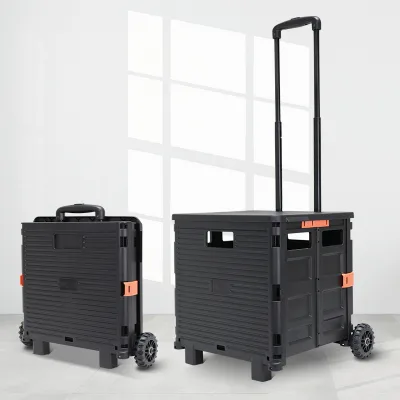


$8.58 - $68.00
MOQ: 10 pieces
Comprehensive Sourcing Guide
Strategic Sourcing Guide for Yellow Packaging Trolleys
Understanding Product Specifications and Variability
When sourcing yellow packaging trolleys, buyers must first navigate a landscape defined by significant variability in technical specifications. The term "Yellow Packaging Trolley" often serves as a broad descriptor for mobile storage and transport units used across diverse industries, ranging from warehousing to retail. Based on available market data, these units are not monolithic; they exist in various configurations, including wire mesh shelves, steel containers, and multi-level racking systems. A critical observation in the current market is the prevalence of custom color options. While the core keyword specifies "yellow," many suppliers offer "Any Color" or "Customized" finishes, allowing buyers to align logistics equipment with specific brand identities or safety color-coding protocols.
The structural integrity of these trolleys is frequently determined by the material composition. Steel remains a dominant material choice, particularly for heavy-duty applications requiring high load capacities. Data indicates specific models capable of supporting up to 1500 lbs, which is a crucial metric for industrial facilities handling bulk goods. Conversely, plastic variants are also prevalent, often weighing significantly less, with specific units recorded at approximately 1.8 kg per piece. These lighter units are typically designed for retail environments or light industrial tasks where mobility and ease of handling are prioritized over extreme durability.
Dimensions vary widely depending on the intended use case. Some units are compact, with dimensions such as 610mm in length, 400mm in width, and 400mm in height, offering a volume of roughly 48 liters. These are ideal for portable shopping baskets or small-scale inventory transport. In contrast, larger industrial trolleys and racking systems can reach substantial heights, with some specifications noting heights exceeding 15 meters for multi-level racking applications. The standard packaging dimensions for these units also vary, with observed configurations including 10070160, 12070170, and 12050160, alongside larger industrial formats like 80010001500mm. Buyers must carefully match these physical constraints to their facility's aisle widths and storage requirements.
Compliance, Certification, and Safety Standards
Ensuring that yellow packaging trolleys meet international and regional safety standards is a non-negotiable aspect of B2B procurement. While the specific regulatory environment depends on the destination market, buyers should verify that suppliers possess recognized quality management certifications. In the observed market, certifications such as ISO9001:2008 and CE marks are frequently cited, indicating adherence to quality management systems and European safety directives. These certifications are essential for validating that the manufacturing processes for steel and plastic components meet rigorous safety benchmarks.
Beyond general certifications, buyers must scrutinize specific product standards. The market data references specific standard codes, such as "10070160" and "12070170," which likely refer to dimensional tolerances or structural testing parameters rather than generic safety standards. For heavy-load applications, verifying the load capacity claims is vital. A specific observation notes a load capacity of 1500 lbs for certain steel models. However, buyers should not assume this capacity applies to all yellow trolleys. Instead, they must request test reports or engineering certificates that validate the weight-bearing limits for the specific model under consideration.
Safety features are also integral to compliance. The presence of rubber wheels is a common specification, designed to reduce noise and prevent floor damage in sensitive environments like hospitals or retail stores. The handle type, often described as "removable," adds a layer of safety and storage efficiency. For units used in food or industrial settings, the condition of the material is paramount; "New" condition is a standard expectation, but buyers should verify that the steel or plastic used is free from contaminants and suitable for the intended environment. Additionally, the "Open" structure of many wire mesh shelves allows for ventilation, which is a critical compliance factor for food storage, preventing moisture buildup and spoilage.
Cost Drivers and Pricing Dynamics
The pricing of yellow packaging trolleys is influenced by a complex interplay of material costs, customization levels, and order volume. The observed price range in the market spans from $5.23 to $4,000, a variance that reflects the spectrum from lightweight plastic baskets to heavy-duty, custom-engineered industrial racking systems. Several key factors drive these costs. Material selection is the primary driver; steel units with high load capacities and custom finishes will naturally command higher prices than standard plastic models.
Customization is another significant cost variable. The market data confirms that customization is available, including custom packaging and logo printing. These value-added services require additional production steps, such as mold creation for plastic or specialized painting for steel, which increases the unit cost. The "Yellow" color specification itself may incur a premium if it requires a specific powder-coating process or a dedicated production run, although "Any Color" options suggest that standard yellow might be a baseline offering.
Order volume plays a critical role in the final landed cost. The Minimum Order Quantity (MOQ) ranges from 1 to 1500 units. For buyers seeking to minimize upfront capital expenditure, suppliers with an MOQ of 1 are available, though the per-unit price will likely be higher. Conversely, bulk purchasers can leverage economies of scale. Specific data points indicate an MOQ of 100 pieces for certain plastic units, with a packing quantity of 12 pieces per carton. Buyers should calculate the total cost of ownership, including shipping and handling, as the net weight of units (e.g., 1.8 kg/PCS for plastic) affects freight charges.
Typical Applications and Usage Scenarios
Yellow packaging trolleys are versatile assets deployed across a wide array of sectors. The observed usage categories include warehouses, retail stores, restaurants, industrial facilities, hotels, and homes. In warehouse environments, these trolleys often function as mobile storage solutions, utilizing wire mesh shelves to organize parts and inventory. The "Multi-Level Racking" type is particularly suited for maximizing vertical space in industrial facilities, where the height of the unit can exceed 15 meters.
In retail and supermarket settings, the focus shifts to customer experience and efficiency. Portable and wheeled shopping baskets, often made of plastic, are common here. Their compact size (e.g., 610400400mm) and light weight (1.8 kg) make them easy for customers to maneuver. The "Yellow" color in these contexts often serves as a visual cue for specific zones or promotional items. For the food and beverage industry, the "Open" structure of wire mesh trolleys is advantageous for hygiene and airflow, ensuring that perishable goods remain fresh during transport.
Industrial and tool storage applications demand robustness. Steel trolleys with high load capacities (1500 lbs) are essential for moving heavy machinery parts or raw materials. The "Removable Handle" feature allows these units to be stored compactly when not in use, optimizing floor space. In hotel and hospitality settings, these trolleys are used for housekeeping and room service, where durability and ease of cleaning are paramount. The versatility of the product is further highlighted by its application in clothing storage and general tool organization, proving that a single product category can serve multiple logistical needs.
Supplier Evaluation and Operational Logistics
Selecting the right supplier requires a thorough evaluation of their operational capabilities and logistical reliability. The origin of these products is predominantly China, a major hub for manufacturing steel and plastic goods. Buyers should verify the supplier's ability to meet specific delivery timelines. Market data indicates a delivery lead time of 7 days for certain orders, which is a competitive advantage for time-sensitive procurement. However, this lead time may vary based on order complexity and customization requirements.
Payment terms are another critical factor in supplier evaluation. Standard practices observed include T/T (Telegraphic Transfer) with a 30% deposit, a common arrangement that balances risk for both parties. Buyers should ensure that the payment terms are clearly defined in the contract and align with their internal financial policies. The loading port is typically Shanghai, which is a major global shipping hub. Understanding the logistics from the loading port to the final destination is essential for accurate cost estimation and delivery planning.
Supplier reliability is often gauged by their product range and development capabilities. The presence of "New Type" developments suggests that suppliers are actively innovating, which can be beneficial for buyers seeking modern solutions. The "Serviceability" aspect, described as "Common Use," implies that the products are designed for widespread application and ease of maintenance. Buyers should also assess the supplier's capacity for custom packaging, as the market offers options ranging from stretch wrap and cartons to fully custom packaging solutions. This flexibility can significantly impact the condition of goods upon arrival and the efficiency of downstream handling.
Quality Control and Long-Term Procurement Strategy
Implementing a robust quality control (QC) strategy is essential for mitigating risks associated with bulk procurement. Given the wide range of materials and specifications, buyers should establish clear acceptance criteria before production begins. For steel units, verifying the thickness of the metal and the quality of the welds is crucial to ensure they can sustain the claimed 1500 lbs load capacity. For plastic units, checking for structural integrity and resistance to cracking under stress is necessary.
Long-term procurement considerations involve building a sustainable supply chain. The availability of a 1-year warranty on these products provides a baseline for after-sales support. Buyers should clarify the terms of this warranty, including what constitutes a defect and the process for claims. Additionally, the "Heat-Preservation" attribute, noted as "Without Heat-Preservation" for some units, indicates that these trolleys are not designed for temperature-controlled transport. Buyers must ensure that the product selection aligns with their specific storage needs; if temperature control is required, alternative solutions must be sought.
Sustainability is an emerging consideration in procurement. The use of recyclable materials like steel and certain plastics can contribute to a company's environmental goals. Buyers should inquire about the recyclability of the packaging materials, such as the "Carton and Plastic Seal" options, to minimize waste. Finally, maintaining a relationship with a supplier who offers "Customized" solutions ensures that the procurement strategy can adapt to future changes in business needs, whether that involves scaling up order volumes, changing color schemes, or modifying dimensions. By focusing on these long-term factors, buyers can secure a reliable supply of yellow packaging trolleys that support their operational efficiency and strategic objectives.
FAQs
What customization options are available for yellow packaging trolleys?
Customization is available for color, packaging, and logo printing. Buyers can select any color finish and request custom packaging solutions like stretch wrap or cartons. Logo printing is also supported for branding purposes.
How much load capacity do steel yellow packaging trolleys support?
Steel models can support up to 1500 lbs of load capacity. This high capacity makes them suitable for industrial facilities and warehouses handling bulk goods. Buyers should verify specific model ratings for heavy-duty applications.
Can I order yellow packaging trolleys with a low minimum quantity?
Yes, some suppliers offer a minimum order quantity as low as one unit. Other models may require a minimum of 100 pieces. The specific MOQ depends on the material and customization level selected by the buyer.
What certifications do Yellow Packaging Trolley manufacturers typically hold?
Manufacturers often hold ISO9001:2008 and CE certifications. These standards indicate adherence to quality management systems and European safety directives. Buyers should verify these certifications to ensure product safety and compliance.
How long does delivery take for Yellow Packaging Trolley orders?
Delivery can be completed within 7 days for certain orders. This lead time varies based on customization requirements and order volume. Buyers should confirm specific timelines with the supplier before placing an order.
Which materials are used to construct yellow packaging trolleys?
Trolleys are constructed from steel or plastic materials. Steel units offer high durability and load capacity, while plastic units are lighter and ideal for retail use. The choice depends on the intended application environment.