Source Yellow Sleeveless Tea-Length Evening Dress for Weddings
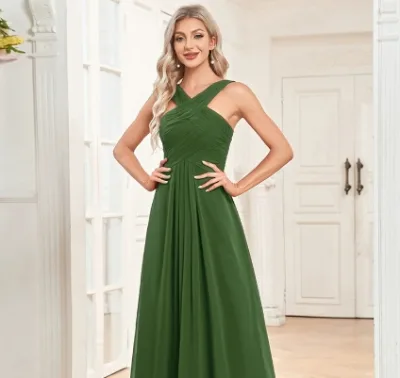
Explore 30 listings for a yellow sleeveless tea-length evening dress suitable for banquets, parties, and daily wear. Buyers can compare styles including mermaid and A-line designs with features like lace embellishment and chiffon fabric to find the right match.
Key considerations
Products List


3/4 Sleeves Lace Party Dress Prom Gown Tea Length Evening Dresses B20158
$129.00 - $159.00
MOQ: 1 Pieces


Sleeveless Short Party Cocktail Dresses Sexy Tassels Evening Gown E22142
$59.00 - $99.00
MOQ: 1 Pieces




Comprehensive Sourcing Guide
Strategic Sourcing Guide for Yellow Sleeveless Tea-Length Evening Dresses
Understanding Product Specifications and Attribute Variability
When initiating a procurement search for a yellow sleeveless tea-length evening dress, buyers must first navigate the inherent variability in product attributes found within the B2B marketplace. The core keyword implies a specific silhouette and color, yet the supplied data reveals a complex landscape where "sleeveless" and "tea-length" are often paired with diverse materials and design philosophies. In the observed inventory, sleeveless styles are frequently associated with specific fabric choices such as chiffon or satin, which directly influence the drape and formal nature of the garment. For instance, while some entries highlight a "Double Layer" construction typical of formal wear, others describe "A-Line" or "Mermaid" silhouettes that may or may not align with the traditional tea-length definition.
The color specification is a critical differentiator. The provided dataset includes a specific entry for an "Apricot" color, which falls within the yellow spectrum but differs significantly from a bright or canary yellow. Buyers must verify if the supplier's "yellow" offering matches the exact hue required for their event or collection. Furthermore, the "tea-length" specification, often defined as falling between the knee and ankle, must be cross-referenced with the "Full-Length" or "Medium" length attributes observed in the data. Some products listed as "Full-Length" may be adaptable, while others explicitly marked as "Medium" or "Long" may require customization to achieve the desired tea-length cut. The "Sleeve Style" is consistently noted as "Sleeveless" or "Strapless" in the high-confidence facts, confirming that the sleeveless requirement is a standard feature for this category, though "Short Sleeve" options also exist in the broader market.
Material Composition and Fabric Performance Analysis
The material selection is the primary driver of the dress's aesthetic and functional performance. The supplied facts indicate a prevalence of "Chiffon" and "Satin" as the dominant materials for evening and bridal wear, with "Cotton" and "Polyester" appearing in more casual or prom-oriented contexts. For a yellow sleeveless tea-length evening dress intended for formal occasions, Chiffon is often the preferred choice due to its lightweight, flowing nature, which complements the "A-Line" or "Mermaid" styles observed in the data. Satin, conversely, offers a more structured and lustrous finish, suitable for a "Double Layer" construction that adds volume and elegance.
Buyers must scrutinize the material composition carefully, as the "Polyester" entries often suggest a more budget-friendly option that may lack the breathability of natural fibers like "Cotton." The "Design" attribute, which includes "Chinese" styles in the dataset, suggests that cultural design elements might be integrated into the fabric patterns or cuts. Additionally, the "Embellishment" data points to "Lace," "Beading," and "Crystal" as common decorative features. A high-quality evening dress should ideally combine a premium base fabric with these embellishments without compromising the structural integrity of the "Sleeveless" design. The "Decoration" options listed as "None," "Crystal," or "Ruched" further indicate that the level of ornamentation is a key variable that impacts both cost and visual appeal.
Compliance, Certification, and Safety Standards
In the B2B fashion sector, compliance is not merely a formality but a critical risk management strategy. The supplied facts mention that the "prod_standard" is often "customized," which implies that suppliers may not adhere to a single universal standard but rather tailor their production to specific buyer requirements. This necessitates a rigorous verification process where the buyer must explicitly request and validate compliance with international safety standards for textiles, such as those regarding colorfastness, flammability, and chemical restrictions (e.g., REACH or CPSIA).
The "prod_origin" is listed as "China," a major manufacturing hub where quality control protocols can vary significantly between factories. Buyers should not assume that a product labeled as "customized" automatically meets the safety regulations of their target market. Instead, they must demand third-party test reports that verify the absence of harmful substances in the "Chiffon," "Satin," or "Polyester" fabrics. The "OEM" (Original Equipment Manufacturer) status being "Yes" confirms that the supplier is capable of private labeling, but it does not guarantee that the underlying materials are certified. It is essential to verify that the "Embellishment" components, such as "Beading" or "Crystal," are securely attached and free from lead or other heavy metals, particularly for garments intended for "Youth" or "25-35 Years Old" demographics.
Cost Drivers and Pricing Structure Analysis
The pricing for a yellow sleeveless tea-length evening dress is influenced by a complex interplay of factors, including material cost, labor intensity, and customization requirements. The observed price range in the market spans from $0.5 to $199, a wide disparity that reflects the difference between mass-produced polyester items and high-end satin or chiffon creations. The "MOQ" (Minimum Order Quantity) is a significant cost driver, with observed values ranging from 1 to 500, and a specific high-confidence fact noting an MOQ of 10,000 for certain customized items.
Buyers must understand that lower unit prices often correlate with higher MOQs or the use of less expensive materials like "Polyester" or "Cotton." Conversely, the "Double Layer" construction and "Lace" embellishments typically command a higher price point due to the increased labor and material usage. The "prod_packing" method, described as "Each Packed in a Polybag" or "OPP Bag," also contributes to the overall cost, especially if specialized packaging is required for premium branding. The "Custom" attribute being "Accept" suggests that bespoke orders will incur additional costs, which should be factored into the total landed cost calculation. Buyers should request a detailed breakdown of costs to distinguish between material, labor, and logistics expenses, ensuring that the final price aligns with the expected quality and design complexity.
Supplier Evaluation and Operational Capabilities
Evaluating a supplier for evening dress production requires a deep dive into their operational capabilities and historical performance. The data indicates that suppliers offer "OEM" services and accept "Custom" designs, which is a positive sign of flexibility. However, the "prod_model" codes, such as "Wedding Bridal Dress-036X" or "Evening Dresses-089G," suggest a catalog-based approach that may limit true customization unless explicitly negotiated. Buyers should verify the supplier's capacity to handle the specific "Style" requirements, such as "Sexy," "Sweet," or "Mermaid," which may require different pattern-making techniques.
The "Age Group" and "Suitable for" attributes, including "Banquet," "Party," and "Youth," provide insight into the supplier's target market and design expertise. A supplier specializing in "Wedding Bridal" may have superior skills in handling intricate "Lace" and "Beading" compared to one focused on "Prom Chiffon Dress" or "Daily" wear. The "Season" attribute, noting "Summer" or "Spring & Autumn," indicates the supplier's ability to produce garments suitable for specific climatic conditions, which is crucial for "Sleeveless" designs that rely on fabric breathability. Buyers should assess the supplier's "prod_origin" logistics, as shipping from "China" involves specific lead times and customs considerations that must be integrated into the procurement timeline.
Quality Control Protocols and Inspection Standards
Implementing a robust quality control (QC) protocol is essential to ensure that the final product matches the design specifications. The "Decoration" options, such as "Ruched" or "Crystal," require close inspection to ensure they are securely attached and do not detract from the garment's overall appearance. The "Front Fly" attribute, noted as "Zipper," necessitates a check for smooth operation and alignment, which is critical for "A-Line Skirt" or "Slip Dress" styles. The "Waist Type," specifically "MID-Waisted," must be verified to ensure it fits the intended demographic correctly.
Buyers should establish clear acceptance criteria for the "Color" consistency, especially given the variation between "Apricot" and other yellow shades. The "Pattern" attribute, which includes "Cartoon" or "Like Photos Show," highlights the importance of visual accuracy. A visual inspection should be conducted to ensure that the "Embellishment" matches the provided samples or digital proofs. For "Double Layer" dresses, the alignment of the layers and the quality of the stitching should be scrutinized to prevent issues like puckering or uneven hems. The "prod_packing" method should also be verified to ensure that the garments arrive in pristine condition, protected by the specified "Polybag" or "OPP Bag" without damage during transit.
Long-Term Procurement and Relationship Management
Sourcing a yellow sleeveless tea-length evening dress is often part of a broader, long-term procurement strategy rather than a one-off transaction. The "Custom" and "OEM" capabilities of suppliers suggest an opportunity for building a strategic partnership that can evolve with the buyer's brand. By working with suppliers who offer "customized" standards, buyers can secure exclusive designs that differentiate their offerings in the market. The "MOQ" flexibility, ranging from low quantities for testing to high volumes for mass production, allows buyers to scale their operations efficiently.
Long-term success depends on maintaining open communication regarding design updates, material changes, and compliance requirements. The "Season" and "Style" trends in the fashion industry are dynamic, and a reliable supplier should be able to adapt to these changes quickly. Buyers should consider the "Age Group" and "Suitable for" attributes when planning future collections, ensuring that the supplier can produce garments that appeal to a consistent target audience. By focusing on quality, compliance, and operational flexibility, buyers can establish a sustainable supply chain that supports their growth and brand reputation in the competitive evening wear market.
FAQs
Can I find a yellow sleeveless tea-length evening dress in satin?
Yes, satin is a documented material for evening wear in this category, though the specific color yellow is not explicitly listed in the high-confidence facts. Buyers should verify if the supplier can customize the color from the available apricot or white options to match the yellow requirement.
What is the minimum order quantity for custom evening dresses?
The minimum order quantity varies significantly, with observed values ranging from 1 to 500 units, while some customized items require an MOQ of 10,000. Buyers must check the specific product model and customization level to determine the exact threshold before placing an order.
Which sleeve styles are available for tea-length evening dresses?
Sleeveless and strapless styles are the standard options for this category, with some listings also offering short sleeves. The product facts confirm that sleeveless designs are common for evening and prom dresses, ensuring the garment remains suitable for summer or banquet occasions.
How is the packaging handled for these evening dresses?
Products are typically packed individually in either a polybag or an OPP bag to ensure protection during transit. The specific packing method depends on the product model, so buyers should confirm the packaging details with the supplier to ensure the dress arrives in pristine condition.
Can suppliers provide OEM services for custom evening dresses?
Yes, suppliers explicitly offer OEM services and accept custom designs for evening dresses. This allows buyers to request specific modifications to the style, fabric, or embellishments, provided they meet the supplier's capacity and minimum order quantity requirements.
What is the typical price range for these dresses?
The observed price range spans from 0.5 to 199 USD, reflecting differences in material quality and customization. Lower prices often correlate with polyester or cotton materials, while higher prices may indicate satin or chiffon with intricate embellishments like lace or beading.
Where are these evening dresses manufactured?
The products originate from China, which is a major manufacturing hub for this type of apparel. Buyers should consider the logistics and lead times associated with shipping from this location when planning their procurement timeline.