Source yellow polyester ratchet tie-down straps for shipping, agriculture, and outdoor gear
Compare 30 yellow polyester ratchet tie-down straps from verified suppliers. Buyers can evaluate widths from 25mm to 100mm, load capacities up to 10 tons, and custom options for cargo transportation and security applications.
Key considerations
Products List


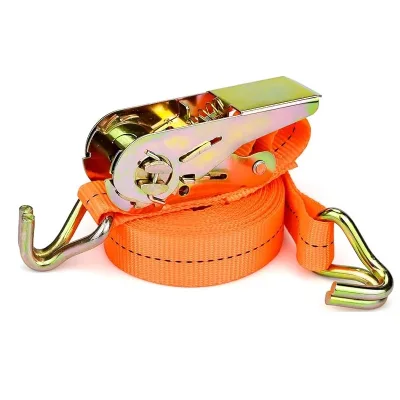


Tie Down Safety Belt Ratchet Straps with Polyester Webbing Sliver Buckle
$16.99 - $17.19
MOQ: 100 Pieces
Comprehensive Sourcing Guide
Strategic Sourcing Guide for Yellow Polyester Ratchet Tie-Down Straps
Procuring industrial-grade securing equipment requires a rigorous approach to technical verification and supplier validation. When sourcing yellow polyester ratchet tie-down straps, buyers must navigate a landscape of varying specifications, material compositions, and compliance standards. The following guide provides a structured framework for evaluating products based on verified attributes, ensuring that procurement decisions are grounded in factual data rather than marketing assertions. This analysis focuses on the specific characteristics observed in the current market, including material properties, dimensional tolerances, and load-bearing capabilities, to assist procurement professionals in making informed decisions.
Technical Specifications and Material Composition
The foundation of a reliable tie-down system lies in its material composition and dimensional consistency. The core product category under review utilizes polyester as the primary belt material. This material choice is critical for its durability and resistance to environmental degradation. Observed data indicates that polyester material is suitable for a temperature range of -40° C to 100° C, making it viable for diverse climatic conditions encountered during global logistics. The color yellow is a standard option, alongside orange, green, black, and blue, which aids in visibility and safety compliance on job sites.
Dimensional specifications vary significantly across listings, necessitating precise verification. Widths are commonly observed in ranges of 25mm, 35mm, 50mm, or can be customized up to 100mm. Specific models list widths of 35mm or 50mm, while others offer a broader range from 25mm to 100mm. Length is another variable; standard offerings include 10m lengths, though "as your request" customization is frequently available. The shape of the strap is typically square, and the end fittings are often double J-hooks made of zinc-coated metal to prevent corrosion. The ratchet mechanism itself is noted for heat treatment, a process that enhances the strength and durability of the metal components. Buyers must confirm the exact width and length requirements for their specific cargo, as the "1-4 inches" or "1-2 inch" descriptors found in some listings refer to the width in imperial units, which must be converted or matched to metric requirements.
Compliance Standards and Certification Verification
Ensuring that tie-down straps meet international safety standards is paramount for liability management and operational safety. The primary standard referenced in the product data is EN 12195-2, which governs the requirements for cargo securing devices. Compliance with this standard ensures that the straps have undergone specific testing protocols regarding breaking strength and working load limits. Additionally, certifications such as CE and GS are frequently cited, indicating conformity with European safety directives. Other certifications observed include ISO 9001 and CCS, which relate to quality management systems and specific industry approvals.
However, buyers must exercise caution when interpreting certification claims. While "Customized" is listed as a certification option, this implies that specific certifications may be tailored to the order rather than being a universal baseline for all stock items. The standard "prod_standard" field often contains values like "1-10Ton" or "1-4 inches," which appear to be descriptive of capacity or size rather than formal regulatory standards. Therefore, procurement teams should not assume that every listed product automatically satisfies EN 12195-2 or ISO 9001 without explicit verification from the supplier. The presence of a certification label should be validated against the specific batch or model number to ensure that the testing was performed on the exact configuration being purchased.
Load Capacity and Performance Metrics
Understanding the load-bearing capabilities of ratchet tie-down straps is essential for preventing cargo damage and ensuring transport safety. The data presents a wide range of capacity claims, with breaking strengths listed as high as 5000kg and working load limits described as "Custom" or ranging from 1 to 10 tons. Specific capacity observations include 5T and 10T limits, while breaking loads are noted in the 1-10t range. It is crucial to distinguish between breaking strength and working load limit (WLL). The breaking strength represents the point at which the strap will fail, whereas the WLL is the maximum load recommended for safe operation, typically a fraction of the breaking strength.
The table below summarizes the observed load and capacity metrics to highlight the variability buyers must address:
| Attribute | Observed Value Range | Verification Requirement |
|---|---|---|
| Breaking Strength | 5000kg | Confirm specific test report for the model |
| Working Load Limit | Custom / 1-10 Ton | Calculate based on safety factor |
| Capacity | 5T / 10T | Match to cargo weight requirements |
| Breaking Load | 1-10t | Verify against EN 12195-2 standards |
| Load Range | 1-10ton | Ensure compatibility with vehicle specs |
Buyers must calculate the required capacity based on the weight of the cargo and the number of straps used. Relying solely on the "1-10ton" descriptor without knowing the specific model's WLL can lead to dangerous underestimations. The "Custom" designation for WLL suggests that suppliers may adjust these limits based on the specific ratchet mechanism and strap width, making it imperative to request a technical data sheet for the specific unit being ordered.
Cost Drivers and Procurement Variables
Several factors influence the final cost of yellow polyester ratchet tie-down straps, beyond the base unit price. The primary cost drivers include the width of the strap, the complexity of the ratchet mechanism, and the level of customization required. Wider straps (e.g., 50mm vs. 25mm) require more raw material, directly impacting the price. Similarly, the heat treatment of the ratchet and the quality of the zinc coating on the hooks add to manufacturing costs. Customization options, such as specific logo printing, unique packing requirements, or non-standard dimensions, introduce additional variable costs.
The observed price range in the market spans from $0.01 to $100 USD, a vast disparity that reflects the difference between basic single straps and complete heavy-duty kits. The minimum order quantity (MOQ) also varies, ranging from 1 to 1000 units. Lower MOQs may result in a higher per-unit cost due to setup fees, while bulk orders of 1000 units often benefit from economies of scale. Packaging is another variable; while "Cartoon" (likely a typo for Carton) and "Standard" packing are common, custom packaging solutions will incur extra charges. Buyers should request a detailed breakdown of costs, including material, labor, tooling, and packaging, to understand the true cost drivers.
Supplier Evaluation and Geographic Considerations
When evaluating potential suppliers, geographic origin plays a significant role in logistics and quality assurance. The data indicates that products originate from various locations in China, including Linyi, Jiangsu, and Tianjin. Each of these regions has established manufacturing clusters for textile and hardware products, but the specific capabilities may vary. Linyi is known for its textile industry, while Jiangsu and Tianjin have strong manufacturing bases for hardware and logistics equipment.
Supplier evaluation should focus on the ability to provide consistent quality and adhere to the stated standards. Key evaluation criteria include the supplier's history with EN 12195-2 compliance, their capacity for customization, and their quality control processes. The presence of "Customized" in multiple fields suggests that many suppliers are flexible, but this flexibility must be balanced with strict quality control. Buyers should verify the supplier's production capacity to ensure they can meet lead times, especially for customized orders. Additionally, the "Feature" attribute of being "Tear-Resistant" should be validated through third-party testing reports rather than accepted as a standard claim.
Quality Control and Long-Term Procurement Strategy
Implementing a robust quality control (QC) strategy is essential for maintaining the integrity of the supply chain. Given the variability in observed specifications, buyers should mandate pre-shipment inspections that verify the strap width, length, and load ratings against the purchase order. The "Carton" or "Standard" packing should be inspected to ensure that the straps are protected from damage during transit. For long-term procurement, establishing a relationship with a supplier who offers consistent quality and reliable certification documentation is more valuable than seeking the lowest initial price.
Long-term considerations also include the availability of replacement parts and the durability of the ratchet mechanism. The "Heat Treatment" of the ratchet is a positive attribute, but buyers should inquire about the frequency of maintenance or replacement required for the hooks and ratchets. The "Applicable Scenarios" listed, such as cargo transportation, agriculture, and outdoor gear, suggest a broad utility, but the specific application should dictate the required safety factors. A strategic approach involves negotiating a long-term agreement that includes regular quality audits and guaranteed compliance with updated safety standards, ensuring that the procurement of yellow polyester ratchet tie-down straps remains a reliable component of the logistics operation.
FAQs
What material is used for yellow polyester ratchet tie-down straps?
The belt material is polyester, which offers durability and resistance to environmental degradation. This material supports a storage temperature range from -40 to 100 degrees Celsius, ensuring viability in diverse climatic conditions during global logistics operations.
Which certifications apply to these cargo securing devices?
Common certifications include CE, GS, ISO, CCS, and ISO9001, though some are listed as customized options. Buyers must verify that specific certifications like EN 12195-2 apply to the exact batch or model number being purchased rather than assuming universal compliance.
How wide can the polyester straps be customized?
Strap widths typically range from 25mm to 100mm, with common options including 35mm and 50mm. Specific models may list widths in imperial units like 1 to 4 inches, but customization is available to meet precise dimensional requirements for specific cargo loads.
What is the breaking strength of these tie-down straps?
Observed breaking strength can reach 5000kg, with breaking loads ranging from 1 to 10 tons. Buyers should distinguish this from the working load limit, which is often custom, and request technical data sheets to ensure the safety factor matches cargo weight requirements.
Can I customize the logo and packing for these straps?
Yes, customized logos and packing options like cartons or standard packaging are available. While some listings mention cartoon packing likely meaning carton, specific packaging requirements and logo printing introduce variable costs that should be confirmed with the supplier before ordering.
Where are these ratchet tie-down straps manufactured?
Products originate from various locations in China, including Linyi, Jiangsu, and Tianjin. Each region has established manufacturing clusters, with Linyi known for textiles and Jiangsu and Tianjin for hardware, so buyers should verify the specific factory location for quality assurance.
What is the minimum order quantity for these straps?
The minimum order quantity ranges from 1 to 1000 units depending on the supplier and customization level. Lower MOQs may result in higher per-unit costs due to setup fees, while bulk orders of 1000 units often benefit from economies of scale in pricing.