Alloy Steel Hobbed Spline Shaft Suppliers and Manufacturers
Compare 23 verified suppliers of alloy steel hobbed spline shafts by location, lead time, response time, and certifications. Review product attributes like hardness and precision grade before contacting factories for quotes; review the available evidence before requesting comparable quotations from suitable candidates.
Suppliers List

- Verified by TUVRHEINLAND
- Manufacturer/Factory
- China Anhui
- Lead time23 days
- Avg. response≤ 5h
Main productsFilter, Car Filter, Construction Machinery, Air Filter, Oil Filter, Color Sorter and Parts, Separator Flter, Hydraulic Filter, Air Compressor, Air Compressor Kits
Main marketsEastern Europe,Mid East,Southeast Asia,Eastern Asia,Oceania,Africa

Hangzhou Huayutai Auto Parts Co., Ltd.
- Verified by SGS
- Manufacturer/Factory
- China Zhejiang
- Lead time60 days
- Avg. response≤ 21h
Main productsDrive Shafts, Cardan Shaft, Universal Joints, U-Joints, Needle Roller, Pto Shafts, Driveline, Propeller Shafts
Main marketsSouth America,Eastern Europe,Mid East,North America,Southeast Asia,Eastern Asia,Oceania,Western Europe,Africa


Contact supplier

Contact supplier

Yuchen power transmission limited
- Verified by SGS
- Combined
- China Zhejiang
- Lead time30 days
- Avg. response≤ 11h
Main productsBelt Pulley, Shaft Collars, Gear Rack, Sprocket, Transmission Chain, Conveyor Chain, Bevel Gear, Roller Chain, CNC Machining, Metal Parts
Main marketsEurope,North America

Henan Forging Emperor Industry Co.,Ltd.
- Verified by BV
- Manufacturer/Factory
- China Henan
- Lead time45 days
- Avg. response≤ 6h
Main productsForging, Casting, Machining, Machining Parts, CNC Machining Parts, Casting Part, CNC Parts, Hot Die Forging, Machinery Parts, Customized Part
Main marketsSouth America,Eastern Europe,Mid East,North America,Southeast Asia,Eastern Asia,Oceania,Western Europe,Africa
Luoyang Deyu Machinery& Technology Co., Ltd.
- Verified by TUVRHEINLAND
- Combined
- China Henan
- Lead time60 days
- Avg. response≤ 2h
Main productsGirth Gear, Gear, Gear Shaft, Hollow Shaft, Rotary Kiln Tyre, Forgings and Castings, Mining Machinery Parts, Rolling Mill Roller, Sheave, Worm Gear
Main marketsAfrica,Southeast Asia/ Mideast,East Asia(Japan/ South Korea),Domestic,Europe,Australia,North America

Spline Shaft Hobbing Machine High Quality Keyed Shaft for Industrial Machinery
$180.00 - $200.00
MOQ: 1 Pieces


Customzied High Accuracy Shaft Spline Gear Shaft Drive Splined Hollow Hub Shaft
$180.00 - $200.00
MOQ: 1 Pieces

High Precision Stainless Steel Spline Shaft External Spline Gear Shaft
$1800.00 - $2000.00
MOQ: 1 Pieces

Jiangyin Golden Machinery Equipment Co., Ltd.
- Trading Company,Manufacturer/Factory
- China Jiangsu
- Lead time23 days
- Avg. response≤ 11h
Main productsForged Ring, Forged Shaft, Forging Wheel, Forged Gear, Forged Flange, Forged Cylinder, Forging Products, Forging Ring, Forging Shaft, Forging Gear
Main marketsSouth America,Eastern Europe,Mid East,North America,Southeast Asia,Eastern Asia,Oceania,Western Europe,Africa

WUXI WEICHENG CARDANSHAFT CO., LTD.
- Verified by TUVRHEINLAND
- Combined
- China Jiangsu
- Lead time15 days
- Avg. response≤ 13h
Main productsCardan Shaft, Universal Shaft, Universal Jiont, Drive Shaft, Jiont, Flange, Spline Shaft, Universal Joint Pin
Main marketsEurope
Luoyang Deyu Machinery& Technology Co., Ltd.
- Verified by SGS Group
- Manufacturer, Trading Company
- Lead time30 days
- Avg. response≤ 4h
Main productsGear, Shaft, Mill Roller, Coupling, Mining Machinery Parts
Main marketsDomestic Market(50%), Eastern Europe(23%), South Asia(13%)
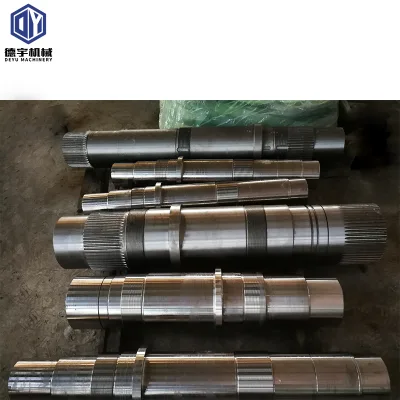
Custom Forged Steel Transmission Large Propeller Gear Shaft Spline Shaft
$90.00 - $100.00
MOQ: 1 pieces
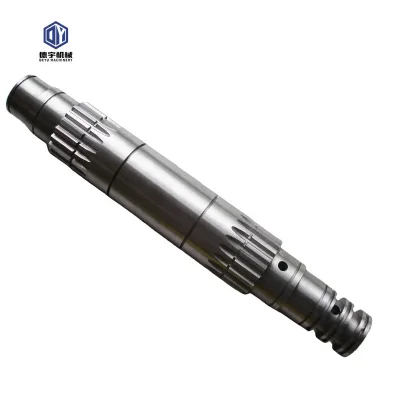
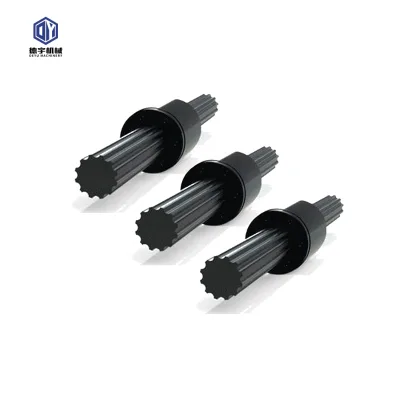
Spline Shaft Gear Oem Forged Drive Stainless Steel Shaft for Heavyduty Equipment
$200.00 - $300.00
MOQ: 1 pieces
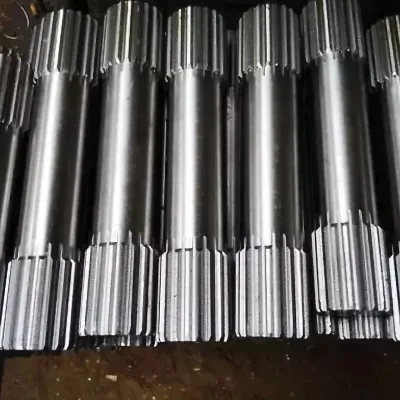
$670.00 - $700.00
MOQ: 1 pieces
Luoyang Wangli Heavy Machinery Co., Ltd.
- Verified by SGS
- Combined
- China Henan
- Lead time60 days
- Avg. response≤ 1h
Main productsGear, Shaft, Girth Gear, Gear Shaft, Segment Gear, Mining Machinery Parts, Cement Machinery Parts, Custom Nonstandard Large Machinery Parts
Main marketsOthers(foreignTradeCapacity.exportBusinessCapacityMarketOther),Southeast Asia/ Mideast,Europe,Australia

Nanjing Technical Equipment Manufacture Co., Ltd.
- Verified by TUVRHEINLAND
- Combined
- China Jiangsu
- Lead time45 days
- Avg. response≤ 3h
Main productsBall Screw, Linear Guideway, Roller Guide, Ball Spline, Ball Bushing
Main marketsSouth America,Southeast Asia/ Mideast,East Asia(Japan/ South Korea)
Shanghai Hafeige Industrial Co., ltd.
- Verified by BV
- Trading Company
- China Shanghai
- Lead time30 days
- Avg. response≤ 23h
Main productsOhv Spare Parts, Wheel Motor Spare Parts, Industrial Motors
Main marketsNorth America

Jinjiang Feida Machinery Co., Ltd
- Verified by SGS
- Manufacturer
- China Fujian
- Lead time30 days
- Avg. response≤ 2h
Main productsGear, Geared Parts, Toothed Shafts, Transmission Parts, Gear Rack, Bevel Gears, Ring Gear, Axle, Machining Parts, Sheet Metal Parts
Main marketsOthers(foreignTradeCapacity.exportBusinessCapacityMarketOther),Southeast Asia/ Mideast,Domestic,Europe


ISO9001 Factory Customized Machining Precision Transmission Components Metal Steel Spur Gear Shaft
$0.50 - $100.00
MOQ: 100 Pieces
Wenling Huirong Machinery Co., Ltd.
- Verified by TUVRHEINLAND
- Manufacturer/Factory
- China Zhejiang
- Lead time45 days
- Avg. response≤ 17h
Main productsGear, Spur Gear, Gear Shaft, Helical Gear, Motorbike Gear, Truck Gear, Timing Belt Pulley, Sprocket

High Efficiency Spline /Straight Stainless Steel Motor Shaft Manufacturer
$8.00 - $15.00
MOQ: 200 Pieces


Ningbo Yinzhou Hisea Machinery Co., Ltd.
- Manufacturer/Factory
- China Zhejiang
- Lead time23 days
- Avg. response≤ 1h
Main productsCNC Machining Parts, Investment Casting Parts, Stamping, Forging, Welding Service, Metal Fabricating Service, Laser Cutting Service, Die Casting, Metal Deep Drawn, Stainless Steel Accessories
Main marketsSouth America,Eastern Europe,Mid East,North America,Southeast Asia,Eastern Asia,Oceania,Western Europe,Africa

Shanxi Fuding International Trade Co.,Ltd.
- Manufacturer/Factory
- China Shanxi
- Lead time23 days
- Avg. response≤ 2h
Main productsCNC Parts, Fabrication Assembly, Stamped Parts, Mold Injection, Forging, Hydraulic Components, Bollard, Dice
Main marketsSouth America,Eastern Europe,Mid East,North America,Southeast Asia,Eastern Asia,Oceania,Western Europe,Africa

Baoding Xinlongtongda Trade Co., Ltd.
- Trading Company
- China Hebei
- Lead time30 days
- Avg. response≤ 12h
Main productsInvestment Casting, Sand Casting, Die Casting, Lost Wax Casting, CNC Machining, Ratchet Tie Down, Precision Casting, Forging, Stamping Parts, Steel Casting
Main marketsDomestic,Europe,North America

Ningbo Micro Precision Machining Manufacturing Co., Ltd.
- Verified by BV
- Combined
- China Zhejiang
- Lead time15 days
- Avg. response≤ 1h
Main productsPrecision Shaft, Micro Shaft, Motor Shaft, Custom Shaft, Stainless Steel Shaft, Precision Pin, Dowel Pin, Spacer, CNC Turned Parts, Custom CNC Machining Parts
Main marketsSouth America,Africa,Southeast Asia/ Mideast,East Asia(Japan/ South Korea),Europe,Australia,North America
Luoyang Yujie Industry&Trade Co., Ltd.
- Verified by BV
- Combined
- China Henan
- Lead time60 days
- Avg. response≤ 2h
Main productsCNC Milling Machine, CNC Boring Machine, CNC Machining Center, Gantry Milling Machine, Gantry Machining Center, Horizontal Boring Machine, Vertical Milling Machine, CNC Lathe, Non-Standard Machinery Parts, Bearing
Main marketsSouth America,Southeast Asia/ Mideast,Europe,North America

SHANGHAI TOTEM MACHINERY CO., LTD.
- Verified by TUVRHEINLAND
- Manufacturer/Factory
- China Shanghai
- Lead time90 days
- Avg. response≤ 2h
Main productsMachining Parts, Forging Parts, Casting Parts, Shaft, Gear, Tilting Pad Bearing, Thrust Shaft, Rotor Shaft, Babbit Bearing, Cylinder
Main marketsSouth America,Eastern Europe,Mid East,North America,Southeast Asia,Eastern Asia,Oceania,Western Europe,Africa

OEM High Speed Steel Double Helical Spline Gear Shaft for Gearbox Reducer
$699.00 - $1233.00
MOQ: 1 Pieces

Custom Large Non-Standard Steel Spline Shaft Forging Gear Shaft for Mining Machine
$89.00 - $599.00
MOQ: 1 Pieces


Xiamen Changchun Import & Export Co., Ltd.
- Trading Company,Manufacturer/Factory
- China Fujian
- Lead time60 days
- Avg. response≤ 1h
Main productsBolt, Nut, CNC Machining Parts, CNC Turning Part, Milling Cutter, Self-Tapping Screw, Non-Standard Screw, Machnical Screw, Combination Screw
Main marketsSouth America,Eastern Europe,Mid East,North America,Southeast Asia,Eastern Asia,Oceania,Western Europe,Africa

Customized Long Connecting Shaft Cylinder Shaft Stainless Steel Shaft Hollow on Both Side Shaft
$0.20 - $0.30
MOQ: 1000 Pieces


Cylinder Shaft Half Hollow Connecting Shaft Customized Hollow Stainless Steel Shaft
$0.20 - $0.27
MOQ: 1000 Pieces

Qingdao Bacsoont Industry and Trade Co., Ltd.
- Verified by SGS
- Trading Company,Manufacturer/Factory
- China Shandong
- Lead time23 days
- Avg. response≤ 1h
Main productsCasting, Forging, Machining, Engineering Machinery Parts, Mining Machinery Parts, Oil Industry Parts, Electric Industry Spare Parts, High Manganese Steel Bushing
Main marketsSouth America,Eastern Europe,Mid East,North America,Southeast Asia,Eastern Asia,Oceania,Western Europe,Africa

Hunan Shunfu Metal Material Co., Ltd.
- Verified by CTI
- Trading Company
- China Hunan
- Lead time23 days
- Avg. response≤ 13h
Main productsSteel Pipe
Main marketsSouth America,Southeast Asia/ Mideast,East Asia(Japan/ South Korea),Europe,Australia
Huizhou Haobang Precision Technology Co., Ltd
- Verified by SGS
- Manufacturer/Factory
- China Guangdong
- Lead time0 days
- Avg. response≤ 23h
Main productsPrecision CNC Automatic Lathes, CNC Lathes, Precision Metal Shaft, Medical Part


Comprehensive Sourcing Guide
Alloy Steel Hobbed Spline Shaft Supplier Concentration and Factory Types
Current data indicates a concentration of manufacturing capabilities in specific Chinese provinces, with Anhui and Zhejiang emerging as notable hubs for industrial machinery components. Suppliers in these regions often list diverse product portfolios including filters, air compressors, and various shaft types, suggesting a mature ecosystem for precision metalworking. The presence of manufacturers and factories in these locations implies a direct supply chain for alloy steel components, reducing the need for intermediate trading layers. Buyers should prioritize regions where the supplier type is explicitly defined as a Manufacturer or Factory to ensure direct access to production lines. This structural advantage often correlates with better control over material sourcing and machining tolerances for complex items like hobbed spline shafts.
When evaluating the factory type, it is crucial to distinguish between pure manufacturers and combined entities that may blend trading and production activities. Some suppliers in the results are categorized as Combined, which might indicate a broader range of services but potentially less direct oversight of the specific hobbing process. The presence of OEM and ODM capabilities in the capacity data suggests that many facilities are equipped to handle custom specifications rather than just standard off-the-shelf inventory. Buyers must verify if the facility possesses the specific CNC turning and hobbing machinery required for alloy steel, as general machining shops may lack the specialized tooling for high-precision spline profiles. Understanding this distinction helps in filtering for suppliers who can guarantee the metallurgical and geometric integrity of the final shaft product.
How to Verify Alloy Steel Hobbed Spline Shaft Suppliers
Verification of supplier credentials is a critical step that relies on third-party audit reports and specific certification markers found in the data. Several suppliers in the current results display verification status from recognized bodies such as TÜV Rheinland and SGS, which serve as external validations of their operational standards. These certifications often cover quality management systems like ISO 9001, which is explicitly listed for some manufacturers. Buyers should treat these verification badges as primary evidence of a supplier's commitment to maintaining consistent quality control processes, rather than relying solely on self-reported claims. The presence of these marks indicates that the facility has undergone rigorous assessment regarding their production capabilities and management systems.
Beyond general certifications, buyers must scrutinize specific product certifications and material standards to ensure compliance with industry requirements. Some product listings in the data reference certifications such as API, while others list standards like ASME, TEMA, JIS, and GB codes. These specific references are vital for alloy steel components used in automotive, agricultural, or heavy machinery applications where failure is not an option. A supplier claiming to produce alloy steel spline shafts should be able to provide documentation linking their specific production batches to these recognized standards. If a supplier lacks these specific product-level certifications, the buyer should request proof of material testing and dimensional inspection reports before proceeding with any order.
What to Compare Across Alloy Steel Hobbed Spline Shaft Suppliers
Comparing suppliers requires a systematic analysis of operational metrics such as response time, lead time, and minimum order quantities to determine logistical fit. The data reveals significant variance in response times, ranging from approximately 4.45 hours to over 20 hours, which directly impacts communication efficiency during the design and negotiation phases. Lead times also differ substantially, with some suppliers indicating a 23-day turnaround while others require up to 60 days. These differences are critical for buyers managing tight production schedules, as a longer lead time may necessitate earlier planning or higher safety stock levels. Buyers should prioritize suppliers whose response and lead time metrics align with their specific project timelines to avoid bottlenecks.
Minimum order quantities and pricing structures provide another layer of comparison essential for cost and volume planning. Current product evidence shows MOQs varying from as low as one unit to as high as 500 units, depending on the specific product configuration and customization level. Price ranges also fluctuate, with some items listed between $1.80 and $2.00, while others span from $10.00 to $75.00. These variations often reflect differences in material costs, machining complexity, and the extent of customization required. Buyers must evaluate whether the lower MOQs come with a premium per unit or if the higher MOQs offer significant economies of scale. Understanding these commercial parameters allows for a more accurate total cost of ownership calculation beyond just the unit price.
Common Alloy Steel Hobbed Spline Shaft Sourcing Risks
One significant risk in sourcing alloy steel spline shafts involves the potential mismatch between advertised capabilities and actual production capacity. While many suppliers list OEM and ODM services, the specific manufacturing method for the spline profile, such as hobbing versus cutting, may vary. Some product attributes mention cast gears or specific machining methods like CNC turning, which might not be suitable for all alloy steel applications requiring high hardness and precision. Buyers must verify that the supplier's stated manufacturing method matches the technical requirements of the spline shaft to avoid receiving components with incorrect metallurgical properties or surface finishes. This discrepancy can lead to premature failure in high-load applications like automotive or agricultural machinery.
Another critical risk relates to the consistency of material quality and adherence to specified standards across different production batches. Although some listings mention standards like DIN or GB, the actual material composition of the alloy steel may vary if the supplier sources raw materials from multiple vendors. The data indicates that some products are marked as "Used" or have specific condition attributes, which could be confusing for new component procurement. Buyers should be wary of suppliers who do not explicitly confirm the grade of alloy steel or the heat treatment process used. Without clear verification of material traceability and hardness testing, there is a risk of receiving shafts that do not meet the required durability or performance specifications for the intended application.
Alloy Steel Hobbed Spline Shaft Regional Sourcing and Logistics
Regional sourcing strategies should focus on the specific logistical advantages offered by suppliers in China, particularly those located in Anhui, Zhejiang, and Henan. These provinces host a dense network of manufacturers capable of producing industrial machinery parts, which can streamline the supply chain for alloy steel components. The proximity of these manufacturing clusters to major ports facilitates efficient export logistics, potentially reducing shipping times and costs for international buyers. However, buyers must account for the specific location of each supplier, as inland facilities in Henan might have different shipping dynamics compared to coastal hubs in Zhejiang. Understanding these geographic nuances helps in selecting a supplier that balances cost efficiency with delivery speed.
Logistics planning must also consider the packaging and handling requirements for precision shafts to prevent damage during transit. Product attributes in the data specify packing methods such as wooden boxes, carton boxes, or specific dimensions like 500mm500mm500mm. These packaging details are crucial for protecting the delicate spline surfaces and ensuring the shafts arrive in perfect condition. Buyers should verify that the supplier's packaging standards align with the fragility of the alloy steel components and the shipping method chosen. Inadequate packaging can lead to deformation or surface damage, rendering the precision shafts unusable. Therefore, confirming the packaging protocol is a key step in the regional sourcing and logistics assessment process.
Alloy Steel Hobbed Spline Shaft Commercial Terms and Order Planning
Commercial terms and order planning require a detailed review of customization options, payment structures, and delivery commitments to ensure a smooth transaction. The data indicates that customization is widely available across suppliers, with options for specific models, materials, and surface treatments. This flexibility allows buyers to tailor the alloy steel spline shafts to exact application needs, but it also introduces complexity in defining the final product specifications. Buyers must clearly articulate their requirements regarding hardness, toothed portion shape, and gear position to avoid misunderstandings that could delay production. Clear communication of these technical details is essential for securing a supplier who can deliver the precise component required.
Order planning must also account for the variability in production capacity and the potential for delays due to high demand or material shortages. While some suppliers offer rapid response times, the lead times can extend up to 60 days, which requires careful scheduling on the buyer's part. Buyers should plan their orders well in advance, considering the supplier's stated lead time and any potential buffer needed for quality inspections. Additionally, the availability of escrow services or specific payment terms should be verified to protect the buyer's financial interests. By aligning the order timeline with the supplier's capacity and lead time, buyers can mitigate the risk of production delays and ensure a steady supply of high-quality alloy steel spline shafts for their operations.
FAQs
What is the price range for alloy steel spline shafts?
Prices for alloy steel spline shafts typically range from 0.30 to 75.00 USD per unit. The final cost depends on specific customization needs, material grades, and order volume. Some suppliers offer low minimum order quantities starting at one piece, while others require larger batches.
How long does it take to receive these shafts?
Lead times for alloy steel spline shafts vary between 23 and 60 days depending on the supplier. Manufacturers in China Anhui and Zhejiang often report different production schedules. Buyers should confirm specific delivery windows before placing orders to ensure alignment with project timelines.
Are these shafts available for custom manufacturing?
Yes, customization is available for alloy steel spline shafts across multiple suppliers. Options include custom models, specific hardness levels, and tailored toothed portion shapes. Many manufacturers support both OEM and ODM services to meet unique application requirements for automotive or agricultural machinery.
What certifications do these suppliers hold?
Suppliers offering alloy steel spline shafts hold various certifications including ISO 9001, API, and SGS verification. Some products also meet standards like ASME, TEMA, and JIS Code. Buyers should verify specific certification documents for each supplier to ensure compliance with industry safety and quality requirements.
Where are the manufacturers of these shafts located?
Manufacturers of alloy steel spline shafts are located in China Anhui, China Zhejiang, and China Henan. These regions host factories specializing in forging, casting, and CNC machining. Buyers can filter results by these specific locations to find suppliers with relevant production capabilities and logistics advantages.
What is the minimum order quantity for these parts?
Minimum order quantities for alloy steel spline shafts range from 1 to 500 units depending on the product type. Some standard items allow orders as low as one piece, while specialized stub shafts may require 500 units. Buyers should check specific product listings for exact MOQ constraints.
How quickly do suppliers respond to inquiries?
Supplier response times for alloy steel spline shaft inquiries vary from 4.45 to 20.14 hours. Faster responses are often associated with manufacturers in specific regions. Buyers seeking urgent support should prioritize suppliers with lower response time metrics to ensure timely communication during the sourcing process.