Sausage Tying Machine Suppliers and Manufacturers
Explore 16 verified options for Sausage Tying Machine suppliers and manufacturers in China. Compare locations, certifications, lead times, and prices to find the right fit. Contact suppliers directly to request quotes and verify specifications; review the available evidence before requesting comparable quotations from suitable candidates.
Suppliers List

Henan Chanda Machinery Co., Ltd
- Verified by TUVRHEINLAND
- Trading Company,Manufacturer/Factory
- China Henan
- Lead time15 days
- Avg. response≤ 3h
Main productsFood Machine, Vegetable Cutting Machine, Bun Making Machine, Roti Making Machine, Samosa Making Machine, Skin Vacuum Packing Machine, Peeling Machine, Tablet Press Machine, Noodle Boiler, Meat Cutting Machine
Main marketsSouth America,Eastern Europe,Mid East,North America,Southeast Asia,Eastern Asia,Oceania,Western Europe,Africa

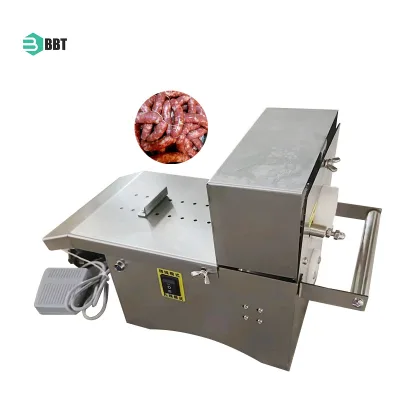
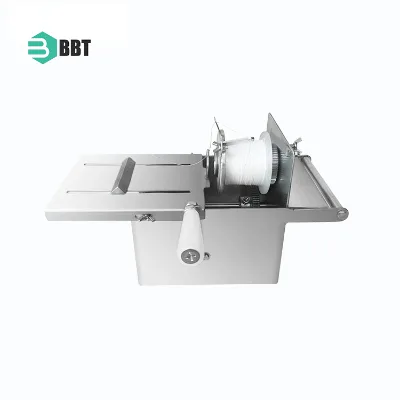
Sausage Tying Linking Machine Sausage Binding Wire Machine Sausage Knotting Machine
$180.00 - $330.00
Moq: 1


ZHE JIANG HORUS APPLIANCE CO., LTD.
- Verified by TUVRHEINLAND
- Manufacturer/Factory
- China Zhejiang
- Lead time0 days
- Avg. response≤ 9h
Main productsSausage Filler, Meat Grinder, Bone Saw Machine, Meat Slicer, Kebab Slicer, Spice Grinder, Flour Mill Machine, Juicer Machine, Planetray Mixer, Dough Mixer

Henan Chuang Qin Mechanical Equipment Co., Ltd.
- Verified by TUVRHEINLAND
- Manufacturer/Factory
- China Henan
- Lead time15 days
- Avg. response≤ 4h
Main productsCoffee Roaster, Meat Processing Machinery, Flour Food Machinery, Vegetable and Fruit Processing Machine, Egg Processing Machine, Snack Food Machinery, Packaging Machine
Main marketsSouth America,Eastern Europe,Mid East,North America,Southeast Asia,Eastern Asia,Oceania,Western Europe,Africa

Zhucheng Shuke Machinery Technology Co., Ltd.
- Verified by TUVRHEINLAND
- Combined
- China Shandong
- Lead time15 days
- Avg. response≤ 2h
Main productsFood Machine, Meat Grinder, Sausage Stuffer, Smoker Oven, Meat Chopper Machine, Meat Cutter Machine, Meat Vacuum Tumbler, Shape Cutting Machine, Meat Cutting Machine, Stuffing Mixer
Main marketsAustralia


Automatic Sausage Knot Tying Machine for Improving Sausage Processing Efficiency!
$1670.00 - $6100.00
Moq: 1


Luohe Juyou Commercial & Trading Co., Ltd.
- Verified by BV
- Trading Company,Manufacturer/Factory
- China Henan
- Lead time15 days
- Avg. response≤ 6h
Main productsDumpling Machine, Tortilla Pita Bread Machine, Meat Cutting Machine, Dough Divider Machine, Dough Mixer Machine, Meat Dicing Machine, Potato Chips Machine, Frying Machine, Packing Machine, Juice Machine
Main marketsSouth America,Eastern Europe,North America,Southeast Asia,Eastern Asia,Western Europe,Africa

Ham Knot Tying Machine Sausage Tie Machine Sausage Tying Machine Sausage Linker Tying Machine
$1450.00 - $1600.00
Moq: 1


Stainless Steel Sausage Linker Knot Tying Machine for Sausage Sausage Tying Machine
$2030.00 - $2150.00
Moq: 1


Vipstar Machinery Technology Co., Ltd.
- Verified by SGS
- Trading Company
- China Hebei
- Lead time15 days
- Avg. response≤ 7h
Main marketsSoutheast Asia/ Mideast


Sausage Linking Twisting Knotting Tying Machine/ Fully Automatic Sausage Tying Machine
$8000.00 - $9500.00
Moq: 1

Factory Supplying Automatic Sausage Tying Machine Sausage Binding Machine Sausage Tie Linker
$8000.00 - $9500.00
Moq: 1

Sausage Linking Electric Sausage Tie Machine Manual Sausage Linking Linker Knotting Tying
$9000.00 - $9500.00
Moq: 1

Electric Sausage Tying Machine High Quality Sausage Making Machine Tie Linker
$2600.00 - $11500.00
Moq: 1

ZHE CHENG HONGXIN MACHINRERY FACTORY
- Verified by TüVRheinland
- Manufacturer, Trading Company
- Henan, China
- Lead time15 days
- Avg. response≤ 3h
Main productsIntestine Case Cleaning Machine, Sesame Peeling Machine, Cardboard Expanding Shredder Machine, Flax Brake, Grain Thresher Machine
Main marketsDomestic Market(40%), Southeast Asia(20%), Africa(20%)

Zhengzhou Hento Machinery Co., Ltd.
- Verified by SGS
- Trading Company,Manufacturer/Factory,Group Corporation
- China Henan
- Lead time15 days
- Avg. response≤ 6h
Main productsMeat Processing Machinery, Egg Processing Machinery, Dairy Processing Machinery, Fruit & Vegetable Processing Machinery, Grain Product Making Machines, Snack Machines, Nuts Processing Machinery, Packing Machines, Drying Machines, Commodity Making Machines
Main marketsSouth America,Eastern Europe,Mid East,North America,Southeast Asia,Eastern Asia,Oceania,Western Europe,Africa

Automatic Quantitative Sausage Linking Machine / Sausage Casing Tying Machine
$1250.00 - $1625.00
Moq: 1


Electric Quantitative Sausage Tying Machine / Automatic Sausage Filling Machine
$1525.00 - $1985.00
Moq: 1

Zhengzhou Jawo Machinery Co., Ltd.
- Verified by TUVRHEINLAND
- Manufacturer/Factory
- China Henan
- Lead time15 days
- Avg. response≤ 5h
Main productsSausage Making Machine, Dumpling Machine, Frozen Meat Cutter, French Fries Production Line, Garlic Separator, Egg Grading Machine, Sand Blasting Machine, Metal Detector, Embroidery Machine, Spray Dryer
Main marketsSouth America,Eastern Europe,Mid East,North America,Southeast Asia,Eastern Asia,Oceania,Western Europe,Africa

Sausage Tying Machine Sausage Production Line Automatic Sausage Making Machine
$1000.00 - $2200.00
Moq: 1


Huaray Food Machinery (Shijiazhuang) Co., Ltd
- Verified by SGS
- Combined
- China Hebei
- Lead time30 days
- Avg. response≤ 1h
Main productsVacuum Sausage Filler, Sausage Production Line, Bowl Cutter, Vacuum Stuffer, Frozen Meat Cutting Machine, Brine Injection, Meat Grinder, Meat Mixer, Smokehouse, Meat Slicer
Main marketsDomestic


Automatic Sausage Tying Machine & Sausage Linker Machine for Commercial Sausage Processing
$12500.00 - $15500.00
Moq: 1


High Speed Automatic Sausage Tying Machine for Hot Dog Frankfurter Link Sausage Making
$12500.00 - $15500.00
Moq: 1

Zhejiang Horus Industry And Trade Co., Ltd.
- Manufacturer, Trading Company
- Lead time旺季: "1 - 50":15,"> 50":"To be negotiated", 淡季: "1 - 50":15,"> 50":"To be negotiated"
Main productsMeat Grinder, Powder Grinder, Sausage Stuffer, Bone Saw, Flour Mill
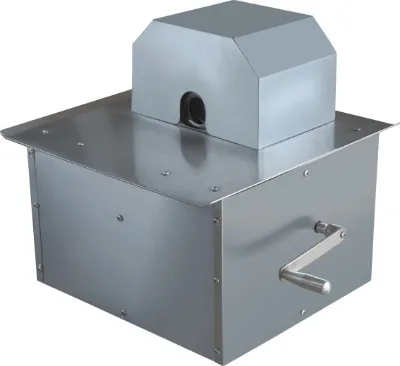
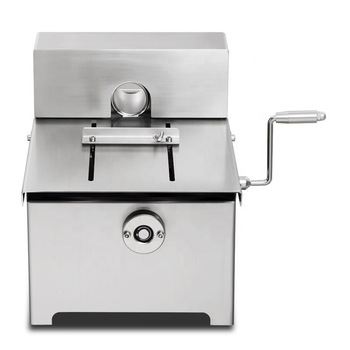
Best Quality Low Cost Sausage Casing Tying Machine Sausage Tie Making Machine
$185.00 - $200.00
Moq: 1

Zhengzhou Merson Machinery Co., Ltd
- Verified by BV
- Combined
- China Henan
- Lead time30 days
- Avg. response≤ 15h
Main marketsSoutheast Asia/ Mideast
- Verified by Intertek
- Trading Company
- Lead time7 days
- Avg. response≤ 2h
Main productsFruit Vegetable Machine, Meat Processing Machine, Pastry Bakery Machine, Snack Machine, Feed Processing Machine

Zhengzhou Honest Machinery Co., Ltd.
- Trading Company,Manufacturer/Factory
- China Henan
- Lead time15 days
- Avg. response≤ 6h
Main productsFood Machinery, Packing Machines, Microwave Equipment, Drying Machines, Grain Product Making Machines, Commodity Making Machines, Texitle Machines, Construction Machinery
Main marketsSouth America,Eastern Europe,Mid East,North America,Southeast Asia,Eastern Asia,Oceania,Western Europe,Africa


High Performance Sausage Clipper Machines / Sausage Casing Tying Machine Price
$1189.00 - $1689.00
Moq: 1

Zhucheng Yido Intelligent Technology Co., Ltd.
- Verified by SGS
- Combined
- China Shandong
- Lead time15 days
- Avg. response≤ 4h
Main productsMeat Processing Equipment Production Line, Fruit and Vegetable Processing Equipment, Potato Chips Production Line, Fish Processing Production Line, Pet Food Production Line, Auxiliary Equipment, Cleaning Equipment, Pastry Processing Equipment, Leisure Food Processing Machinery, Vacuum Packaging Machine
Main marketsSoutheast Asia/ Mideast,Europe,North America

ZHENGZHOU MAICHENG MACHINERY CO.,LTD
- Verified by SGS
- Trading Company,Manufacturer/Factory
- China Henan
- Lead time23 days
- Avg. response≤ 8h
Main productsAutomatic Cartoning Machine, Packing Machine, Food Processing Machine, Disposable Wooden/Bamboo Cutlery Processing Mach, Charcoal/Coal Briquette Machine, Agriculture Machine, Waste Recycling Machine
Main marketsSouth America,Eastern Europe,Mid East,North America,Southeast Asia,Eastern Asia,Oceania,Western Europe,Africa


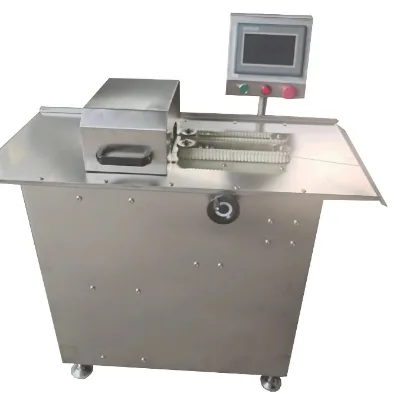
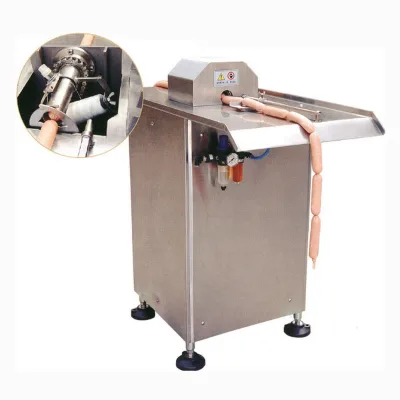
Latest Design Automatic Sausage Tying Machine Electric Tying Machine for Sausage
$2200.00 - $2680.00
Moq: 1






Comprehensive Sourcing Guide
Sausage Tying Machine Supplier Concentration and Factory Types
Buyers searching this category will find suppliers concentrated in a small number of Chinese provinces, and the supplier listings themselves confirm this pattern. Results in this category show suppliers based in Henan and Zhejiang, two provinces that appear repeatedly in food processing machinery sourcing. Henan-based listings in this search combine trading company and manufacturer/factory company types, while the Zhejiang supplier presents itself purely as a manufacturer/factory. This distinction matters: a factory listing suggests direct production control over the tying and knotting mechanisms, whereas a trading company may aggregate products from several workshops and can be useful when you want to consolidate sausage fillers, meat grinders, and tying machines in one order. Check which type each candidate actually is before assuming factory-direct pricing.
The supplier profiles also reveal a spread of product portfolios that signals different levels of specialization. Some listings come from suppliers whose main products are overwhelmingly meat processing items such as sausage fillers, meat grinders, bone saws, and meat slicers, which suggests deep category focus. Others list broad food machinery ranges including vegetable cutters, bun makers, and noodle boilers, alongside tying machines. Neither profile is automatically better, but specialized suppliers are more likely to offer engineering support for knotting mechanisms, while generalist food machinery suppliers may suit buyers building a full production line. Record the company type and portfolio for every candidate before deeper verification.
How to Verify Sausage Tying Machine Suppliers
Verification should start with the credentials that are actually displayed in supplier results, because this category shows meaningful variation. One Henan supplier in the current results holds ISO 9001, ISO 13485, and GMP system certifications and is verified through TÜV Rheinland, which is an unusually strong verification package for food machinery listings. A Zhejiang factory shows ISO 9000 certification, and product-level listings within its catalog claim CE and CCC/CE certification on specific models. Third-party platform verification and system certifications are not the same thing, so log them separately. Also note that a displayed certification applies to a management system or a specific product listing, not automatically to every model in a catalog.
Beyond displayed credentials, verify what the listing does not prove. Product attributes can state stainless steel construction, 220V electric power, and factory-supplier status, but you should still request material certificates for food-contact parts, photos or video of the knotting mechanism running, and confirmation that the claimed automatic or semi-automatic grade matches your line. Some listings advertise OEM and ODM capability plus an own brand, which you should confirm by asking for customization examples rather than accepting the label. Finally, verify the export history for your destination market, since voltage, plug type, and food-safety documentation requirements differ by region and a supplier experienced in one market may be new to yours.
What to Compare Across Sausage Tying Machine Suppliers
Build a comparison sheet using the dimensions suppliers actually publish. Lead time is directly comparable in this category: one Henan listing shows a 15-day lead time, while one Zhejiang supplier shows no meaningful lead time value at all, so you must ask that supplier to commit to a date in writing. Response time is another published metric, and the current results range from roughly 2.9 hours to nearly 8.9 hours average response. Fast response matters when you are iterating on knotting tension, clip size, or sausage diameter specifications during sampling. MOQ varies dramatically: some manual and compact tying machines list an MOQ of one unit, while a Zhejiang model lists ten pieces, which changes your sampling budget considerably.
Compare technical and commercial attributes side by side. Published prices in this category span roughly 145 to 330 dollars for compact and manual units, and up to about 1,850 to 2,050 dollars for a heavier electric knot-tying machine with a 750W motor, so clarify which machine class you are pricing. Compare sausage diameter ranges such as 32/42/52mm, capacity figures such as 48kg/h or stated pieces per hour, power, weight, and machine dimensions. Also compare establishment year where shown, warranty terms such as the one-year guarantee stated on one model, and whether customization is offered. Escrow availability is another supplier-label dimension worth recording where the platform displays it.
Common Sausage Tying Machine Sourcing Risks
The most common risk in this category is specification drift between listing and delivered machine. Listings advertise automatic grade, voltage, material, and sausage diameter ranges, but these attributes are self-reported. A machine described as automatic may in practice require manual feeding, and stainless steel may refer only to the frame rather than food-contact surfaces. Mitigate this by requiring a pre-shipment video of the machine tying sausages at your target diameter, and by specifying in the contract which components must be stainless steel. Warranty claims are a second risk area; one listing states a one-year guarantee, but you should define in writing what the warranty covers, who pays shipping for replacement parts, and how technical support is delivered after the warranty period.
Certification risk is equally significant. System certifications such as ISO 9001 shown on a supplier profile do not certify the tying machine itself, and product-level claims like CE or CCC on one model do not extend automatically to a customized variant. If your market requires documented compliance, request the actual certificate documents and verify their scope and validity rather than relying on badge images. A third risk is mismatch between supplier type and expectations: a trading company listing may forward technical questions to a third factory, adding days to every exchange. Confirm who answers engineering questions and who holds spare parts inventory before you place a deposit.
Sausage Tying Machine Regional Sourcing and Logistics
Where a displayed location exists, use it for logistics planning. Henan and Zhejiang are the provinces represented in the current results, and both are established inland and coastal-adjacent manufacturing regions for food machinery respectively. Zhejiang's proximity to major ports generally simplifies container consolidation, while Henan shipments may route through a coastal port after inland transport, which can add a few days and cost. Because the suppliers here also sell complementary equipment — sausage fillers, meat grinders, bone saws, dough mixers, and packaging machines — ask whether multiple machines can ship in one consolidated container, which materially reduces per-unit freight. Packing matters too: listings mention standard export cartons, honeycomb boxes, and wooden cases, and heavier 130kg machines on wooden pallets or in wooden cases require different handling than a 6kg tabletop unit.
Where no location fact is available to you, do not guess the cluster; instead identify it yourself. Filter candidate suppliers by province, check whether their main product lists concentrate in meat processing machinery, and request factory address proof before auditing. For logistics, compare published lead times across suppliers — a 15-day production lead time is meaningful data, while a blank or zero field is an open question — and add inland transport, port cut-off, and vessel time to build a realistic delivery date. Confirm Incoterms early, since door-to-door shipping service is advertised on some listings and changes who arranges customs clearance.
Sausage Tying Machine Commercial Terms and Order Planning
Commercial terms in this category are workable for both small and volume buyers, but they differ sharply between suppliers. Some compact and manual tying machines list an MOQ of a single unit with prices in the low hundreds of dollars, making pilot testing cheap; a Zhejiang model requires ten pieces. Plan your first order around the smallest configuration that lets you test knot quality at your sausage diameters, then negotiate volume pricing for repeat orders. Confirm the payment structure, whether any platform escrow option applies, and the currency, since published price ranges such as 180–330 or 1,850–2,050 dollars are typically starting quotes rather than final landed costs. Ask exactly what customization is included in the quoted price.
Order planning should map published attributes against your production calendar. A 15-day lead time still needs sampling time, quality inspection, and freight added, so build a buffer of several weeks for first orders. For the heavier electric models, confirm the wooden case packaging and machine weight so your freight forwarder can quote accurately, and verify voltage at order stage because 220V listings may need modification for your market. Lock the warranty scope — one year is stated on at least one model — plus lifetime technical support commitments in writing, and schedule a pre-shipment inspection covering knot integrity, diameter compatibility across the stated 32/42/52mm range, and safety guarding before releasing the balance payment.
FAQs
What is the price range for sausage tying machines?
Prices for sausage tying machines typically range from $145 to $2,050 depending on the model and automation level. Basic manual or semi-automatic units are available at the lower end, while fully automatic commercial models with higher capacity command premium pricing. Buyers should check specific product listings for exact costs.
What is the minimum order quantity for these machines?
The minimum order quantity varies by supplier and model. Some manufacturers accept a single unit as the MOQ, while others require a minimum of 10 pieces. Buyers should verify the specific MOQ for their chosen model, as it directly impacts initial procurement costs and inventory planning for small businesses.
Where are sausage tying machines manufactured?
These machines are primarily manufactured in China, with specific production hubs located in Henan and Zhejiang provinces. Suppliers in these regions offer various models, including automatic and semi-automatic options. Buyers can filter results by location to prioritize suppliers from these established manufacturing centers for potential logistics advantages.
What certifications do sausage tying machines have?
Common certifications include ISO 9001, ISO 13485, GMP, CE, and CCC. These standards ensure quality management and safety compliance for food processing equipment. Buyers should verify specific certification documents for each machine model to ensure they meet local regulatory requirements and international safety standards for commercial use.
What is the typical lead time for delivery?
Lead times vary significantly, with some suppliers listing 15 days for production and delivery. Other suppliers may indicate zero days, suggesting ready stock or immediate availability. Buyers should confirm the exact lead time with the supplier before ordering, as production schedules and shipping methods can affect the final delivery date.
What materials are used in sausage tying machines?
Most sausage tying machines are constructed from stainless steel to ensure hygiene and durability in food processing environments. This material resists corrosion and is easy to clean. Buyers should confirm the specific grade of stainless steel used to ensure it meets food safety standards and provides long-term reliability in commercial kitchens.