Antibacterial Trekking Socks Suppliers and Manufacturers
Compare 11 verified suppliers offering Antibacterial Trekking Socks with varying lead times, MOQs, and certifications. Review response times and product attributes like material and thickness before requesting quotes from these sources; review the available evidence before requesting comparable quotations from suitable candidates.
Suppliers List

Foshan Qixiang Textile Co., Ltd
- Verified by TUVRHEINLAND
- Combined
- China Guangdong
- Lead time15 days
- Avg. response≤ 9h
Main productsSocks
Main marketsDomestic


Trail Hiking Socks Anti Slip Sole Anti Wear Breathable Sweat Wicking Socks
$0.86 - $1.25
MOQ: 100 Pairs


Summer Hiking Socks Mesh Breathable Quick Dry Moisture Wicking Anti Odor Socks
$0.86 - $1.25
MOQ: 100 Pairs


Sichuan Chenhai International Trade Co., Ltd.
- Trading Company
- China Sichuan
- Lead time0 days
- Avg. response≤ 3h
Main productsSocks, Lingerie

$2.60 - $2.90
MOQ: 1500 Pairs

- Verified by SGS Group
- Manufacturer, Trading Company
- Lead time7 days
- Avg. response≤ 3h
Main productsSocks
Main marketsNorth America(18%), Central America(13%), Eastern Europe(11%)
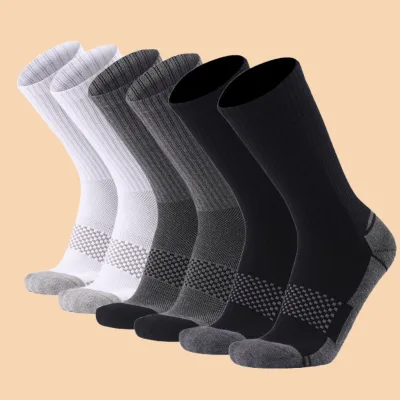
Hot Selling Outdoor Sports Knitted Crew Socks Men Women Anti-sweat Thermal Camping Hiking Socks
$0.27 - $0.32
MOQ: 3 pairs

- Verified by CTI
- Trading Company
- China Zhejiang
- Lead time30 days
- Avg. response≤ 4h
Main productsSocks, Men Socks, Sports Socks, Cotton Socks, Custom Socks, Women Socks, Baby Socks, Grip Socks, Crew Socks, Dress Socks
Main marketsSoutheast Asia/ Mideast


Hiking Walking Socks Unisex Wicking Cotton Cushion Long Tube Crew Socks with Arch Support
$1.85 - $3.50
MOQ: 100 Pairs


Shanghai Lingtech Technology Co., Ltd.
- Trading Company,Manufacturer/Factory
- China Shanghai
- Lead time15 days
- Avg. response≤ 13h
Main productsESD and Cleanroom Autoclavable Garments, ESD and Cleanroom Autoclavable Shoes, ESD and Cleanroom Fabric, ESD Work Gloves, Safety Shoes, Clean Wiper, Cleanroom Products, ESD Products, Cleanroom Project and Equipment, Autoclavable Garments and Laundry
Main marketsSouth America,Mid East,North America,Southeast Asia,Eastern Asia,Africa

Jurong Yuanfeng Industries Ltd.
- Verified by BV
- Trading Company
- China Jiangsu
- Lead time23 days
- Avg. response≤ 4h
Main productsBandana, Multi Tube Bandana, Baseball Caps, Beanie, Handkerchiefs, Socks, Durag, Head Band, Wrist Band, Head Wear
Main marketsEurope,North America

- Verified by TUVRHEINLAND
- Trading Company,Manufacturer/Factory
- China Chongqing
- Lead time38 days
- Avg. response≤ 4h
Main productsBaseball Cap, Beanie Hat, Trucker Hat, Bucket Hat, Snapback Hat, Scarf, Gloves, Apron, Sock, T Shirt&Polo Shirt
Main marketsSouth America,Eastern Europe,Mid East,North America,Southeast Asia,Eastern Asia,Oceania,Western Europe,Africa


Premium Custom Cotton Ankle Socks for Men - Breathable and Anti-Bacterial
$0.60 - $2.00
MOQ: 200 Pairs


- Verified by CTI
- Combined
- China Zhejiang
- Lead time30 days
- Avg. response≤ 2h
Main productsCottton Sock, Crew Sock, Kids Sock, Adult Sock, Men Sock, Sports Sock, Pilates Sock, Football Sock, Ankle Sock
Main marketsEurope,Australia,North America

High Elasticity Breathable Anti-Bacterial Men Cotton Custom Logo Sports Crew Socks
$0.49 - $1.95
MOQ: 100 Pairs

Custom High Elasticity Anti-Bacterial Breathable Cotton Unisex Men Sport Crew Socks
$0.49 - $1.95
MOQ: 100 Pairs


Custom Logo Unisex Adult Breathable Anti Bacterial Sport Cotton Crew Socks
$0.49 - $1.95
MOQ: 100 Pairs


Shanghai Jspeed Industry Co., Ltd.
- Verified by BV
- Trading Company
- China Shanghai
- Lead time60 days
- Avg. response≤ 4h
Main productsMen/Women Swimwear, Underwear, Bra, Socks, Men/Women Pants, Men/Women Jackets, Dress, Sportwear, Skirt, Shirt
Main marketsEurope

- Verified by CTI
- Trading Company
- China Anhui
- Lead time23 days
- Avg. response≤ 1h
Main productsFurniture, Home Furniture
Main marketsSoutheast Asia/ Mideast

Zhejiang Wensang Knitted Garment & Technology Co., Ltd.
- Combined
- China Zhejiang
- Lead time60 days
- Avg. response≤ 7h
Main productsMerino Wool Underwear, Merino Wool Shirt, French Linen
Main marketsEurope,Australia,North America


Comprehensive Sourcing Guide
Antibacterial Trekking Socks Supplier Concentration and Factory Types
Current data indicates that verified suppliers for this category are concentrated in specific manufacturing hubs within China, with Guangdong and Sichuan provinces appearing as primary locations for production. These regions host a mix of combined entities and trading companies that specialize in hosiery and outdoor apparel. The presence of suppliers in Guangdong suggests a mature supply chain for textile manufacturing, while Sichuan-based entities often focus on broader apparel categories including lingerie alongside socks. Buyers should verify the specific factory address for each listing, as the distinction between a manufacturer and a trading company significantly impacts production control and customization capabilities.
When evaluating the company type, it is essential to distinguish between pure manufacturers and combined entities that may also function as trading companies. Some suppliers in the results are identified as manufacturers or trading companies, while others are listed strictly as trading companies. This distinction matters because manufacturers typically offer more direct control over the knitting method and material composition, such as the polyester or cotton blends found in the product attributes. Buyers must confirm whether the supplier can directly manage the "OEM Service" and "Customized Design Accepted" requirements without relying on third-party intermediaries, which can introduce delays or communication gaps during the production of technical hiking gear.
How to Verify Antibacterial Trekking Socks Suppliers
Verification of supplier credibility relies heavily on third-party audit reports and specific certification badges displayed in the supplier profile. In the current dataset, some suppliers have undergone verification by major bodies like TÜV Rheinland and SGS Group, which provides a baseline level of trust regarding their business legitimacy and operational stability. However, not all suppliers in the search results display these verification badges, and some show a system certification status of NIL. Buyers must actively check for these specific verification marks rather than assuming all listed suppliers have undergone the same rigorous background checks, as the absence of a badge does not necessarily indicate a problem but requires further due diligence.
Beyond general business verification, buyers should scrutinize specific product certifications that relate to the functional claims of the socks, such as antibacterial properties. While some suppliers in the results list Oeko-Tex 100 certification, which addresses harmful substances in textiles, this does not automatically confirm the specific antibacterial performance of the trekking socks. Buyers need to request detailed test reports for the specific product attributes like "Anti-Bacterial" and "Moisture Wicking" to ensure the claims are backed by laboratory data. Relying solely on the supplier's self-declared features without independent verification of the material composition, such as the specific cotton content or synthetic blends, can lead to receiving products that do not meet the required performance standards for outdoor activities.
What to Compare Across Antibacterial Trekking Socks Suppliers
Comparing suppliers requires a detailed analysis of key operational metrics including lead time, minimum order quantity, and response speed to ensure alignment with project timelines. The data shows significant variation in these areas; for instance, response times range from approximately 2.69 hours to over 8 hours, and lead times vary from immediate availability to standard 15-day windows. Some suppliers list a lead time of zero, which may indicate stock availability, while others require longer production cycles. Buyers should prioritize suppliers with response times under three hours for urgent inquiries and verify if the stated lead times apply to custom orders or standard stock items, as this distinction affects the overall procurement schedule.
Minimum Order Quantity (MOQ) and pricing structures are equally critical factors when comparing potential partners for this category. The observed MOQs range widely, from as low as 10 pairs for certain styles to 1,500 pairs for specialized merino wool options, reflecting different production capabilities and business models. Price points also fluctuate based on material and complexity, with ranges observed from roughly $0.85 to $2.90 per pair. Buyers must calculate the total cost of ownership by factoring in these MOQs, as a lower unit price might be offset by a high minimum order requirement that ties up capital. It is essential to match the supplier's MOQ and price range with the buyer's specific volume needs and budget constraints before proceeding to sample requests.
Common Antibacterial Trekking Socks Sourcing Risks
One significant risk in sourcing this category involves the discrepancy between claimed material properties and actual product specifications. While product attributes often list features like "Anti-Bacterial," "Breathable," and "Moisture Wicking," the underlying fabric composition can vary, with some items listing polyester content and others specifying cotton blends. Without explicit verification of the antibacterial treatment method or the specific percentage of functional fibers, buyers risk receiving socks that fail to perform in high-sweat environments. The variation in material content, such as the 60% main fabric ingredient in some listings versus the 30-50% cotton content in others, highlights the need for strict material verification to ensure the functional claims are met.
Another critical risk is the inconsistency in packaging and standardization across different suppliers, which can complicate logistics and inventory management. Product attributes show diverse packing methods, ranging from simple plastic bags to custom cartons or paper boxes, with some suppliers offering fully customized packaging while others use standard formats. This lack of uniformity can lead to confusion regarding shipping costs and storage requirements, especially when mixing orders from multiple suppliers. Furthermore, the absence of standardized product dimensions or weight specifications in some listings, such as the missing weight data for certain items, creates uncertainty about the final product quality and shipping volume, necessitating clear communication on packaging standards before order confirmation.
Antibacterial Trekking Socks Regional Sourcing and Logistics
Geographic location plays a pivotal role in determining shipping efficiency and potential logistics costs for buyers sourcing trekking socks. The current supplier pool is concentrated in China, specifically within the Guangdong and Sichuan provinces, which are established textile manufacturing hubs. Guangdong, in particular, is known for its robust export infrastructure and proximity to major ports, often facilitating faster shipping times for international orders. Buyers should verify the specific city or district of the supplier within these provinces, as local logistics networks can vary significantly even within the same province, impacting the final delivery timeline and freight costs.
When planning logistics, buyers must account for the specific shipping requirements associated with the product attributes and packaging methods. Some suppliers utilize standard carton packing, while others specify express bags or paper boxes, which can affect the dimensional weight and overall shipping volume. The origin location, confirmed as Guangdong China or general China in the data, dictates the export procedures and potential customs clearance times. Buyers should request detailed shipping terms from each supplier to understand if they handle export documentation or if the buyer is responsible for arranging freight forwarders, as this responsibility can shift based on the supplier's location and their standard operating procedures for international trade.
Antibacterial Trekking Socks Commercial Terms and Order Planning
Commercial terms for this category often include specific customization options such as OEM services, custom logos, and design acceptance, which must be clearly defined in the purchase agreement. The data indicates that many suppliers accept custom designs and logos, but the extent of these services varies, with some offering fully customized packaging and others providing standard options. Buyers need to clarify the scope of customization, including the minimum order quantities required for custom runs, as some suppliers may have higher MOQs for personalized items compared to their standard stock offerings. Understanding these terms is crucial for planning production schedules and ensuring that the final product meets the brand's specific identity requirements.
Order planning must also consider the financial terms and payment structures associated with the suppliers, including any escrow services or payment milestones. While the current data does not explicitly detail all payment terms, the presence of verification badges like SGS and TÜV Rheinland suggests a level of financial security for transactions. Buyers should inquire about the specific payment schedule, such as deposits and balance payments, and whether escrow services are available to protect funds until the goods are shipped and verified. Additionally, the lead time of 15 days or zero for some suppliers must be factored into the overall order timeline, ensuring that production and shipping align with the buyer's market launch dates or inventory replenishment cycles.
FAQs
What is the typical lead time for trekking socks?
The typical lead time for trekking socks is 15 days based on current supplier data. Some suppliers may offer faster turnaround times, but 15 days is the standard expectation for production and shipping. Buyers should confirm specific timelines with their chosen vendor before placing orders.
Do suppliers offer custom logo services for hiking socks?
Yes, multiple suppliers accept custom logo requests for hiking socks. This service allows buyers to brand products with their own designs. Customization options often include specific knitting methods and packaging styles to meet unique business requirements for retail or promotional use.
What is the minimum order quantity for Antibacterial Trekking Socks?
Minimum order quantities vary by product, ranging from 10 to 1500 pairs. Basic athletic styles often start at 10 pairs, while specialized Merino wool options may require 1500 pairs. Buyers must check specific product listings to determine the exact MOQ applicable to their order size.
Are the hiking socks available in unisex sizes?
Yes, many hiking socks are available in unisex sizes. Some products feature a one-size-fits-all design suitable for adults. Other options specify medium sizes or specific foot lengths, ensuring a proper fit for various users engaging in outdoor activities like trekking or cycling.
What certifications do the sock suppliers hold?
Some suppliers hold Oeko-Tex 100 certification for their textile products. Others may have verification from groups like SGS or TÜV Rheinland. Buyers should verify specific certification status for each supplier to ensure compliance with safety and quality standards required for their market.
How quickly do suppliers typically respond to inquiries?
Response times vary among suppliers, with some responding within 2.69 hours and others taking up to 8.37 hours. Faster response times indicate higher availability for communication. Buyers seeking urgent assistance should prioritize suppliers with documented quick response metrics for better service.
What materials are used for moisture-wicking trekking socks?
Materials include polyester, cotton, and Merino wool depending on the specific product. Some socks feature high elasticity and breathable designs for comfort. Buyers can find options with specific fabric content percentages to match their performance needs for hiking, running, or daily exercise.