Antique Industrial Bar Stool Suppliers and Manufacturers
Compare 15 verified suppliers offering Antique Industrial Bar Stool with varying lead times, response speeds, and locations in China. Review product specifications like material and warranty before contacting factories for quotes; review the available evidence before requesting comparable quotations from suitable candidates.
Suppliers List

Foshan Shuaige Furniture Co., Ltd.
- Verified by TUVRHEINLAND
- Combined
- China Guangdong
- Lead time23 days
- Avg. response≤ 4h
Main productsWedding Chair, Wedding Table, Dining Furniture, Dining Chair, Dining Table Set, Stainless Steel Chair, Wedding Furniture, Wedding Backdrop, Banquet Furniture, Hotel Chair and Table
Main marketsDomestic

Langfang Airun Imp. & Exp. Co., Ltd.
- Verified by BV
- Trading Company
- China Hebei
- Lead time15 days
- Avg. response≤ 10h
Main productsDining Table, Coffee Table, Dining Chair, Hotel Chair, Leisure Chair, Plastic Chair, Metal Chair, Fabric Covered Chair, TV Stand, Sideboard
Main marketsSouth America,Africa,Southeast Asia/ Mideast,Europe,North America

Industrial Chairs Vintage Metal Bar Stool Cheap Restaurant Bar Stool with Wood Seat
$7.20 - $13.00
MOQ: 100 Pieces

Wholesale Vintage Industrial Antique Style Bar Stool Chair Metal Counter Kitchen Bar Stool
$7.20 - $13.00
MOQ: 100 Pieces


Tianjin Kingnod Furniture Co., Ltd.
- Verified by BV
- Manufacturer/Factory
- China Tianjin
- Lead time23 days
- Avg. response≤ 3h
Main productsDining Chair, Restaurant Chair, Office Chair, Bar Stool, Game Chair, Plastic Chair, Metal Chair, Dining Table, Gaming Table, Barstool
Main marketsSouth America,Eastern Europe,Mid East,North America,Southeast Asia,Eastern Asia,Oceania,Western Europe,Africa

Modern Night Club Counter Height Industrial Wooden Metal Bar Stool with Back
$15.99 - $20.99
MOQ: 200 Pieces

Vintage Industrial High Metal Bar Stools Chair with Footrest Counter Height Stools
$8.71 - $10.59
MOQ: 200 Pieces


Modern Steel Frame High Back Chairs Colorful Industrial Bistro Dining Bar Stool
$9.90 - $11.90
MOQ: 200 Pieces


Fujian Dongyi Shenghui International Trade Co., Ltd.
- Verified by SGS
- Combined
- China Fujian
- Lead time15 days
- Avg. response≤ 1h
Main productsHotel Furniture, Apartment Furniture, Dining Restaurant Banuqet Furniture, Church Furniture, Movie Theater Furniture, Opera House Furniture, KTV Furniture, Office School Stadium Furniture
Main marketsEurope

Tianjin Bchair Import and Export Trade Co., Ltd.
- Verified by SGS
- Trading Company
- China Tianjin
- Lead time23 days
- Avg. response≤ 1h
Main productsDining Chairs, Dining Table, Benches, Ottomans, Tolix Chairs, Bar Table, Restaurant Chair, Lounge Chair
Main marketsSouth America,Eastern Europe,Mid East,North America,Western Europe

TIANJIN CHRCASE FURNITURE TECHNOLOGY DEVELOPMENT CO., LTD.
- Verified by SGS
- Trading Company
- China Tianjin
- Lead time15 days
- Avg. response≤ 6h
Main productsOffice Chair, Gaming Chairs, Chair Accessories, Dining Chair, Coffee Chair, Plastic Chair, Bar Chair, Hardware Products, Furniture Spare Parts
Main marketsAfrica,Europe

Hebei ChangXin Import and Export Trade Co., Ltd.
- Verified by SGS
- Trading Company
- China Hebei
- Lead time15 days
- Avg. response≤ 18h
Main productsTV Stand, Dining Chair, Office Chair, Dining Table, Bar Chair, Coffee Table
Main marketsEurope

Popular Antique Design Modern China Bent Wood Bar Stool with PU Leather, Stool Bar
$25.00 - $40.00
MOQ: 50 Pieces


- Verified by SGS
- Trading Company
- China Guangdong
- Lead time60 days
- Avg. response≤ 14h
Main productsSofa Dining Table Bed Chair Coffee Table, Living Room Furniture, Dining Room Furniture, Bedroom Furniture, Hotel Furniture, Office Furniture, Outdoor Furniture, Mattress
Main marketsSouth America,Eastern Europe,Mid East,North America,Southeast Asia,Eastern Asia,Oceania,Western Europe,Africa


Modern Padded Bar Stool Comfortable Design with Elegant Armrests and Metal Legs
$300.00 - $1000.00
MOQ: 1 Pieces

Zhongshan Uptop Furnishings Co., Ltd.
- Verified by BV
- Combined
- China Guangdong
- Lead time15 days
- Avg. response≤ 2h
Main productsRestaurant Furniture, Restaurant Table and Chair, Hotel Table and Chair, Cafeteria Table and Chair, Bar Table and Chair, Canteen Furniture, Plastic Chair, Cafe Furniture, Contract Furniture, Commercial Furniture
Main marketsSouth America,Africa,Southeast Asia/ Mideast,East Asia(Japan/ South Korea),Europe,Australia,North America

- Verified by TUVRHEINLAND
- Combined
- China Guangdong
- Lead time30 days
- Avg. response≤ 1h
Main productsDesigner Replica Chairs, Designer Tables, Fiberglass Chairs, Lounge Chairs, Leisure Chairs, Metal Wire Chairs, Office Sofas, Living Room Sofas, Commercial Furniture, Furniture
Main marketsEurope

Modern Restaurant Club Velvet Fabric Leather Counter Height Stool Bar Chair Barstool
$90.00 - $100.00
MOQ: 10 Pieces


Foshan Orient Industry Co., Ltd.
- Verified by BV
- Combined
- China Guangdong
- Lead time30 days
- Avg. response≤ 6h
Main productsStairs, Railing, Cabinets, Windows and Doors, Wooden Door, Furniture
Main marketsDomestic

Orient Industrial Adjustable Height Bar Stool Round Seat Vintage Look Interior Furniture
$50.00 - $300.00
MOQ: 1 Sets

Orient Bar Stool with Metal Seat and Backrest Vintage Look Interior Furniture
$50.00 - $300.00
MOQ: 1 Sets

Guangzhou Mega Import and Export Co., Ltd.
- Verified by TUVRHEINLAND
- Trading Company
- China Guangdong
- Lead time30 days
- Avg. response≤ 4h
Main productsOffice Chair, Office Table, Office Cubicle, Restaurant Furniture, Conference Table, Office Sofa, Executive Desk, Restaurant Sofa, Hotel Furniture, Executive Furniture
Main marketsEurope,North America

Burgundy Leather Bar Stool with Metal Frame – Commercial Bar & Pub Seating
$129.00 - $199.00
MOQ: 10 Pieces


Backrest Chair High Stool High Bar Chair Metal Commercial Furniture Bar
Contact supplier
MOQ: 10 Pieces

Langfang Ruiyi Furniture Co., Ltd.
- Verified by TUVRHEINLAND
- Trading Company,Manufacturer/Factory
- China Hebei
- Lead time60 days
- Avg. response≤ 2h
Main productsDining Chair, Dining Table, Accent Chair, Sofa Chair, Coffee Table, Lounge Chair, Cabinet, Glass TV Stand, Side Table, Tea Table
Main marketsSouth America,Eastern Europe,Mid East,North America,Southeast Asia,Eastern Asia,Oceania,Western Europe,Africa

Seat with Backrest Bar Stools Tall Industrial Vintage Metal Bar Chairs Metal Dining Chair
$26.00 - $28.00
MOQ: 100 Pieces


Quanzhou Wolf Household Goods Co., Ltd.
- Manufacturer, Trading Company
- Fujian, China
- Lead time0 days
- Avg. response≤ 3h
Main productssofa,bar chair,Change the shoe stool,Various types of furniture,Furniture Customization
Main marketsNorth America(10.00%)

Guangdong Hongye Furniture Group Co., Ltd.
- Combined
- China Guangdong
- Lead time30 days
- Avg. response≤ 7h
Main productsOffice Furniture, Office Table, Office Chair, Meeting Table, Meeting Chair, Executive Table, Executive Chair, File Cabinet, Executive Desk, Staff Chair
Main marketsDomestic,Europe,Australia,North America




Comprehensive Sourcing Guide
Antique Industrial Bar Stool Supplier Concentration and Factory Types
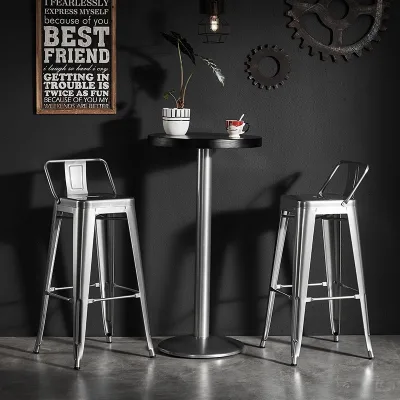
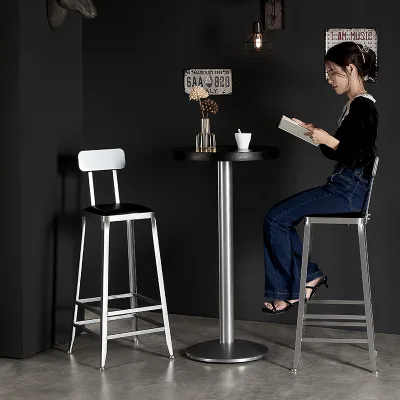
Sourcing results for this category show a clear concentration of suppliers across several Chinese provinces, including Guangdong, Hebei, and Tianjin. Each cluster has a distinct character. Guangdong suppliers in these results list wedding, banquet, and hotel furniture among their main products, with stainless steel and metal bar stools offered in gold, silver, and rose gold frame finishes at very low minimum order quantities. Hebei results are dominated by trading companies specializing in vintage and industrial-style metal stools with wood seats in retro color options, while Tianjin entries include a manufacturer and factory type listing bar stools, dining chairs, and gaming furniture among core lines. Understanding which type sits behind a listing is the first step in supplier assessment.
Three company types appear in this category: manufacturers and factories, trading companies, and combined operations. A factory listing may offer OEM and ODM customization and direct control over production, while a trading company may aggregate multiple workshops and provide broader product ranges but add a margin. Combined suppliers can do both. The buyer should confirm which structure applies, because it affects customization depth, communication channels, and accountability when defects arise. Company type labels displayed on a profile are a starting signal, not proof; always ask the supplier directly to confirm its role, factory address, and whether it manufactures the stool frames in-house or subcontracts.
How to Verify Antique Industrial Bar Stool Suppliers
Verification begins with third-party inspection status. In the current results, some suppliers carry on-site verification badges from recognized inspection bodies such as TÜV Rheinland or Bureau Veritas, while others show no system certification at all. A missing certification is not automatically disqualifying, but it shifts the burden of proof onto the buyer. For any supplier without a displayed audit, request recent factory audit reports, business licenses, and photographs or video walkthroughs of the welding, powder-coating, and upholstery areas relevant to metal bar stool production. Verified badges should also be checked for scope and date, since a badge covers the audited entity at a point in time, not every product listed.
Product-level evidence provides a second verification layer. Some listings in this category include detailed attribute tables covering material, frame color options, packing configuration, standard dimensions, and origin, while others provide sparse data. Suppliers who document their products thoroughly are generally easier to hold to a specification. Ask each shortlisted supplier for a physical sample before committing, and compare weld quality, finish adhesion, footrest reinforcement, and seat stability against the sample when bulk goods arrive. Finally, test responsiveness directly: recorded response times in these results range from under three hours to more than nine, and a supplier who replies slowly during the quotation stage is unlikely to improve once a deposit is paid.
What to Compare Across Antique Industrial Bar Stool Suppliers
Build a comparison table with the dimensions these supplier profiles actually display: location, company type, verification status, main products, response time, lead time, and the minimum order quantity and price range of representative listings. In the current results, lead times range from roughly two weeks to nearly a month, and one supplier quotes twenty to twenty-five days for stainless steel bar stools while another quotes fifteen to thirty days for vintage metal stools. MOQs differ dramatically by product: some stainless steel bar stools list a minimum of just two pieces, other metal stools require one hundred pieces, and a factory option mixes two hundred pieces with other items to fill a container. These gaps directly affect sample orders and pilot runs.
Response time and main-product alignment deserve equal weight. A supplier whose core catalog is dining, hotel, and restaurant seating is more likely to hold relevant tooling than one listing bar stools as a side item, even if prices look attractive. Note which suppliers advertise customization capability, since industrial and antique finishes frequently require specific powder-coat colors, distressed treatments, or wood-seat options. Warranty statements also vary; one listing in these results claims a warranty of more than three years, which should be confirmed in writing with claim conditions. Do not assume every supplier publishes every attribute—establishment year and escrow availability, for example, are absent from some profiles, so ask for anything missing rather than inferring it.
Common Antique Industrial Bar Stool Sourcing Risks
The most frequent risk in this category is finish inconsistency. Antique and vintage appearances depend on deliberate distressing, brushed metal textures, or aged powder coats, which are inherently variable between production runs. A sample that looks perfectly aged can be followed by bulk goods with patchy coating or mismatched tones. Mitigate this by approving a golden sample, photographing it, and writing it into the purchase contract as the finish reference. A second risk is structural: bar stools carry concentrated loads on footrests and leg welds, and low quoted prices—some listings in these results start in the low double digits—may reflect thinner gauge steel or reduced welding time.
Packing and consolidation risks follow closely. One listing packs four chairs per box, another packs five per carton, and carton dimensions vary from roughly 39 centimeters to 44 centimeters in width, all of which change container loading calculations and damage exposure. Confirm inner packing materials, corner protection, and drop-test practices before shipment. A further risk is conflating trading companies with factories, which can mean the trading company cannot enforce quality changes at the production line. Finally, watch for MOQ structures that force over-ordering: if a low-MOQ listing applies only to one color while your chosen antique finish requires a hundred pieces, the effective minimum is much higher than the headline number suggests. Clarify the MOQ per color and per model in writing.
Antique Industrial Bar Stool Regional Sourcing and Logistics
The regional picture from current results is straightforward: Guangdong, Hebei, and Tianjin all appear as supplier locations for this category. Guangdong suppliers here tie bar stools to a broader wedding, banquet, and hotel furniture offering, with product origin listed as Guangdong and delivery quoted at twenty to twenty-five days. Hebei trading companies focus on vintage metal stools and quote fifteen to thirty days. A Tianjin factory lists a loading port of Xingang and quotes delivery of around seven to thirty days depending on the order, which suggests meaningful flexibility for buyers who need staggered shipments. These regional profiles are observations from the current listings, not permanent facts, so recheck them each sourcing cycle.
Logistics planning should account for how each region's product mix affects your container. Bar stools nest or stack unevenly depending on design, so confirm whether the model stacks, knock-down assembly requirements, and carton counts per container with each supplier. If combining bar stools with dining chairs or tables from the same supplier—one Guangdong listing explicitly supports mixing two hundred pieces with other items to fill a container—map the mixed loading plan early to avoid last-minute freight surprises. Ask which port the supplier ships from, whether inland haulage is included in quoted pricing, and what documentation is provided for customs. For buyers elsewhere in the world, coastal cluster proximity to ports generally shortens the pre-shipment leg, but confirm freight terms rather than assuming them.
Antique Industrial Bar Stool Commercial Terms and Order Planning
Commercial terms should be nailed down before any deposit. Payment terms visible in current results include T/T and L/C from one factory listing, which gives buyers options depending on order size and risk appetite. Ask every shortlisted supplier to state its payment structure, deposit percentage, and balance timing, and consider third-party escrow or inspection-held payment where offered, since escrow availability is not shown for every supplier in these results. Confirm the warranty in writing—one listing states more than three years—and define what counts as a defect, the remedy, and the claim window, because verbal warranty statements rarely survive a dispute.
Order planning should sequence small before large. Use low-MOQ listings, where available, to test market response: some stainless steel bar stools in these results carry a minimum of two pieces at prices ranging from the mid-thirties to seventy dollars, while vintage metal stools start around seven to fourteen dollars at hundred-piece minimums. A sensible plan is a paid sample, then a small pilot order, then a full container once finish and structure have survived real use. Build the quoted lead time—seven to thirty days in current listings—into your calendar with a buffer for coating and Chinese holiday closures. Finally, confirm packing counts, carton dimensions, and gross weight per unit in the proforma invoice so freight forwarders can quote accurately and your landed cost per stool is known before you commit.
FAQs
What is the price range for antique industrial bar stools?
Prices for these stools typically range from $7.20 to $70.00 per unit depending on the specific model and material quality. Lower-cost options around $11.00 are available for basic metal designs, while premium gold stainless steel variants can reach $70.00. Buyers should verify exact pricing based on their chosen quantity and customization requirements.
What is the minimum order quantity for these stools?
Minimum order quantities vary significantly by supplier, ranging from just 2 pieces to 200 pieces. Some manufacturers require a full container load of 200 mixed items, while others accept small trial orders of 10 or 100 units. Buyers must check the specific MOQ for each product listing to ensure it aligns with their purchasing volume.
How long does delivery take for these bar stools?
Standard lead times generally fall between 15 and 30 days, with some suppliers offering faster production in 23 days. Specific product listings indicate delivery windows of 20-25 days or around 7-30 days depending on order size. Buyers should confirm the exact timeline with the supplier before placing orders to manage inventory planning effectively.
Are these stools suitable for wedding and banquet use?
Yes, many suppliers explicitly list these stools for wedding, party, banquet, and hotel applications. The durable metal construction and modern industrial style make them versatile for various event settings. Buyers can select specific models designed for high-traffic commercial environments to ensure longevity and aesthetic appeal for large-scale events.
What materials are used in these industrial bar stools?
These stools are primarily constructed from metal, often featuring stainless steel frames with gold, silver, or rose gold finishes. Some models include wooden seats or specific color options like red, blue, or black. The materials are chosen for durability and modern aesthetic appeal, suitable for both indoor and outdoor commercial furniture applications.
Do these suppliers offer customization services?
Several manufacturers provide customization options, including OEM and ODM services for specific designs and branding. Buyers can often request custom colors, sizes, or structural modifications to meet unique project requirements. It is advisable to discuss specific customization needs directly with the supplier to confirm feasibility and any associated costs or lead time adjustments.