Automatic Electric Pasta Cooker Suppliers and Manufacturers
Explore 17 verified suppliers offering Automatic Electric Pasta Cooker options from China Henan and Guangdong. Compare response times, lead times, certifications, and product specifications to find the right factory. Contact suppliers directly to request quotes; review the available evidence before requesting comparable quotations from suitable candidates.
Suppliers List

Henan Chuang Qin Mechanical Equipment Co., Ltd.
- Verified by TUVRHEINLAND
- Manufacturer/Factory
- China Henan
- Lead time15 days
- Avg. response≤ 4h
Main productsCoffee Roaster, Meat Processing Machinery, Flour Food Machinery, Vegetable and Fruit Processing Machine, Egg Processing Machine, Snack Food Machinery, Packaging Machine
Main marketsSouth America,Eastern Europe,Mid East,North America,Southeast Asia,Eastern Asia,Oceania,Western Europe,Africa

Guangdong Jieguan Kitchen Equipment Manufacturing Co., Ltd.
- Combined
- China Guangdong
- Lead time30 days
- Avg. response≤ 7h
Main productsCombi Oven, Convection Oven, Fryer, Griddle, Induction Cooker, Coffee Maker, Chicken Rotisserie, Food Warmer, Bain Marie, Pasta Cooker and Cooking Range
Main marketsSouth America,Africa,Others(foreignTradeCapacity.exportBusinessCapacityMarketOther),Europe,Australia


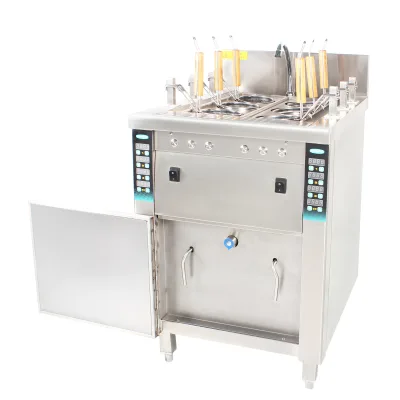
Stainless Steel Commercial Electric Automatic Lift Commercial Pasta Cooker
$1250.00 - $1300.00
MOQ: 1 Pieces


- Verified by SGS
- Combined
- China Guangdong
- Lead time30 days
- Avg. response≤ 8h
Main productsBakery Equipment, Catering Equipment, Fryer, Griddle, Oven, Dough Mixer, Grill, Food Display Cabinet, Freezer, Refrigerator
Main marketsDomestic,Europe,North America
Guangzhou Jieguan Western Kitchen Equipment Factory
- Verified by Intertek
- Manufacturer, Trading Company
- Lead time15 days
- Avg. response≤ 3h
Main productsOven, Gas Range, Fryer, Griddle, Food Warmer Cabinet
Main marketsWestern Europe(18%), Southeast Asia(15%), Mid East(12%)

Shandong Wilk Kitchen Equipment Co., Ltd
- Verified by SGS
- Trading Company
- China Shandong
- Lead time15 days
- Avg. response≤ 1h
Main productsStainless Steel Worktable, Stainless Steel Sink, Stainless Steel Shelf, Commercial Rice Steamer, Commercial Gas Stove, Refrigeration Equipment, Western Kitchen Equipment, Bakery Equipment, Cleaning&Sterilizing Equipment, Changing Room Equipment
Main marketsSoutheast Asia/ Mideast


Noodle Boiler Kitchen Equipment Noodle Cooker Fast Food Electric Pasta Cooker Machine
$30.00 - $85.00
MOQ: 10 Sets


Guangzhou Nantian Sources Co., Ltd.
- Manufacturer/Factory
- China Guangdong
- Lead time15 days
- Avg. response≤ 5h
Main productsKitchen Equipment, Kitchenware, Food Machine, Kitchen Appliance, Glassware, Food Machinery, Bakery Equipment, Dinnerware, Kitchen Utensils, Food Processor
Main marketsSouth America,Mid East,Southeast Asia,Eastern Asia,Oceania,Africa

Ancheng Hardware Manufacturing Co., Ltd.
- Verified by SGS
- Trading Company
- China Guangdong
- Lead time30 days
- Avg. response≤ 4h
Main productsKitchenware, Restaurant Equipment, Catering Equipment
Main marketsAfrica,Southeast Asia/ Mideast,Europe,Australia,North America

Guangzhou Jianchu Electrical Technology Co., Ltd.
- Verified by SGS
- Combined
- China Guangdong
- Lead time15 days
- Avg. response≤ 1h
Main productsNoodle Cooker, Deep Fryer, Combination Oven, Ice Maker
Main marketsSoutheast Asia/ Mideast,Domestic,Australia

Jiangsu Xinyuehai Commercial Kitchenware Co., Ltd
- Verified by SGS
- Combined
- China Jiangsu
- Lead time15 days
- Avg. response≤ 2h
Main productsCatering Equipment, Chinese Stove, Kitchen Equipment, Kitchen Appliance, Gas Stove, Ice Maker Machine, Stainless Steel Shelf, Kitchen Workbench, Refrigerator, Induction Cooker
Main marketsDomestic,Europe


Electricity Pasta Cooker with Caninet Stainless Steel Tank for Restaurant Stove
$928.00 - $958.00
MOQ: 1 Pieces
- Manufacturer, Trading Company
- Guangdong, China
- Lead time30 days
- Avg. response≤ 4h
Main productsFryer,Griddle,Warming Cabinet,Oven,Marinator
Main marketsDomestic Market(59.00%), North America(15.00%), Western Europe(15.00%), Eastern Europe(1.00%), South Asia(1.00%), Southern Europe(1.00%), Northern Europe(1.00%), Central America(1.00%), South America(1.00%), Eastern Asia(1.00%), Mid East(1.00%), Oceania(1.00%), Africa(1.00%), Southeast Asia(1.00%)

Guangzhou Sunrry Kitchen Equipment Co., Ltd.
- Verified by CTI
- Trading Company,Manufacturer/Factory
- China Guangdong
- Lead time30 days
- Avg. response≤ 3h
Main productsCommercial Kitchen Solutions, Turnkey Kitchen Solutions, Catering Equipment, Restaurant Equipment, Commercial Refrigeration Equipment, Commercial Bakery Equipment, Commercial Cooking Equipment, Stainless Steel Equipment, Commercial Food Prep Equipment, Commercial Kitchen Equipment
Main marketsSouth America,Eastern Europe,Mid East,North America,Southeast Asia,Eastern Asia,Oceania,Western Europe,Africa


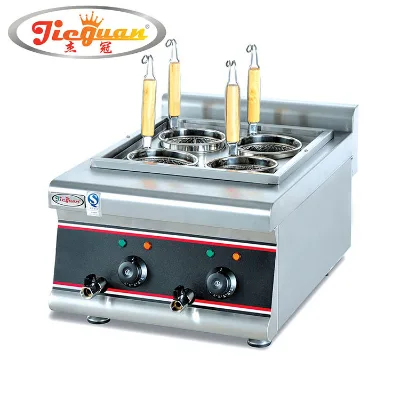
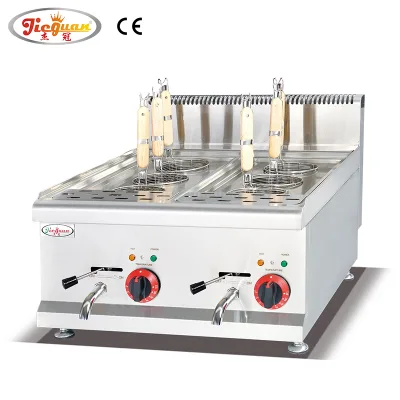
6-Basket Commercial Table Top Pasta Cooker Electric Instant Noodle Cooker
$316.00 - $395.00
MOQ: 1 Pieces


Dongguan Jingcheng Electric Energy Equipment Co., Ltd
- Verified by SGS
- Combined
- China Guangdong
- Lead time15 days
- Avg. response≤ 5h
Main productsPizza Oven, Kitchen Equipment, Restaurant Equipment, Catering Equipment, Induction Cooker, Food Processing Machine, Bakery Equipment, Commercial Dishwashers, Cooking Pot, Oven
Main marketsSouth America,Africa,Others(foreignTradeCapacity.exportBusinessCapacityMarketOther),Southeast Asia/ Mideast,East Asia(Japan/ South Korea),Domestic,Europe,Australia,North America

Guangzhou Fuqi Food Machinery Co., Ltd.
- Verified by CTI
- Combined
- China Guangdong
- Lead time15 days
- Avg. response≤ 3h
Main productsFryer, Griddle, Shawarma Machine, Electric Bain Marie, Waffle Machine, Crepe Maker
Main marketsSoutheast Asia/ Mideast,Europe,Australia,North America

Guangzhou Astar Kitchen Equipment Co., Ltd.
- Verified by BV
- Combined
- China Guangdong
- Lead time15 days
- Avg. response≤ 14h
Main productsBakery Equipment, Oven, Kitchen Equipment, Mixer, Baking Oven, Convection Oven, Rotary Oven, Pizza Oven, Refrigerator, Cake Showcase
Main marketsAfrica,Domestic,Europe

Electric Pasta Cooker with High Quality Stainless Steel Frame Ce Approved
Contact supplier
MOQ: 1 Pieces


- Verified by BV
- Combined
- China Guangdong
- Lead time15 days
- Avg. response≤ 2h
Main productsHood Type Dishwasher, Conveyor Type Dishwasher, Ultrasonic Dishwasher, Undercounter Dishwasher, Bakery Equipment, Food Processor
Main marketsSouth America,Africa,Others(foreignTradeCapacity.exportBusinessCapacityMarketOther),North America


Automatic Professional Electric Pasta Cooker with 3 Food Grade Baskets
$448.00 - $458.00
MOQ: 2 Pieces

Guangzhou ola Machinery Equipment Co., Ltd.
- Verified by SGS
- Combined
- China Guangdong
- Lead time23 days
- Avg. response≤ 3h
Main marketsDomestic

High Power Electric Pasta Cooker with Safety Thermostat Commercial Grade for Kitchen Us
$96.00 - $115.00
MOQ: 1 Pieces


$145.00 - $169.00
MOQ: 1 Pieces

Guangzhou ETON Import & Export Co., Ltd.
- Verified by SGS
- Combined
- China Guangdong
- Lead time30 days
- Avg. response≤ 10h
Main productsCandy Floss Machine, Popcorn Machine, Cup Sealing Machine, BBQ Roaster, Electric Fryer, Hot-Dog Roller, Ice Blender, Ice Crusher, Juice Extrctor, Slush Machine
Main marketsSouth America,Europe




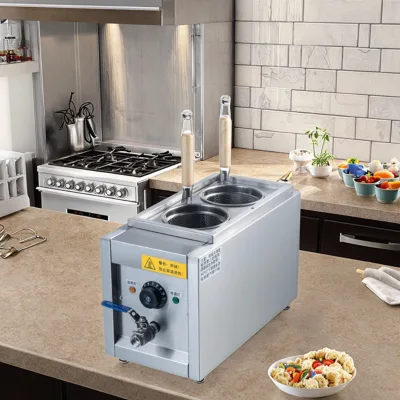


Comprehensive Sourcing Guide
Automatic Electric Pasta Cooker Supplier Concentration and Factory Types
Current data indicates manufacturing activity concentrated in specific Chinese provinces, with Henan and Guangdong emerging as key production hubs for commercial kitchen equipment. Suppliers in these regions often list diverse portfolios including coffee roasters, meat processing machinery, and various food processing lines alongside pasta cookers. This clustering suggests a mature supply chain where specialized components for heating elements and stainless steel fabrication are readily available locally. Buyers should verify if a supplier's primary focus aligns with their specific volume needs, as some entities operate as manufacturers while others function as combined trading and production entities. The presence of OEM and ODM capabilities in the data suggests flexibility for custom branding, though the extent of this customization varies by facility.
Factory types range from pure manufacturers to combined entities that may blend production with trading functions. A manufacturer typically offers direct control over the production line, which can influence lead times and quality consistency for standard models. In contrast, combined suppliers might leverage broader networks to source components, potentially offering a wider variety of models but with less direct oversight on the final assembly. The data shows suppliers offering both gas and electric heating sources, indicating that the manufacturing base supports diverse energy requirements. Buyers must distinguish between these operational models to ensure the supplier can meet specific technical specifications without relying on third-party subcontractors who may not adhere to the same quality standards.
How to Verify Automatic Electric Pasta Cooker Suppliers
Verification of supplier credentials is critical when sourcing industrial kitchen equipment, as the data highlights specific certifications like ISO 9001, ISO 14001, and BSCI that indicate adherence to management and safety standards. Some suppliers display verification from third-party bodies such as TÜV Rheinland, which serves as a tangible indicator of factory audits and product safety compliance. Buyers should prioritize suppliers who explicitly list these certifications rather than assuming general compliance. The presence of GMP and HSE certifications further suggests a focus on hygiene and occupational health, which are essential for food processing machinery. It is important to request current certificates directly from the supplier to confirm their validity and scope.
Beyond certifications, response times and verification status provide insight into supplier reliability and operational efficiency. The observed response times vary, with some suppliers averaging around 3.67 hours while others take significantly longer, potentially indicating differences in staffing or communication infrastructure. A faster response time often correlates with better customer service and quicker resolution of technical queries regarding voltage, power, or dimensions. Buyers should also check if the supplier is marked as verified, as this status often implies a baseline level of trust regarding business legitimacy. However, verification status alone is not a guarantee of product quality, so it must be combined with a review of specific product attributes and past performance records.
What to Compare Across Automatic Electric Pasta Cooker Suppliers
When evaluating potential partners, buyers must compare key operational metrics such as lead times, minimum order quantities, and pricing structures to determine the best fit for their business model. Lead times in the current data range from 15 days to 30 days, a significant variance that impacts inventory planning and market responsiveness. Minimum order quantities also differ, with some suppliers offering a single unit as the MOQ while others may have higher thresholds. Pricing varies widely based on specifications, with models ranging from approximately $159 to $1300 depending on features like automatic lifts, cabinet enclosures, and power ratings. Buyers should create a comparison matrix to weigh these factors against their specific budget and timeline constraints.
Product specifications and customization options are equally vital when comparing suppliers, as the data reveals a wide array of technical configurations. Some models feature dual heating sources like electric and gas, while others are strictly electric with specific voltage requirements such as 220V or 380V. Capacity differences, such as 6-basket versus single-basket units, and material choices like stainless steel construction, directly affect the suitability for different kitchen environments. Customization availability is another differentiator, with some suppliers offering tailored solutions while others provide non-customized standard models. Buyers should verify if the supplier can accommodate specific power requirements or dimensional constraints before committing to an order, ensuring the equipment integrates seamlessly into their existing infrastructure.
Common Automatic Electric Pasta Cooker Sourcing Risks
One significant risk involves the discrepancy between advertised capabilities and actual production capacity, particularly regarding customization and power specifications. While some suppliers list customization as available, the actual implementation may be limited by their existing tooling or supply chain constraints. Buyers must confirm if the "customized" label applies to branding, dimensions, or functional modifications, as this distinction affects the feasibility of the order. Additionally, power source mismatches pose a risk, as equipment designed for 380V may not function correctly in regions with 220V infrastructure without costly transformers. This technical incompatibility can lead to operational delays and additional expenses that were not anticipated during the initial sourcing phase.
Another risk stems from inconsistent lead times and packing standards, which can disrupt logistics and increase shipping costs. The data shows lead times varying from 15 to 30 days, and without a firm contract, these estimates may shift due to raw material shortages or production bottlenecks. Packing methods also vary, with options ranging from wooden cases to plywood packaging, each offering different levels of protection during transit. Inadequate packing can result in damage to the stainless steel components or electrical systems, leading to returns or replacements. Buyers should explicitly define packing requirements in the purchase agreement to ensure the equipment arrives in pristine condition, mitigating the risk of damage during international shipping.
Automatic Electric Pasta Cooker Regional Sourcing and Logistics
Sourcing from Chinese manufacturing hubs like Henan and Guangdong offers access to a dense network of suppliers but requires careful navigation of regional logistics. Suppliers in these provinces often have established export channels, yet the distance from the factory to the port can influence transit times and freight costs. Buyers should verify the specific origin of the product, as some listings indicate Guangzhou while others specify China generally, which affects the accuracy of shipping estimates. Understanding the regional logistics infrastructure helps in planning the supply chain, as some areas may have better access to major shipping lanes or rail connections. This knowledge allows buyers to optimize delivery schedules and reduce the overall cost of goods sold.
Logistics planning must also account for the specific dimensions and weight of the pasta cookers, which vary significantly across models. For instance, some units measure 800x900x940mm and weigh up to 52kg, while others are more compact. These physical attributes determine the shipping method, whether by sea or air, and the required packaging to prevent damage. Buyers should request detailed packing lists and dimensions from the supplier to calculate freight charges accurately. Additionally, the origin location impacts customs clearance procedures, as different regions may have varying export regulations or documentation requirements. Proactive coordination with freight forwarders ensures that the equipment clears customs efficiently and reaches the destination on time.
Automatic Electric Pasta Cooker Commercial Terms and Order Planning
Commercial terms regarding payment, pricing, and order planning are essential for managing financial risk and ensuring project success. The data indicates a wide price range, from $159 to $1300, which necessitates a clear understanding of what is included in the quoted price, such as taxes, duties, or shipping costs. Buyers should clarify if the price is fixed or subject to fluctuation based on raw material costs, especially for stainless steel and electrical components. Establishing a clear payment schedule, potentially using escrow services for larger orders, can protect both parties and ensure that funds are released only upon satisfactory delivery. This financial structure helps maintain trust and reduces the risk of disputes over pricing or delivery timelines.
Order planning must align with the supplier's lead times and production capacity to avoid stockouts or delays in market launch. With lead times ranging from 15 to 30 days, buyers should factor in this duration when forecasting demand and placing orders. It is crucial to confirm the supplier's ability to scale production if demand increases, as some may have limited capacity for large batches. Additionally, buyers should plan for potential delays by maintaining a buffer stock or having alternative suppliers identified. Clear communication regarding order milestones, such as production start dates and shipping notifications, ensures that all parties are aligned. This proactive approach to order planning minimizes disruptions and supports a smooth supply chain operation.
FAQs
What is the typical lead time for automatic electric pasta cookers?
The typical lead time for these machines is 15 days based on current supplier data. Some manufacturers in Guangdong may require up to 30 days for production. Buyers should confirm specific delivery schedules with the factory before placing orders to ensure timely arrival.
Are automatic electric pasta cookers available with custom specifications?
Yes, many models support customization with options for different power sources and capacities. Suppliers in Henan and Guangdong offer both customized and non-customized versions. Buyers can request specific voltage or heating method adjustments depending on the manufacturer's capabilities.
What certifications do manufacturers of these cookers typically hold?
Manufacturers often hold ISO 9001, ISO 14001, and BSCI certifications for quality and safety. Some facilities also possess OHSAS 18001 and GMP standards. Verification by third parties like TÜV Rheinland is available for certain suppliers to ensure compliance with international standards.
What is the minimum order quantity for purchasing these machines?
The minimum order quantity is typically one unit for most automatic electric pasta cookers. This allows small businesses to test the equipment without large initial investments. Buyers should verify specific MOQ requirements with individual suppliers as policies may vary by model.
Where are the manufacturers of automatic electric pasta cookers located?
Manufacturers are primarily located in Henan and Guangdong provinces in China. These regions host factories producing various commercial kitchen equipment including pasta cookers. Buyers can source from these locations to access a wide range of models and pricing options.
What power sources are available for automatic electric pasta cookers?
Available power sources include electric, gas, and dual heating options. Models range from 3000W to 9000W depending on capacity and design. Buyers should select the appropriate voltage, such as 220V or 380V, to match their local electrical infrastructure requirements.
How quickly do suppliers typically respond to inquiries about these cookers?
Suppliers typically respond within 3.67 to 6.12 hours based on current data. Faster response times are common for manufacturers in Henan, while Guangdong suppliers may take slightly longer. Buyers should expect prompt communication when contacting verified factories directly.