Automatic Tiltable Induction Kettle Suppliers and Manufacturers
Source 21 suppliers for Automatic Tiltable Induction Kettle equipment. Compare lead times, MOQs, prices, and response speeds to find the right partner. Contact verified vendors directly to request quotes and specifications; review the available evidence before requesting comparable quotations from suitable candidates.
Suppliers List

Jinan Tindo International Co., Ltd.
- Trading Company
- China Shandong
- Lead time15 days
- Avg. response≤ 9h
Main productsCooking Kettle, Popcorn Machine, Roasting Machine, Frying Machine, Vacuum Fryer, Chicken Nuggets Machine, Microwave Drying Machine
Main marketsSoutheast Asia/ Mideast,Europe,North America

Automatic Tiltable Jacketed Kettle with Mixer Machine Electric Induction Sauce Cooking Pot
$5800.00 - $15000.00
MOQ: 1 Pieces

Electric Induction Cooking Mixer Machine Tiltable Jacketed Kettle Cooking Pot
$5800.00 - $15000.00
MOQ: 1 Pieces

$5800.00 - $15000.00
MOQ: 1 Pieces

Automatic Pressure Cooking Pot Tilting Electric Induction Thermal Oil Heating Cooking Kettle Machine
$3600.00 - $15000.00
MOQ: 1 Pieces

Large Capacity Electric Induction Cooking Mixer Machine Jacketed Kettle on Sale
$5500.00 - $18000.00
MOQ: 1 Pieces

Price Cooking Jacketed Kettle with Mixer Machine Automatic Mixing Tiltable Cooker Pot
$5800.00 - $15000.00
MOQ: 1 Pieces

Qingdao Shindah Machinery Co., Ltd.
- Verified by SGS
- Trading Company
- China Shandong
- Lead time23 days
- Avg. response≤ 25h
Main productsSMC Machine, Reactor, Sigma Kneader, SMC Sheet Cutting Solution, Bead Mill, Three Roller Mill, Ribbon Mixer, Dispersing Mixer, Paint Production Line, Adhesive Production Plant
Main marketsSouth America,Southeast Asia/ Mideast,Europe

Zhucheng Longmai Machinery Co., Ltd.
- Verified by TUVRHEINLAND
- Combined
- China Shandong
- Lead time15 days
- Avg. response≤ 4h
Main productsJacketed Kettle, Planetary Cooking Mixer, High Temperature High Pressure Pot, Boiling Pot, Industrial Popcorn Machine, Industrial Popcorn Machine Line, Planetary Steam Cooking Mixer, Planetary Gas Cooking Mixer, Planetary Electric Cooking Mixer
Main marketsSouth America,Africa,Southeast Asia/ Mideast,Europe,North America

Electric Induction/Steam/Gas Heating Cooking Pot Machine Automatic Tilting Jacket Kettle
$5000.00 - $5500.00
MOQ: 1 Pieces

Industrial Cooking Kettle Machine Automatic Stirring Tilting Cooking Pot
$5000.00 - $5500.00
MOQ: 1 Pieces


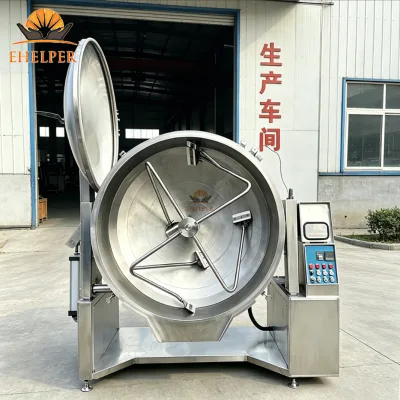
Yiwu Ehelper Technology Co., Ltd.
- Verified by TüVRheinland
- Trading Company
- Lead time30 days
Main productsPrecision Air Conditioner, Industrial Cooking Pot, Meat Grinder, Kitchen Equipment, Kitchenware
Main marketsNorth America(41%), Eastern Europe(30%), South America(10%)

$3937.19 - $4192.85
MOQ: 1 units

Wenzhou Longwan Wanyuan Food Machinery Factory
- Combined
- China Zhejiang
- Lead time45 days
- Avg. response≤ 23h
Main productsRetort Autoclave, Mixing Tank, Cooking Kettle, Milk Cooling Tank, Milk Batch Pasteurizer, Jacketed Kettle, Plate Heat Exchanger, Storage Tank, Blending Tank, Milk Chiler Tank
Main marketsEurope

Shanghai Nancheng Machinery Co., Ltd.
- Verified by BV
- Trading Company,Manufacturer/Factory
- China Shanghai
- Lead time38 days
- Avg. response≤ 7h
Main productsWater Bottling Line, Milk Processing Line, Yogurt Processing Line, Juice Processing Line, Uht Sterilizer, Milk Pasteurizer, Homogenizer, Water Treatment System, Filling Machine, Sleeve Shrink Labeling Machine
Main marketsSouth America,Eastern Europe,Mid East,North America,Southeast Asia,Eastern Asia,Oceania,Western Europe,Africa

Wenzhou Tianlong Machinery Technology Co., Ltd.
- Verified by SGS
- Trading Company,Manufacturer/Factory
- China Zhejiang
- Lead time45 days
- Avg. response≤ 2h
Main productsStainless Steel Mixing Tank, Botanical Extractor, Ss Storage Tank, Vacuum Freeze Dryer, Alcohol Distillation Equipment, Falling Film Evaporator, Food Jacket Kettle, Herb Extracts Concentrator, Customized Stainless Steel Vessels, Ss Filters
Main marketsSouth America,Eastern Europe,Mid East,North America,Southeast Asia,Eastern Asia,Oceania,Western Europe,Africa

Zheng Zhou Taizy Trading Co., LTD
- Verified by BV
- Trading Company
- China Henan
- Lead time15 days
- Avg. response≤ 7h
Main productsWood Processing Machine, Plastic Processing Machine, Charcoal Processing Machine, Food Processing Machine, Waste Recycling Machine, Packing Machine, Agricultural Machine, Egg Tray Machine, Metal Processing Machine
Main marketsSouth America,Others(foreignTradeCapacity.exportBusinessCapacityMarketOther),Southeast Asia/ Mideast,Europe

Wenzhou Rayen Machinery Co., Ltd.
- Verified by TUVRHEINLAND
- Trading Company
- China Zhejiang
- Lead time30 days
- Avg. response≤ 9h
Main productsStainless Steel Tank, Stainless Steel Filter Housing
Main marketsNorth America

WENZHOU LENO MACHINERY CO., LTD.
- Verified by BV
- Trading Company
- China Zhejiang
- Lead time30 days
- Avg. response≤ 9h
Main productsMixing Tank, Distillation Equipment, Pump, Filter, Filling Machine, Vacuum Evaporator, Mixing Equipment
Main marketsSouth America,Africa,Southeast Asia/ Mideast,Europe,North America

Zhejiang L&B Machinery Co., Ltd.
- Verified by SGS
- Combined
- China Zhejiang
- Lead time30 days
- Avg. response≤ 12h
Main productsTank, Emulsifying Machine, Lobe Pump, Butterfly Valve, Centrifugal Pump, Colloid Mill, Unions, Storage Tank, Sanitary Fitting, Filter
Main marketsDomestic

Shandong EPS Machinery Co., Ltd.
- Verified by SGS
- Trading Company
- China Shandong
- Lead time15 days
- Avg. response≤ 1h
Main productsFruit Vegetable Processing Machine, Meat Processing Solution, Prepared Food Processing Machine, Food Packing Solution, Food Sterilization Solution, Container Washing Processing Machine, Sausage Making Production Line, French Fries and Potato Chips Production Line
Main marketsSoutheast Asia/ Mideast,North America

Cheap Price Automatic Electric Heating Tilting Cooking Jacketed Kettle Cooking Pot with Mixer
$3800.00 - $5200.00
MOQ: 1 Pieces


Zhengzhou Bogen Machinery Equipment Co., Ltd.
- Verified by CTI
- Trading Company
- China Henan
- Lead time30 days
- Avg. response≤ 3h
Main productsPeanut Butter Machine, Spice Grinder, Meat Grinder, Meat Slicer, Meat Chopper, Potato Washing and Peeling Machine, Vegetables and Fruits Cutting Machine, Sausage Stuffer, Sausage Filler, Sausage Making Machine
Main marketsAfrica,Europe,North America

Zhengzhou Shuliy Machinery Co., Ltd.
- Verified by SGS
- Trading Company,Manufacturer/Factory
- China Henan
- Lead time0 days
- Avg. response≤ 7h
Main productsPacking Machinery, Food Processing Machinery, Agriculture Processing Machinery, Wood Processing Machinery, Plastic Processing Machinery, Charcoal Processing Machinery, Baler Machinery, Recycling Machinery, Metal Processing Machinery

Zhongshan Longstar Electrical Appliance Co., Ltd.
- Verified by BV
- Combined
- China Guangdong
- Lead time30 days
- Avg. response≤ 11h
Main productsInduction Cooker, Infrared Cooker
Main marketsSoutheast Asia/ Mideast


MOQ: 250 Pieces

MOQ: 250 Pieces

MOQ: 250 Pieces

MOQ: 250 Pieces

ZHUCHENG MBC INDUSTRIAL & TRADING CO., LTD.
- Verified by TUVRHEINLAND
- Combined
- China Shandong
- Lead time15 days
- Avg. response≤ 7h
Main productsFruit & Vegetable Processing Lines, Industrial Jacketed Kettles with Mixer, Retort Sterilizers & Pasteurizers, Frying & Cooking Systems, Tunnel Pasteurization Machine, Food Fryer, Vegetable Cutting Machine, Vacuum Cooking & Concentrating Equipment, Food Sterilizer, Potato Processing French Fries Production Line
Main marketsSouth America,Africa,Southeast Asia/ Mideast,Europe,North America

High Quality Full Stainless Steel 304 material Tiltable Jacketed Kettle With Agitator For Sale
$2600.00 - $29600.00
MOQ: 1 Sets

China Great/Factory Price New-Style Customized electric heated kettle with agitator and stepless
$2600.00 - $29800.00
MOQ: 1 Sets

Dongguan Jingcheng Electric Energy Equipment Co., Ltd
- Verified by SGS
- Combined
- China Guangdong
- Lead time15 days
- Avg. response≤ 7h
Main productsPizza Oven, Kitchen Equipment, Restaurant Equipment, Catering Equipment, Induction Cooker, Food Processing Machine, Bakery Equipment, Commercial Dishwashers, Cooking Pot, Oven
Main marketsSouth America,Africa,Others(foreignTradeCapacity.exportBusinessCapacityMarketOther),Southeast Asia/ Mideast,East Asia(Japan/ South Korea),Domestic,Europe,Australia,North America

Commercial Tilting Kettle with Automatic Stirring for Sauce and Caramel
$2550.00 - $4500.00
MOQ: 1 Pieces


Jiangmen Weifeng Houseware Co., Ltd.
- Manufacturer/Factory
- China Guangdong
- Lead time30 days
- Avg. response≤ 5h
Main productsStainless Steel Cookware, Kitchenware, Houseware, Cookware Set, Whistling Kettle, Kitchen Utensils, Stainless Steel Cookware Set, Stainless Steel Houseware
Main marketsSouth America,Eastern Europe,Mid East,North America,Southeast Asia,Eastern Asia,Oceania,Western Europe,Africa


Tea Pot Stainless Steel Whistling Kettle with Induction Capsuled Bottom
$4.50 - $6.50
MOQ: 1200 Pieces

- Verified by BV
- Trading Company
- China Zhejiang
- Lead time30 days
- Avg. response≤ 7h
Main productsElectric Kettle, Massager, Hair Dryer, Heater, Electric Grill, Humidifier, Hair Straightener, Mixer, Beauty Instrument, Electronics
Main marketsAfrica,Southeast Asia/ Mideast,Europe,North America

Premium Instant Heating Stainless Steel Electric Kettle for Quick Boiling
$2.88 - $4.47
MOQ: 1000 Pieces


Xuzhou Sheng Ming Casting Co., Ltd
- Verified by SGS
- Combined
- China Jiangsu
- Lead time30 days
- Avg. response≤ 7h
Main productsManhole Cover, Ductile Iron Pipes, Valves, Water Meter Tank Cover, Iron Castings(Support Customization), Hardware Tools, Cast Iron Fireplace, Air Fryer, Kettle, coffee Machine
Main marketsDomestic

Zensun Stainless Steel Products Co. , Ltd.
- Verified by SGS
- Trading Company
- China Guangdong
- Lead time30 days
- Avg. response≤ 8h
Main productsGn Pan, Chafing Dish, Food Tray, Stock Pot, Kettle, Cutlery, Kitchenware, Cookware, Restraurant and Hotel Supplies, Milk Pot
Main marketsDomestic


Comprehensive Sourcing Guide
Automatic Tiltable Induction Kettle Supplier Concentration and Factory Types
When browsing current results for an Automatic Tiltable Induction Kettle, you will notice that suppliers cluster in China's industrial machinery category, with Shandong appearing as a listed origin among the results. Shandong is a reasonable anchor for this equipment because food processing machinery manufacturing is concentrated there, but concentration should be confirmed, not assumed: check each listing's stated location and treat the province label as a starting filter rather than proof of factory depth. Suppliers in this category describe themselves with different company types, including trading companies and combined operations, and that label matters. A trading company typically consolidates products from multiple workshops, which can widen the catalog but may add a margin layer and distance you from the actual production line.
Beyond the location and company type, look at how each supplier positions itself through its main product lines. Some list cooking kettles, popcorn machines, roasting and frying equipment, suggesting a food machinery portfolio; others list reactors, mixers, kneaders and paint production lines, signaling a chemical equipment background even when a kettle appears in their catalog. A supplier whose core products are industrial food processing machines is more likely to have repeat tooling, welders experienced in sanitary stainless work, and spares on hand. Map each candidate against this portfolio test before you invest time in detailed quotations, because factory type often predicts the quality ceiling of your finished kettle.
How to Verify Automatic Tiltable Induction Kettle Suppliers
Verification for this category should start with the platform signals that are actually displayed. Some listings carry third-party verification badges, such as SGS or TÜV Rheinland assessments, which indicate that a company's registration and on-site status were checked by an independent body; a listing with no displayed certification should not be rejected, but it belongs in a slower verification track. Next, examine the product evidence itself rather than the marketing copy. A kettle listing should state the stainless steel grade, such as SS201, SS304 or SS316, the volume range, the mixing method, the heating type and the packing standard. Listings that document these attributes are easier to audit than those that only repeat keyword strings.
Then verify operationally. Ask each supplier to confirm which products are manufactured in-house and which are sourced, request their business license details, and ask whether the specific kettle model has been exported before. For an induction-heated tiltable kettle, technical verification matters more than paperwork: ask for the induction heating power specification, the tilting mechanism description and the control system option list. Cross-check that the model name in the quotation matches the listing you evaluated, since catalog titles can drift from the quoted configuration. Finally, request references or at least evidence of prior shipments in food machinery, and treat an unanswered technical question as a verification failure in itself, whatever certificates the profile displays.
What to Compare Across Automatic Tiltable Induction Kettle Suppliers
Build a comparison sheet using the dimensions actually shown on supplier profiles, without assuming every supplier displays every attribute. Useful columns include company type (trading, manufacturer or combined), location, verification badge, average response time, stated lead time, minimum order quantity and main product lines. On current results, response times range from roughly three hours to over a day, and lead times from about two weeks to over three weeks, so these two fields alone can separate a responsive manufacturer from a slow intermediary. MOQ is another differentiator: listings in this category commonly show a minimum order of one unit, which is expected for capital equipment, but confirm that customization requests do not change that figure.
Product-level comparison matters as much as supplier-level. Compare kettle listings on volume range, steel grade options, heating method, mixing design, tilting style and packing. Note that listed price ranges on this page span from the mid-three-thousands to around eighteen thousand dollars, reflecting differences in volume, pressure rating, automation and material grade, so never compare prices without normalizing these variables. Also compare depth: a supplier listing kettles alongside popcorn machines and roasting equipment demonstrates food machinery continuity, while a chemical equipment seller offering a reaction kettle may be adapting existing designs. Record which suppliers offer ODM or OEM capability, since that label indicates willingness to modify heating, volume or control configurations rather than sell a fixed catalog model.
Common Automatic Tiltable Induction Kettle Sourcing Risks
The first risk is material substitution. Listings advertise SS201, SS304 and SS316 as available standards, and the difference is easy to hide in a finished pot but significant for food contact durability and corrosion resistance around acidic sauces. Specify the grade in the contract, not just the inquiry, and require material certificates with the shipment. The second risk is configuration drift: because most kettles here are advertised as customized, the machine you receive can differ from the listing in mixing speed, tilting control, PLC inclusion or induction power. Lock the final specification sheet, packing standard and model designation into the proforma invoice before paying a deposit.
A third risk is supplier-type mismatch. A trading company can be perfectly competent, but if you assume you are buying from the factory and discovery happens after a quality problem, your claim cycle lengthens. Confirm the manufacturing role early. Fourth, watch for response-time decay: a supplier answering in hours before the order and days afterward is signaling where you sit in their queue, so keep response expectations aligned with the profile's stated average. Fifth, be cautious with certification claims in product titles, such as CE approval mentioned in a listing heading, and ask for the actual certificate documents covering that specific model. Finally, beware of judging by price range alone; a low-end kettle quote may simply describe a smaller, simpler configuration within the same catalog rather than a bargain on the machine you actually specified.
Automatic Tiltable Induction Kettle Regional Sourcing and Logistics
Shandong is the location shown on current supplier results for this equipment, and it is a sensible region to examine because food processing and industrial machinery manufacturing are established there. When you shortlist, note that location affects more than factory visits: it determines the nearest major port, the domestic trucking leg, and how conveniently you can combine a kettle inspection with audits of other machinery suppliers in the same trip. If a listing shows a different or unspecified location, ask directly where production occurs, because a sales office address and a factory address frequently differ, especially for trading companies.
Logistically, plan around how these machines ship. Listings for this category describe plywood case or wooden case packing, sometimes with full container load arrangements, and a tiltable kettle of several hundred liters will typically consume meaningful container space with its frame, mixer arm and control cabinet. Confirm the packed dimensions and gross weight in writing, not the operating dimensions, and ask whether the machine ships assembled or disassembled, since that affects both container fit and your installation time. The stated lead times on current results run from roughly fifteen to twenty-three days, but that clock usually starts after deposit and drawing confirmation, so build buffer for customization and inland transit. Ask who arranges freight, whether export documentation is provided, and how the induction components are protected against transit vibration, because heating assemblies are among the most damage-prone parts in machinery shipments.
Automatic Tiltable Induction Kettle Commercial Terms and Order Planning
Commercial planning for an Automatic Tiltable Induction Kettle should start from the listed data, then move to negotiation. Current listings show single-unit minimum orders and price ranges stretching from roughly $3,600 to $18,000 depending on volume, pressure capability and material grade, which means your quoted price is a function of specification, not supplier generosity. Request itemized quotations splitting the base kettle, the tilting and mixing configuration, the induction heating package, the control option and the packing. This structure lets you compare suppliers line by line and identifies which extras inflate the total. Ask what is included in the lead time, when it starts, and what milestones trigger payment.
On payment structure, a deposit with balance against inspection or shipping documents is the standard pattern for capital equipment, but align the balance trigger with a pre-shipment check of the specified steel grade, heating power and tilting function. Order planning should respect the customization timeline: because most listings here offer customized configurations, drawings and confirmation calls consume real calendar time before the fifteen-to-twenty-three-day production windows observed on this page begin to run. Order early enough that packing, inland transport and port lead times do not compress your installation schedule. Finally, plan the after-sales relationship before ordering: confirm spare part availability, control system documentation and remote support, since an induction kettle is a long-service asset whose cheapest risk to avoid is a supplier who disappears after the balance is paid.
Word count check: each section ~230; total ≈1385 words.
FAQs
What is the price range for automatic tiltable induction kettles?
Prices for automatic tiltable induction kettles typically range from $3,600 to $18,000 depending on capacity and features. Smaller units start around $3,600, while larger industrial models with advanced controls can reach $18,000. Buyers should verify specific pricing based on their required volume and customization needs.
What capacities are available for these cooking kettles?
Manufacturers offer a wide range of capacities, including 100L, 200L, 300L, 400L, 500L, 600L, 800L, 1000L, and 1500L. The specific volume depends on the model, with some industrial pressure cookers reaching up to 1500L. Buyers should select the size that matches their production requirements.
What is the typical lead time for these machines?
Lead times for automatic tiltable induction kettles generally range from 15 to 23 days. Some suppliers offer faster turnaround times, while others may require additional time for customization or larger orders. Buyers should confirm the exact delivery schedule with the supplier before placing an order.
Are these kettles customizable for specific needs?
Yes, customization is available for many automatic tiltable induction kettles. Buyers can often choose materials like SS304 or SS316 stainless steel, adjust mixing speeds, and select heating methods. Some models also offer optional PLC systems and specific tilting mechanisms to suit particular industrial processes.
What certifications do these machines typically have?
Many automatic tiltable induction kettles are CE approved, ensuring they meet European safety and quality standards. Some suppliers may also hold SGS or TÜV Rheinland verification. Buyers should request specific certification documents to verify compliance with their local regulations and industry requirements.
What is the minimum order quantity for these kettles?
The minimum order quantity for automatic tiltable induction kettles is typically one unit. This allows buyers to purchase single machines for testing or small-scale production. Bulk discounts may be available for larger orders, so buyers should inquire about pricing tiers for multiple units.
Where are these kettles manufactured?
These kettles are primarily manufactured in China, with many suppliers located in Shandong province. The origin is often listed as China on product specifications. Buyers should verify the exact manufacturing location and origin details with the supplier to ensure alignment with their sourcing preferences.