Bamboo Flooring Suppliers and Manufacturers in China
Compare 14 verified Bamboo Flooring suppliers in China by location, lead time, and certifications. Review product specs like strand bamboo and carbonized finishes, then request quotes directly from manufacturers offering ISO 9001 and CE standards; review the available evidence before requesting comparable quotations from suitable candidates.
Suppliers List

- Verified by CTI
- Trading Company,Manufacturer/Factory
- China Shanghai
- Lead time45 days
- Avg. response≤ 6h
Main productsVinyl/Lvt/Looselay/Dry Back/WPC Vinyl Floor, Engineered Wood/Hardwood Flooring/Wooden Floor, Spc Flooring/ABA Rigid Spc/ Wood Spc Flooring, WPC Decking/Wall Panel/Wall Cladding, Interior Door/Exterior Door/Fire Rated Door, Bamboo Floor/Laminate Floor/Parquet Floor, HDF Moulded Door/Wooden Door/Kitchen Cabinet, Cordless Drill, Angle Grinder, Electric Mixer
Main marketsSouth America,Eastern Europe,Mid East,North America,Southeast Asia,Eastern Asia,Oceania,Western Europe,Africa

- Verified by BV
- Trading Company
- China Beijing
- Lead time15 days
- Avg. response≤ 2h
Main productsWPC Decking, Laminated Flooring, Spc Flooring, Engineered Flooring, Bamboo Flooring, PVC Flooring, Plastic Pedestal
Main marketsSouth America,Australia

XIAMEN TWO CITY IMP AND EXP CO., LTD.
- Verified by SGS
- Trading Company
- China Fujian
- Lead time30 days
- Avg. response≤ 4h
Main productsBamboo Panel, Bamboo Plywood, Bamboo Cutting Board, Bamboo Chopping Board, Bamboo Products, Bamboo Kitchenware, Bamboo Tableware, Bamboo Furniture, Wood Product, Wood Root Carving Product
Main marketsSoutheast Asia/ Mideast,Europe,North America


Outdoor Bamboo Decking Garden Terrace High Resistance Bamboo Flooring Strand Woven Bamboo
$8.50 - $10.18
Moq: 1000

Solid Small Wave Bamboo Decking Bamboo Outdoor Flooring Garden Floor Pool Decking Boards
$8.50 - $10.18
Moq: 1000

High Quality Bamboo Flooring Decking Outdoor Bamboo Decking Tiles Strand Woven
$25.00 - $30.00
Moq: 1000

Guangzhou Greenvills Flooring Co., Ltd.
- Trading Company
- China Guangdong
- Lead time45 days
- Avg. response≤ 5h
Main productsOak Flooring, Engineered Flooring, Wood Flooring, Flooring, Solid Wood Flooring, Bamboo Flooring
Main marketsEurope,Australia,North America

Dark Solid Bamboo Flooring/Bamboo Hardwood Flooring/Solid Strand Woven Bamboo Flooring
$20.80 - $26.80
Moq: 300


Customized Bamboo Products Flooring/Solid Bamboo Flooring, Bamboo Parquet Flooring
$20.80 - $23.50
Moq: 300

Distresssed Bamboo Board Flooring/Solid Bamboo Parquet Flooring/Solid Bamboo Flooring
$20.50 - $25.50
Moq: 300

Wider Horizontal Bamboo Flooring, Smooth Natural Bamboo Factory Price Indoor Wooden Flooring
$19.30 - $23.50
Moq: 300

Solid Tigerskin Bamboo Flooring/Solid Strand Woven Bamboo Flooring/Bamboo Board
$20.50 - $24.50
Moq: 300

Anhui Sunhouse Floor Technology Co., Ltd.
- Combined
- China Anhui
- Lead time30 days
- Avg. response≤ 4h
Main productsBamboo Flooring, Engineered Wood Flooring, Vspc Flooring, Anti-Slip Wood Flooring
Main marketsSouth America,Southeast Asia/ Mideast,East Asia(Japan/ South Korea),Europe,Australia,North America


E-Co Friendly Solid Bamboo Flooring Indoor Vinyl Flooring / Spc Bamboo Flooring
$18.50 - $20.50
Moq: 300


Eco Forest Bamboo Flooring High Quality 12mm Strand Woven Solid Bamboo Flooring in Click
$18.50 - $20.50
Moq: 300

Fujian Sanming DACHUAN Bamboo Industry Co., Ltd.
- Verified by BV
- Trading Company
- China Fujian
- Lead time30 days
- Avg. response≤ 3h
Main productsBamboo Flooring, Bamboo Decking, Bamboo Plywood, Bamboo Fence, Bamboo Wall Panel, Building Materials, Bamboo Pole
Main marketsSouth America,Southeast Asia/ Mideast

Corrosion Resistance Garden Flooring Tile (Small Wave) Bamboo Decking Bamboo Flooring
$29.00 - $33.00
Moq: 300


High Density Wholesale Flooring Bamboo Flooring Factory Eco Forest Bamboo Decking
$25.00 - $33.00
Moq: 300

High Density Fire Resistance High Durability Bamboo Wood Flooring Outdoo Bamboo Decking
$25.00 - $36.00
Moq: 500

Eco-Friendly High Density Wooden Flooring Outdoor Strand Woven Bamboo Decking/Flooring
$25.00 - $33.00
Moq: 300

GANZHOU ZHUGE BAMBOO WOODS TECHNOLOGY CO., LTD.
- Verified by BV
- Trading Company,Manufacturer/Factory
- China Jiangxi
- Lead time23 days
- Avg. response≤ 4h
Main productsBamboo Plywood, Bamboo Wall Panels, Bamboo Decking, Bamboo Flooring, Acoustics Panel, Wooden Countertop, Bamboo Countertop, Pet Acoustic Bamboo Wall Panel, Bamboo Timber, Bamboo Beams
Main marketsSouth America,Eastern Europe,Mid East,North America,Southeast Asia,Eastern Asia,Oceania,Western Europe,Africa

Factory Durable Eco Building Material Bamboo Floor Indoor Solid Bamboo Flooring
$14.00 - $18.00
Moq: 100


Fujian Golden Bamboo Industry Co., Ltd.
- Verified by BV
- Combined
- China Fujian
- Lead time23 days
- Avg. response≤ 8h
Main productsBamboo Flooring, Bamboo Decking, Bamboo Outdoor Flooring, Bamboo Wall Panel, Bamboo Horse Stable Plank, Bamboo Fences, Bamboo Pergolas, Bamboo Handrails, Bamboo Beams, Bamboo Furniture
Main marketsSouth America,Africa,Southeast Asia/ Mideast,East Asia(Japan/ South Korea),Europe,Australia,North America
Hunan Taohuajiang Bamboo Science & Technology Co., Ltd.
- Manufacturer, Trading Company
- Hunan, China
- Lead time7 days
- Avg. response≤ 6h
Main productsOutdoor Bamboo Flooring,Outdoor Bamboo Siding,Bamboo Decoration Material,Bamboo products,Bamboo Furniture
Main marketsDomestic Market(50.0%), Western Europe(18.0%), Southeast Asia(10.0%), Mid East(8.0%), South America(2.0%), North America(2.0%), South Asia(2.0%), Southern Europe(2.0%), Eastern Europe(1.0%), Oceania(1.0%), Africa(1.0%), Eastern Asia(1.0%), Northern Europe(1.0%), Central America(1.0%)
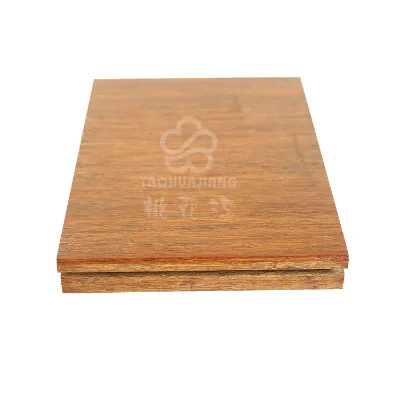
Sustainable Bamboo Flooring,wholesale Garden Decking,Terrace Flooring Outdoor
$20.00 - $30.00
Moq: 300
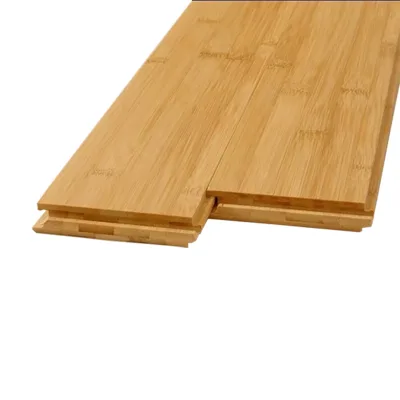
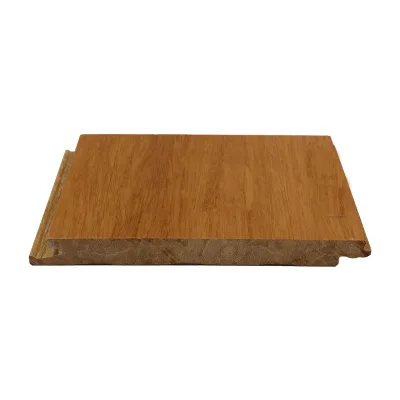
Waterproof Bamboo Floor With CE Certificate
Contact supplier

Jiujiang Xingli Beihai Composite Co., Ltd.
- Verified by TUVRHEINLAND
- Trading Company
- China Jiangxi
- Lead time15 days
- Avg. response≤ 6h
Main productsGlass Fiber, Chopped Strand Mat, Fiberglass Mat, Fiberglass Roving, Woven Roving, Chopped Strand, Basalt Fiber, FRP Rebar, Fiberglass Needle Mat, PP Core Mat
Main marketsSouth America,Africa,Southeast Asia/ Mideast,East Asia(Japan/ South Korea),Europe,Australia,North America

Hainan Zhenjing International Trade Co., Ltd.
- Trading Company
- China Hainan
- Lead time0 days
- Avg. response≤ 3h
Main productsPackaging and Printing, Cup Holder, Bowls Series, Compartment Boxes, Egg Carton, Trays, Cutlery & Accessories, Coffee Cups, Egg Trays

Anhui Huishang International Ltd.
- Manufacturer/Factory
- China Anhui
- Lead time45 days
- Avg. response≤ 4h
Main productsBamboo Blinds, Bamboo Curtains, Venetian Blinds, Roller Blinds, PVC Mini Blinds, Bamboo Shades, Wooden Shutters, Bamboo Carpets, Bamboo Placemats, Flooring
Main marketsMid East,North America,Southeast Asia,Oceania,Western Europe,Africa

Liaocheng Fugesen Import and Export Co., Ltd.
- Verified by CTI
- Combined
- China Shandong
- Lead time23 days
- Avg. response≤ 1h
Main marketsSoutheast Asia/ Mideast,East Asia(Japan/ South Korea)

Suzhou Joyshine New Material Co., Ltd.
- Trading Company,Manufacturer/Factory
- China Jiangsu
- Lead time15 days
- Avg. response≤ 3h
Main productsSpc Floor, PVC Floor, Acoustic Panel, Square Carpet, Plastic Pellets
Main marketsSouth America,Eastern Europe,Mid East,North America,Southeast Asia,Eastern Asia,Oceania,Western Europe,Africa


Comprehensive Sourcing Guide
Bamboo Flooring Supplier Concentration and Factory Types
Bamboo Flooring supply on major B2B platforms is concentrated among a relatively small pool of active exporters, so buyers should expect to review a limited candidate set rather than an endless list. The visible results include suppliers based in Shanghai, Beijing and Fujian, which gives an early signal that listings for Bamboo Flooring appear alongside adjacent product lines such as vinyl, SPC, laminated, engineered wood and WPC decking. This matters because some of the companies advertising bamboo boards are diversified flooring exporters, while others, particularly those in Fujian, list bamboo panels, cutting boards and bamboo kitchenware as core products and may treat flooring as a secondary category.
Supplier types also vary. Current listings include companies registered as trading companies, combined manufacturer-and-trading operations, and pure factories. A combined manufacturer-trader profile can be attractive if you want factory pricing with export documentation support, but you should still confirm which production is in-house. When your search results do not reveal where a cluster sits, identify concentration yourself: sort candidate listings by product keyword density, note which provinces repeat across the profile locations of bamboo-focused suppliers, and weigh suppliers whose main product lists explicitly include Bamboo Flooring and bamboo parquet against generalists whose catalogs span many unrelated materials. The keyword evidence in the listings, such as strand woven, carbonized, horizontal and click-system variants, helps you separate specialists from broad-line sellers.
How to Verify Bamboo Flooring Suppliers
Verification starts with the platform signals shown on each profile. In the current results, one Shanghai-based combined trading-and-manufacturing supplier carries CTI verification and ISO 9001 and ISO 14001 system certification; a Beijing trading company shows BV verification with an ISO9001:2015 certificate; a Fujian supplier is SGS verified but lists its system certification as "others." Treat these as screening inputs, not proof of flooring competence. Next, confirm that verification covers the entity you will actually contract with, because verified trade status does not certify product quality.
For product-level assurance, use the evidence suppliers publish about their boards. One listing declares CE certification and cites Floorscore, Greengard, Dibt, SGS, Intertek and ISO among its certificates, alongside a stated 25-year warranty and a moisture content range of 8 to 12 percent; another shows CE and ISO labels with T&G joints and stated thicknesses of 10mm, 12mm and 14mm. Ask each candidate for the underlying test reports matching those claims, checked against your target market's requirements, since certificates referenced in marketing copy still need documentary confirmation. Also verify customization capability directly: several listings state customization is available, and at least one supplier advertises OEM, ODM and its own brand, but you should request recent custom-order references. Finally, confirm factory audits, sample accuracy against published specifications, and whether the legal name on invoices matches the verified profile.
What to Compare Across Bamboo Flooring Suppliers
Build a comparison sheet using the attributes suppliers actually display, without assuming every supplier shows every field. The strongest comparable dimensions in current listings are lead time, MOQ, response speed, location, company type, main products and certification labels. Lead times differ sharply between candidates on this page: one Shanghai listing shows a 45-day lead time, while a Beijing trading company displays 15 days, and a Fujian profile shows 30 days. Response times also vary, roughly from under two hours to over five hours, which matters when you expect iterative sample discussions.
MOQs reveal order flexibility. One Shanghai-based listing shows a minimum order of 1,000 units, another of the same location shows 500, and a Beijing supplier displays an MOQ as low as 100, though the unit basis should be confirmed per listing. Compare main product breadth next: a Shanghai supplier's catalog spans vinyl, engineered wood, SPC, WPC decking and doors in addition to bamboo, while a Fujian supplier centers on bamboo panels and kitchenware, suggesting different levels of flooring focus. Price ranges appear on some listings, for example a range spanning roughly 14 to 43 per unit on one Shanghai product, but treat displayed prices as starting points for negotiation rather than quotations. Finally, compare specification depth: boards described with lengths of 915mm to 2200mm, widths of 96mm to 216mm, click or T&G joints, and stated certifications give you more to validate than listings with sparse attributes.
Common Bamboo Flooring Sourcing Risks
The most frequent risk is specification drift between listing and shipment. Suppliers publish detailed standards such as 1850x130x14mm or 960x96x15mm boards, carbonized or natural colors, and horizontal or strand-woven structures, but the delivered goods may differ in density, finish or profile. Mitigate this by approving a golden sample, referencing the exact published model number and standard in your contract, and requiring pre-shipment inspection against those dimensions and the stated moisture content range of 8 to 12 percent.
Second, certification risk. Listings cite CE, Floorscore, Dibt and other marks, but one Fujian supplier lists system certification only as "others," which signals weaker documented management systems. If your market demands formaldehyde or emissions compliance, do not rely on keywords; request the actual certificate numbers and validity dates. Third, category-focus risk: suppliers whose core products are vinyl, SPC or doors may sub-contract Bamboo Flooring, adding a hidden layer between you and the mill. Fourth, lead-time risk: displayed lead times range from about 15 to 45 days on this page, and one listing separately states delivery 35 days after deposit, so clarify whether quoted lead times include production only or also booking and transit. Fifth, MOQ mismatch risk: a 1,000-unit minimum may block small pilot orders, and very low minimums can signal trading intermediaries. Finally, beware the 25-year warranty claims; ask what the warranty actually covers and whether it is enforceable in your jurisdiction.
Bamboo Flooring Regional Sourcing and Logistics
The visible supplier base for this page sits in three Chinese regions with distinct profiles. A Shanghai-based combined trading-and-manufacturing supplier offers the broadest flooring portfolio, including Bamboo Flooring alongside vinyl, engineered wood, SPC and WPC products, and displays a 45-day lead time; Shanghai also provides major port access for full-container exports. A Beijing-based trading company lists Bamboo Flooring among laminated, SPC and engineered products and shows a 15-day lead time, the fastest on this page, which may suit replenishment orders. A Fujian supplier focuses on bamboo panels, plywood and kitchenware, is SGS verified, and shows a 30-day lead time; its position suggests proximity to bamboo raw material supply, though you should confirm whether it produces flooring itself.
For logistics planning, note the packing evidence in the listings: boards packed on pallets in one case, cartons first then pallets in another, and carton quantities such as 24, 12 or 8 pieces per carton on a third. Palletized carton packing protects long boards such as 1850mm planks but affects container fill efficiency, so request loading plans for 20-foot and 40-foot containers with your chosen dimensions. Confirm Incoterms, whether quotations include inland haulage to the port, and container weight limits, because engineered or strand-woven boards with glass fiber reinforcement, as one listing describes, can be heavier than standard solid bamboo and reduce the square meters per container you can load.
Bamboo Flooring Commercial Terms and Order Planning
Structure commercial terms around the evidence suppliers display, then negotiate the gaps. Payment terms appear explicitly on one listing as T/T, so expect deposit-and-balance structures and negotiate the deposit percentage and inspection window before the balance payment. Pricing evidence on this page includes a per-unit range of roughly 14 to 43 on one Shanghai listing and an upper bound around 18 on another, which shows how widely specifications and finishes move price; request quotations against one locked specification, such as 1850x130x14mm carbonized horizontal strand bamboo, so bids are comparable.
Plan orders around displayed MOQs and lead times. With minimums ranging from 100 to 1,000 units across these listings, sequence a sample order, a pilot container and a repeat order, and confirm whether the low end of a lead-time quote, for example the 15 days shown by one Beijing supplier, applies to stock colors or customized production. One listing states delivery 35 days after deposit, so align your contract delivery clause with that formula and define what happens if production slips. Confirm customization terms in writing, including tooling or profile charges for click-system boards, since several listings advertise customization availability. Finally, define acceptance criteria before paying the balance: dimensions against the published standard, moisture content within the stated 8 to 12 percent band, joint fit, finish consistency, and packing per carton and pallet counts, with a third-party inspection booked before shipment.
FAQs
What certifications do Bamboo Flooring suppliers hold?
Suppliers typically hold ISO 9001 and ISO 14001 system certifications. Some products also carry CE certification for market compliance. Additional verification may include CTI, BV, or SGS audits. Buyers should request specific certificates to confirm quality standards and environmental compliance before placing orders.
What is the typical lead time for Bamboo Flooring?
Lead times generally range from 15 to 45 days depending on the supplier and order volume. Some manufacturers offer faster delivery within 15 days, while others require up to 45 days for production. Buyers should confirm exact timelines during negotiation to align with project schedules effectively.
What is the minimum order quantity for Bamboo Flooring?
Minimum order quantities vary significantly, ranging from 100 square meters to 1000 square meters. Some suppliers accept small orders of 100 units, while others require larger bulk purchases. Buyers should check specific supplier requirements to determine the most suitable option for their project scale.
Where are Bamboo Flooring manufacturers located?
Manufacturers are primarily located in China, including cities like Shanghai, Beijing, and Fujian. These regions offer established supply chains for bamboo and wood products. Buyers can filter suppliers by location to reduce shipping costs and improve logistics efficiency for international orders.
What materials are used in Bamboo Flooring?
Common materials include strand bamboo, horizontal bamboo, and carbonized bamboo. Some products use 100% virgin material with glass fiber for click systems. Buyers can choose between natural or carbonized colors based on aesthetic preferences and functional requirements for indoor or outdoor use.
What functions do Bamboo Flooring products offer?
Bamboo Flooring typically offers waterproof, soundproof, anti-static, and thermal insulation properties. Some products also feature fireproof and wear-resistant surfaces. These functions make the flooring suitable for household, commercial, and outdoor applications, providing durability and comfort for various environments.