Bar Design Outdoor Weather Station Suppliers and Manufacturers
Source 15 verified suppliers for Bar Design Outdoor Weather Station units. Compare grounded dimensions including location, response time, lead time, and certifications. Review product specs and pricing to identify suitable partners for your project; review the available evidence before requesting comparable quotations from suitable candidates.
Suppliers List

- Verified by SGS
- Manufacturer/Factory
- China Shaanxi
- Lead time0 days
- Avg. response≤ 7h
Main productsPressure Sensor, Pressure Transmitter, Level Measurement, Pressure Transducer, Water Level Sensor, Water Level Meter, Ultrasonic Level Sensor, Radar Level Sensor, Fuel Level Sensor, Flow Meter


Outdoor Weather Station Automatic Meteorological Station Suitable for Agricultural
$558.60 - $578.60
MOQ: 1 piece

Outdoor Home Use Wind Direction Speed Thermometer Wireless Digital Home Weather Station
$40.00 - $50.00
MOQ: 1 Pieces


Mechanical Weather Station Multi-Parameter Meteorological Intelligent Online Monitoring System
$829.00 - $1971.00
MOQ: 1 Pieces

Anhui Ya Tun Iot Technology Co., Ltd.
- Verified by SGS
- Trading Company
- China Anhui
- Lead time30 days
- Avg. response≤ 3h
Main marketsAfrica,Europe,Australia,North America

Sichuan Weinasa Technology Co., Ltd.
- Verified by BV
- Trading Company
- China Sichuan
- Lead time15 days
- Avg. response≤ 4h
Main productsAutomatic Weather Stations, Sensors, Temperature Humidity Controlling, Ultrasonic Weather Stations, Measuring Instruments
Main marketsSouth America,Africa

Climate Station Online Monitoring System Indoor Outdoor Weather Station
$5720.00 - $6108.00
MOQ: 1 Pieces


$1880.00 - $1980.00
MOQ: 1 Pieces


Wireless Automatic Weather Stations with Basic 5 Meteorological Sensors
$1580.00 - $1980.00
MOQ: 1 Pieces

Good Price Hot Sale Automatic Weather Station with 9 Meteorological Sensors
$2680.00 - $2980.00
MOQ: 1 Pieces

Zhejiang Top Cloud-Agri Technology Co., Ltd.
- China Zhejiang
- Lead time0 days
- Avg. response≤ 6h
Main productsSoil Nutrient Analyzer, Seed Tester Meter, Chlorophyll Meter, Leaf Area Meter, Fat Analyzer, Fruit Hardness Tester, Incubator, Grain Testing Meter Tester, Plant Physical Tester, Flour and Oil Testing Instrument

Shandong Renke Control Technology Co., Ltd.
- Verified by CTI
- Combined
- China Shandong
- Lead time23 days
- Avg. response≤ 5h
Main productsSoil Sensor, Wind Sensor, Weather Station
Main marketsSoutheast Asia/ Mideast,East Asia(Japan/ South Korea),Domestic,Europe,Australia,North America


High Protection Compact Outdoor Solar Weather Station Online PV Weather Station
$2438.00
MOQ: 1 Pieces


Hunan Rika Electronic Tech Co., Ltd.
- Verified by BV
- Combined
- China Hunan
- Lead time15 days
- Avg. response≤ 3h
Main productsWind Sensor, Radiation Sensor, Temperature Humidity Sensor, Rain Guage, Pyranometer, Soil Sensor, Level Sensor, Data Logger, Solar Radiation Shield, Weather Station
Main marketsSouth America,Southeast Asia/ Mideast,Europe

Hot Product Innovative Weather Station with Meteorological Data Logger
$1300.00 - $3215.00
MOQ: 1 Pieces

Advanced Agricultural Weather Station with Wind Speed and Rain Gauges
$1300.00 - $3215.00
MOQ: 1 Pieces

Hot Sale Real-Time Automatic Weather Station with Meteorological Data Logger
$1300.00 - $3215.00
MOQ: 1 Pieces

China Manufacturers Weather-Resistant Automatic Weather Station for Agriculture
$1300.00 - $3215.00
MOQ: 1 Pieces

Best Selling Weather-Resistant Automated Weather Station with Meteorological Data Logger
$1300.00 - $3215.00
MOQ: 1 Pieces

Industry Benchmark Innovative Weather Station for Reliable Weather Monitoring and Data
$1300.00 - $3215.00
MOQ: 1 Pieces
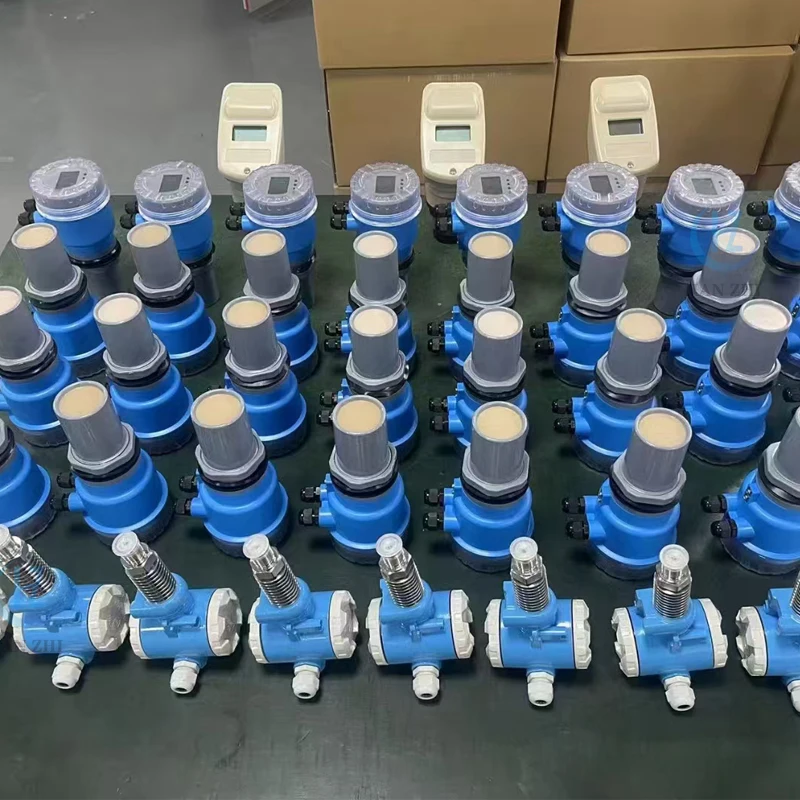
Xi 'an Hanzhi Technology Co., Ltd.
- Manufacturer, Trading Company
- Shaanxi, China
- Lead time10 days
- Avg. response≤ 3h
Main productsUltrasonic level sensor,Radar level sensor,Weather station,Flow meter,Environmental sensors
Main marketsEastern Europe(15.00%), Western Europe(15.00%), North America(15.00%), Domestic Market(14.00%), South America(10.00%), Oceania(8.00%), Southeast Asia(5.00%), Africa(5.00%), Mid East(4.00%), Central America(3.00%), Eastern Asia(2.00%), South Asia(2.00%), Northern Europe(2.00%)
Shanghai Total Industrial Co., Ltd.
- Verified by SGS
- Manufacturer/Factory
- China Shanghai
- Lead time0 days
- Avg. response≤ 23h
Main productsFeeder Clamp, Weather Shield Enclosure, Rubber Grommet, Hoisting Grip, Cable Entry, Flexible Jumper Cable, Cablen Ties, Terminal Lugs, Conduit and Fittings, Hole Saw

- Verified by BV
- Trading Company,Manufacturer/Factory,Group Corporation
- China Henan
- Lead time15 days
- Avg. response≤ 4h
Main productsLaboratory Instrument, Rotary Evaporator, Glass Reactor, Life Science Instruments, Agricultural Instruments, Chemical Analysis Equipments, Thermal Cycler PCR, Petroleum Instruments, Drug Testing Equipment, Physical Testing Instruments
Main marketsSouth America,Eastern Europe,Mid East,North America,Southeast Asia,Eastern Asia,Oceania,Western Europe,Africa


Weather Station for Outside Atmosphere Monitoring
Contact supplier

BGT Technology(Beijing) Co., Ltd.
- Verified by CTI
- Trading Company
- China Beijing
- Lead time23 days
- Avg. response≤ 3h
Main productsPrecipitation Sensors, Flow Velocity Sensors, Water Quality Sensors, Ambient Sensors, Radiation Sensors, Soil Sensors, Water Level Sensors, Wind Sensors, Compact Weather Station
Main marketsAfrica,Southeast Asia/ Mideast,East Asia(Japan/ South Korea),Domestic,Europe,Australia,North America

IoT Outdoor Ultrasonic 5 in 1 Compact Design Weather Station for Weather Sensor Station
$400.70 - $445.20
MOQ: 1 pieces


Hot Sale Outdoor Environmental Monitor Weather Station for Smart Agriculture
$500.00 - $1500.00
MOQ: 1 Sets

$110.99 - $129.99
MOQ: 1 Pieces


Factory Direct Meteorological Station Environmental Mini Economical Multi-Parameter Weather Station
$500.00 - $1500.00
MOQ: 1 Sets
Chengdu Sentec Technology Co., Ltd.
- Trading Company
- Lead time旺季: "1 - 1":7,"> 1":"To be negotiated", 淡季: "1 - 1":7,"> 1":"To be negotiated"
- Avg. response≤ 6h
Main productssoil sensor,temperature&humidity sensor,PM gas sensor,light and solar radiation sensor,wind sensor
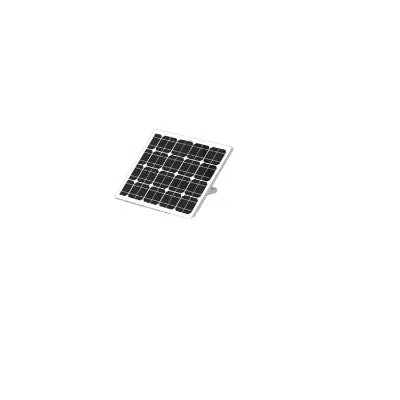
Customizable Multifunctional Agrometeorological Weather Station OEM & ODM Supported
$28.00 - $250.00
MOQ: 1 Minimum
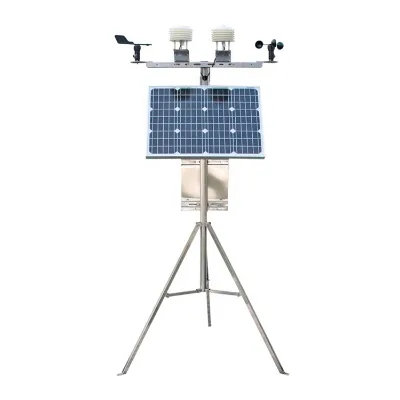
Hot-Selling Outdoor Intelligent Weather Monitoring System Factory Customized OEM & ODM Support
$28.00 - $250.00
MOQ: 2 Minimum
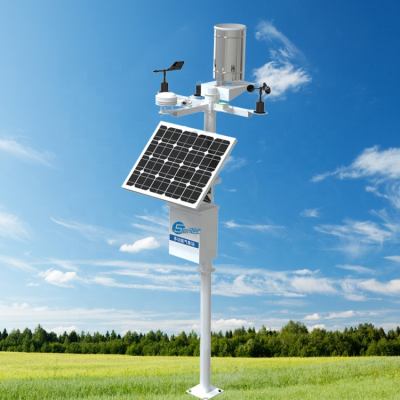
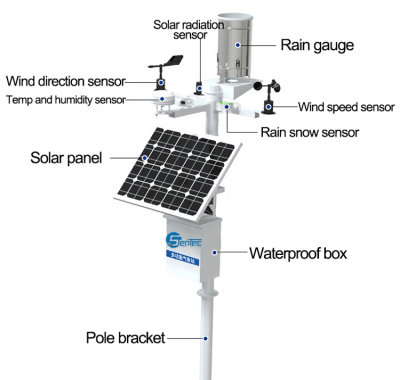

Xi'an Lonn M&E Equipment Co., Ltd.
- Verified by TUVRHEINLAND
- Combined
- China Shaanxi
- Lead time30 days
- Avg. response≤ 4h
Main productsClamp Meter, Laser Distance Meter, Coating Thickness Gauge, Gas Analyzer, Mass Flowmeter, Digital Food Thermometer, Hygrometer Thermometer, Wireless Bluetooth Thermometer, Weather Station, pH Meter
Main marketsEurope,North America

Professional Weather Station Manufacturers Forecast Weather Station with Rain Gauge
$63.50 - $68.00
MOQ: 10 Pieces

2020 New Colorful Weather Station Wireless Mini Weather Station with Data Storage
$63.50 - $68.00
MOQ: 10 Pieces



Fujian Tiancheng United Industrial Group Co., Ltd.
- Manufacturer, Trading Company
- Fujian, China
- Lead time15 days
- Avg. response≤ 13h
Main productsWeather Station,Thermometer Hygrometer,Alarm Clock,Kitchen Timer,Alarm Clock
Main marketsDomestic Market(95.00%), North America(1.00%), Southern Europe(1.00%), Northern Europe(1.00%), Western Europe(1.00%), South America(1.00%)
Handan Yantai Import And Export Co., Ltd.
- Verified by TüVRheinland
- Manufacturer, Trading Company
- Lead time0 days
- Avg. response≤ 3h
Main productsCompact Weather Station, Environmental Monitoring Station, Soil Monitor, Water Monitor
Main marketsEastern Asia(30%), Southeast Asia(25%), Eastern Europe(10%)
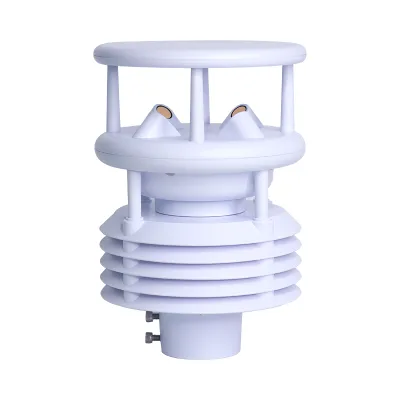
smallenviroment weather thermometer size Outdoor WIND multi parameters compact weather station
$240.00 - $258.00
MOQ: 1 sets
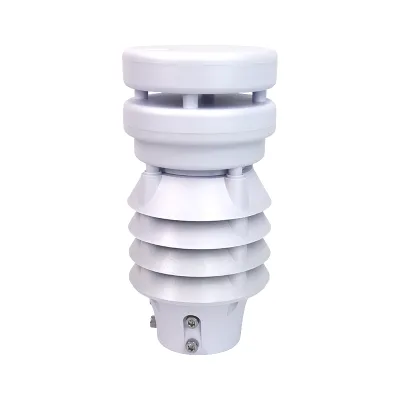
XF800L 8-in-1 Compact Weather Station Case Only
Contact supplier
Zhejiang Top Cloud-Agri Technology Co., Ltd.
- Verified by Intertek
- Manufacturer, Trading Company
- Lead time5 days
- Avg. response≤ 4h
Main productsAgriculture Testing Instrument, Laboratory Equipment, Smart Fertilizer Machine, Water Quality And Environmental Monitoring Equipment, Genetic And Biotechnology Equipment
Main marketsDomestic Market(80%), Southeast Asia(16%), Eastern Europe(1%)
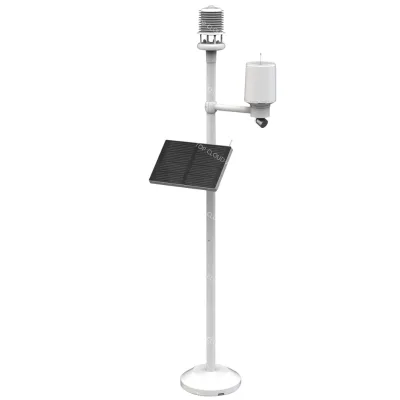
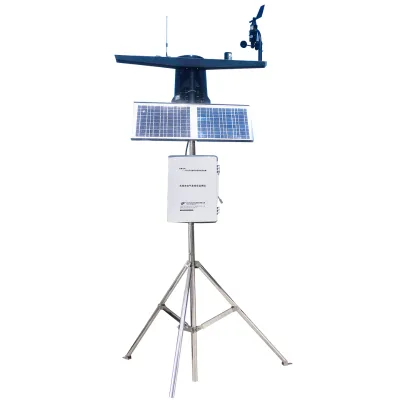
Professional Microclimate Information Collection System Instrument
$2540.00 - $3000.00




Comprehensive Sourcing Guide
Bar Design Outdoor Weather Station Supplier Concentration and Factory Types
The current supplier landscape for bar design outdoor weather stations reveals a distinct concentration of manufacturing activity within specific Chinese provinces. Available data confirms that a significant portion of verified manufacturers are located in Shaanxi, China, where facilities specialize in producing pressure sensors, level measurement devices, and comprehensive weather monitoring systems. These Shaanxi-based factories often list main products that include ultrasonic level sensors, radar level sensors, and various flow meters alongside their core weather station offerings. This geographic clustering suggests a mature industrial ecosystem in Shaanxi capable of supporting complex sensor integration and mass production for agricultural and industrial applications.
In contrast, other suppliers operating in this space are identified as trading companies based in Anhui, China. These entities differ from the manufacturers in Shaanxi by offering ODM capabilities and focusing on IoT multi-parameter solutions rather than solely on hardware fabrication. The Anhui-based trading companies often highlight certifications such as ISO and CE, along with warranty terms of one year, indicating a service-oriented approach to sourcing. While the Shaanxi factories emphasize their direct manufacturing capacity for components like temperature and humidity sensors, the Anhui trading companies bridge the gap between production and global distribution, offering network communication options like 4G, LoRa, or WiFi for their smart farm systems.
How to Verify Bar Design Outdoor Weather Station Suppliers
When evaluating potential partners for bar design outdoor weather stations, buyers must prioritize verification status and company type to ensure reliability. The available data indicates that some suppliers hold SGS verification, a critical credential that adds a layer of trust to their operational claims. Buyers should explicitly check for this verification badge before proceeding with negotiations, as it serves as a third-party validation of the supplier's business legitimacy. Additionally, distinguishing between a Manufacturer/Factory and a Trading Company is essential, as the former typically offers more direct control over production quality and customization, while the latter may provide broader product ranges and ODM services.
Beyond verification badges, buyers should scrutinize the specific product attributes and certifications listed in the supplier's catalog. For instance, some suppliers provide detailed specifications for their weather stations, including accuracy ratings of ≤0.5°C, digital displays, and specific material compositions like gas-resistant housing. Others may list certifications such as ISO and CE, which are vital for compliance in international markets. It is crucial to verify that the stated certifications match the specific model number, such as the SC-EM3 or AWSS-11, rather than assuming they apply to the entire product line. This granular verification prevents mismatches between expected performance and delivered goods, ensuring the Bar Design Outdoor Weather Station meets the required technical standards for the intended application.
What to Compare Across Bar Design Outdoor Weather Station Suppliers
Comparing suppliers requires a systematic analysis of response times, lead times, and minimum order quantities to align with project timelines. Data shows significant variation in response speeds, with some suppliers responding in approximately 2.75 hours while others take around 6.51 hours. This difference can impact the urgency of procurement, especially for time-sensitive agricultural projects. Furthermore, lead times vary widely, with some suppliers indicating a zero-day lead time for immediate dispatch, while others specify a 30-day production window. Buyers must weigh these factors against their specific schedule needs, understanding that a faster response does not always guarantee a shorter delivery period if the product requires custom manufacturing.
Price and minimum order quantity (MOQ) are equally critical dimensions for comparison across the supplier base. The observed price ranges for bar design outdoor weather stations span from approximately $40 to $2,600, depending on the complexity and features of the unit. For example, basic handheld units may start at $40, whereas comprehensive automatic stations with advanced data tools can reach $2,600. The MOQ is generally low, with many suppliers accepting orders as small as one unit, which is beneficial for testing or small-scale deployments. However, buyers should verify if bulk pricing tiers exist and ensure that the quoted price includes all necessary accessories, such as specific packing materials like cartons or wooden boxes, to avoid hidden costs that could inflate the total expenditure.
Common Bar Design Outdoor Weather Station Sourcing Risks
One significant risk in sourcing bar design outdoor weather stations involves the discrepancy between advertised specifications and actual product performance. Suppliers may list attributes such as a temperature range of -40 to 80 degrees Celsius or an accuracy of 1°C, but these figures must be validated against independent test results or third-party certifications. Without concrete evidence of these claims, buyers risk receiving units that fail to operate within the required environmental parameters, particularly in extreme conditions. It is imperative to request detailed test reports or certification documents that specifically cover the model in question, rather than relying on general product descriptions that might not reflect the specific batch being ordered.
Another prevalent risk is the ambiguity surrounding warranty terms and after-sales support, which varies significantly between manufacturers and trading companies. While some suppliers explicitly state a one-year warranty and offer customization services, others may provide vague or non-existent support guarantees. This lack of clarity can lead to substantial financial losses if the equipment malfunctions shortly after deployment. Buyers should carefully review the warranty clauses, ensuring they cover specific failure modes like sensor drift or housing damage. Additionally, the origin of the product, whether from Shaanxi or Anhui, should be confirmed to ensure that the supply chain is transparent and that the supplier can be held accountable for any defects or delays in the delivery of the Bar Design Outdoor Weather Station.
Bar Design Outdoor Weather Station Regional Sourcing and Logistics
Regional sourcing strategies must account for the specific logistical advantages and challenges associated with different manufacturing hubs. Suppliers located in Shaanxi, China, often benefit from established industrial infrastructure that supports the production of heavy-duty sensors and weather monitoring equipment. This region's concentration of manufacturers can facilitate faster production cycles for standard models, potentially reducing lead times for bulk orders. However, buyers should verify the specific shipping capabilities of these factories, as inland locations might require additional transit time compared to coastal ports. Understanding the origin, such as Shaanxi or Qinhuangdao, helps in estimating the total logistics cost and delivery schedule more accurately.
Conversely, trading companies based in Anhui may offer different logistical benefits, particularly regarding international shipping and customs clearance. These entities often have established relationships with freight forwarders and may provide more flexible shipping options for smaller orders or customized units. The product origin listed as Qinhuangdao for some IoT multi-parameter stations suggests a strategic location for export, potentially offering streamlined logistics for global distribution. Buyers should inquire about the specific packing standards, such as carton or wooden box packaging, to ensure the equipment survives the journey without damage. Additionally, confirming the network communication capabilities, such as 4G or LoRa, is essential to ensure the weather station functions correctly in the target region's infrastructure.
Bar Design Outdoor Weather Station Commercial Terms and Order Planning
Commercial terms for bar design outdoor weather stations must be meticulously planned to avoid unexpected costs and delays. Buyers should pay close attention to the payment terms, delivery schedules, and any potential tariffs associated with the product's origin. While some suppliers offer immediate dispatch with a zero-day lead time, others may require a 30-day production period, which must be factored into the project timeline. It is also crucial to verify the currency of the quoted prices, as fluctuations can impact the final cost. Ensuring that the price includes all necessary components, such as the power supply unit or communication modules, prevents the need for additional purchases that could disrupt the project schedule.
Order planning should also consider the customization options and scalability of the supplier's offerings. Many suppliers indicate that customization is available, allowing buyers to tailor the Bar Design Outdoor Weather Station to specific agricultural or industrial needs. However, this customization often comes with a longer lead time and potentially higher costs. Buyers should confirm the exact specifications for custom orders, including the model number and any unique features like specific communication protocols or sensor ranges. Additionally, verifying the warranty period and the process for handling claims is vital for long-term operational stability. By carefully planning these commercial terms, buyers can secure a reliable supply chain that meets their technical and financial requirements without compromising on quality or delivery timelines.
FAQs
Where are the weather station manufacturers located?
Manufacturers are located in China Shaanxi and China Anhui. Some suppliers operate as factories while others function as trading companies. Buyers should verify specific facility locations to ensure proximity to their logistics needs and to confirm the origin of the equipment.
What is the minimum order quantity for these stations?
The minimum order quantity is one unit for several models listed. This allows buyers to test products before placing larger orders. Always confirm the specific MOQ for the selected model as requirements may vary depending on customization options or bulk pricing tiers.
How long does it take to receive the products?
Lead times vary significantly among suppliers, with some showing zero days and others requiring thirty days. Response times also differ, ranging from roughly three hours to over six hours. Buyers must check the specific lead time for their chosen supplier before finalizing purchase plans.
What certifications do the weather stations hold?
Some products carry ISO and CE certifications for compliance. One supplier is verified by SGS for quality assurance. Buyers should request current certification documents to ensure the equipment meets international safety and performance standards required for their specific industrial or agricultural applications.
What is the price range for outdoor weather stations?
Prices range from forty dollars to two thousand six hundred dollars depending on the model and features. Basic handheld units cost less than comprehensive automatic systems. Buyers should compare specific product attributes like accuracy and sensor types to understand the value within each price bracket.
What are the temperature operating ranges for these devices?
Operating temperatures vary from negative forty to eighty degrees Celsius for some models. Others function between negative twenty and sixty degrees Celsius. Select a unit with a range that matches your local climate conditions to ensure reliable data collection and long-term durability in the field.
Do suppliers offer customization for weather station models?
Customization is available for certain models like the Sc-Em3 series. Buyers can request specific configurations for their agricultural or industrial projects. Verify the customization options and associated costs with the supplier to ensure the final product meets your exact technical and operational requirements.