Blind Box Christmas Advent Calendar Suppliers and Manufacturers
Source 23 verified suppliers for Blind Box Christmas Advent Calendar packaging. Compare lead times, MOQs, certifications, and response rates to find the right partner. Review product specs and request quotes today; review the available evidence before requesting comparable quotations from suitable candidates.
Suppliers List

- Verified by SGS
- Trading Company
- China Guangdong
- Lead time15 days
- Avg. response≤ 6h
Main productsPackaging Boxes, Gift Packaging, Jewelry Packaging, Gift Wrapping, Sterling Silver Jewelry, Jewelry, Necklace
Main marketsSoutheast Asia/ Mideast,Europe,Australia


Affordable Christmas New Year Holiday Mystery Tackle Blank Advent Calendar Box Empty
$0.40 - $1.50
Moq: 500

Custom Empty Advent Calendar Gift Boxes Wholesale for Food Health Care Products
$0.80 - $2.50
Moq: 500

Guangzhou Vitality Printing Co., Ltd
- Verified by SGS
- Trading Company,Manufacturer/Factory
- China Guangdong
- Lead time105 days
- Avg. response≤ 6h
Main productsPaper Packaging, Paper Folding Box, Booklet, Paper Can, Gift Box, Book Printing Service, PVC Box, Cosmetics Packaging, Food Container, Children Book Printing
Main marketsEastern Europe,North America,Southeast Asia,Eastern Asia,Western Europe,Africa


Advent Calendar 12 Day Blind Box Halloween Packaging Food Packaging Cute Funny Toy Box
$0.23 - $0.84
Moq: 1000

Guangzhou Mike Printing & Packaging Co., Ltd
- Verified by SGS
- Manufacturer
- China Guangdong
- Lead time15 days
- Avg. response≤ 12h
Main productsHardcover Book, Softcover Book, Children Book, Textbook, Dictionary, Notebook Printing, Magazine, Booklet, Paper Box
Main marketsSoutheast Asia/ Mideast,Europe,North America

- Trading Company,Manufacturer/Factory
- Hongkong_China Hongkong
- Lead time23 days
- Avg. response≤ 6h
Main productsCustom Paper Puzzle, Packaging Box, Books/Magazine, PU Album, Plastic Ziplock Bag, Paper Bag, Photo Frame, Board Game
Main marketsSouth America,Eastern Europe,North America,Southeast Asia,Eastern Asia,Oceania,Western Europe,Africa


Holiday Custom Christmas Calendar Box Advent Calendar Blind Box Countdown Surprise Gift Box
$6.55 - $12.99
Moq: 1000

Dongguan Pomall Packaging Product Co.,Ltd
- Verified by CTI
- Combined
- China Guangdong
- Lead time15 days
- Avg. response≤ 4h
Main productsPaper Box, Chocolate Box, Gift Box, Packaging Box, Jewelry Box, Cosmetic Box, Perfume Box, Wine Box
Main marketsSoutheast Asia/ Mideast


Bespoke Advent Christmas Calender Gift Boxes Surprise Blind Personalized Gift Box
$0.52 - $1.25
Moq: 500

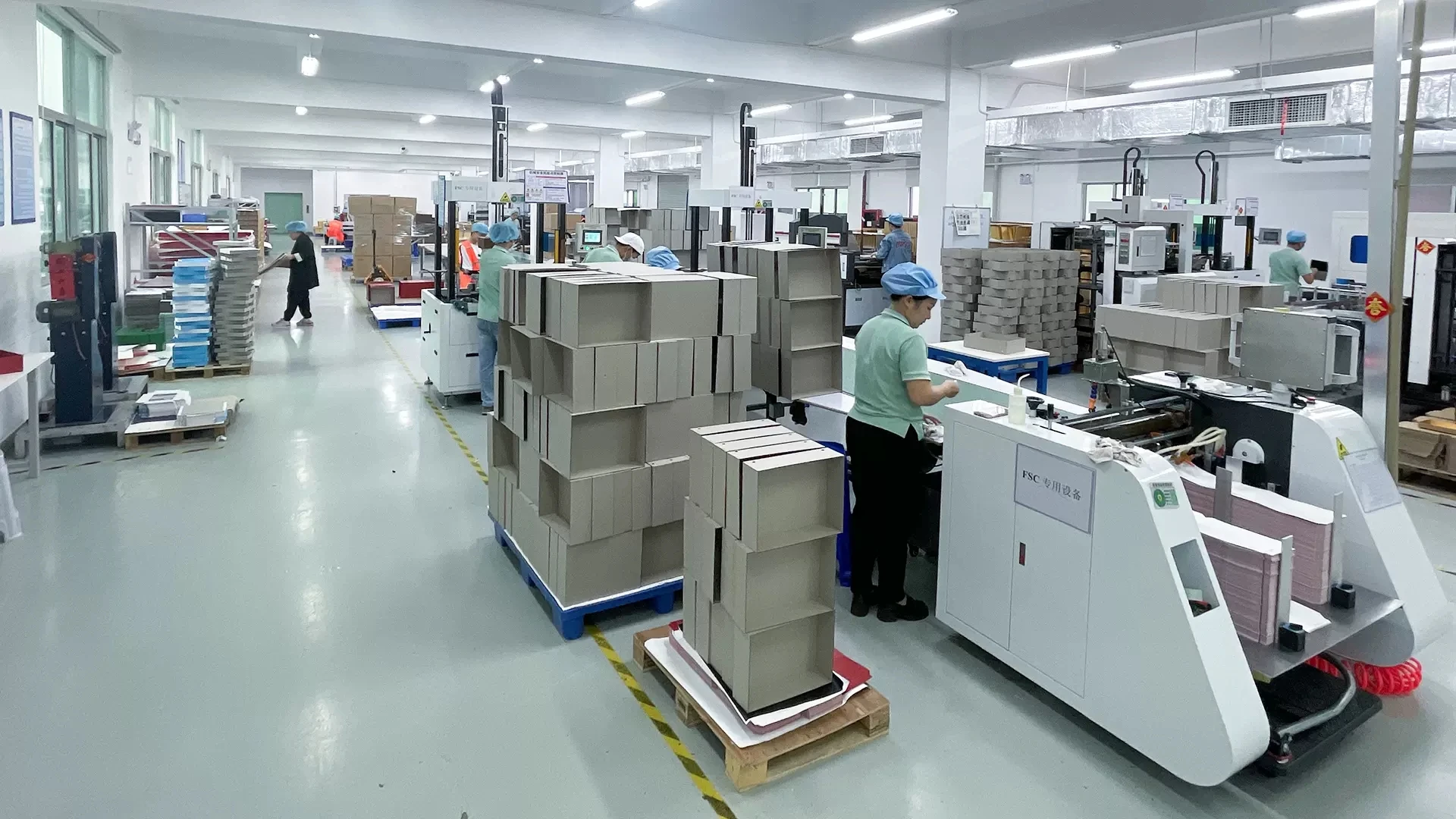
Shenzhen Idreampackaging Technology Co., Ltd.
- Manufacturer, Trading Company
- Guangdong, China
- Lead time15 days
- Avg. response≤ 2h
Main productsJewelry Box,Suede Pouch Microfiber Pouch Cotton Pouch,Paper Box,paper bag,cardboard box
Main marketsCentral America(30.0%), North America(20.0%), Eastern Asia(10.0%), Northern Europe(10.0%), Africa(10.0%), Southeast Asia(10.0%), Southern Europe(3.0%), Western Europe(2.0%), Mid East(2.0%), South America(2.0%), South Asia(1.0%)
Guangzhou Shinelee Paper Product Co., Ltd.
- Verified by Intertek
- Manufacturer, Trading Company
- Guangdong, China
- Lead time10 days
- Avg. response≤ 2h
Main productsAdvent Calendar, Gift Box, Cosmetic Box, Food Box, Interactive Box
Main marketsWestern Europe(40%), North America(30%), Southeast Asia(15%)

Tianjin Caile Printing Co., Ltd
- Verified by TUVRHEINLAND
- Trading Company
- China Tianjin
- Lead time60 days
- Avg. response≤ 9h
Main productsPlanner, Journal, Notebook, Calendar, Box, Diary, PU Leather Binder, Pop up Book, First Aid Kit, Gift Set
Main marketsEurope,Australia,North America

Fuzhou Yuanyang Future Import and Export Co., Ltd.
- Verified by SGS
- Combined
- China Fujian
- Lead time15 days
- Avg. response≤ 3h
Main productsPackaging Bag, Bag, Travel Bag, Shopping Bag, Tote Bag, Paper Bag, Sports Bag, Backpack, Gift Bag, Promotioan Bag
Main marketsAustralia

Blind Box Christmas Calendar Box with Door Customized Advent Day Packaging Christmas
$0.99 - $3.99
Moq: 500


GUANGZHOU MIYI PRINTING CO., LTD
- Verified by BV
- Trading Company,Manufacturer/Factory
- China Guangdong
- Lead time0 days
- Avg. response≤ 8h
Main productsBook Printing, Custom Magazine, Catalog, Paper Bag, Paper Box, Packageing Box, Toy Box, Sticker, Label, School Supplies
Main marketsSouth America,Eastern Europe,Mid East,North America,Southeast Asia,Eastern Asia,Oceania,Western Europe,Africa

Suzhou Honychem Specialties Manufacture Co., Ltd.
- Verified by BV
- Trading Company,Manufacturer/Factory
- China Jiangsu
- Lead time15 days
- Avg. response≤ 3h
Main productsSilicone Seal, Rubber Seal, Silicone Parts, Silicone Tube, Rubber O Ring, Silicone Keyboard, Silicone Rubber Keyboard Button, Rubber Gasket, Silicone Rubber, Rubber Parts
Main marketsSouth America,Eastern Europe,Mid East,North America,Southeast Asia,Eastern Asia,Oceania,Western Europe,Africa

Xiamen Birtley Industry & Trading Co., Ltd.
- Verified by SGS
- Trading Company,Manufacturer/Factory
- China Fujian
- Lead time15 days
- Avg. response≤ 2h
Main productsMailer Box, Food Box, Display Box, Cosmetic Box, Jewelry Box, Flower Box, Christmas Box, Accessories, Printing Service, Gift Box
Main marketsSouth America,Eastern Europe,Mid East,North America,Southeast Asia,Eastern Asia,Oceania,Western Europe,Africa
Xiamen Essencreate Industry&trade Co., Ltd.
- Manufacturer, Trading Company
- Fujian, China
- Lead time20 days
- Avg. response≤ 6h
Main productsPaper Tube,Paper Cans,Paper Canister,Foldable Gift Box,Paper Gift Box
Main marketsSouthern Europe(10.0%), Northern Europe(10.0%), Western Europe(10.0%), Eastern Asia(10.0%), Mid East(10.0%), Oceania(10.0%), Southeast Asia(10.0%), Eastern Europe(10.0%), South America(10.0%), North America(10.0%)

Shenzhen Tengyue Printing Co., Ltd.
- Verified by TUVRHEINLAND
- Combined
- China Guangdong
- Lead time15 days
- Avg. response≤ 6h
Main productsPackaging&Printing, Cardboard Gift Box, Paper Box, Plastic Clear Box, Paper Tube, Paper Bag, Mailer Box, Shipping Box, Paper Card, Stickers
Main marketsEurope,Australia,North America

Yiwu Tiger Playing Cards Co., Ltd.
- Trading Company
- China Zhejiang
- Lead time15 days
- Avg. response≤ 9h
Main productsPlaying Cards, Jigsaw Puzzle, Gift Box, Card Game, Board Game, Cognitive Educational Card, Paper Bag, Audible Children Book
Main marketsNorth America
Longgang Baihe Packaging Co., Ltd.
- Manufacturer, Trading Company
- Zhejiang, China
- Lead time15 days
- Avg. response≤ 5h
Main productsShopping paper bag,Gift bag,Kraft paper bag,cotton bag,paper box
Main marketsNorth America(50.0%), Southeast Asia(30.0%), Mid East(20.0%)

Xiamen ZRF Media Turnkey Co., Ltd.
- Verified by SGS
- Trading Company
- China Fujian
- Lead time23 days
- Avg. response≤ 2h
Main productsPaper Boxes, Gift Packaging Boxes, Paper Bags, Shopping Paper Bags, Labels&Stickers, PP Container
Main marketsSouth America,East Asia(Japan/ South Korea),Europe,North America
Xiamen Zeren Paper Industry Co., Ltd.
- Verified by SGS
- Combined
- China Fujian
- Lead time15 days
- Avg. response≤ 3h
Main productsSpecial Paper, Paper Packaging
Main marketsNorth America


Wholesale 24 Days Christmas Packaging Gift Box Luxury Empty Blank Advent Calendar
$1.19 - $2.59
Moq: 500


Hangzhou Iforest Electronic Commerce Co., Ltd.
- Verified by SGS
- Trading Company
- China Shanghai
- Lead time30 days
- Avg. response≤ 11h
Main productsPaper Box, Paper Bag, Paper Tube
Main marketsSoutheast Asia/ Mideast,Australia,North America
Qingdao Aibokaier Industry And Trade Co., Ltd.
- Verified by TüVRheinland
- Manufacturer, Trading Company
- Lead time10 days
- Avg. response≤ 1h
Main productsPaper Box, Paper Bag, Stickers
Main marketsDomestic Market(28%), North America(15%), Northern Europe(7%)

- Trading Company
- Chongqing, China
- Lead time0 days
- Avg. response≤ 4h
Main productsJewelry storage,Glasses storage,Watch storage,Women's bag,jewelry
Main marketsNorthern Europe(20.0%), South America(20.0%), North America(20.0%), Southern Europe(10.0%), Eastern Europe(10.0%), Western Europe(10.0%), Mid East(10.0%)
Guangzhou Huaisheng Packaging Inc.
- Manufacturer, Trading Company
- Lead time旺季: "1 - 200000":20,"> 200000":"To be negotiated", 淡季: "1 - 200000":20,"> 200000":"To be negotiated"
- Avg. response≤ 2h
Main productsPaper Box, Paper Bag, Gift Box, Paper Packaging Box

Qingdao Jiayinda Packaging Co., Ltd.
- Verified by BV
- Combined
- China Shandong
- Lead time15 days
- Avg. response≤ 6h
Main productsFoldable Box, Gift Box, Gift Bag, Printed Tissue Paper, Printing & Packaging, Hangtag, Label, Box, Product Catalog, Display Box
Main marketsSoutheast Asia/ Mideast,East Asia(Japan/ South Korea),Europe,North America


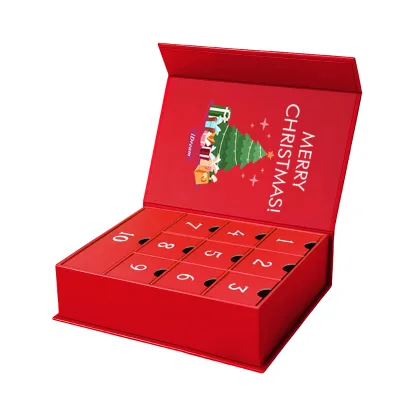
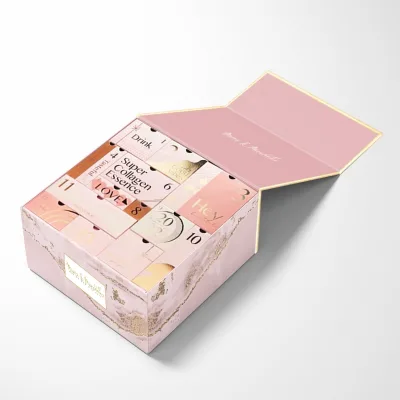

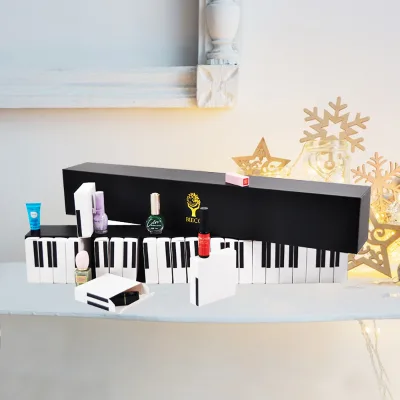


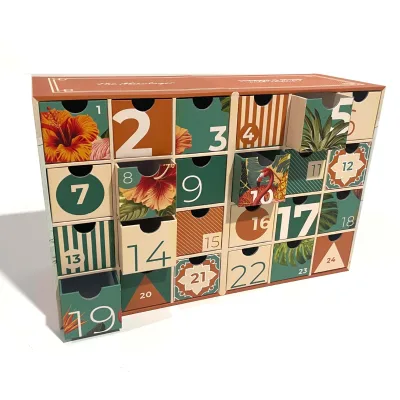
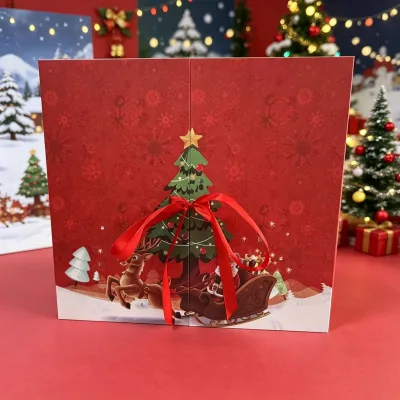


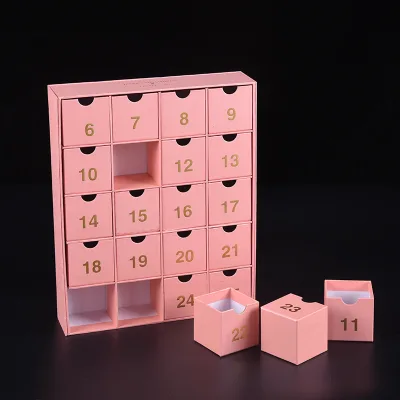
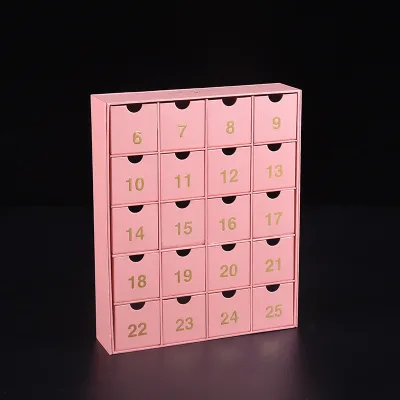


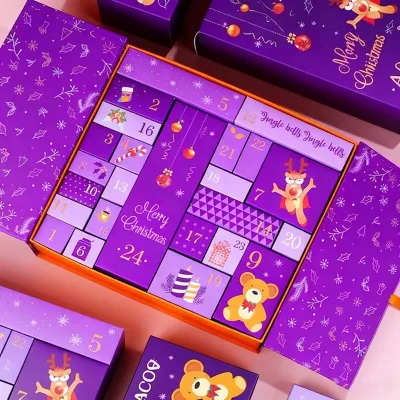
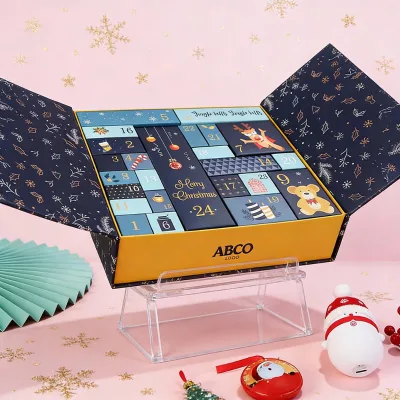
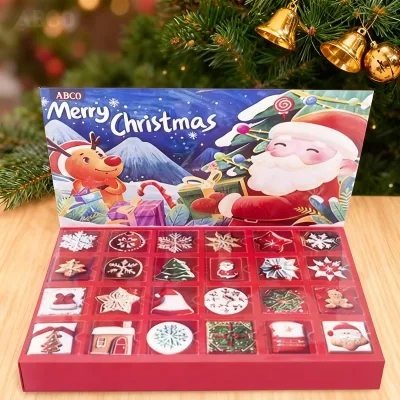
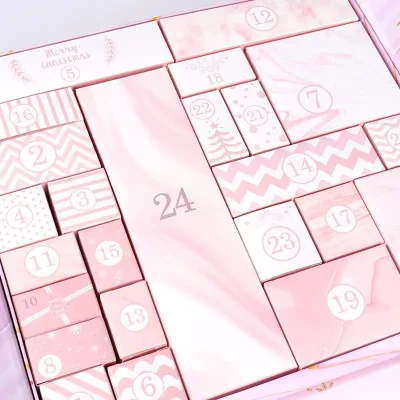
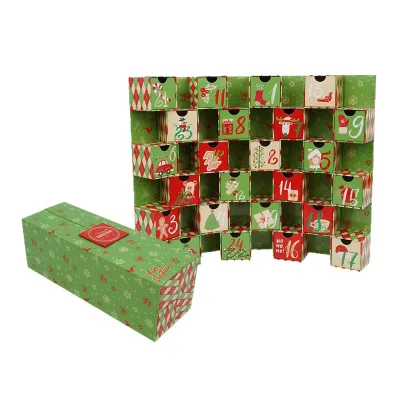
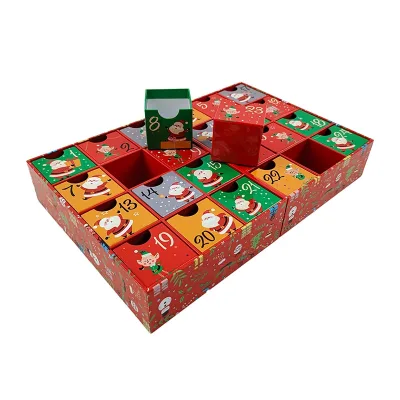
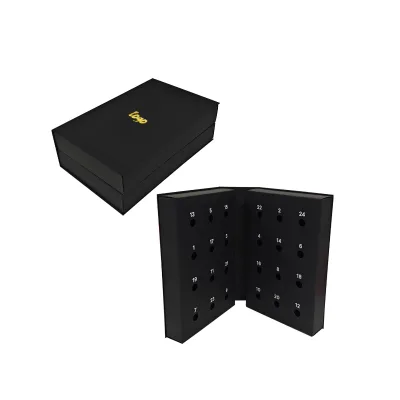
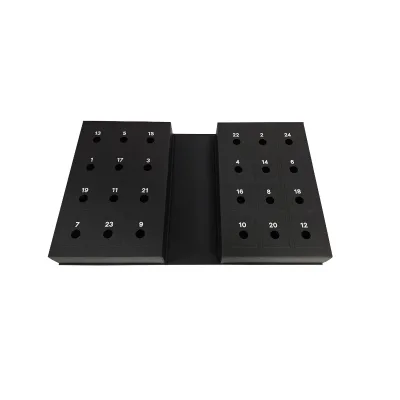


Comprehensive Sourcing Guide
Blind Box Christmas Advent Calendar Supplier Concentration and Factory Types
Suppliers of Blind Box Christmas Advent Calendar products on B2B platforms are heavily associated with packaging and printing manufacturing regions in China, and the current supplier pool reflects that pattern. Several suppliers in the observed results are located in Guangdong, which is one of China's established provinces for paper packaging production. However, not every listing displays a confirmed location, so buyers should treat geographic concentration as a starting hypothesis rather than a settled fact. When a supplier profile does not state a location, request it directly and ask whether production happens in-house or through partner facilities, since advent calendar boxes involve die-cutting, folding, gluing and multi-compartment assembly that not every printing workshop can handle alone.
The supplier mix spans several company types. Pure trading companies appear alongside combined trading-and-manufacturing operations and dedicated manufacturers. Manufacturers in the pool tend to list book and paper box printing as main products, which indicates press capacity suited to two-sided printed advent panels. Trading companies often list broad packaging portfolios including gift packaging and jewelry packaging, which can be useful for buyers sourcing filled or decorated formats. Some listings carry verification labels such as SGS, while system certifications vary from recognized standards to none displayed. Because the results show this spread, categorize each candidate early as manufacturer, hybrid or trading company, and let that classification drive which verification steps you apply in the next stage.
How to Verify Blind Box Christmas Advent Calendar Suppliers
Verification for Blind Box Christmas Advent Calendar sourcing should start with the labels and attributes actually displayed in the supplier results, then move to independent confirmation. One supplier in the current pool is SGS-verified, which is a third-party verification signal, but verification labels are not uniform across all listings. Some profiles show system certifications such as ISO 9001 and BSCI, while at least one shows no system certification at all. Do not assume a certification exists because the category involves food-adjacent use; if the boxes will touch chocolate, candy or other consumables, ask specifically for food-contact material documentation and confirm any stated certificate number with the issuing body.
Practical verification steps should match the supplier type. For manufacturers, ask for factory photos, equipment lists covering die-cutting and folder-gluing, and the production address so you can commission or conduct an audit. For trading companies, clarify who owns the tooling and who controls quality checks at the packing stage, because advent calendars require every numbered door to align with its inner compartment. Request physical samples before any deposit, and inspect paperboard thickness, door-cut precision, hot stamping quality and glue adhesion. A sample offer is itself a data point; one observed listing explicitly states samples are accepted with a three-day sample time. Finally, confirm business registration details and export experience with your destination market, since custom holiday goods must clear customs before the season begins.
What to Compare Across Blind Box Christmas Advent Calendar Suppliers
Build a comparison table using only attributes that suppliers actually display, and leave blanks where a listing shows nothing. Lead time is one of the most consequential differences in this category: observed listings range from fifteen days on one profile to a hundred and five days on another, a gap wide enough to determine whether a late-summer order still lands before Christmas retail deadlines. Response time also varies in the pool, from roughly five hours to over eleven hours, which matters when artwork revisions and countdown-season deadlines compress decision windows. MOQ differences are equally material, with observed product-level MOQs starting at 500 pieces on one listing and 1,000 on another.
Beyond operational metrics, compare product and capability dimensions. Main products tell you whether a supplier is a packaging specialist or a printer with adjacent capabilities; one pool supplier lists jewelry packaging and gift wrapping while others emphasize booklet and hardcover book printing. Price ranges on observed advent calendar products span roughly 0.23 to 2.50 US dollars depending on format, size and finish, so compare quotes at identical specifications rather than headline prices. Customization depth is another axis: some listings state customization availability, logo printing, hot stamping surface treatment, cardboard weights from 800 to 2,000 GSM, and insert options like foam, pulp trays or blister trays. Establishment year and escrow availability may not display for every candidate, so collect them during outreach and score suppliers on completeness as well as content.
Common Blind Box Christmas Advent Calendar Sourcing Risks
The most significant risk in this category is timing failure. Advent calendars are date-critical merchandise with essentially no residual value after December, so any delay in production, artwork approval or shipping destroys the selling window. The observed lead-time spread of fifteen to a hundred and five days shows how differently suppliers define feasibility, and the longer figure likely reflects peak-season congestion or complex custom tooling. Build a backward schedule from your in-port deadline, and treat any supplier whose quoted lead time leaves no buffer as a risk regardless of price. Another risk is artwork error: misnumbered doors, reversed countdown sequences or wrong printing on individual compartments are rarely caught in a single flat sample.
Quality and compliance risks deserve equal attention. If boxes will hold food items, buyers must verify food-contact compliance for inks, adhesives and board rather than assuming the packaging category covers it; one observed listing explicitly targets food and health care products, but you should still obtain documentation. Structural risks include doors that open early under carton compression, glue failures in humid climates, and hot stamping that scuffs in transit. Commercial risks include order cancellation windows, since customized printed goods are usually non-refundable once production starts. Finally, beware single-sample bias: one flawless sample from a trading company does not prove the mass-production run from an unknown partner factory will match, so specify a golden sample and a pre-shipment inspection.
Blind Box Christmas Advent Calendar Regional Sourcing and Logistics
The current supplier results point to Guangdong, China, as a sourcing region for this category, which is consistent with the province's role in paper packaging and gift box manufacturing. Guangdong's coastal position gives buyers realistic options for both air and sea freight, and observed product listings explicitly state shipment by air and by sea. Sea freight is the practical default for bulky, lightweight goods like empty advent calendar boxes, where cube utilization drives landed cost more than weight; the listings note unit weights under 0.5 kilograms, meaning a full container's value is mostly air. Air freight should be reserved for samples, replacement stock or late recovery orders where the selling season justifies the premium.
Production origin details on observed listings cite Guangzhou and China generally, so confirm the exact factory address early because inland suppliers may add trucking legs to port. Holiday seasonality creates a logistics pinch: advent calendar production peaks in summer and early autumn, competing with other Christmas goods for container space, so book shipping capacity in advance and confirm cutoff dates with your forwarder. Ask suppliers how finished boxes are packed; observed listings mention carton packing and export cartons, and you should specify inner-carton counts and moisture protection. If you source from regions not represented in your current results, apply the same checks: confirm port proximity, peak-season surcharges and whether quoted prices include delivery to a named Chinese port.
Blind Box Christmas Advent Calendar Commercial Terms and Order Planning
Commercial terms for Blind Box Christmas Advent Calendar orders should be negotiated around the category's unforgiving deadline. Observed price ranges run from about 0.23 to 2.50 US dollars per unit across listings, with MOQs of 500 to 1,000 pieces displayed on some products, giving a realistic envelope for opening negotiations. Ask each supplier to quote at your exact specification: board GSM, print colors, hot stamping areas, insert type and packaging format, since the observed listings show price bands that widen significantly with customization. Clarify Incoterms, payment structure and whether tooling or plate charges apply once and are reusable in later seasons, which matters if you plan annual reorders.
Order planning should accommodate the season-calendar mathematics of the category. With observed lead times ranging from fifteen to a hundred and five days, a buyer targeting mid-October arrival may need to place orders in mid-year for slower suppliers, while faster ones may still accommodate later starts with less buffer. Sequence your commercial steps accordingly: approve artwork and a golden sample before deposit, confirm a production schedule with milestone dates, and book pre-shipment inspection during peak production weeks. For multi-season programs, ask about reordering terms and whether the supplier retains dielines and printing plates. Finally, document everything in the contract, including tolerance for color variation, door alignment and carton compression, because customized holiday packaging disputes are hard to resolve after the selling window closes.
FAQs
What is the price range for custom blind box advent calendars?
Prices typically range from $0.23 to $2.50 per unit depending on material and customization. Cardboard options start around $0.40, while art paper boxes may cost up to $1.55. Higher-end rigid drawer boxes can reach $2.31. Final costs depend on order volume and specific design requirements.
What is the minimum order quantity for these packaging boxes?
Minimum order quantities generally start at 500 units for standard cardboard boxes. Some suppliers require 1,000 units for specific art paper or gray paper models. Customization availability often influences these thresholds. Buyers should verify exact MOQs with suppliers before placing orders to ensure alignment with production capabilities.
How long does production take for custom advent calendar boxes?
Lead times vary significantly between suppliers, ranging from 15 days to 105 days. Trading companies often offer faster turnaround times compared to manufacturers. Sample production can be completed in approximately three days. Buyers should confirm specific timelines with their chosen supplier to align with holiday shipping schedules.
Are these boxes suitable for jewelry and cosmetic packaging?
Yes, many suppliers list usage for jewelry, cosmetics, and health care products. Options include foam inserts, blister trays, and pulp trays for secure item placement. Custom logo printing and hot stamping are available for branding. Buyers can select appropriate paper types like cardboard or art paper to match product value.
What certifications do these packaging suppliers hold?
Some suppliers hold ISO 9001 and BSCI certifications for quality and social compliance. Others may have SGS verification for product standards. Not all suppliers display system certifications, so buyers should verify specific credentials. Checking for relevant certifications ensures compliance with international trade requirements and ethical sourcing standards.
Can I get samples before placing a bulk order?
Yes, many suppliers accept sample requests for quality evaluation. Sample production typically takes around three days to complete. Buyers can assess paper quality, printing accuracy, and structural integrity before committing to large volumes. Confirming sample costs and shipping details with the supplier is recommended prior to request.