Bubble Tent Suppliers and Manufacturers in China
Source 24 verified Bubble Tent suppliers from China Shanghai and Guangdong. Compare key dimensions including ISO certifications, lead times, MOQs, and response speeds. Review product specs and pricing to identify the right partner for your inflatable tent needs; review the available evidence before requesting comparable quotations from suitable candidates.
Suppliers List

Shanghai BGO Import & Export Co., Ltd.
- Manufacturer/Factory,Group Corporation
- China Shanghai
- Lead time23 days
- Avg. response≤ 16h
Main productsTarpaulin Water Bladder, Aquaculture Tank, Gasoline Fuel Bladder, Dome Tent, PVC Non-Slip Mat, PVC Coated Mesh, Boat Buoy, Tree Watering Bags, Marina Salvage Airbag /Weight Test Bag, Swimming Pool and Pool Cover
Main marketsSouth America,Eastern Europe,Mid East,North America,Southeast Asia,Eastern Asia,Oceania,Western Europe,Africa


5m Inflatable Bubble Tent Two Layers Good Insulation Outdoor Restruant Coffee Bar Ball Tent
$58.00 - $180.00
MOQ: 10 Square Meters

6m Diameter Camping Tent Inflatable Bubble Tent
MOQ: 1 Pieces

Guangzhou Asia Inflatables Co., Ltd.
- Combined
- China Guangdong
- Lead time15 days
- Avg. response≤ 11h
Main productsInflatable Water Park, Inflatable Aqua Park, Inflatable Water Sports, Inflatable Water Trampolin, Inflatable Banana Boat, Water Ski Tubes, Inflatable Water Games, Inflatable Tent, Inflatable Obstacle Course, Inflatable Decoration
Main marketsEurope,Australia,North America


Popular Inflatable Bubble Camping Tent with LED
MOQ: 1 Pieces
Guangzhou Anka Inflatables Co., Ltd.
- Manufacturer, Trading Company
- Guangdong, China
- Lead time7 days
- Avg. response≤ 8h
Main productsHigh-end Customized Simulation Inflatable Model,Inflatable Tent,Inflatable Arch,Advertising Inflatable
Main marketsNorth America(40.00%), Western Europe(20.00%), South Asia(11.00%), Mid East(10.00%), Southeast Asia(6.00%), Domestic Market(5.00%), Oceania(1.00%), Eastern Europe(1.00%), Southern Europe(1.00%), Northern Europe(1.00%), Central America(1.00%), South America(1.00%), Eastern Asia(1.00%), Africa(1.00%)
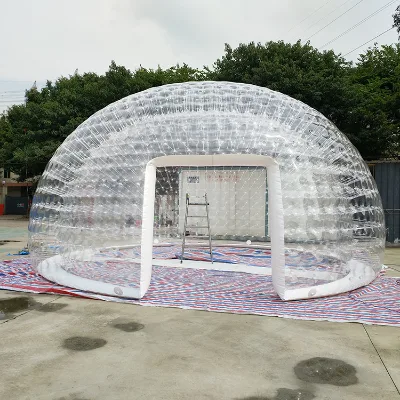
Best Price Bubble Party Bubble Tent Inflatable Clear Dome Tent with LED Lights
$369.00 - $569.00
MOQ: 1

Guangzhou Huayue Inflatable Products Co., Ltd.
- Verified by BV
- Combined
- China Guangdong
- Lead time30 days
- Avg. response≤ 5h
Main productsInflatable Water Park, Inflatable Slide, Bouncy Castle, Inflatable Mirror Ball, Air Track, Inflatable Bunkers, Inflatable Platform, Inflatable Tent, Inflatable Water Toy, Paddle Boards
Main marketsSouth America,Africa,Southeast Asia/ Mideast,East Asia(Japan/ South Korea),Europe,Australia,North America

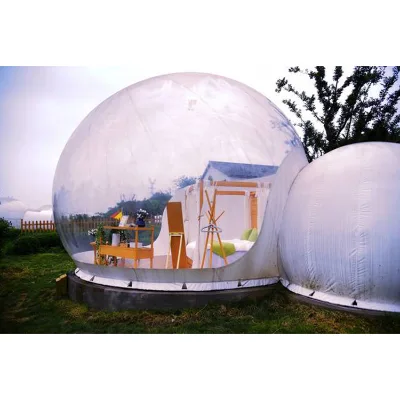
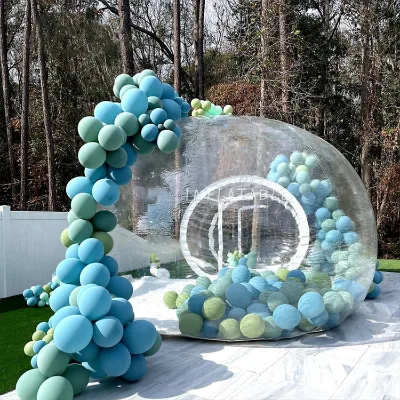
Commercial Bubble Tent Inflatable Bubble Tent Party Event Custom Birthday Bubble Tent
$540.00 - $560.00
MOQ: 1 Pieces


5×5m Transparent Inflatable Tent Outdoor Events Inflatable Air Tent for Camping Accommodation
$865.00 - $880.00
MOQ: 1 Pieces

- Verified by BV
- Combined
- China Guangdong
- Lead time15 days
- Avg. response≤ 14h
Main productsInflatables, Inflatable Jumping, Inflatable Bouncer, Inflatable Slide, Inflatable Toys, Water Balls, Zorbs, Inflatable Water Toys, Inflatable Games
Main marketsSouth America,Africa,Southeast Asia/ Mideast,East Asia(Japan/ South Korea),Europe,Australia,North America


Inflatable Tent Waterproof Camping Tent Transparent Inflatable Bubble Tent
$500.00 - $1000.00
MOQ: 1 Pieces
Foshan Davis Outdoor Products Co., Ltd.
- Verified by TüVRheinland
- Manufacturer, Trading Company
- Lead time15 days
- Avg. response≤ 3h
Main productsLouvered Pergola, Cassette Awning, Retractable Roof, Zip Screen, Window Awning
Main marketsDomestic Market(30%), North America(15%), Oceania(7%)

Hebei Xinghe Outdoor Products Co., Ltd
- Verified by SGS
- Trading Company,Manufacturer/Factory
- China Hebei
- Lead time23 days
- Avg. response≤ 2h
Main productsWedding Tent, Party Tent, Marquee Tent, Event Tent, Warehouse Tent, Canopy TFS Tent, Atrium Tent, High Peak Tent, Dome Tent, Fabric Truss Building
Main marketsSouth America,Eastern Europe,Mid East,North America,Southeast Asia,Eastern Asia,Oceania,Western Europe

Polycarbonate Bubble Tent Versatile Bubble Tent for Exhibitions and Multi Purpose Use
$29.00 - $39.00
MOQ: 50 Square Meters

Modern Design Transparent Bubble PC Dome Tent Outdoor Glamping Bubble Tent for Unique Accommodation
$29.00 - $39.00
MOQ: 50 Square Meters

Glamping Clear Dome Inflatable Bubble Tent Easy Setup for Quick Outdoor Deployment
$25.00 - $39.00
MOQ: 25 Square Meters

House Party Bubble Tent with Starry Sky Rooms for Themed Events and Unique Social Gathering Spaces
$25.00 - $39.00
MOQ: 25 Square Meters

Bubble Tent with Starry Sky for Waterproof Lightweight Camping Enjoy Outdoor Adventures Comfortably
$25.00 - $39.00
MOQ: 25 Square Meters

Guangzhou Aurora Sports Products Co., Ltd.
- Verified by BV
- Trading Company
- China Guangdong
- Lead time15 days
- Avg. response≤ 4h
Main productsSoft Play Equipments, Bounce House, Chiavari Chairs, Inflatable Water Slide, Advertising Inflatables, Inflatable Sports Games, Inflatable Water Games, Indoor Playground, Party Rental Equipments, Gymnastic Equipments
Main marketsSouth America,Africa,Southeast Asia/ Mideast,East Asia(Japan/ South Korea),Europe,Australia,North America

Inflatable Bubble Tent Balloon Bubble Dome Tent Transparent Party Tent
$298.00 - $498.00
MOQ: 1 Pieces

Hot Sale Inflatable Bubble Balloon Tent Bubble House Transparent Clear Party Tent
$298.00 - $498.00
MOQ: 1 Pieces
Fengming Prefabricated Construction Technology (Guangzhou) Co., Ltd.
- Verified by SGS Group
- Manufacturer, Trading Company
- Lead time10 days
- Avg. response≤ 2h
Main productsTent, Truss/Stage, Homestay, Dome Tent, Trade Show Tent
Main marketsNorth America(26%), Eastern Europe(22%), Africa(18%)

GUANGZHOU YOLLOY OUTDOOR PRODUCT CO.,LIMITED
- Verified by BV
- Combined
- China Guangdong
- Lead time15 days
- Avg. response≤ 4h
Main productsInflatable Tent, Inflatable Swimming Pool, Inflatable Water Park, Inflatable Water Slide, Inflatable Floating Dock, Inflatable Sup Paddle Broad, Inflatable Water Toys, Inflatable Game Mechanical Rodeo Bull, Inflatable Planetarium Projection Tent, Inflatable Spray Paint Booth
Main marketsSouth America,East Asia(Japan/ South Korea),Europe,North America
Qingdao Funseed Inflatable Co., Ltd.
- Manufacturer
- Shandong, China
- Lead time30 days
- Avg. response≤ 3h
Main productsStretch Tent,Outdoor Party ent,Inflatable Tent,Safari Tent,Inflatable Booth
Main marketsWestern Europe(60.00%), North America(30.00%), Southeast Asia(10.00%)
Dingzhou Starshine Technology Co., Ltd.
- Verified by SGS Group
- Manufacturer, Trading Company
- Lead time12 days
- Avg. response≤ 2h
Main productsPolycarbonate Sheet, PC dome house, PC Carport, Prefab House
Main marketsNorth America(40%), Western Europe(40%), Eastern Europe(10%)

Hebei New Sight Outdoor Products Co., Ltd.
- Verified by SGS
- Combined
- China Hebei
- Lead time23 days
- Avg. response≤ 7h
Main productspop up tent
Main marketsEurope

Inflatable Dome Tent Outdoor Concert Air Dome Inflatable Tent Inflatable Bubble Dome Tent
$280.00 - $290.00
MOQ: 1 Pieces


Party Tent Canopy Outdoor Exhibition Waterproof Tent Promotion Booth Tent
$96.50 - $120.00
MOQ: 1 Pieces


Pop up Tents Camping Outdoor Exhibition Booth Tent Outdoor Promotion Tent
$35.00 - $44.50
MOQ: 1 Pieces

Inflatable Dome Tent Portable Inflatable Tent Outdoor Inflatable House Tent
$280.00 - $290.00
MOQ: 1 Pieces

Guangzhou U-Rides attraction Co.,Ltd
- Trading Company,Manufacturer/Factory
- China Guangdong
- Lead time23 days
- Avg. response≤ 13h
Main productsMechanical Bull, Inflatables, Inflatable Water Park, Inflatable Castle, Inflatable Slide, Amusement Park, Trampoline, Inflatable Tent, Inflatable Game, Inflatable Products
Main marketsSouth America,Eastern Europe,Mid East,North America,Southeast Asia,Eastern Asia,Oceania,Western Europe,Africa

Premium Quality Inflatable 5m Jumping Bubble tent for Events Festivals and Outdoor Activities
$1078.00 - $1176.00
MOQ: 1 Pieces

Inflatable camping transparent bubble tent for outdoor hotel resort use
$800.00 - $1500.00
MOQ: 1 Pieces

Modern Round Inflatable Clear Bubble Tent with LED Light for Night Camping
$1800.00 - $2000.00
MOQ: 1 Pieces

Difanmax Tech Lianyungang Co., Ltd.
- Verified by BV
- Manufacturer/Factory
- China Jiangsu
- Lead time23 days
- Avg. response≤ 3h
Main productsConsumer Electronics, Kinesiology Tape Adhesive Tapes, Industrial Tools, Home & Garden, Gifts & Crafts, Sport Products Entertainment, Health & Medical, Auto Parts E-Bike Auto Tools & Components, Clothes Apparel, Bicycle Hardware Laboratory Measuring Protective
Main marketsSouth America,North America,Southeast Asia,Oceania,Western Europe

Guangzhou Planet Inflatables Ltd.
- Combined
- China Guangdong
- Lead time15 days
- Avg. response≤ 3h
Main productsInflatable Tents, Inflatable Sports Tunnels, Inflatable Advertising Products, Inflatable Bouncer, Inflatable Water Games, Inflatable Games, Inflatable Interactive Games, Inflatable Slides, PVC Balloons&Blimps
Main marketsSouth America,Africa,Southeast Asia/ Mideast,East Asia(Japan/ South Korea),Domestic,Europe,Australia,North America


Leisure and Entertainment Inflatable Bubbles Tourist Accommodation Equipment House
$550.00 - $680.00
MOQ: 1 Pieces
Suzhou Dongdong International Trading Co., Ltd.
- Verified by SGS Group
- Trading Company
- Lead time15 days
- Avg. response≤ 5h
Main productsEZ Fabric Display, Pavement Sign, Roll Up Banners, Canopy Tents, Promotional Gifts
Main marketsWestern Europe(49%), North America(30%), Central America(6%)

Maxwin Precision Machinery Co., Ltd.
- Verified by BV
- Manufacturer/Factory
- China Jiangsu
- Lead time0 days
- Avg. response≤ 7h


Custom Logo Tent for Exhibitions and Entertainment Activities — Inflatable Tent.
$349.00 - $899.00
MOQ: 1 Pieces

Hubei Jinlong New Materials Company Limited by Shares
- Verified by CTI
- Combined
- China Hubei
- Lead time23 days
- Avg. response≤ 3h
Main productsPVC Flex Banner, PVC Tarpaulin, Tent & Membrane Fabric, Airtight Fabric, Drop Stitch Fabric, Flexible Water Tank, TPU Fabric, Finished Products, Inflatable Products, PVC Flooring Roll
Main marketsDomestic

Guangzhou Caixin Inflatable Products Co., Ltd.
- Verified by SGS
- Trading Company
- China Guangdong
- Lead time15 days
- Avg. response≤ 13h
Main productsInflatable, Inflatable Tent, Inflatable Bouncer, Inflatable Slide, Inflatable Water Park, Helium Balloon, Inflatable Advertising Replica, Inflatable Toys, Interactive Inflatable, Festival Inflatable
Main marketsOthers(foreignTradeCapacity.exportBusinessCapacityMarketOther)

2023 New Camping Clear Transparent Inflatable Bubble Tent with Tunnel for Sale
$100.00 - $500.00
MOQ: 1 Pieces


NINGBO XUSHENG LEISURE PRODUCTS CO., LTD.
- Trading Company
- China Zhejiang
- Lead time30 days
- Avg. response≤ 14h
Main productsBeach Chair, Patio Swing Chair, Garden Tools, Outdoor Furniture, Patio Umbrella, BBQ, Sun Lounger, Tent & Awning, Cast Aluminium Garden Furniture, Rattan Furniture
Main marketsSouth America,Africa,Southeast Asia/ Mideast,East Asia(Japan/ South Korea),Domestic,Europe,Australia,North America

Zhejiang Hexin Umbrella Co., Ltd
- Verified by TUVRHEINLAND
- Combined
- China Zhejiang
- Lead time30 days
- Avg. response≤ 23h
Main productsPop up Canopy, Folding Tent, Easy up Gazebo, Canopy, Pavillion, Shelter, Gazebo, Marquee, Pop up Gazebo, Umbrella
Main marketsAfrica,Domestic,North America

Shaanxi Saifusite Mechanical Electrical Equipment Co., Ltd.
- Verified by SGS
- Trading Company
- China Shaanxi
- Lead time15 days
- Avg. response≤ 2h
Main productsStrand Jack, Rock Splitter, Mud Pump, Rebar Bending Machine, Anchor Wedge, Rock Breaker, Yb Pump, Lifting Jack, DTH Drilling Rig
Main marketsOthers(foreignTradeCapacity.exportBusinessCapacityMarketOther)

Expomax ( China ) Exhibition Tent Co., Ltd.
- Verified by SGS
- Combined
- China Jiangsu
- Lead time15 days
- Avg. response≤ 2h
Main productsMarquee Tent, Clear Span Tent, Pagoda Tent, Arcum Tent
Main marketsOthers(foreignTradeCapacity.exportBusinessCapacityMarketOther),Domestic






Comprehensive Sourcing Guide
Bubble Tent Supplier Concentration and Factory Types
Current data indicates manufacturing clusters primarily located in Shanghai and Guangdong, China, where suppliers operate as manufacturers, factories, or group corporations. These entities often list diverse portfolios including tarpaulin water bladders, aquaculture tanks, and various inflatable structures alongside bubble tents. Some suppliers in these regions possess their own brands like BGO while others focus on OEM or ODM capabilities, suggesting a mix of private label and contract manufacturing models. The presence of group corporations implies larger operational scales, potentially offering more robust production lines for high-volume orders compared to smaller factory units. Buyers should verify if a specific supplier is a direct manufacturer or a trading entity within these clusters, as this distinction impacts pricing structures and communication efficiency.
When assessing factory types, look for explicit declarations of company type such as "Manufacturer/Factory" or "Group Corporation" in supplier profiles. Evidence shows some suppliers specialize in commercial equipment and advertising inflatables, while others focus on sports and entertainment categories like camping and hiking gear. This specialization often dictates the quality of materials used, such as PVC or PVC-coated mesh, and the specific certifications held, including ISO 14001 or ISO 9001. Buyers must confirm if the factory has the specific machinery to handle custom sizes, as some listings show widths ranging from 1.02 meters to 3.20 meters or diameters up to 20 meters. Understanding the factory's primary product mix helps determine if they are a dedicated Bubble Tent producer or a generalist inflatable manufacturer, which influences their expertise in sealing and inflation technologies.
How to Verify Bubble Tent Suppliers
Verification begins by cross-referencing claimed certifications against official databases, as some suppliers list ISO 14001, ISO 9001, and ISO 14000 while others show no system certifications. Buyers should request valid certificates for standards like EN 14960, SGS, CE, COC, UL, or B1/B2 fire ratings, which are critical for commercial and event applications. Response times vary significantly, with some suppliers averaging under 11 hours and others taking over 15 hours, indicating potential differences in customer service capacity. A fast response time often correlates with a dedicated sales team, but it does not guarantee production reliability. Always ask for recent test reports or third-party inspection documents to validate claims about material durability, waterproofing, and lifespan, which are often advertised as over five or eight years.
Check the supplier's production capacity and customization capabilities by reviewing their stated ability to handle OEM, ODM, or own-brand projects. Evidence suggests some suppliers offer customized sizes and colors, while others have fixed models like the IB-022 or ib-003-1. Verify the origin of materials, such as whether the PVC is coated on the surface or if the structure uses single-skin designs, as these affect the final product's performance. Ask for a video tour of the factory floor to confirm the presence of sewing and inflation equipment, ensuring they can meet specific technical requirements like anti-UV treatment or fire resistance. Do not rely solely on product keywords; demand physical evidence of quality control processes and ask for references from previous clients who ordered similar inflatable structures.
What to Compare Across Bubble Tent Suppliers
Comparing suppliers requires a detailed analysis of lead times, which range from 15 to 23 days in observed data, alongside minimum order quantities that vary from single units to ten pieces. Some suppliers offer a lead time of 15 days with an MOQ of one, while others require ten units and take 23 days to fulfill orders. Response times also differ, with averages around 10.88 hours versus 15.67 hours, affecting how quickly inquiries are resolved. Buyers must weigh these operational metrics against price ranges, which can span from $58 to over $1,800 depending on size, material thickness, and customization levels. A lower price point might indicate a smaller capacity or less rigorous quality control, whereas higher prices often reflect larger diameters, double-layer insulation, or extended lifespans.
Evaluate the product attributes and specifications to ensure they match your specific event or usage needs. Differences in material composition, such as PVC versus PVC tarpaulin, and features like waterproofing or fire resistance, significantly impact the suitability of the tent for outdoor or indoor environments. Some suppliers offer single-skin structures suitable for summer use, while others provide double-layer options for better insulation. Check the warranty terms, as some listings mention three-year warranties, while others do not specify a duration. Compare the packing methods, such as kraft paper, hard tubes, or PVC bags, to ensure safe transport. Finally, assess the customization options available, including color choices and door configurations, to determine which supplier can best tailor the product to your brand or event requirements.
Common Bubble Tent Sourcing Risks
One significant risk involves the discrepancy between advertised lifespans and actual product durability, as some suppliers claim over five years while others promise over eight years without providing independent verification. Buyers must be cautious of vague material descriptions that do not specify the thickness or coating quality of the PVC, which directly affects resistance to tearing and UV degradation. Another risk is the inconsistency in certification claims, where some suppliers list multiple standards like EN 14960 while others show no certifications at all. This lack of standardization can lead to compliance issues in certain markets, particularly for commercial events or public gatherings where fire safety and structural integrity are legally mandated.
Logistical risks include potential delays in shipping due to varying lead times and the complexity of transporting large inflatable structures. Some suppliers have lead times of 15 days, while others take 23 days, and this variance can disrupt event schedules if not accounted for. Additionally, the packaging methods vary, with some using hard tubes and others using soft bags, which affects the ease of handling and potential for damage during transit. There is also the risk of hidden costs related to customization, such as additional fees for specific colors or sizes that exceed standard dimensions. Buyers should verify the payment terms and escrow options to ensure financial protection, as some suppliers may require full payment upfront without the security of a third-party escrow service.
Bubble Tent Regional Sourcing and Logistics
Sourcing from China, specifically Shanghai and Guangdong, offers access to established manufacturing hubs with specialized knowledge in inflatable products. Suppliers in these regions often have experience exporting globally, but buyers must verify the specific port of origin and shipping capabilities. The distance between the factory and the port can impact lead times and shipping costs, so it is essential to confirm the exact location of the production facility. Some suppliers list their origin as Guangzhou, while others are based in Shanghai, and this distinction can influence the logistics chain and the availability of freight forwarders familiar with the specific product type.
Logistics planning should account for the unique dimensions and weight of bubble tents, which can vary significantly based on size and material. Large diameter tents, such as those up to 20 meters, require specialized packaging and handling to prevent damage during transit. Buyers should inquire about the supplier's experience with international shipping and whether they offer door-to-door delivery services. It is also important to check if the supplier provides the necessary documentation for customs clearance, including commercial invoices and packing lists. Understanding the regional logistics network helps in estimating total landed costs and ensuring timely delivery for events or installations.
Bubble Tent Commercial Terms and Order Planning
Commercial terms vary widely among suppliers, with some offering flexible payment methods like TT or Western Union, while others may require different arrangements. Buyers should clarify the payment schedule, including deposit percentages and final payment triggers, to manage cash flow effectively. Minimum order quantities can range from one piece to ten pieces, influencing the initial investment and inventory planning. Some suppliers offer customization at low MOQs, while others require higher volumes for custom orders, so buyers must align their order size with their budget and storage capabilities.
Order planning must consider the production lead time, which can range from 15 to 23 days, and the time required for shipping and customs clearance. Buyers should factor in these timelines when scheduling events or product launches to avoid delays. It is also crucial to discuss the warranty terms and after-sales support, as some suppliers offer three-year warranties while others do not specify a duration. Clear communication regarding customization details, such as color, size, and material specifications, is essential to ensure the final product meets expectations. Finally, verify the return and refund policies in case the product does not meet the agreed-upon standards or specifications.
FAQs
What is the price range for bubble tents?
Bubble Tent prices vary significantly based on size and customization. The lowest listed price is $58, while the highest reaches $1,897. Most standard models fall between $68 and $298. Buyers should verify specific dimensions and material thickness to determine the exact cost for their project requirements.
What is the minimum order quantity for these tents?
Minimum order quantities differ by supplier and product model. Some manufacturers accept orders as low as one piece, while others require a minimum of two or ten units. Buyers must check the specific product listing to confirm the MOQ, as requirements range from single units to bulk orders of ten.
How long does production take for bubble tents?
Production lead times vary by supplier location and order complexity. One supplier in Guangdong reports a lead time of fifteen days, with specific production windows of three to twelve days. Another supplier in Shanghai indicates a general lead time of twenty-three days. Buyers should confirm timelines directly with the manufacturer.
What certifications do bubble tents have?
Bubble tents often carry safety and quality certifications. Products may comply with EN14960, CE, SGS, UL, and COC standards. Some suppliers also hold ISO 9001 and ISO 14001 system certifications. Buyers should request valid test reports to ensure the tents meet specific regional safety and environmental regulations.
What materials are used to make bubble tents?
Bubble tents are primarily constructed from PVC or PVC tarpaulin. The material is often coated on the surface for durability and waterproofing. Features include UV resistance and fireproofing options like FRM1 or B1 ratings. The lifespan typically exceeds five to eight years depending on the specific material grade and usage conditions.
Where are Bubble Tent manufacturers located?
Manufacturers are primarily located in China, specifically in Shanghai and Guangdong provinces. Suppliers in these regions offer various capabilities, including OEM and ODM services. Buyers can source from factory-type companies or combined enterprises. Location impacts shipping logistics and lead times, so verifying the exact city is essential for planning.