Folding Handle Titanium Bowl Suppliers and Manufacturers
Source 15 verified suppliers for Folding Handle Titanium Bowl products. Compare response times, lead times, certifications, and MOQs to find the right partner. Contact suppliers directly to request samples and negotiate pricing; review the available evidence before requesting comparable quotations from suitable candidates.
Suppliers List
Chaozhou Chaoan Nicety Stainless Steel Wares Manufactory
- Verified by TüVRheinland
- Manufacturer, Trading Company
- Lead time30 days
- Avg. response≤ 3h
Main productsStainless Steel Lunch Box, Stainless Steel Dog Bowl, Stainless Steel Cookware
Main marketsDomestic Market(30%), North America(20%), Western Europe(20%)
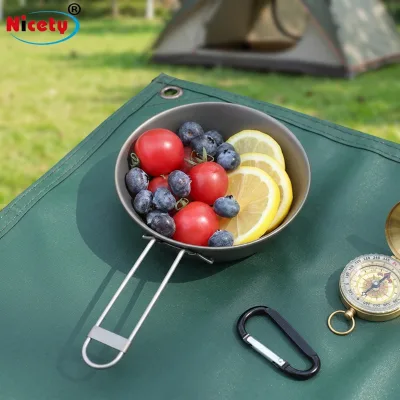
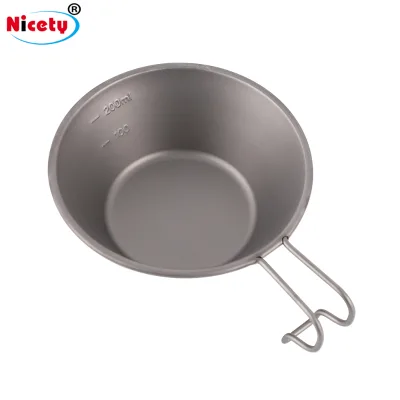
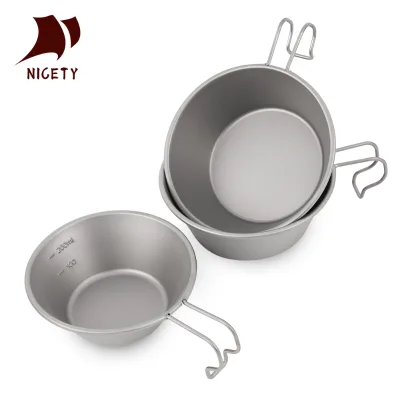
300ML Titanium Hiking Travel Titanium Bowl with Folding Handle for Camping Outdoor
$5.92 - $6.31
MOQ: 500 pieces

Ningbo Galaxy International Trading Co., Ltd.
- Trading Company,Manufacturer/Factory,Group Corporation
- China Zhejiang
- Lead time23 days
- Avg. response≤ 16h
Main productsTitanium, Titanium Bar, Nickel Base Alloy, Titanium Sheet, Nickel Sheet, Titanium Pipe, Nickel Bar, Titanium Tube, Tantalum Bar, Niobium Bar
Main marketsSouth America,Eastern Europe,Mid East,North America,Southeast Asia,Eastern Asia,Oceania,Western Europe,Africa

Chaozhou Nicety Technology Co., Ltd
- Verified by CTI
- Trading Company
- China Guangdong
- Lead time30 days
- Avg. response≤ 9h
Main productsLunch Box, Stainless Steel Lunch Box, Pet Product, Pet Bowl, Car Accessory, Bathroom Fitting
Main marketsSouth America,Southeast Asia/ Mideast,East Asia(Japan/ South Korea),Domestic,Europe,Australia,North America


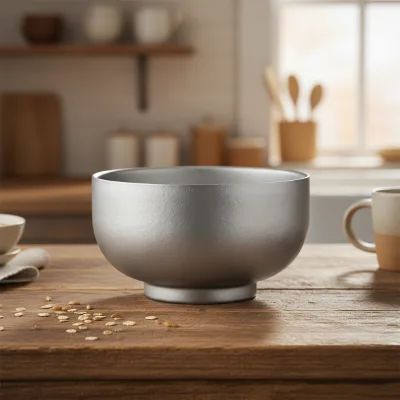
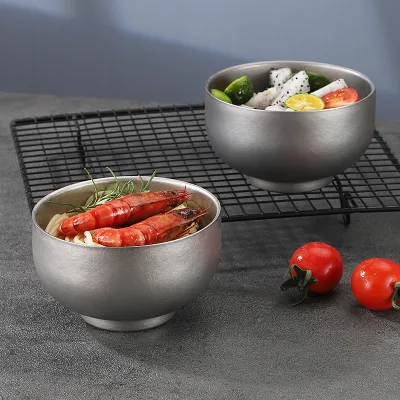
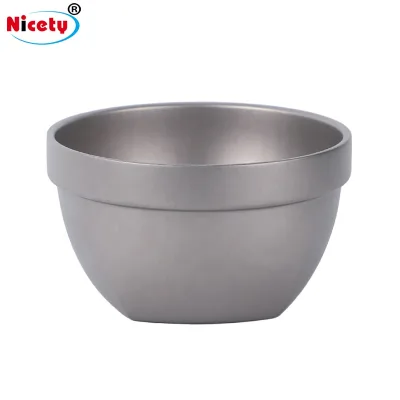
Wholesale Titanium Korean Rice Bowl Kitchen Baking Mixing Bowl Salad Bowl
$9.20 - $9.80
MOQ: 480 Pieces


Yongkang Heecn Stainless Steel Co., Ltd.
- Manufacturer/Factory
- China Zhejiang
- Lead time45 days
- Avg. response≤ 8h
Main productsMug, Cup, Flask, Bottle, Coffee Mug, Drink Bottle, Camping Mug, Advsing Mug, Gift Mug, Shot Glass
Main marketsSouth America,Eastern Europe,North America,Western Europe

Folding Titanium Fork Folding Titanium Spoon Removable Titanium Chopsticks
$6.60 - $6.80
MOQ: 200 Pieces

Folding Titanium Spoon with Shiraz Bowl Outdoor Folding Chopsticks Set
$12.05 - $12.20
MOQ: 200 Pieces

Zhong Xing Da (Hangzhou) Import & Export Co., Ltd.
- Verified by SGS
- Manufacturer/Factory
- China Zhejiang
- Lead time45 days
- Avg. response≤ 6h
Main productsCooking, Cookware, Waterfun, Fishing, Camping, RV
Main marketsSouth America,Eastern Europe,North America,Western Europe

Titanium Sierra Bowl for Outdoor Hiking Camping 260ml 300ml 450ml Tableware Equipment Bowl
$5.15 - $6.24
MOQ: 100 Pieces

$5.15 - $6.24
MOQ: 100 Pieces

$5.15 - $6.24
MOQ: 100 Pieces

$5.15 - $6.24
MOQ: 100 Pieces

Titanium Sierra Bowl Outdoor Hiking Camping 260ml 300ml 450ml Tableware Bowl Set Stacking Cups
$5.15 - $6.24
MOQ: 100 Pieces

Jinjiang Jiaxing Import and Export Co., Ltd.
- Verified by CTI
- Manufacturer/Factory
- China Fujian
- Lead time120 days
- Avg. response≤ 1h
Main productsShoes, Slipper, Clothes, Promotion Gifts, Silicone Products, Outdoor Sports Products, Bags, Fashion Accessories, Consumer Electronics
Main marketsSouth America,Eastern Europe,Mid East,North America,Southeast Asia,Eastern Asia,Oceania,Western Europe,Africa

HAWSON INTERNATIONAL INDUSTRIAL LIMITED
- Trading Company
- China Zhejiang
- Lead time45 days
- Avg. response≤ 25h
Main productsSaddlery, Equestrian Products, Grooming Kit, Whips, Harness, Brush Hoof Pick, Dog Apparel, Girth Halter Lead Rope Bandage, Bag, Horse Stable Rack
Main marketsSouth America,Southeast Asia/ Mideast,Europe

Baoji Titanium Progress New Technology Co., Ltd.
- Manufacturer/Factory
- China Shaanxi
- Lead time23 days
- Avg. response≤ 4h
Main productsTitanium Bottle, Titanium Clad Plate & Foil, Titanium Cookware Pot Wok Stock Frying Pan Skill
Main marketsSouth America,Eastern Europe,Mid East,North America,Southeast Asia,Eastern Asia,Oceania,Western Europe,Africa


Corrosion-Resistant Titanium Bowl - Lightweight and Durable for Home Use
$11.60 - $15.70
MOQ: 12 Pieces

Zibo Timestone International Co., Ltd.
- Manufacturer/Factory
- China Shandong
- Lead time45 days
- Avg. response≤ 13h
Main productsCeramic Dinnerware, Ceramic Mugs, Stainless Steel Bottles Mugs and Tumblers, Glass Bottles Mugs and Tumblers, Dinnerware, Tableware, Glassware, Kitchenware, Household Items, Ceramic Granding Balls and Filters
Main marketsSouth America,Eastern Europe,Mid East,North America,Southeast Asia,Eastern Asia,Oceania,Western Europe,Africa

Linyi Feifan Imp. & Exp. Co., Ltd.
- Verified by TUVRHEINLAND
- Trading Company
- China Shandong
- Lead time30 days
- Avg. response≤ 11h
Main productsEnamel Mug/Cup, Enamel Bowl, Enamel Basin, Enamel Plate/Tray/Kettle, Enamel Casserole/Pot, Enamel Bucket, Safety Shoe/Boot, Safety Gloves
Main marketsSoutheast Asia/ Mideast,Domestic
Shanghai Fupower Industry Co., Ltd.
- Manufacturer, Trading Company
- Lead time旺季: "1 - 500":30,"> 500":"To be negotiated", 淡季: "1 - 500":30,"> 500":"To be negotiated"
- Avg. response≤ 2h
Main productsAir intakes, Exhaust Pipes, Carbon fiber panels , Silicone hose, Air filter and prefilters
Baoji Ninghao Industry And Trade Co., Ltd.
- Trading Company
- Shaanxi, China
- Lead time0 days
- Avg. response≤ 3h
Main productstitanium bike parts bicycle frame,titanium fastner,titanium outdoor parts,carbon bicycle parts,other titanium bicycle parts
Main marketsNorth America(50.00%), South America(20.00%), Central America(10.00%), Western Europe(10.00%), Eastern Asia(10.00%)

- Verified by SGS
- Trading Company
- China Zhejiang
- Lead time15 days
- Avg. response≤ 14h
Main productsTents, BBQ Grill, Folding Table and Chair, Cooler Bag, Outdoor Lamp, Beach Mat, Picnic Blanket, Sleeping Bag, Water Bottle, Hammock
Main marketsEurope,Australia


2024 High Quality fashion Outdoor 800ml Pure Titanium Camping Salad Bowl
$6.95 - $8.93
MOQ: 100 Pieces

2024 New Design Outdoor 304 Stainless Steel Portable 400/600ml Snow Roller Bowl
$1.14 - $1.29
MOQ: 1000 Pieces

ZHOUKOU BEST KITCHENWARE CO., LTD.
- Verified by TUVRHEINLAND
- Trading Company
- China Henan
- Lead time15 days
- Avg. response≤ 11h
Main productsEnamelware, Enamel Mug, Enamel Casserole, Enamel Storage Bowl, Enamel Kettle, Enamel Basin, Round Tray, Cup, Enamel Pot, Enamel Plate
Main marketsAfrica,Europe

Shanghai Jspeed Industry Co.Ltd
- Verified by TUVRHEINLAND
- Trading Company
- China Shanghai
- Lead time30 days
- Avg. response≤ 3h
Main productsWater Bottle, Stainless Steel Bottle, Vacuum Bottle, Thermal Mug, Vacuum Flask, Thermal Cup, Insulated Cup, Vacuum Cup
Main marketsSouth America




Comprehensive Sourcing Guide
Folding Handle Titanium Bowl Supplier Concentration and Factory Types
The current supplier landscape for folding handle titanium bowls reveals a mix of manufacturer and trading company entities, with specific facility types including factories, group corporations, and trading firms. Evidence indicates that some suppliers operate as manufacturers with in-house capabilities for sample processing, graphic processing, and customized on-demand production. Others function primarily as trading companies or group corporations, often sourcing from a broader network of factories to fulfill orders. This structural diversity means buyers must distinguish between direct production facilities and intermediaries to understand the supply chain depth. The presence of both company types suggests that while some suppliers control the entire manufacturing process from raw material to finished good, others may focus on logistics and quality assurance without direct fabrication capabilities.
Regarding geographic concentration, specific data points identify suppliers located in Guangdong, China, and Zhejiang, China. These regions are known for metal processing and camping gear manufacturing, though the exact cluster density for this specific product type varies by supplier. Buyers should verify if a supplier's claimed location matches their actual factory address, as some trading companies may list a different city than their production base. The main products listed by these entities often include stainless steel lunch boxes, cookware, and various titanium bars or sheets, indicating that titanium bowl production is frequently part of a broader metalworking portfolio rather than a specialized niche. This suggests that buyers should assess whether the supplier's primary expertise aligns with the specific demands of titanium folding bowls or if they are a generalist metal processor.
How to Verify Folding Handle Titanium Bowl Suppliers
Verification of supplier credibility relies heavily on third-party audit reports and system certifications rather than self-declared claims. Available evidence shows that some suppliers hold TüVRheinland verification status, which provides a concrete basis for assessing their operational integrity. Additionally, system certifications such as LFGB, (EC) 1935/2004, FDA 21 CFR 177, and CE are present in the data, indicating compliance with international food safety and material standards. Buyers should request current audit reports to confirm that these certifications are active and cover the specific production lines for titanium bowls. It is crucial to ensure that the certification scope explicitly includes the manufacturing of camping cookware and titanium products, as general factory certifications may not cover specific product lines or materials.
Beyond certifications, buyers must scrutinize the supplier's response time and sample processing capabilities as indicators of operational readiness. Data indicates response times ranging from 3 to 15.38 hours, which can significantly impact the speed of the sourcing process. A faster response time often correlates with better communication channels and more agile production planning. Furthermore, the availability of sample processing and graphic processing capabilities suggests that the supplier can handle customization requests efficiently. Buyers should verify if the supplier offers sample times of 3-5 days as indicated in some product listings, and confirm that the sample quality matches the final production standards. This verification step ensures that the supplier can deliver prototypes that meet the specific design and material requirements before committing to a large order.
What to Compare Across Folding Handle Titanium Bowl Suppliers
When evaluating multiple suppliers, buyers should prioritize comparing lead times, minimum order quantities (MOQ), and pricing structures to determine the best fit for their project. Lead times in the current data range from 23 to 30 days, which is a critical factor for inventory planning and market launch schedules. Some suppliers offer a lead time of 30 days, while others may be faster at 23 days, depending on their current production load and capacity. Buyers must also compare MOQs, which vary significantly from 50 pieces to 1000 pieces per order. A lower MOQ of 50 units may be suitable for testing the market or small boutique orders, whereas a higher MOQ of 1000 units might be necessary to achieve lower unit costs for large-scale distribution.
Pricing and product specifications are equally important comparison points, with unit prices ranging from approximately $5.92 to $10.34 depending on the model and capacity. Specific product attributes such as weight, capacity, and handle type (folding vs. stationary) directly influence the price point. For instance, a 300ml titanium bowl with a folding handle may have a different price structure compared to a 380ml stackable version. Buyers should also compare the material specifications, ensuring that the titanium grade matches the intended use, such as outdoor camping or high-temperature cooking. Additionally, the availability of customization options like laser logos or custom packaging should be factored into the total cost analysis. By systematically comparing these dimensions, buyers can identify suppliers that offer the optimal balance of cost, speed, and quality for their specific needs.
Common Folding Handle Titanium Bowl Sourcing Risks
One significant risk in sourcing folding handle titanium bowls is the potential mismatch between claimed material properties and actual product performance. While some listings specify titanium as the material, buyers must verify the specific grade and purity to ensure durability and safety. There is a risk that suppliers may use lower-grade alloys or mix materials without disclosure, which could compromise the bowl's lightweight and corrosion-resistant properties. Buyers should request material test reports or certificates of analysis to confirm that the titanium meets the required standards, such as ASTM B348, which is referenced in some product data. Without this verification, the final product may fail to meet the expectations of outdoor enthusiasts who rely on the bowl's strength and weight characteristics.
Another critical risk involves the reliability of customization services and the consistency of the final product quality. While suppliers claim capabilities for custom logos and packaging, the actual execution may vary depending on the supplier's equipment and quality control processes. Some listings indicate a "Customize Packing" option, but the quality of the packaging and the precision of the logo application need to be validated through samples. There is also a risk related to the supplier's capacity to handle large orders without compromising quality or delivery timelines. If a supplier is simultaneously managing multiple large orders, they may face delays or quality issues. Buyers should assess the supplier's production capacity and past performance to mitigate the risk of supply chain disruptions or substandard product delivery.
Folding Handle Titanium Bowl Regional Sourcing and Logistics
Geographic location plays a pivotal role in determining shipping costs, lead times, and overall logistics efficiency for folding handle titanium bowls. The available data identifies suppliers located in Guangdong and Zhejiang, China, which are major manufacturing hubs for metal products and camping gear. Sourcing from these regions can offer advantages in terms of established supply chains and access to raw materials, but buyers must consider the distance to their destination market. Shipping from these locations may involve different transit times and freight costs depending on the destination country and the chosen shipping method. Buyers should calculate the total landed cost, including freight, insurance, and customs duties, to ensure that the regional advantage translates into a competitive final price.
Logistics planning also requires attention to the packaging specifications provided by the supplier, as these directly impact shipping volume and weight. Product attributes indicate single package sizes ranging from 15x15x12 cm to 20x20x7 cm, with weights varying from 60g to 81g per unit. These dimensions are crucial for optimizing container loading and minimizing shipping costs. Buyers should verify if the supplier offers consolidated shipping options or if they can provide packaging that is optimized for international transport. Additionally, the supplier's ability to handle export packaging, as noted in some product data, is essential for ensuring that the bowls arrive in perfect condition. Buyers should discuss packaging requirements with the supplier to avoid damage during transit and to ensure compliance with destination country regulations.
Folding Handle Titanium Bowl Commercial Terms and Order Planning
Commercial terms for folding handle titanium bowls often include specific requirements for payment, delivery, and quality assurance that must be clearly defined before placing an order. Lead times of 23 to 30 days are standard, but buyers should negotiate these terms based on their specific project timeline and the supplier's current capacity. It is essential to confirm whether the quoted lead time includes sample approval time or if it starts only after the order is confirmed. Additionally, buyers should clarify the payment terms, such as the percentage required upfront and the timing of the final payment. Understanding these commercial terms helps in planning cash flow and ensuring that the supplier has the necessary resources to fulfill the order on time.
Order planning for folding handle titanium bowls requires careful consideration of the minimum order quantities and the scalability of the production process. With MOQs ranging from 50 to 1000 pieces, buyers must determine the optimal order size that balances inventory costs with the need for sufficient stock. For new product launches, starting with a lower MOQ may be prudent to test the market before committing to larger volumes. Buyers should also plan for potential variations in production, such as changes in material costs or labor rates, which could affect the final price. Establishing a clear communication channel with the supplier for regular updates on production progress is vital for managing expectations and addressing any issues that arise during the order fulfillment process.
FAQs
What certifications do titanium bowl suppliers hold?
Suppliers offer LFGB, FDA 21 CFR 177, CE, and (EC) 1935/2004 certifications for food safety compliance. Some manufacturers also hold ISO 9001, BSCI, and IFS standards. Verify specific system certifications with the supplier before placing bulk orders to ensure product safety.
What is the typical lead time for titanium bowls?
Standard lead times range from 23 to 30 days depending on order volume and customization needs. Some suppliers provide sample processing within three days. Confirm exact delivery schedules with the manufacturer to align with your project timeline and avoid potential delays.
What are the minimum order quantities for these bowls?
Minimum order quantities vary between 50 and 1000 pieces based on the specific product model and customization requirements. Some listings require 480 or 500 units, while others accept orders as low as 50 pieces. Check the specific MOQ for your selected titanium bowl design.
How fast do suppliers typically respond to inquiries?
Response times generally range from 3 to 15 hours for most verified suppliers. Some manufacturers respond within three hours, while others may take up to 15 hours. Prompt communication helps clarify product details and negotiate pricing efficiently during the initial sourcing phase.
Where are these titanium bowl manufacturers located?
Manufacturers are primarily located in Guangdong and Zhejiang provinces in China. Specific models originate from Guangdong, while other suppliers operate from Zhejiang. Verify the exact place of origin to assess shipping costs and logistics requirements for your international orders.
What customization options are available for titanium bowls?
Suppliers offer custom logos, customized packing, and various handle styles including folding or stationary options. You can request specific sizes and colors like gray or titanium. Graphic processing and on-demand customization are available for bulk orders to meet your branding needs.
What is the price range for folding handle titanium bowls?
Prices typically range from 5.92 to 10.34 USD per unit depending on capacity and features. Some models cost around 7.20 or 8.90 USD, while others reach 10.00 USD. Final pricing depends on order quantity and specific material specifications requested by the buyer.