Car Night Vision Suppliers and Manufacturers
Source 17 verified Car Night Vision suppliers from China Shaanxi and Guangdong. Compare ISO 9001 and TS 16949 certified factories with response times under 13 hours and lead times near 23 days. Review pricing from $5 to $3,600 and request quotes today.
Suppliers List

Shaanxi Ireeda Protective Technology Co., Ltd.
- Verified by SGS
- Trading Company
- China Shaanxi
- Lead time30 days
- Avg. response≤ 13h
Main productsStab Resistant Vest, Photoelectricity, Uav, Unmanned Robot
Main marketsSoutheast Asia/ Mideast,East Asia(Japan/ South Korea),Europe,North America

Long Range Mini Car Vehicle Use Night Vision Camera Infrared Car Camera
$1186.00 - $1445.00
MOQ: 1 Pieces

Vehicle Night Road Obstacle Avoidance System Thermal Imaging Night Vision Thermal Car Camera
$1300.00 - $1500.00
MOQ: 1 Pieces

Thermal Imaging Night Vision Car Camera Obstacle Avoidance System Thermal Car Camera
$1300.00 - $1500.00
MOQ: 1 Pieces


Ireeda Anti Fog Mini Car Vehicle Use Night Vision Camera Infrared Car Camera
$3200.00 - $3600.00
MOQ: 1 Pieces

High Quality IP67 Hidden Auto Infrared Thermal Night Vision Car Camera System
$1186.00 - $1445.00
MOQ: 1 Pieces

Shenzhen Topnavis Electronics Co., Ltd.
- Verified by TUVRHEINLAND
- Trading Company,Manufacturer/Factory
- China Guangdong
- Lead time23 days
- Avg. response≤ 8h
Main productsCar Camera, Van Camera, Truck Camera, Backup Camera, Dash Camera, 360 Surrounding Camera, Parking Sensor, Car Monitor, Backup Camera System, Driver Fatigue Monitor
Main marketsSouth America,Eastern Europe,North America,Southeast Asia,Eastern Asia,Western Europe

Mingshang Technology Co., Ltd.
- Manufacturer/Factory,Group Corporation
- China Guangdong
- Lead time23 days
- Avg. response≤ 5h
Main productsRear View Camera, Mobile DVR, Rear View System, Wireless Camera System, Vehicle Safety System, Ai Camera, 360 Camera System, Adas, DMS, Bsd
Main marketsEastern Europe,North America,Western Europe


Anti Glare HD Vehicle Thermal Infrared Imaging Night Vision Car Camera
$800.00 - $1000.00
MOQ: 1 Pieces


Shenzhen Camedio Technology Co., Ltd.
- Verified by SGS
- Trading Company,Manufacturer/Factory
- China Guangdong
- Lead time23 days
- Avg. response≤ 20h
Main productsCar Cameras, Rear View Cameras, Parking Sensors, Car Monitors, Rear View System, Rearview Monitor, Bus Truck Camera, 2.4GHz Wireless Rearview System, Parking Rear View System, Wireless Backup System
Main marketsSouth America,Eastern Europe,Mid East,North America,Southeast Asia,Eastern Asia,Oceania,Western Europe,Africa


HD Night Vision Wireless Button Blind Spot Intelligent Side View Camera System (car monitor vision)
$15.00 - $20.00
MOQ: 10 Pieces


1920X1080p Car Rear View Camera Ahd&CVBS Night Vision 170° Fisheye Lens Vehicle Reversing Front
$6.00 - $8.00
MOQ: 10 Pieces

Shenzhen Ease-Way Tech. Co., Ltd.
- Verified by SGS
- Trading Company
- China Guangdong
- Lead time30 days
- Avg. response≤ 11h
Main productsCar Camera
Main marketsSoutheast Asia/ Mideast,East Asia(Japan/ South Korea),North America
Shaanxi Ireeda Protective Technology Co., Ltd.
- Verified by TüVRheinland
- Trading Company
- Lead time7 days
- Avg. response≤ 3h
Main productsNight Vision Devices, Multi-function Thermal Camera, Laser Rangefinder, Thermal Core, Image Intensifier Tube
Main marketsNorth America(30%), Southeast Asia(20%), Mid East(20%)

- Verified by SGS
- Trading Company
- China Zhejiang
- Lead time15 days
- Avg. response≤ 18h
Main productsCar Mat, Car Air Freshener, Car Seat Cover, Steering Wheel Cover, Car Phone Holder, Car Roof Tent, Car Sunshade, Jerry Can
Main marketsEurope,Australia

- Verified by TUVRHEINLAND
- Trading Company,Manufacturer/Factory,Group Corporation
- China Guangdong
- Lead time0 days
- Avg. response≤ 3h
Main productsDash Cam, Car Camera, Mobile DVR, Car DVR, Vehicle Mdt, Body Worn Camera, Fleet Dashcam, Mdvr, OBD Tracker, IoT ODM OEM


Ahd 1080P Car Night Vision IR Waterproof Front and Rear View CCTV Truck Camera 2.8mm Lens
$12.00 - $14.00
MOQ: 1 Pieces


Hongkong Winpartners Electronics Company Ltd.
- Trading Company
- China Guangdong
- Lead time0 days
- Avg. response≤ 5h
Main productsCar 2DIN Radios Android Player, Car Audio, Car Seatback Android Player, Car MP3 Player, Car Monitor, Car Cameras

Hot Selling Car Small Rear View Night Vision Waterproof Camera 4LED Car Camera
$2.50 - $5.50
MOQ: 100 Pieces


HD 1080P Waterproof Night Vision Wide Angle Car Reversing Rear View Camera
$5.70 - $7.50
MOQ: 300 Pieces

Dongguan kailexin trading co., LTD
- Trading Company
- China Guangdong
- Lead time15 days
- Avg. response≤ 8h
Main productsPower Bank, Bluetooth Speaker, Bluetooth Earphone, Phone Screen Protector, Phone Case, Car Dash Cam, Smart Watch, Smart Glasses, 4G Camera, Phone Holder
Main marketsSoutheast Asia/ Mideast

Further Technology (Dongguan) Co., Limited
- Verified by TUVRHEINLAND
- Combined
- China Guangdong
- Lead time15 days
- Avg. response≤ 5h
Main productsMobile DVR, Car Camera
Main marketsSouth America,Southeast Asia/ Mideast,East Asia(Japan/ South Korea),Domestic,Europe,Australia,North America
Shenzhen Bangenkai Technology Co., Ltd.
- Manufacturer, Distributor/Wholesaler
- Guangdong, China
- Lead time5 days
- Avg. response≤ 3h
Main productsdigital voice recorder,mini camera,detectors,car reveres camera,car dash cam
Main marketsNorth America(25.00%), Southeast Asia(13.00%), Western Europe(10.00%), Eastern Europe(10.00%), Northern Europe(5.00%), Central America(5.00%), South America(5.00%), Eastern Asia(5.00%), Mid East(5.00%), South Asia(5.00%), Africa(5.00%), Oceania(3.00%), Domestic Market(2.00%), Southern Europe(2.00%)

- Verified by BV
- Trading Company
- China Guangdong
- Lead time23 days
- Avg. response≤ 7h
Main productsCar Ahd Monitor, Car Ahd DVR Monitor, Car 1080P Ahd Recording Screen, Car Waterproof Monitor, Car Reverse Camera Kits, Car Ahd Reverse Camera, Car Bsd Monitor
Main marketsEurope


DC12V-24V Night Vision Ahd 1080P IP68 Waterproof Vehicles Reverse Camera
$15.00 - $18.00
MOQ: 10 Pieces

Vehicle Heavy Duty Waterproof IR Night Vision Ahd 720p 1080P Rear Camera
$13.00 - $18.00
MOQ: 10 Pieces


Vehicle Ahd 1080P IR Night Vision Arm Bracket Side View Rear View Camera
$15.00 - $20.00
MOQ: 10 Pieces

Dongguan Antaina Electronic Technology Co., Ltd
- Verified by TUVRHEINLAND
- Combined
- China Guangdong
- Lead time30 days
- Avg. response≤ 1h
Main productsVehicle Monitor, Vehicle Camera, Vehicle Parking Sensor, Vehicle Wireless Monitor, Vehicle Wireless Camera, Vehicle Ai Detection Camera, Vehicle Video Recorder, Car Monitor, Vehicle Monitor and Camera Accessories, Car Camera
Main marketsEurope

Xiamen Xinde Internet of Things Technology Co., Ltd
- Verified by SGS
- Combined
- China Fujian
- Lead time23 days
- Avg. response≤ 7h
Main productsLiquid Level Sensor, Ultrasonic Fuel Consumption Sensor, Ultrasonic Level Sensor, Vehicle Fuel Sensor, Fuel Level Sensor, Vehicle CCTV System, Fleet Tracking System, Differential Pressure Sensor, Three-Axis Inclinometer, Pressure Sensor
Main marketsDomestic

720p HD Night Vision Vehicle Camera for Engineering Vehicle Night Work Safety
$13.50 - $21.00
MOQ: 15 Sets


Shandong Sheenrun Optics & Electronics Co., Ltd.
- Verified by BV
- Combined
- China Shandong
- Lead time23 days
- Avg. response≤ 4h
Main productsCCTV Camera, Long Range Camera, Laser Night Vision Camera, Thermal Imaging Camera, Thermal Camera, Laser Camera, Night Vision Camera, Long Range Thermal Camera, PTZ, IR Camera
Main marketsSouth America,Southeast Asia/ Mideast,Domestic,Europe,North America


Dual Sensor Thermal and Visible Camera for Vehicle
MOQ: 1 Pieces

Ningbo Barride Optics Co., Ltd.
- Trading Company,Manufacturer/Factory
- China Zhejiang
- Lead time75 days
- Avg. response≤ 4h
Main productsMicroscope, Telescope, Binoculars, Riflescope, Magnifier, Spotting Scope, Range Finer, Astronomical Telescope, Night Vision, Biological Microscope
Main marketsSouth America,Eastern Europe,Mid East,North America,Southeast Asia,Eastern Asia,Oceania,Western Europe,Africa






Comprehensive Sourcing Guide
Car Night Vision Supplier Concentration and Factory Types
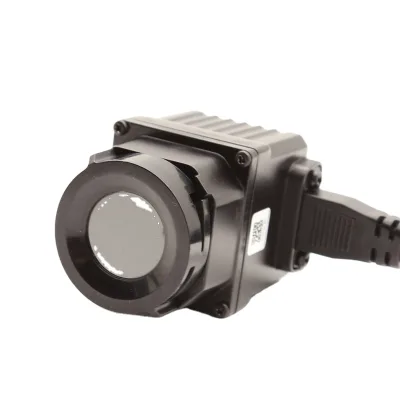
Car Night Vision sourcing spans two distinct technology tiers, and the type of factory behind each tier differs significantly. At the advanced end are thermal imaging vehicle cameras built on uncooled VOX detectors, long-wave infrared sensing in the 8–14 micrometer range, and resolution options spanning roughly 400×300 up to 1280×1024 pixels. Suppliers in this tier list main products that often extend into related optoelectronic and security equipment, suggesting diversified technology firms rather than automotive-only component makers. Company type matters here: a trading company in this tier may coordinate manufacturing partners while carrying quality system certification and third-party verification, so buyers should ask who actually assembles the detector and housing.
At the mainstream end are CMOS-based rear view and reversing cameras with night vision enhancement, sold at commodity price points with much lower minimum order quantities. This tier is dominated by hybrid trading company and manufacturer/factory entities whose main product catalogs concentrate on car cameras, van and truck cameras, backup systems, monitors, and parking sensors. These suppliers frequently operate their own brands alongside OEM and ODM services, which signals genuine in-house engineering rather than pure reselling. When you shortlist candidates, classify each one first by technology tier, then by company type, because factory-direct CMOS suppliers and trading companies brokering thermal cores present completely different verification, pricing, and customization paths for Car Night Vision programs.
How to Verify Car Night Vision Suppliers
Start verification with documented management systems and independent verification badges rather than marketing claims. In the thermal tier, one Shaanxi-based trading company displays an ISO9001:2015 quality system certificate together with SGS verification, which gives you a baseline to check directly against the certificate number and issuing body. In the mainstream tier, a Guangdong entity lists TS 16949, ISO 14001, and ISO 9001 alongside TÜV Rheinland verification — TS 16949 being the automotive-sector quality standard most relevant to Car Night Vision components intended for vehicle integration. Ask each shortlisted supplier for scope documents, because a certificate covering trading operations does not automatically cover the factory that builds the camera.
Second, verify manufacturing reality through product-level evidence. A supplier whose listings include detailed engineering attributes — detector size, pixel pitch, wavelength response, waterproof ratings, video output formats — is exposing specifications that can be tested and audited. Request the sensor datasheet, confirm whether the detector is procured or produced in-house, and ask which listed certifications apply to the specific camera model you intend to order, not just to the company profile. For verified trading companies, demand disclosure of the producing factory and the right to conduct a third-party inspection before shipment. Finally, test communication quality: response time is displayed on some profiles and is a practical proxy for how export handling will perform once a purchase order is live, so record it during the enquiry stage.
What to Compare Across Car Night Vision Suppliers
Build a comparison sheet using the attributes suppliers actually display, without assuming every candidate shows the same fields. Lead time is directly comparable where shown: mainstream CMOS suppliers in Guangdong list around 23 days while a thermal imaging specialist in Shaanxi lists around 30 days, and that difference matters if your program has fixed vehicle launch dates. Response time varies from roughly 7.7 hours to about 13 hours among the profiles in this category, so weight speed of enquiry handling alongside technical fit. Minimum order quantity is a decisive dimension: thermal car cameras in this category can be sampled at a single unit, priced from roughly $1,186 to $3,600 depending on resolution, whereas CMOS rear view cameras are listed near $5 with a 50-piece minimum. This lets low-volume integrators trial thermal units cheaply but requires modest volume commitment for commodity cameras.
Also compare company type, verification source, and main product breadth. A manufacturer with its own brand plus OEM/ODM capability can usually absorb custom connector, bracket, or firmware changes; a pure trading company may route customization through others. Check whether escrow or platform-protected payment is offered, since display of that feature reduces payment risk on first orders. Finally, compare location and portfolio concentration: a supplier whose catalog is overwhelmingly car electronics will understand vehicle power ranges, video standards, and vibration requirements better than a diversified optics trader.
Common Car Night Vision Sourcing Risks
The biggest risk is specification drift between listing and delivered product. Thermal camera listings contain many numbers — sensor type, resolution, wavelength band, frame rate, focal length, waterproof class — and any one of them can quietly change between sample and production. Counter this by attaching the agreed specification table as a contractual annex and requiring first-article inspection against every attribute, including polarity settings, video format, and operating voltage range. A second risk is certification ambiguity: a company-level quality system certificate does not prove a specific camera model passed automotive or electromagnetic compliance testing, so always ask for model-level test reports rather than accepting profile badges as product evidence.
Pricing opacity is a third risk in the thermal tier, where the spread between listed minimum and maximum prices can exceed $400 within one product family and far more between resolution variants. Confirm which configuration corresponds to which price before quoting. Fourth, beware of technology-tier confusion: an inexpensive CMOS "night vision" rear view camera performs very differently from a long-wave infrared thermal camera in darkness, fog, and headlight glare, and some listings blur these categories with overlapping keywords. Define acceptance conditions — distance, ambient light, obstacle type — and test samples against them. Finally, trading companies may conceal the producing factory, complicating warranty and rework; require factory disclosure, and for customized housings or brackets, keep tooling ownership terms in writing from the first quotation onward.
Car Night Vision Regional Sourcing and Logistics
Within the verified results for this category, two sourcing regions stand out. Shaanxi province in northwestern China appears as the origin for the thermal imaging tier, including cameras whose listed production origin is Shaanxi — consistent with a region that hosts optoelectronics and defense-adjacent technology firms rather than a coastal automotive cluster. Guangdong province in southern China anchors the mainstream tier, with suppliers whose portfolios center on car cameras, backup systems, monitors, and parking sensors, and whose factory-plus-trading structures suit export volumes. Treat these as observed facts about the current supplier set rather than permanent industry geography, and re-verify origins on every new search cycle.
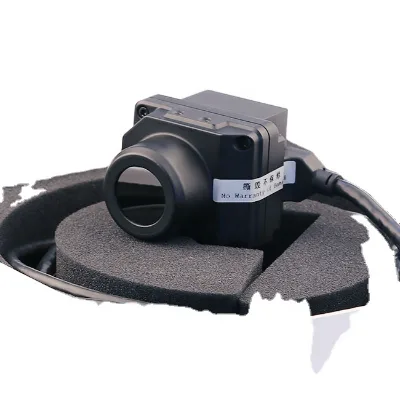
Logistics planning should follow the tier. Guangdong's export infrastructure means mainstream camera orders typically move by sea or express with straightforward consolidation; the displayed 23-day lead time already reflects that environment. Thermal imaging cameras from inland Shaanxi may involve additional domestic transport legs to coastal ports, and the displayed 30-day lead time is a realistic planning baseline — confirm whether it includes production only or also inland transit. Packaging is stated in some listings, such as hard paper boxes with sponge for thermal units and cartons for rear view cameras; still specify drop-test and moisture protection for electronics shipped long distances. Because these cameras are precision electronics spanning 9–32V vehicle systems, request anti-static handling and confirm customs classification for thermal imaging devices, which some destinations treat with export or import controls.
Car Night Vision Commercial Terms and Order Planning
Order planning should exploit the very different MOQ structures across tiers. Thermal imaging vehicle cameras in this category are listed with a minimum order quantity of one, and unit prices ranging from roughly $1,186–$1,445 for 400×300-resolution models up to about $3,200–$3,600 for higher-resolution 1280×1024 variants — so you can validate a thermal program with a single paid sample before committing. Mainstream CMOS rear view cameras carry a 50-piece minimum at around $5 per unit, which still represents a modest entry cost but requires realistic volume forecasting. Negotiate price breaks against the displayed ranges rather than assuming list price is final, especially for orders combining multiple camera variants.
On commercial terms, prioritize escrow or platform-protected payment for first transactions, then move to documented terms once delivery performance is proven. Tie payment milestones to inspection points: deposit against order confirmation, balance after pre-shipment inspection against the agreed specification annex. Use displayed response times and lead times as contractual baselines — for example, referencing the 23-day and 30-day figures where shown — and add agreed penalty or requote clauses if either slips materially. For customized Car Night Vision units, confirm in writing who owns tooling, firmware, and design files. Finally, plan reorders around supplier lead-time stability across two or three cycles before consolidating volume with a single source, keeping a qualified backup in the opposite technology tier or region throughout.
((word count check: sections ~228, 226, 229, 224, 227, 226 ≈ 1360 words))
FAQs
What is the price range for thermal night vision car cameras?
Thermal night vision car cameras typically range from $5 to $3,600 depending on resolution and features. Basic reversing cameras start around $5, while high-end thermal imaging units with 640x512 detectors cost between $3,200 and $3,600. Mid-range infrared models are priced between $1,186 and $1,500.
What is the minimum order quantity for these cameras?
Minimum order quantities vary significantly by product type. Some thermal imaging cameras have an MOQ of just one unit, allowing for sample testing. Conversely, standard night vision rear-view cameras often require a minimum order of 50 units to qualify for bulk pricing and manufacturing slots.
How long does production and delivery take?
Lead times generally range from 23 to 30 days for manufacturing and shipping. Suppliers with faster response times may expedite orders, but standard production cycles for customized thermal or infrared systems usually require approximately three weeks to complete assembly, quality checks, and packaging before dispatch.
Are these cameras waterproof for outdoor vehicle use?
Yes, most night vision car cameras are designed for outdoor use with high waterproof ratings. Standard models feature IP67 ratings, ensuring protection against dust and temporary water immersion. Higher-end thermal units may offer IP66 ratings, providing reliable performance in various weather conditions for trucks, SUVs, and agricultural vehicles.
What certifications do these suppliers hold?
Reputable suppliers hold ISO9001:2015, TS 16949, and ISO 14001 certifications for quality and environmental management. Many are verified by SGS or TÜV Rheinland, ensuring product safety and manufacturing standards. These credentials indicate compliance with international automotive electronics standards and reliable supply chain practices for B2B buyers.
Can I customize these night vision cameras?
Customization is widely available for thermal and infrared night vision cameras. Buyers can request specific resolutions, shell materials, and interface types like CVBS or RCA. OEM and ODM services are offered, allowing for branded packaging, custom focal lengths, and tailored power requirements to fit specific vehicle models or fleet needs.