Car LED Tail Lamp Suppliers and Manufacturers
Source 15 verified Car LED Tail Lamp suppliers from China Zhejiang, Jiangsu, and Guangdong. Compare response times, lead times, certifications, and pricing to find the right partner. Review product specs and request quotes today; review the available evidence before requesting comparable quotations from suitable candidates.
Suppliers List

Ningbo Brilliant Dragon Electronic Technology Co., Ltd.
- Verified by TUVRHEINLAND
- Manufacturer/Factory
- China Zhejiang
- Lead time105 days
- Avg. response≤ 12h
Main productsLED Light for Indoor, LED Light for Ourside, Auto / Bicycle Accessories, Security Items, Work Light, Electric Appliance, Personal Items
Main marketsSouth America,Eastern Europe,Mid East,North America,Southeast Asia,Eastern Asia,Oceania,Western Europe,Africa

Changzhou LangNuo Auto Parts Manufacturing Co.,LTD
- Verified by TUVRHEINLAND
- Manufacturer/Factory
- China Jiangsu
- Lead time38 days
- Avg. response≤ 7h
Main productsBodykit, Spoiler, Front Lip, Tail Lamp, Radiator Support, Grille, LED Lamp
Main marketsSouth America,Eastern Europe,Mid East,North America,Southeast Asia,Eastern Asia,Oceania,Western Europe,Africa


High-Quality Auto Parts Car Light LED Rear Tail Lamp for Cla 117 2016-2019
$100.00 - $120.00
MOQ: 10 Pieces

High-Quality Auto Parts Car Light LED Rear Tail Lamp for Glb 2021-2022
$100.00 - $120.00
MOQ: 10 Pieces

Guangzhou Fdn Autolighting Company Limited.
- Verified by SGS
- Manufacturer/Factory
- China Guangdong
- Lead time0 days
- Avg. response≤ 2h
Main productsLED COB Work Lights, LED COB Work Pods, LED COB Light Bars, LED COB Tail Lights, LED COB Signal Lights/Warning Lights, LED COB Interior Lights, LED Headlights, LED Motorcycle Lights, LED Fog/Driving Lights, LED Strip Lights/Decaroation Lights


$1.00 - $1.20
MOQ: 500 Pieces

15LED High Position Brake Tail Light Side Light 12V/24V LED Car Work Light Truck Trailer Tail Lamp
$1.00 - $1.20
MOQ: 500 Pieces

K-Lite (Shanghai) Industrial Co., Ltd.
- Verified by TUVRHEINLAND
- Trading Company
- China Shanghai
- Lead time30 days
- Avg. response≤ 8h
Main productsReflector, Motorcycle LED Lamps, Road Markers, Vehicle Lamps, Trailer LED Lamps, Pedestrian Reflector, Light Guide Strip, Road Stud, Auto Parts, Headlamp
Main marketsSoutheast Asia/ Mideast,East Asia(Japan/ South Korea)
Danyang Xiatian Auto Parts Co., Ltd.
- Verified by SGS
- Trading Company
- China Jiangsu
- Lead time0 days
- Avg. response≤ 6h

Guangzhou B-King Auto Electronics Limited
- Verified by TUVRHEINLAND
- Trading Company
- China Guangdong
- Lead time15 days
- Avg. response≤ 11h
Main productsLED Headlight, LED Headlight Bulb, Auto Lights, Car Lights, HID, Car Camera, LED Work Light, Turn Signal Light, LED Fog Light
Main marketsSouth America

Shanghai Huaqi Industrial Co., Ltd.
- Verified by TUVRHEINLAND
- Trading Company
- China Shanghai
- Lead time15 days
- Avg. response≤ 6h
Main productsCar Mats, Seat Cover, Car Cover, Wiper Blade, Air Compressor, Steering Wheel Cover, Car Lock, Baby Mirror, Car Jack, Racing Seat
Main marketsSouth America,Africa,Southeast Asia/ Mideast,Europe,Australia,North America
Renqiu Xinxuanyi Lighting Manufacturing Co., Ltd.
- Verified by SGS
- Combined
- China Hebei
- Lead time15 days
- Avg. response≤ 6h
Main productsLED Taillight, LED Warning Light, LED Car Lights, LED Truck Taillight, LED Working Lamp, LED Indicator Light, LED Roof Light
Main marketsSoutheast Asia/ Mideast

Shanghai Anma Industry Co., Ltd.
- Trading Company
- China Shanghai
- Lead time30 days
- Avg. response≤ 5h
Main productsCar Accessories, Car Spare Parts, Car Tools, Car Interior Accessories, Car Exterior Accessories, Car Electrical Accessories, Car Lights, Car Mirror, Car Emergency Kits, Car Care Products
Main marketsSouth America,Others(foreignTradeCapacity.exportBusinessCapacityMarketOther),Southeast Asia/ Mideast,Europe,North America
Guangzhou Hongbao Automobile Accessories Co., Ltd.
- Verified by TüVRheinland
- Manufacturer, Trading Company
- Lead time10 days
- Avg. response≤ 2h
Main productsSteering Wheel Cover, Car Mats, Car Sunshade, Neck Pillow And Square Pillow, Car Seat Cover
Main marketsMid East(30%), North America(20%), South America(10%)
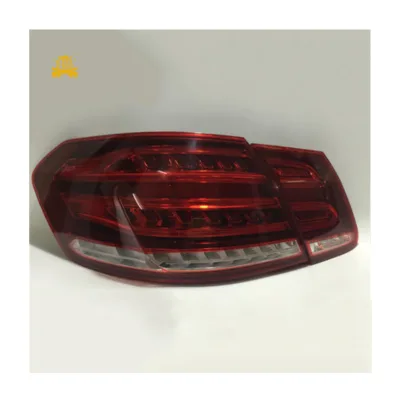
Car Tail Light Assemblies Automotive LED Lighting Tail Lamps for Mercedes Benz
$46.28 - $52.16
MOQ: 100 sets
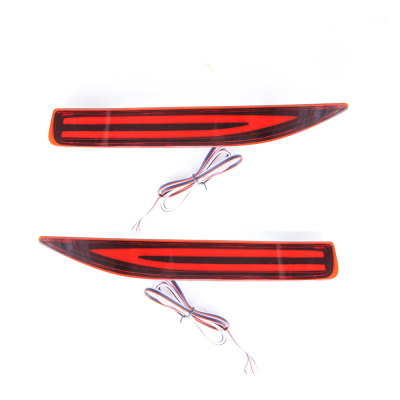
LED Tail Lights Indicator Rear Brake Light Rear Bumper Reflector Tail Lamps
$18.37 - $19.83
MOQ: 20 sets
- Verified by SGS
- Trading Company
- China Zhejiang
- Lead time15 days
- Avg. response≤ 19h
Main productsCar Mat, Car Air Freshener, Car Seat Cover, Steering Wheel Cover, Car Phone Holder, Car Roof Tent, Car Sunshade, Jerry Can
Main marketsEurope,Australia

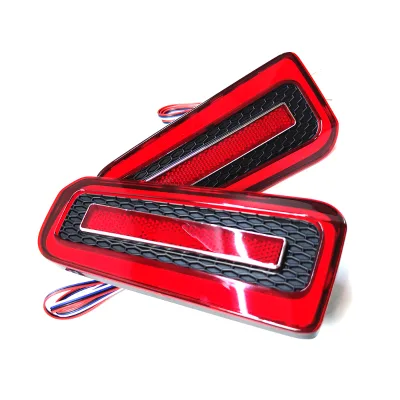
Factory Price Car LED High Brightness Turn Signal Tail Light Rear Stoplight
$2.51 - $2.82
MOQ: 400 Pieces


Shenzhen Hongrun Vehicle Parts Co., Ltd.
- Verified by SGS
- Trading Company
- China Guangdong
- Lead time30 days
- Avg. response≤ 25h
Main productsLED Trailer Light, Trailer LED Lamp, Excavator Part, Trailer Spare Part, Air Bag and Air Spring, Volvo Truck Part, Scania Truck Part, Daf Truck Part, Excavator Undercarriage Part, Bulldozer Part
Main marketsSoutheast Asia/ Mideast,Australia

Pingxiang Bowang Industry Co.,Ltd.
- Verified by TUVRHEINLAND
- Manufacturer/Factory
- China Jiangxi
- Lead time15 days
- Avg. response≤ 2h
Main productsLED Car Light, LED Marker Light, LED Work Light, Truck Lamp, Trailer Light, Tail Light, High Mount Brake Light, Whip Light, Boat Light, RV Light
Main marketsSouth America,Eastern Europe,Mid East,North America,Southeast Asia,Eastern Asia,Oceania,Western Europe,Africa

Changzhou Super Auto Parts Co., Ltd.
- Verified by CTI
- Combined
- China Jiangsu
- Lead time30 days
- Avg. response≤ 5h
Main productsAuto Lamp, Auto Mirror, Auto Parts, Bus Lamp, Bus Mirror, Bus Parts, Truck Light, Truck Mirror, Truck Parts, Bus Light
Main marketsSouth America,Southeast Asia/ Mideast,Europe,Australia
Hangzhou lizhong shengteng Auto Parts Co., Ltd.
- Verified by TUVRHEINLAND
- Trading Company
- China Zhejiang
- Lead time23 days
- Avg. response≤ 8h
Main productsAuto Bumper, Auto Rear Bumper Cover, Auto Rear Mirror, Auto Hood, Auto Head Lamp, Auto Cooling Fan Cover, Auto Radiator
Main marketsSouth America,Eastern Europe,Mid East,North America,Southeast Asia,Eastern Asia,Western Europe


Comprehensive Sourcing Guide
Car LED Tail Lamp Supplier Concentration and Factory Types
The current supplier landscape for Car LED Tail Lamp products shows a distinct concentration of manufacturing capabilities within specific Chinese provinces. Available data indicates that factories are located in Zhejiang, Jiangsu, and Guangdong, with Zhejiang and Jiangsu appearing as primary hubs for this specific product category. These regions host a mix of manufacturers and factories that specialize in LED lighting systems, auto accessories, and security items. Buyers should note that the supplier types observed are predominantly manufacturers or factories rather than pure trading companies, which suggests a direct line to production capabilities for custom branding and OEM services.
When evaluating the factory types, it is essential to distinguish between those offering OEM, ODM, and own-brand services. Some suppliers explicitly list capabilities for custom branding under the name RaysEye, while others focus on standard production lines for vehicle parts and accessories. The main products listed by these entities often include LED lights for indoor and outdoor use, auto lighting systems, and various safety items. Buyers must verify if a specific factory can handle the volume and customization required for their specific Car LED Tail Lamp needs, as the range of capabilities varies significantly even within the same geographic cluster.
How to Verify Car LED Tail Lamp Suppliers
Verification of Car LED Tail Lamp suppliers requires a rigorous check of third-party credentials and system certifications to ensure operational legitimacy. Several suppliers in the current results have undergone verification by recognized bodies such as TÜV Rheinland and SGS, which serves as a critical indicator of their operational stability and quality management systems. Additionally, system certifications like BSCI, ISO 9000, and ISO 9001 are present in the data, suggesting adherence to international standards for social compliance and quality control. Buyers should prioritize suppliers who display these specific verification badges and certification numbers to mitigate the risk of engaging with unverified entities.
Beyond external verification, buyers must scrutinize the specific product certifications listed for the car led tail lamps themselves. Product evidence shows certifications such as CE, RoHS, CCC, and ISOEEC, which are vital for market entry in different regions. For instance, a supplier offering products with IP68 ratings and specific voltage requirements must also provide proof of these technical standards. It is crucial to confirm that the certifications listed on the product page match the actual goods being shipped, as discrepancies can lead to customs delays or safety liabilities. Buyers should request copies of these certificates directly from the supplier to ensure they are current and valid for the specific model numbers being considered.
What to Compare Across Car LED Tail Lamp Suppliers
Comparing suppliers requires a detailed analysis of operational metrics such as lead time, minimum order quantity, and response speed to determine fit for specific project timelines. The data reveals significant variance in lead times, ranging from immediate availability to over 100 days, which directly impacts inventory planning and cash flow. Response times also differ, with some suppliers showing a response time of under two hours while others take over eleven hours. Buyers should create a comparison matrix that weighs these operational speeds against their own urgency requirements, ensuring that the selected supplier can meet the delivery schedule without compromising on quality or communication.
Price and minimum order quantity (MOQ) are equally critical factors when comparing Car LED Tail Lamp suppliers. The observed price ranges vary from under one dollar to over one hundred dollars per unit, depending on the product complexity and specifications. MOQs also fluctuate, with some suppliers requiring orders as low as ten units while others demand a minimum of two hundred. Buyers must align these financial constraints with their budget and sales volume projections. It is important to note that lower prices often correlate with higher MOQs or longer lead times, so a balanced approach is necessary. Evaluating the total cost of ownership, including shipping and potential customization fees, provides a more accurate picture of supplier value than unit price alone.
Common Car LED Tail Lamp Sourcing Risks
One of the primary risks in sourcing car led tail lamps involves the discrepancy between advertised specifications and actual product performance. While product attributes list features like IP68 waterproofing and specific LED counts, buyers must verify these claims through independent testing or sample requests. The data shows various housing materials and voltage requirements, but without physical verification, there is a risk of receiving substandard components that fail under real-world conditions. This is particularly relevant for products intended for outdoor use or harsh environments where durability is paramount. Buyers should insist on pre-shipment samples to validate the claimed IP ratings and material quality before committing to a large order.
Another significant risk is the inconsistency in supply chain reliability and the potential for production delays. Lead times in the current data range widely, and some suppliers report zero lead time, which may indicate stock availability or a lack of realistic production planning. Buyers must assess the supplier's capacity to handle volume spikes and their history of meeting deadlines. The presence of OEM and ODM capabilities suggests flexibility, but this can also lead to confusion regarding production schedules and quality control. Establishing clear communication channels and setting realistic expectations for delivery dates is essential to mitigate the risk of supply chain disruptions that could halt production or sales operations.
Car LED Tail Lamp Regional Sourcing and Logistics
Sourcing car led tail lamps from China involves navigating logistics challenges specific to the manufacturing regions of Zhejiang, Jiangsu, and Guangdong. These provinces are known for their robust industrial infrastructure and proximity to major ports, which facilitates efficient export processes. However, buyers must account for the varying distances from these inland manufacturing hubs to the shipping ports, as this can impact transit times and freight costs. Understanding the geographic location of the supplier is crucial for estimating the total lead time from order placement to delivery at the destination port. Buyers should request detailed shipping information from the supplier to calculate accurate logistics costs and delivery schedules.
Logistics planning also requires attention to packaging standards and product protection during transit. The product evidence indicates various packaging types, including color boxes and carton boxes, with specific dimensions provided for different models. Ensuring that the packaging meets international shipping standards is vital to prevent damage during long-haul transport. Buyers should verify that the supplier uses appropriate cushioning and sealing methods to protect the LED components from moisture and impact. Additionally, understanding the Incoterms agreed upon with the supplier will clarify who is responsible for insurance and freight costs, allowing for better financial planning and risk management throughout the shipping process.
Car LED Tail Lamp Commercial Terms and Order Planning
Commercial terms for Car LED Tail Lamp orders must be clearly defined to avoid disputes regarding payment, delivery, and quality assurance. The data shows a range of minimum order quantities and price points, which necessitates careful negotiation of payment terms to align with the buyer's cash flow. Some suppliers may offer flexible terms for established partners, while others might require full payment upfront. Buyers should ensure that the contract includes specific clauses regarding quality inspections, return policies for defective goods, and penalties for late deliveries. Clear commercial terms provide a legal framework that protects both parties and ensures a smooth transaction process.
Order planning for car led tail lamps requires a strategic approach to inventory management and demand forecasting. Given the variability in lead times and MOQs, buyers should plan their orders well in advance to avoid stockouts or overstocking. The ability to customize products, as indicated by the available customization options, allows for tailored solutions but requires additional time for design and production. Buyers should factor in the time needed for sample approval and production setup when creating their order schedule. Regular communication with the supplier regarding production status and potential delays is essential to maintain a reliable supply chain and meet market demands effectively.
FAQs
What is the price range for car LED tail lamps?
Prices for car LED tail lamps typically range from $0.99 to $120.00 per unit. The cost varies significantly based on the product type, with basic bicycle safety lights costing under $2 and specialized auto rear lamps priced higher. Buyers should check specific model listings for exact pricing tiers.
What is the minimum order quantity for these products?
Minimum order quantities vary by supplier and product type. Some suppliers require a minimum of 10 units for specific auto tail lamps, while others set the MOQ at 100 or 200 units for general LED lighting accessories. Buyers must verify the specific MOQ for their chosen model before placing an order.
What certifications are available for LED tail lights?
Common certifications for LED tail lights include CE, RoHS, CCC, ISO 9001, and BSCI. These certifications ensure compliance with international safety and quality standards. Buyers should verify specific product documentation to confirm that the selected tail lights meet the regulatory requirements for their target market.
What is the typical lead time for manufacturing?
Lead times for LED tail lamps range from 0 to 105 days depending on the supplier and order volume. Some manufacturers offer immediate availability with zero lead time, while others require up to 105 days for production. Buyers should confirm the exact lead time with the supplier before finalizing purchase agreements.
Where are these LED tail lamp suppliers located?
Suppliers for car LED tail lamps are primarily located in China, specifically in Zhejiang, Jiangsu, and Guangdong provinces. These regions are known for their manufacturing capabilities in automotive lighting and accessories. Buyers can filter search results by these locations to find suppliers with established production infrastructure.
What is the response time for supplier inquiries?
Supplier response times for LED tail lamp inquiries range from 1.64 to 11.64 hours. Faster response times indicate more active customer service teams. Buyers should prioritize suppliers with quicker response times to ensure efficient communication during the sourcing and negotiation process.