Christmas Holiday Storage Container Suppliers and Manufacturers
Source 19 verified suppliers for Christmas Holiday Storage Container products. Compare key dimensions including location, lead time, MOQ, and certifications. Review product specs and request quotes to streamline your procurement process; review the available evidence before requesting comparable quotations from suitable candidates.
Suppliers List

Jinjiang Jiayi Supply Chain Management Co., Ltd.
- Verified by BV
- Trading Company
- China Fujian
- Lead time30 days
- Avg. response≤ 1h
Main productsGift, Shoe, Garment, Machine
Main marketsDomestic
Zhejiang Runjiang New Material Technology Co., Ltd.
- Verified by Intertek
- Manufacturer, Trading Company
- Lead time10 days
- Avg. response≤ 2h
Main productsNon-woven Fabric, Stroage Bag, Shopping Bag, Cooler Bag
Main marketsNorth America(40%), Western Europe(30%), South America(15%)
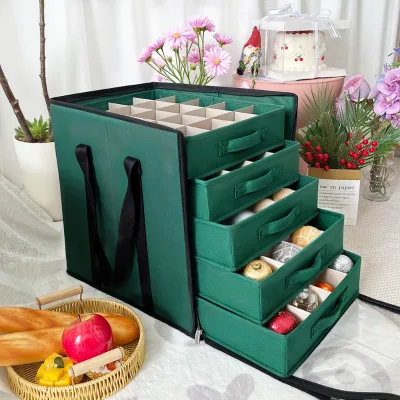
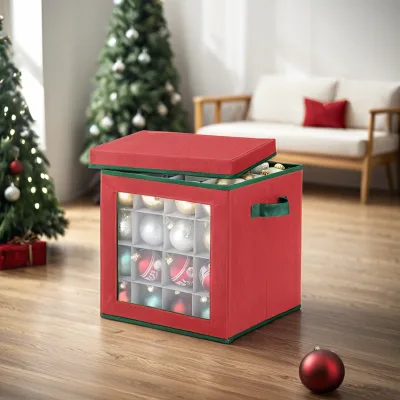
Durable Holiday Decoration Christmas Ornament Storage Box Organizer with Dividers Storage Container
$2.03 - $2.64
MOQ: 1000 pieces
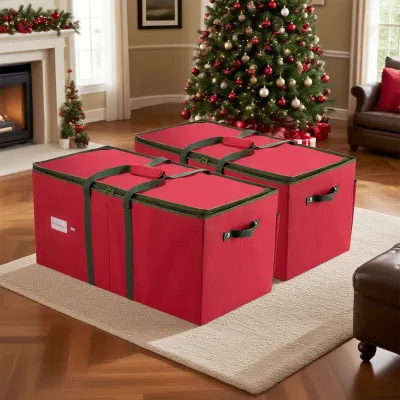
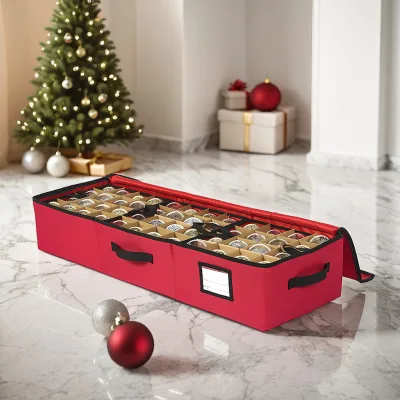
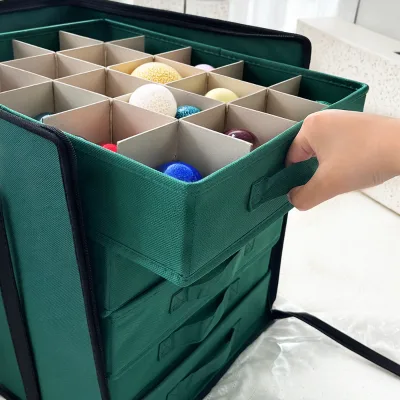
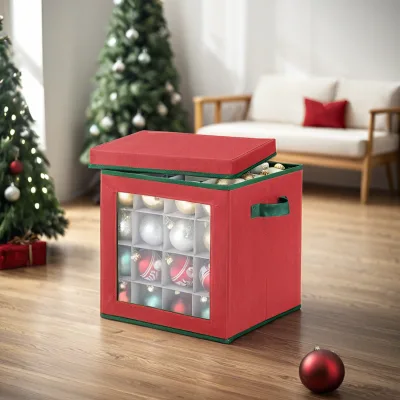
New Large Capacity Household Foldable Christmas Storage Box Christmas Decorations Storage Box
$2.29 - $3.02
MOQ: 1000 pieces
$2.17 - $3.07
MOQ: 500 pieces
Jinhua Saving Industry and Trade Co. Ltd
- Verified by SGS
- Manufacturer
- China Zhejiang
- Lead time15 days
- Avg. response≤ 6h
Main productsNon-Woven Storage Box, Non-Woven Storage Bag, Laundry Bag, Cloth Storage Box, Foldable Storage Box, Storages Basket


$2.67 - $3.15
MOQ: 2000 Pieces
Shanghai Shengyada Houseware Co., Ltd.
- Verified by SGS
- Combined
- China Shanghai
- Lead time30 days
- Avg. response≤ 2h
Main productsfoldable storage box
Main marketsEurope

Christmas Ornament Storage Boxes Christmas Storage Container with Dividers
$1.84 - $2.44
MOQ: 500 Pieces


Factory Price Folded Versatile Foldable Practical Container Organized Christmas Ball Storage Box
$1.84 - $2.44
MOQ: 500 Pieces

$3.90 - $4.30
MOQ: 500 Pieces

High Quality Christmas Ball & Bins Practical Container Multi-Purpose Foldable Storage Box Boxes
$3.90 - $4.30
MOQ: 500 Pieces

High Quality Folded Versatile Foldable Organized Practical Container Ball Box Christmas Storage
$1.84 - $2.44
MOQ: 500 Pieces
Ningbo Kingdom Home Fashion Co., Ltd.
- Manufacturer, Trading Company
- Zhejiang, China
- Lead time30 days
- Avg. response≤ 2h
Main productsShopping bags,closet organizer,Storage stool,over the door hanging storage bag,suit cover
Main marketsNorth America(40.00%), Central America(20.00%), Northern Europe(20.00%), Domestic Market(10.00%), Eastern Europe(5.00%), Southern Europe(5.00%)

- Combined
- China Guangdong
- Lead time45 days
- Avg. response≤ 1h
Main productsResin Craft, Baby Doll, Christmas Tree, Christmas Wreath, Christmas Garland, Christmas Decoration, Artificial Flower, Artificial Plant, Artificial Tree, Christmas Ornaments
Main marketsSouth America,Europe,North America


$1.00 - $2.00
MOQ: 1 Pieces


Christmas Decoration Christmas Products Navidad Claus Christmas Santa Xmas Fabric Dolls
$1.00 - $2.00
MOQ: 1 Pieces
Jiaxing Aifute Household Products Co., Ltd.
- Verified by TüVRheinland
- Trading Company
- Lead time25 days
- Avg. response≤ 7h
Main productsStorage Boxes, Laundry Basket, Suit Bag, Ironing Board, Travel Bag
Main marketsNorth America(60%), Eastern Europe(20%), Western Europe(20%)
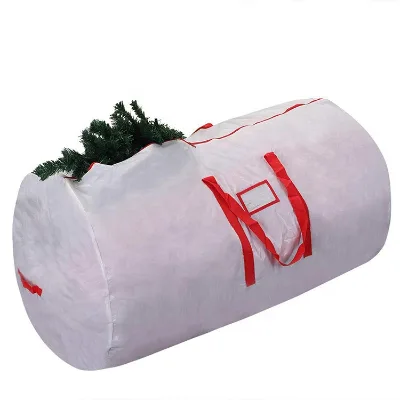
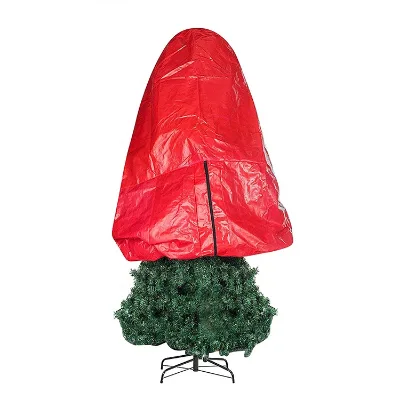
Large Christmas Tree Storage Containers for Artificial Tree Storage Bags
$4.69 - $4.99
MOQ: 1000 pieces
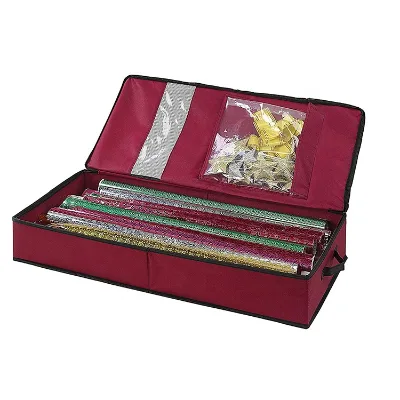
$2.67 - $3.08
MOQ: 1000 sets
- Verified by BV
- Trading Company
- China Zhejiang
- Lead time30 days
- Avg. response≤ 13h
Main productsHousehold Products, Recreation& Game Products, Outdoor Products, Garden Products, Pet Products, Car Products, Daily Use Products
Main marketsSouth America,Africa,Southeast Asia/ Mideast,East Asia(Japan/ South Korea),Europe,Australia,North America


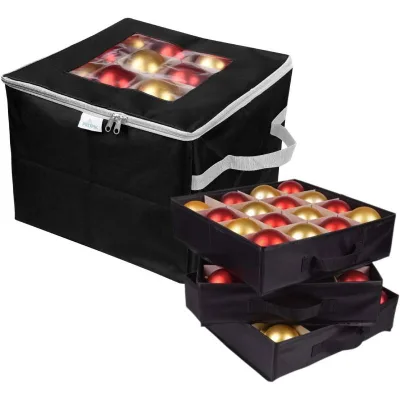
China Manufacturer Christmas Bauble Customised Storage Box Containers with Removable Trays
$2.00 - $3.00
MOQ: 500 Pieces

Taizhou Shangyi Plastic Co., Ltd.
- Verified by TUVRHEINLAND
- Trading Company
- China Zhejiang
- Lead time23 days
- Avg. response≤ 17h
Main productsFood Container, Storage Container, Lunch Box, Bento Box, Plastic Laundry Basket, Plastic Storage Container, Plastic Cutting Board
Main marketsSouth America,Southeast Asia/ Mideast


Space-Saving Plastic Storage Box, Plastic Bin Container/Plastic Storage Basket
$3.80 - $4.00
MOQ: 2000 Pieces

Qingdao Rayfore Container lndustry Co., Ltd.
- Verified by TUVRHEINLAND
- Combined
- China Shandong
- Lead time30 days
- Avg. response≤ 13h
Main productsSpecial Container, Storage Container, Standard Shipping Container, Used Container, Flat Pack, Generator Container, Container House, Prefabricated Container House, Reefer Container
Main marketsDomestic,Europe,North America

Dongguan City Huawei Hardware Products Co., Ltd.
- Verified by SGS
- Combined
- China Guangdong
- Lead time30 days
- Avg. response≤ 2h
Main productsTin Box, Tin Can, Food Tin Box, Tin Packing Box, Tea Tin Box, Cosmetic Tin Box, Candy Tin Box, Gift Tin Box, Cigarette Tin Box, Wine Tin Box
Main marketsSouth America


Large Size Rectangle Empty Container for Holiday Cookie Gift Sets Tin Box
$0.62 - $0.95
MOQ: 5000 Pieces
Dongguan City Jinyuanbao Packing Industrial Co., Ltd.
- Verified by SGS
- Combined
- China Guangdong
- Lead time15 days
- Avg. response≤ 4h
Main productsCoffee Tea Tin Box/Tin Can, Candy Wax Tin Box/Tin Can, Christamas Gift Tin Box/Tin Can, Aluminum Tin Box/Tin Can, Cookie Biscuit Tin Box/Tin Can, Candy Sweet Tin Box/Tin Can, Lunch Tin Box/Tin Can, Tin Bucket/Tin Pail/Tin Tray
Main marketsEurope,North America


Christmas Gift Packaging Metal Tin Container for Candy/Food/Gift/Jewelry
$1.48 - $1.63
MOQ: 3000 pieces

Custom Blue Printed Tree Tin Box Gift Decorative Tin Container for Chirstmas
$0.79 - $0.93
MOQ: 3000 pieces

Decorative Holiday Tin Container Christmas-Themed House-Shaped Gift Tin Box for Treats
$0.99 - $1.18
MOQ: 3000 pieces

- Combined
- China Guangdong
- Lead time30 days
- Avg. response≤ 8h
Main productsTin Can
Main marketsSouth America,Africa,Southeast Asia/ Mideast,East Asia(Japan/ South Korea),Domestic,Europe,Australia,North America

Hot Sales Tinplate Storage Container Santa Claus Metal Box Candy Chocolate Tin Can for Christmas
$0.42 - $0.65
MOQ: 500 Pieces

$0.67 - $0.87
MOQ: 3000 Pieces

$0.68 - $0.88
MOQ: 3000 Pieces

Xiamen Ebei Import & Export Co., Ltd.
- Verified by CTI
- Trading Company,Manufacturer/Factory
- China Fujian
- Lead time45 days
- Avg. response≤ 2h
Main productsEco-Friendly Products, Bamboo Tableware, Bamboo Furniture, Bamboo Kitchenware, Bamboo Office Supply, Bamboo Fibre Products, Biodegradable Products, Bamboo Towel, Solar Energy Products, Bamboo Garden Products
Main marketsSouth America,Eastern Europe,Mid East,North America,Southeast Asia,Eastern Asia,Oceania,Western Europe,Africa


Large Size Bamboo Storage Box / Storage Container
MOQ: 500 Pieces

ZHENGZHOU YITUO MACHINERY CO., LTD.
- Verified by BV
- Combined
- China Henan
- Lead time30 days
- Avg. response≤ 5h
Main productsFood Truck, Food Trailer, Food Cart, Airstream Food Trailer, Ice Cream Bicycle, Electric Food Truck, Mobile Kitchen, Food Kiosk, Food Van, Restaurant Car
Main marketsEurope,Australia,North America

Qingdao Haylite Machinery Co., Ltd.
- Verified by BV
- Combined
- China Shandong
- Lead time30 days
- Avg. response≤ 24h
Main productsTool Cabinet, Exhibition Tent, Tire Changer, Camper Trailer, Auto Lift, Livestock Product, Trailer, Container Loading Ramp, Iron Gate, Tire
Main marketsAustralia,North America
Qingdao Double Friend Logistic Equipment Co., Ltd.
- Verified by TUVRHEINLAND
- Combined
- China Shandong
- Lead time15 days
- Avg. response≤ 12h
Main productsShipping Container
Main marketsAustralia

Zhangjiagang Tianyang Imp. & Exp. Co., Ltd.
- Trading Company,Manufacturer/Factory,Other
- China Jiangsu
- Lead time23 days
- Avg. response≤ 25h
Main productsContainer, Container Hinge, Sea Container, Mobile Houses, Movable House, Container House, Prefabricated House, Office Container, Prefab House, Modular House
Main marketsSouth America,Eastern Europe,Mid East,North America,Southeast Asia,Eastern Asia,Oceania,Western Europe,Africa

Jiangyin Rension International Trading Co., Ltd.
- Trading Company,Manufacturer/Factory
- China Jiangsu
- Lead time23 days
- Avg. response≤ 25h
Main productsContainer, Corner Casting, Twist Lock, Container Spare Parts, Marine Lashing Parts, Trailer Parts, Container Door Locking Gear, Container Corner Fitting, Container Lashing Parts, Stainless Steel Flange
Main marketsSouth America,Eastern Europe,Mid East,North America,Southeast Asia,Eastern Asia,Oceania,Western Europe,Africa

MOQ: 1 Pieces

MOQ: 1

MOQ: 50 Pieces




Comprehensive Sourcing Guide
Christmas Holiday Storage Container Supplier Concentration and Factory Types
Suppliers of Christmas holiday storage containers fall into two broad structural types that shape how a buyer should approach them. The first is the pure trading company, which sources from multiple underlying factories and typically lists a wide main-product span—gifts, footwear, garments, and machinery alongside storage goods. A trading company based in Fujian, China, for example, carries third-party verification (BV) and advertises a very fast response time, but its quoted lead times stretch to roughly thirty days because goods move through intermediaries. The second type is the combined manufacturer and trading company, often rooted in non-woven fabric, cooler bags, and shopping bags—a natural adjacency for fabric-based ornament boxes and wreath storage containers. These hybrid suppliers tend to show shorter lead times, sample processing and graphic design capability, and broader system certifications.
For this category, the manufacturing base in China is real but the buyer should not assume a single cluster location from any one result. Instead, identify clusters by cross-checking the place-of-origin fields on individual products, noting where model numbers, materials, and origins repeat across suppliers, and mapping which provinces show the highest density of storage-bag and storage-box listings. Polyester and non-woven construction dominates the fabric-style containers, while plastic appears in bags; the underlying material supply chains—non-woven fabric mills, zippers, dividers, and transparent lids—tell you where genuine production depth sits rather than where resellers list.
How to Verify Christmas Holiday Storage Container Suppliers
Verification for this category rests on three layers. First, confirm third-party inspection credentials: results on this page show suppliers verified by BV and by Intertek, both recognized inspection bodies, and a buyer should treat the presence of a named verification body as a meaningful filter before sending inquiries. Second, check system-level certifications where a supplier chooses to display them—one hybrid manufacturer here lists GRS, ISO 9001, BSCI, sedex, AZO, and REACH—covering quality management, social compliance, chemical restriction, and recycled content. Never assume a certification applies to all products; ask the supplier to state which certificates cover the specific ornament storage box or storage bag you intend to order, and request certificate numbers you can check with the issuing body. Third, ask for documents tied to the goods themselves: test reports for the fabric or plastic material, AZO and REACH compliance statements where required by your market, and a factory audit report if the supplier claims manufacturing rather than trading.
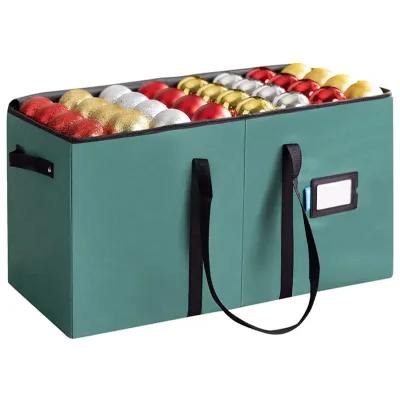
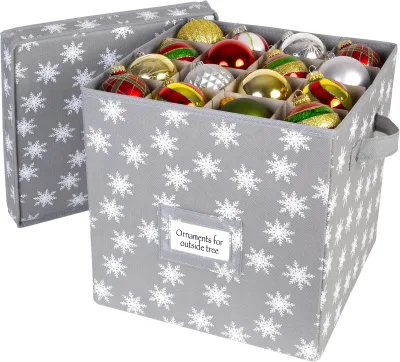
On the product level, verification means matching claims to physical samples. Listings here specify attributes such as foldable construction with zippers and handles, dust-proof finishes, transparent lids, dimensional tolerance under ±1cm, and polybag packing—so order a sample and measure each attribute against the specification sheet. Confirm the model number on the sample matches the quoted model, photograph the packaging, and run a small drop and load test for divider-based ornament boxes. Keep every verification result in writing so that any later dispute over quality or compliance references a documented, sample-linked baseline.
What to Compare Across Christmas Holiday Storage Container Suppliers
Build a comparison table using the dimensions suppliers actually display. Lead time is the sharpest contrast on this page: one supplier quotes around thirty days while another quotes roughly ten, so the same purchase order placed in September can arrive a month apart depending on which supplier wins. Response speed also differs dramatically—one result shows near-instant responses, another around two hours—so weight response time heavily if you operate on a short holiday-season runway. MOQ varies from two hundred pieces to one thousand, which decides whether you can test two designs or must commit to one. Compare main products to judge focus: a supplier whose catalog is non-woven fabric, storage bags, and shopping bags is materially closer to this category than one whose main products are gifts, shoes, garments, and machines. Compare company type and verification body, and note whether an escrow or platform-protected payment option is offered, confirming the mechanism on the listing itself rather than assuming it.
Round out the comparison with depth indicators rather than surface claims. Check whether the supplier offers OEM and customized logo work, on-demand customization, sample processing, and graphic processing—these show in-house or managed development capability. Compare product-level evidence: price ranges from roughly two dollars to over seven dollars across listings, so quote the same specification, size, and fabric weight to every supplier before comparing unit costs.
Common Christmas Holiday Storage Container Sourcing Risks
The most damaging risk in this category is seasonal timing. Because holiday goods must land on retail shelves well before December, a quoted lead time of thirty days versus ten days is not a minor difference—it can determine whether the shipment is sellable. Build a timeline backward from your latest usable arrival date and reject any supplier whose lead time, plus sampling, production, and freight, breaches it. The second risk is specification drift on fabric construction: these containers are frequently foldable with dividers, zippers, handles, and transparent lids, and tolerance is often stated as under ±1cm. A sample may pass while mass production uses thinner non-woven fabric, weaker zippers, or dividers that sag, so lock material weight, zipper grade, and stitching specifications into the purchase contract and inspect against the approved sample, not the catalog photo.
Other recurring risks deserve explicit mitigation. MOQ mismatch is common—two hundred versus one thousand pieces changes your inventory exposure, and a supplier may quietly raise MOQ after sampling. Certification gaps are another: a supplier may hold ISO 9001 for its management system while the specific fabric has no AZO or REACH documentation for your destination market; demand product-level test reports. Packaging is easy to overlook—many of these goods ship polybag-packed only—so confirm master carton specifications to avoid damaged goods in transit. Finally, distinguish manufacturers from trading companies; a trading company can add cost and communication lag, though it may also offer wider product selection and stronger sourcing reach.
Christmas Holiday Storage Container Regional Sourcing and Logistics
Regional sourcing for this category should be approached as a mapping exercise rather than a single-origin assumption. Product listings on this page identify China as the place of origin, and one supplier is located in Fujian province, but that single data point does not establish where the whole category is manufactured. To identify real clusters, extract the place-of-origin field from every shortlisted product listing, tally the results by province, and prioritize regions where multiple independent suppliers of fabric storage boxes and bags appear. Then ask each supplier where production actually occurs—many trading companies are headquartered in one province while their partner factories sit elsewhere—and record the answer alongside their listed location. This distinction matters for audits: if you plan a factory visit or third-party inspection, you need the factory address, not the sales office address.
Logistics planning follows the product's physical profile. Foldable storage boxes compress well and ship economically, but rigid divider-based containers with transparent lids consume more cube; request actual carton dimensions and calculate loading per container before comparing prices. Mode selection depends on your calendar: sea freight suits early orders placed months ahead, while late-season orders may force air freight at a cost the unit price cannot absorb. Confirm Incoterms early, clarify whether the supplier handles export documentation, and for repeat orders build a calendar with production slots reserved before the seasonal capacity crunch compresses lead times across the category.
Christmas Holiday Storage Container Commercial Terms and Order Planning
Commercial terms in this category reward early, structured negotiation. Unit prices observed here range from roughly two dollars for basic storage bags to over seven dollars for large-capacity tree storage containers, so always anchor quotes to an identical specification—size, fabric, divider count, lid type, and packing—and request an itemized breakdown covering materials, labor, packaging, and freight-ready cartons. Treat MOQ as a negotiable variable tied to your first order: suppliers here display MOQs of two hundred to one thousand pieces, and a first order at the lower tier with a stated re-order commitment is often acceptable. Match payment structure to verification status; if an escrow or platform-protected option is displayed, use it for initial orders, and shift to deposit-and-balance terms only after you have received and inspected goods. Always confirm which certifications, such as those some suppliers list (GRS, ISO 9001, BSCI, sedex, AZO, REACH), are included in the quoted price and which require paid testing.
Order planning should reflect the seasonal curve of this category. Sample development—covering logo customization, color confirmation, and dimensional checks—can consume several weeks, so begin two production cycles before peak retail demand. Reserve production capacity early with a stated lead time in writing, then schedule pre-shipment inspection against the approved golden sample. Plan replenishment separately from the initial run: a supplier with a ten-day lead time can serve as a fast backfill source, while longer-lead suppliers should carry your baseline volume committed well before the holiday window.
FAQs
What is the typical lead time for Christmas storage containers?
Manufacturers generally require 10 to 30 days to produce and ship orders. This timeframe depends on order volume and customization needs. Buyers should confirm specific delivery schedules with suppliers before placing bulk orders to ensure timely arrival for the holiday season.
What are the common materials used for these storage bags?
Suppliers offer storage containers made from plastic, polyester, fabric, and non-woven fabric. Plastic options provide durability, while fabric and non-woven materials offer eco-friendly folding solutions. Buyers can select materials based on their specific storage requirements and aesthetic preferences.
What is the minimum order quantity for custom storage boxes?
Minimum order quantities typically range from 200 to 1000 pieces. Some suppliers accept orders as low as 200 pieces, while others require 1000 pieces for customized products. Buyers should verify the specific MOQ with each supplier to align with their inventory needs.
Are these storage containers suitable for indoor and outdoor use?
Many storage bags and boxes are designed for both indoor and outdoor applications. Features like dust-proof zippers and durable materials ensure protection against environmental factors. Buyers should check product specifications to confirm suitability for their specific storage environment and usage conditions.
What certifications do these suppliers typically hold?
Reputable suppliers often hold certifications such as ISO 9001, BSCI, Sedex, GRS, AZO, and REACH. These certifications indicate compliance with quality management and social responsibility standards. Buyers should request certification documents to verify supplier credibility and product safety standards.
What is the price range for Christmas ornament storage boxes?
Prices for storage containers generally range from $2.03 to $6.50 per unit. The cost varies based on material, size, and customization options. Buyers can find budget-friendly options starting around $2.19 or premium solutions up to $7.63 depending on specific requirements.
Can I customize the logo on these storage containers?
Most suppliers offer customized logo printing services for storage bags and boxes. Buyers can provide their logo design for OEM production. This service allows for brand visibility and personalized packaging solutions for holiday decorations and gifts.