Classical Octagonal Jewelry Box Suppliers and Manufacturers
Source 18 verified suppliers for Classical Octagonal Jewelry Box options. Compare response times, lead times, MOQs, and certifications like RoHS and ISO 9001. Review product specs and request quotes directly from these manufacturers and trading companies; review the available evidence before requesting comparable quotations from suitable candidates.
Suppliers List
Shenzhen Jinhongjue Trading Co., Ltd.
- Verified by SGS Group
- Trading Company
- Lead time15 days
- Avg. response≤ 1h
Main productsJewelry Box, Silver Ornament, Jewelry Display Props, Paper Bag
Main marketsNorth America(45%), Domestic Market(15%), South America(5%)

- Verified by BV
- Trading Company,Manufacturer/Factory
- China Zhejiang
- Lead time23 days
- Avg. response≤ 7h
Main productsGift Box, Watch Box, Paper Box, Packing Box, Gift Packing, Packing Bag, Cosmetic Box, Pen Box, Jewelry Box
Main marketsSouth America,Eastern Europe,Mid East,North America,Southeast Asia,Eastern Asia,Oceania,Western Europe,Africa


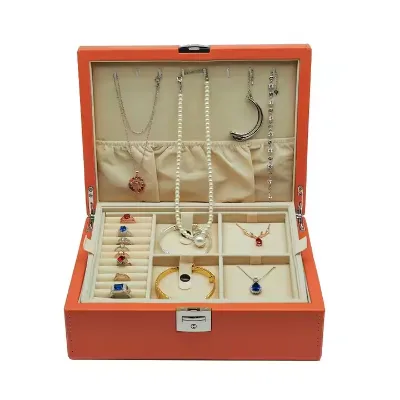
Pattern Carved Octagonal Jewelry Box Ring Pendant Box Necklace Storage Box
$1.25 - $1.48
MOQ: 50 Pieces

$1.58 - $2.36
MOQ: 20 Pieces

Jewelry Box Home Ring Box Earrings Necklace Earrings Storage Jewelry Box
$1.67 - $1.91
MOQ: 100 Pieces

$0.58 - $2.68
MOQ: 20 Pieces


Shenzhen Flying Supply Chain Co., Ltd.
- Verified by SGS
- Trading Company
- China Guangdong
- Lead time15 days
- Avg. response≤ 5h
Main productsPacking Bag, Gift Bag, Folding Bag, Laptop Bag, Carton, Toy Puzzle, Stationery, Label, Hot Melt Paper, 3D Printing Consumables
Main marketsNorth America

Fuzhou Haomin Imp. & Exp. Co., Ltd.
- Verified by SGS
- Manufacturer/Factory
- China Fujian
- Lead time23 days
- Avg. response≤ 4h
Main productsBackpacks, Beach Bags, School Bags, Shopping Bags, Canvas Bags, Sports Bags, Cosmetic Bags, Pet Bags, Cotton Bag, Travel Bag
Main marketsSouth America,Eastern Europe,Mid East,North America,Southeast Asia,Eastern Asia,Oceania,Western Europe,Africa

Jewelry Box Storage Box, Stud Earrings Storage Box, Ring Jewelry Storage Box
$5.83 - $20.23
MOQ: 50 Pieces


Jewelry Box, Leather Ins Storage Box, Anti-Oxidation Stud Earrings, Necklace Ring Storage Box
$5.83 - $20.23
MOQ: 50 Pieces

Dongguan DianYa Packaging MFG. Co., Ltd.
- Verified by TUVRHEINLAND
- Manufacturer/Factory
- China Guangdong
- Lead time30 days
- Avg. response≤ 1h
Main productsBox, Paper Box, Wooden Box, Leather Box, Plastic Box, Jewellery Box, Watch Box, Wine Box, Perfume Box, Cigar Box
Main marketsSouth America,Eastern Europe,Mid East,North America


Luxury Leather Jewelry Box Custom Jewelry Organizer Gift Packaging Storage Case
$35.50 - $50.00
MOQ: 200 Pieces


- Verified by SGS
- Combined
- China Jiangsu
- Lead time23 days
- Avg. response≤ 4h
Main productsGlass Smoking Pipe
Main marketsSouth America,Domestic,Europe,Australia,North America

Dongguan Nodiman Packing Co., Ltd.
- Combined
- China Guangdong
- Lead time30 days
- Avg. response≤ 1h
Main productsWatch Box, Jewelry Box, Gift Box, Perfume Box, Paper Box, Wooden Box, Jewellry Box, Box, Pen Box, Coffee Box
Main marketsSouth America,Southeast Asia/ Mideast,East Asia(Japan/ South Korea),Europe,North America

Shenzhen Daohua Industrial Co., Ltd.
- Verified by TUVRHEINLAND
- Manufacturer/Factory
- China Guangdong
- Lead time15 days
- Avg. response≤ 4h
Main productsPackaging Material, Gift Box, Paper Box, Wooden Box, Watch Box, Jewelry Box, Carton, Packing Box
Main marketsEastern Europe,North America,Southeast Asia,Eastern Asia,Oceania,Western Europe

Dongguan Pomall Packaging Product Co.,Ltd
- Verified by CTI
- Combined
- China Guangdong
- Lead time15 days
- Avg. response≤ 5h
Main productsPaper Box, Chocolate Box, Gift Box, Packaging Box, Jewelry Box, Cosmetic Box, Perfume Box, Wine Box
Main marketsSoutheast Asia/ Mideast


Elegant Customized Jewelry Packaging Box with Handle for Rings and Earrings
$0.19 - $0.35
MOQ: 500 Pieces


Shishi Jieli Creative Trading Co., Ltd.
- Verified by BV
- Combined
- China Fujian
- Lead time30 days
- Avg. response≤ 10h
Main productsShoe Charm, Straw Toppers, PVC Keychains, PVC Focal Beads, PVC Bottle Opener, PVC Coaster, PVC Zipper Puller, PVC Luggage Tag, PVC Bookmark, PVC Wristbands
Main marketsDomestic

Jinjiang Jiaxing Supply Management Co., Ltd.
- Verified by TUVRHEINLAND
- Trading Company
- China Fujian
- Lead time30 days
- Avg. response≤ 1h
Main productsEVA Clogs, Flip Flop, Shoe Charms, Shopping Bags, Wristbands, Gifts, Promotional Gifts, Slipper, Sport Cap, Ball
Main marketsNorth America
Xiamen Airetion Technology Co., Ltd.
- Trading Company
- China Fujian
- Lead time0 days
- Avg. response≤ 4h
Main productsGift Box, Jewelry Box, Color Box, Food Box, Cosmetic Box, Electronic Packaging Box, Paper Bag

Henan Qingchengzhilian Wedding Props Co., Ltd.
- Verified by BV
- Trading Company
- China Henan
- Lead time15 days
- Avg. response≤ 21h
Main productsWedding Arch
Main marketsDomestic

Shenzhen Hengda Xin Jewelry Co., Ltd.
- Verified by BV
- Combined
- China Guangdong
- Lead time15 days
- Avg. response≤ 2h
Main productsJewelry, Stainless Steel Fittings, Stainless Steel Jewelry, Necklace, Bracelet, Stud Earrings, Ring, Pendant, Fashion Jewelry, Fashion Accessories
Main marketsSoutheast Asia/ Mideast,East Asia(Japan/ South Korea),Domestic,Europe,Australia,North America
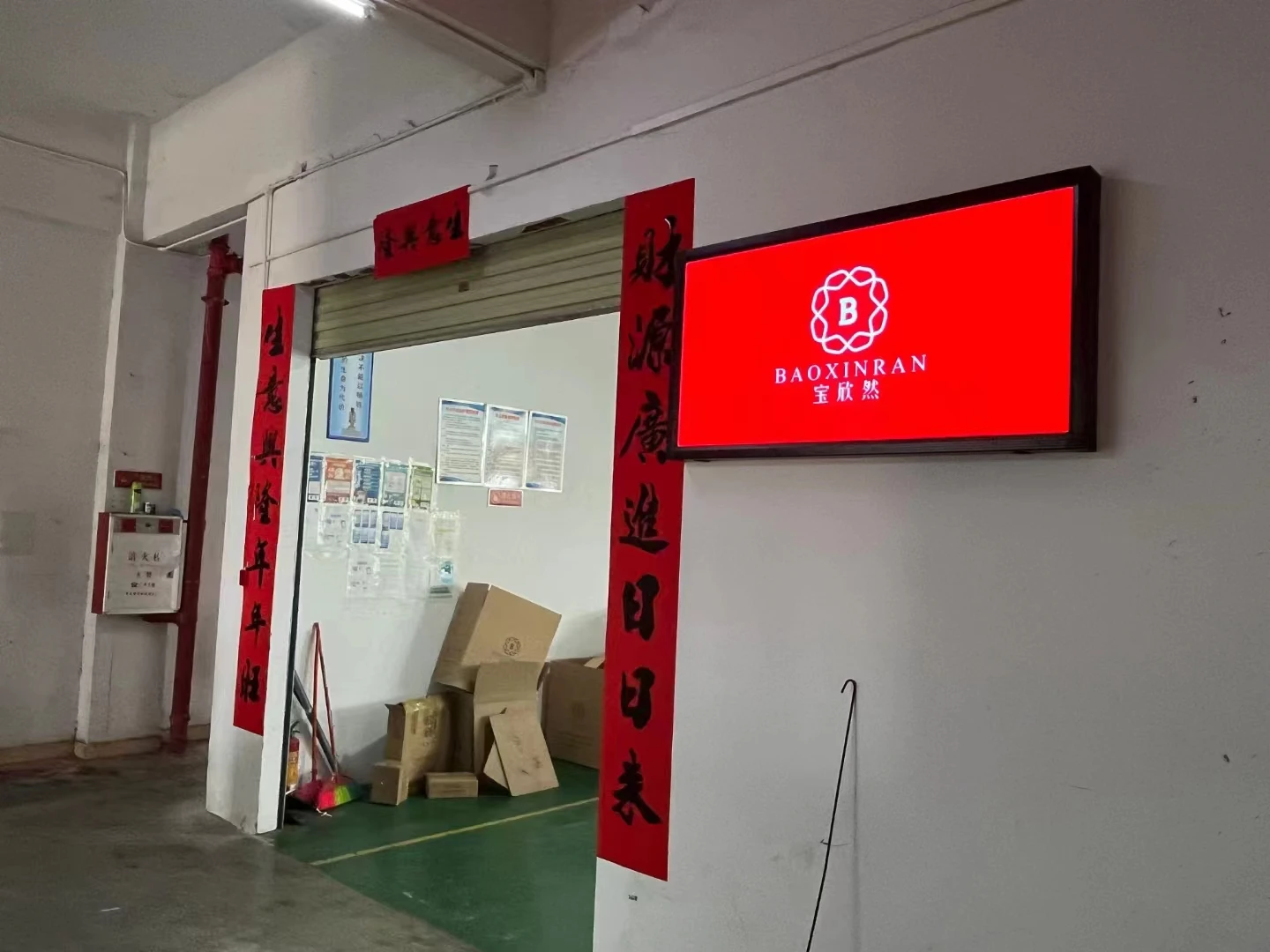
Shenzhen Baoxinran Jeweylr Packaging Co., Ltd.
- Manufacturer
- Guangdong, China
- Lead time30 days
- Avg. response≤ 2h
Main productsJewelry Eyewea,Watches & Accessories,Jewelry Packaging & Display,Jewelry Packaging,jewelry gift
Main marketsDomestic Market(20.00%), Southeast Asia(15.00%), Oceania(9.00%), Mid East(8.00%), Western Europe(8.00%), Southern Europe(8.00%), Eastern Europe(6.00%), South America(6.00%), Eastern Asia(5.00%), North America(5.00%), Northern Europe(5.00%), South Asia(3.00%), Central America(2.00%)

Forever Standing Stationery Co., Ltd.
- Combined
- China Guangdong
- Lead time30 days
- Avg. response≤ 25h
Main productsCosmetic Box, Jewelry Box, Make up Box, Wine Box, Wine Bags, Wine Rack, Storage Box, Gift Packing Box, Photo Albums, Stationery and Office Supply
Main marketsSouth America,Africa,Southeast Asia/ Mideast,East Asia(Japan/ South Korea),Domestic,Europe,Australia,North America

Ningbo Paiaopai Display Co., Ltd
- Verified by TUVRHEINLAND
- Combined
- China Zhejiang
- Lead time30 days
- Avg. response≤ 3h
Main productsMakeup Cosmetic Display Organizer Beauty, Jewelry Display Stand for Necklace Breclet Tray, Counter Display for Retial Store Sunglass, Buffet Display for Cake Dessert Party Stand, Funko Pop Acrylic Box Pokemon Etb Booster Pack, Acrylic Sign Label Price Tag Display Holder Fram, Juice Wine Display Racking Shelf Showcase, Acrylic Floor Display Pop up Display Side Table, House Decoration Display Stand Desktop Vase, Store Display Rack Supermarket Metal Acrylic PVC
Main marketsDomestic,North America

- Verified by SGS
- Manufacturer/Factory,Group Corporation
- China Guangdong
- Lead time45 days
- Avg. response≤ 4h
Main productsGift Box, Watch Box, Perfume Box, Cosmetic Box, Whisky Box, Jewelry Box, Wine Box, Spirits Box, Coin Box




Comprehensive Sourcing Guide
Classical Octagonal Jewelry Box Supplier Concentration and Factory Types
The current supplier landscape for classical octagonal jewelry boxes reveals a mix of trading companies and manufacturers operating within specific regions. Evidence indicates that some suppliers are located in China Zhejiang, while others originate from Guangdong, suggesting distinct manufacturing clusters that buyers should investigate. These locations often correlate with specific supply chain efficiencies, though the exact concentration of factories versus trading firms varies by result. Some entities list themselves as trading companies, while others identify as manufacturers or factories, offering different value propositions regarding direct production control and customization capabilities.
When evaluating the type of entity, buyers must distinguish between those offering light customization and those providing full OEM and ODM services. The observed data shows suppliers with capabilities ranging from sample processing and graphic processing to customized on-demand production. This distinction is critical because a trading company might facilitate sourcing from multiple factories, whereas a manufacturer controls the entire production line. Buyers should verify the company type to ensure the supplier can meet specific volume requirements and customization needs without relying on third-party intermediaries that may add layers of cost or communication delay.
How to Verify Classical Octagonal Jewelry Box Suppliers
Verification of suppliers for classical octagonal jewelry boxes relies heavily on third-party audit reports and system certifications. Available data points indicate that some suppliers have undergone verification by SGS Group, while others hold BV verification status. These external validations provide a baseline of trust regarding the supplier's operational legitimacy and adherence to basic business standards. Buyers should prioritize suppliers with these specific verification badges, as they confirm that an independent agency has reviewed the company's existence and operational capacity.
Beyond physical verification, system certifications such as RoHS, BSCI, ISO 9000, ISO 9001, ISO 14001, ISO 14000, and HSE serve as indicators of quality management and environmental compliance. The presence of these certifications suggests the supplier adheres to international standards for product safety and workplace conditions. However, buyers must confirm that these certifications are current and applicable to the specific product lines being sourced. Relying solely on the presence of a certification without checking its scope or validity can lead to compliance gaps. Therefore, cross-referencing these credentials with the specific product requirements is essential before proceeding with any order.
What to Compare Across Classical Octagonal Jewelry Box Suppliers
Comparing suppliers requires a detailed analysis of lead times, response speeds, and minimum order quantities to align with project timelines. Observed lead times in the current results range from 15 days to 23 days, indicating significant variation in production capacity and scheduling efficiency. Response times also differ, with some suppliers showing a response time of 1 day and others taking up to 6 days. These metrics directly impact the agility of the supply chain, especially for urgent orders or when rapid prototyping is required. Buyers should calculate the total time from order placement to delivery, factoring in these internal processing speeds.
Minimum order quantities (MOQ) and pricing structures further differentiate suppliers in the Classical Octagonal Jewelry Box market. Current data shows MOQs varying from 20 units to 100 units, with price ranges spanning from approximately $0.58 to $3.14 per unit depending on material and design complexity. Some suppliers offer flexible customization options, while others may have stricter constraints on order volume. Buyers must weigh the cost per unit against the MOQ to determine the most economical option for their specific volume needs. Additionally, the availability of different materials, such as leather, wood, or plastic, and the specific shapes like octagonal or right-angle designs, should be compared to ensure the final product meets aesthetic and functional requirements.
Common Classical Octagonal Jewelry Box Sourcing Risks
One significant risk in sourcing classical octagonal jewelry boxes is the discrepancy between product descriptions and actual manufacturing capabilities. While some listings claim customization is available, the extent of this capability, such as graphic processing or specific material sourcing, may vary. Buyers must verify if the supplier can actually deliver the specific design nuances, such as embossed patterns or metal plaques, without compromising the structural integrity of the box. Misalignment in these details can lead to rejected shipments or the need for costly rework, delaying the entire project timeline.
Another critical risk involves the consistency of quality control and adherence to safety standards. Although certifications like RoHS are present, the actual product testing results for materials like PU leather or wood are not always explicitly detailed in the initial search results. There is a potential for variation in the exterior materials, such as the embossed octagonal print or the quality of the metal tags, which can affect the perceived value of the jewelry packaging. Buyers should request specific test reports or samples to validate that the materials used meet the required durability and safety standards before committing to a large order.
Classical Octagonal Jewelry Box Regional Sourcing and Logistics
Regional sourcing impacts logistics costs and delivery speed, with suppliers located in China Zhejiang and Guangdong offering different logistical advantages. The location of the factory determines the proximity to major shipping ports and the efficiency of inland transportation. Buyers should assess whether the supplier's location aligns with their preferred shipping routes to minimize transit time and freight costs. Understanding the specific origin, such as Guangdong or Zhejiang, helps in estimating the lead time more accurately, as regional infrastructure and port congestion can vary significantly.
Logistics planning must also account for packaging standards and export requirements. The observed data indicates that products are often packed in standard export cartons or standard export packaging, which is designed to protect items during transit. However, the specific dimensions and weight of the single package, such as 22x18x10 cm or 10x10x8 cm, influence the number of units that can be shipped per container. Buyers need to calculate the total volume and weight to optimize container utilization and reduce shipping costs. Additionally, verifying the supplier's experience with international shipping and their ability to handle customs documentation is crucial for a smooth delivery process.
Classical Octagonal Jewelry Box Commercial Terms and Order Planning
Commercial terms for classical octagonal jewelry boxes often include specific pricing models based on order volume and customization levels. The price range observed, from $0.58 to $3.14, reflects the complexity of the design and the material used, such as leather, wood, or plastic. Buyers should negotiate based on the total order value and the specific customization requirements, as these factors significantly influence the final unit cost. Understanding the pricing structure helps in budgeting accurately and avoiding unexpected costs that may arise from additional design features or expedited production.
Order planning must also consider the production capacity and the ability to handle large volumes without compromising quality. Suppliers with OEM and ODM capabilities may offer more flexibility in scaling production, but this requires clear communication of specifications and timelines. Buyers should establish a detailed production schedule that accounts for the lead time, which can range from 15 to 23 days, and the response time of the supplier. Ensuring that the supplier can meet the required delivery date is essential for maintaining inventory levels and meeting market demand. Clear communication of these terms at the outset prevents misunderstandings and ensures a successful partnership.
FAQs
What shapes are available for octagonal jewelry boxes?
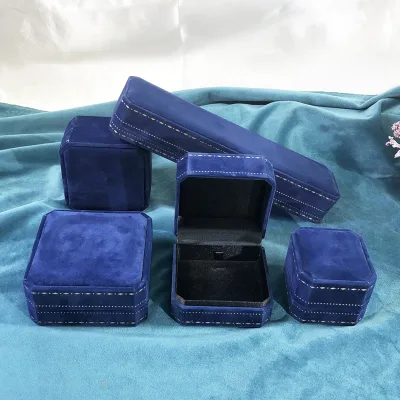
Octagonal shapes are available alongside right-angle and square designs. Some options feature embossed printing for a premium look. Colors include blue, moss green, pink, and lake blue. These variations allow buyers to select styles that match specific branding needs effectively.
What is the typical lead time for these orders?
Lead times vary between 15 and 23 days depending on the supplier. Some manufacturers offer faster processing for light customization requests. Buyers should confirm specific timelines before placing large orders to ensure timely delivery for their retail or wholesale schedules.
Are these boxes suitable for rings and necklaces?
Yes, these boxes are designed for rings, necklaces, pendants, and bracelets. Many models feature clamshell openings for easy access. The interior dimensions accommodate various jewelry sizes while maintaining a secure storage environment for collection or gift presentation purposes.
What materials are used for the exterior finish?
Exterior materials include embossed octagonal print, PU leather, plastic, and wood. Some designs feature metal plaques or gold edges for a luxury appearance. Buyers can choose materials based on durability requirements and the desired aesthetic appeal for their specific product line.
What is the minimum order quantity for these boxes?
Minimum order quantities range from 20 to 100 units per model. Specific MOQs depend on the selected design and customization level. Buyers should verify the exact requirement for each product model to ensure their order meets the supplier's production thresholds.
Do suppliers offer customization services for these boxes?
Customization is available for many models including graphic processing and on-demand designs. Suppliers support OEM and ODM services for tailored packaging solutions. Buyers can request specific colors, sizes, and printing methods to align with their brand identity and market requirements.
What certifications do the suppliers hold?
Suppliers hold certifications such as RoHS, BSCI, ISO 9000, ISO 9001, and ISO 14001. Some are verified by SGS Group or BV for quality assurance. These credentials indicate adherence to international standards for safety, quality management, and environmental responsibility in production processes.
Where are these jewelry boxes manufactured?
Manufacturing locations include Guangdong and Zhejiang provinces in China. Products originate from verified trading companies and manufacturers in these regions. Buyers can expect consistent quality standards associated with these established manufacturing hubs for packaging and display items.