Eco-Friendly Burlap Gift Bag Suppliers and Manufacturers
Source 23 verified suppliers for Eco-Friendly Burlap Gift Bag products. Compare key dimensions including lead times, MOQs, and certifications like SGS and BV. Contact suppliers directly to request quotes and samples for your packaging needs; review the available evidence before requesting comparable quotations from suitable candidates.
Suppliers List

- Verified by BV
- Manufacturer/Factory
- China Zhejiang
- Lead time45 days
- Avg. response≤ 5h
Main productsJute Fabric, Jute Table Runner, Jute Bag, Jute Placemat, Jute Tablecloth, Burlap Ribbon, Burlap Roll
Main marketsSouth America,North America,Southeast Asia,Western Europe,Africa

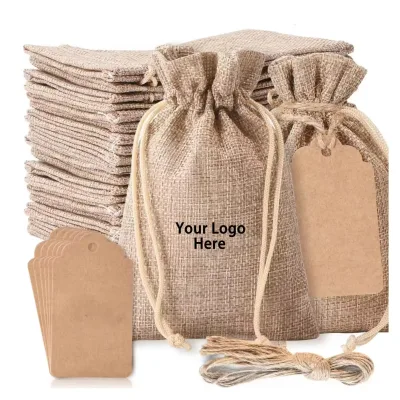
5 X 7 Inch Burlap Gift Bags, Small Burlap Bags with Drawstringsburlap Sacks
$0.17 - $0.21
MOQ: 500 Pieces


Small Burlap Bags with Drawstring 4X6 Inch Reusable Premium Mini Gift Bag with Tag and String
$0.15 - $0.18
MOQ: 500 Pieces


YIWU JINYE IMPORT AND EXPORT CO., LTD
- Verified by SGS
- Trading Company
- China Zhejiang
- Lead time15 days
- Avg. response≤ 24h
Main productsBangle, Wrist Band, Bracelet, Fashion Jewelry
Main marketsNorth America

$0.08 - $0.27
MOQ: 50 Pieces

Wholesale Christmas Burlap Bags Drawstring Gift Storage Burlap Bags Canvas Drawstring Christmas Bags
$0.27 - $0.75
MOQ: 1000 Pieces

Christmas Hot Stamped Burlap Gift Bags Christmas Drawstring Bags Candy Gift Wrapping Christmas Bags
$0.10 - $0.25
MOQ: 50 Pieces

Custom Printed Burlap Handbag Eco Reusable Shopping Jute Tote Bag Plain Jute Tote Bags Wholesale
$1.52 - $2.68
MOQ: 100 Pieces
Wenzhou Mixing Arts & Crafts Co., Ltd
- Verified by TUVRHEINLAND
- Trading Company
- China Zhejiang
- Lead time23 days
- Avg. response≤ 4h
Main productsPP Woven Bags, Cotton Canvas Bag, Cooler Bag, Tyvek Bag, Picnic Mat, Drawstring Bag, Cosmetic Bag, RPET Bag, Toiletry Bag, Non Woven Bag
Main marketsEurope

Christmas Sacks Personalized Burlap Canvas Xmas Gift Bags with Drawstring for Kids
$0.27 - $0.69
MOQ: 1000 Pieces

Custom Logo Christmas Burlap Drawstring Bags with Seal Stickers Gift Candy Bags
$0.45 - $1.20
MOQ: 1000 Pieces

Promotional Custom Burlap Bags Wholesale Jute Drawstring Bag Gift Pouch
$0.12 - $0.27
MOQ: 1000 Pieces

Anhui Magic Industry Co., Ltd.
- Verified by SGS
- Manufacturer/Factory
- China Anhui
- Lead time98 days
- Avg. response≤ 9h
Main productsCanvas Bag, Tote Bag, Backpack, Shoulder Bag, Drawstring Bag, Cosmetic Bag, Customize Bag, Sports Bag, Shopping Bag, Cooler Bag
Main marketsSouth America,Eastern Europe,Mid East,North America,Southeast Asia,Eastern Asia,Oceania,Western Europe,Africa


Custom Logo Eco-Friendly Natural Reusable Gift Shopping Burlap Tote Jute Bag
$0.80 - $1.50
MOQ: 100 Pieces


Zhongshan Dongfeng Town Orient Printing Plastic Factory
- Verified by SGS
- Combined
- China Guangdong
- Lead time15 days
- Avg. response≤ 1h
Main productsBag, Roll Film, Packing, Gift Bag, Light Chemical Products, Gift Box, Doypack, Degradable Material, Composite Matrial
Main marketsDomestic
- Verified by CTI
- Trading Company
- China Zhejiang
- Lead time15 days
- Avg. response≤ 1h
Main marketsSoutheast Asia/ Mideast,Domestic,Europe,North America

Xiamen Yahongda Trading Co., Ltd.
- Verified by BV
- Trading Company
- China Fujian
- Lead time30 days
- Avg. response≤ 6h
Main productsNon Woven Bag, Cotton Bag, Folding Bag, PP Woven Bag, RPET Bag, Makeup Bag, Mesh Bag, Jute Bag, Drawstring Bag, Garment Bag
Main marketsSoutheast Asia/ Mideast,East Asia(Japan/ South Korea),Europe,Australia,North America


Cheap Natural Recycle Jute Burlap Gift Bag Eco-Friendly Plain Hessian Shopper Bag
$0.92 - $1.33
MOQ: 500 Pieces

Wholesale Eco Large Burlap Gift Shopping Natural Jute Tote Bag with Custom Logo
$1.18 - $1.32
MOQ: 500 Pieces

Colorful Burlap Drawstring Gift Bag Cheap Pouch Bag Jute Custom Christmas Promotional Burlap Bag
$0.60 - $0.92
MOQ: 500 Pieces


Nan'an Brightpath International E-Commerce Co., Ltd.
- Verified by CTI
- Trading Company
- China Fujian
- Lead time0 days
- Avg. response≤ 3h
Main productsPromotion Gift, Stationery, Gift Set, Packaging Bag & Box, Keychain, Promotion Drinkware, Shoulder Bag, Backpack

Wenzhou Gaodeng Packaging Technology Co., Ltd.
- Trading Company,Manufacturer/Factory
- China Zhejiang
- Lead time23 days
- Avg. response≤ 7h
Main productsCooler Bag, Non Woven Bag, Cotton Bag Canvas Bag, Jute Tote Bag, Cosmetic Bag, PP Woven Bag, Polyester Bag/Drawstring Bag, Ultrasonic Bag, Toolkit
Main marketsSouth America,Eastern Europe,Mid East,North America,Southeast Asia,Eastern Asia,Oceania,Western Europe,Africa

$0.30 - $1.00
MOQ: 1000 Pieces

Wenzhou Lvlin Bag Making Co., Ltd.
- Verified by SGS
- Combined
- China Zhejiang
- Lead time15 days
- Avg. response≤ 3h
Main productsNonwoven Bag, Canvas Bag, Tote Bag, PP Woven Bag, Jute Bag
Main marketsDomestic
Hangzhou Initi Imp&Exp Co., Ltd.
- Verified by SGS
- Combined
- China Zhejiang
- Lead time30 days
- Avg. response≤ 7h
Main productsTote Bag, Cotton Bag, Canvas Bag, Drawstring Bag, Garment Bag, Cooler Bag, Cosmetic Bag, Shaker Bottle, Felt Bag, Corduroy Bag
Main marketsSoutheast Asia/ Mideast,East Asia(Japan/ South Korea),Europe,Australia,North America

Promotion Custom Printed Eco-Friendly High Quality Jute Burlap Tote Bags
$0.60 - $1.80
MOQ: 100 Pieces

Promotion Custom Printed Eco-Friendly High Quality Jute Burlap Shopping Tote Bags
$0.40 - $0.88
MOQ: 100 Pieces


Custom Logo Waterproof Shopping Bag Portable Burlap Jute Tote Eco-Friendly Jute Bag
$0.68 - $1.50
MOQ: 100 Pieces

Custom Printed Burlap Handbag Eco Reusable Shopping Jute Tote Bag Plain Jute Tote Bags Wholesale
$0.68 - $1.50
MOQ: 100 Pieces

Qingdao Chenghaoda Science and Technology Co., Ltd.
- Verified by BV
- Manufacturer/Factory
- China Shandong
- Lead time15 days
- Avg. response≤ 15h
Main productsCustom Packaging Paper Bag, Custom Packaging Paper Box, Corrugated Carton/Gift Box, Custom Notebook, Decorative Books, Book/Booklet/Brochure/Catalog/Magazine Printing, Disposable Dishware
Main marketsNorth America,Eastern Asia,Western Europe

$0.27 - $0.36
MOQ: 500 Pieces


$0.27 - $0.36
MOQ: 500 Pieces


$0.27 - $0.36
MOQ: 500 Pieces

Wenzhou Fendy Packaging Co., Ltd.
- Verified by BV
- Combined
- China Zhejiang
- Lead time23 days
- Avg. response≤ 13h
Main productsShopping Bag. Cotton Bag Picnic Mat, Jute Bag Garment Bag Ultrasonic Bag, Die Cut Bag Polyester Bag, Cooler Bag Picnic Bag, Foldable Bag Thermal Bag Heat Sealing Bag, PP Woven Bag Promotional Bag, Mesh Bag Shoulder Bag Handed Bag, Tote Bag Stitchwork Bag, Insulated Bag Picnic Bag, Kids Apron Wine Bag
Main marketsSouth America,Southeast Asia/ Mideast,East Asia(Japan/ South Korea),Europe


Custom Logo Printed Eco Recycle Natural Foldable Reusable Burlap Tote Jute Bag
$1.30 - $1.50
MOQ: 3000 Pieces
Nanchang Qianti Packaging Co., Ltd
- Verified by TUVRHEINLAND
- Manufacturer/Factory
- China Jiangxi
- Lead time15 days
- Avg. response≤ 2h
Main productsShopping Bag, Custom Logo Bag, Canvas Cotton Bag, Non Woven Bag, Paper Bag, Kraft Paper Bag, Jute Bag, Cooler Bag, Drawstring Bag, Christmas Gift Bag
Main marketsSouth America,Eastern Europe,Mid East,North America,Southeast Asia,Oceania,Western Europe,Africa

$0.80 - $1.50
MOQ: 100 Pieces

$0.80 - $1.50
MOQ: 100 Pieces
Ningbo Quanwei Rubber Products Co., Ltd.
- Verified by BV
- Combined
- China Jiangsu
- Lead time15 days
- Avg. response≤ 4h
Main marketsDomestic

$1.00 - $2.50
MOQ: 300 Pieces


$1.00 - $2.50
MOQ: 300 Pieces
Shijiazhuang Cangli Trading Co., Ltd.
- Trading Company
- Hebei, China
- Lead time45 days
- Avg. response≤ 3h
Main productsMakeup brush,makeup brush set,makeup sponge,makeup remover,textile
Main marketsNorth America(50.00%), Western Europe(20.00%), Southern Europe(5.00%), Northern Europe(5.00%), South America(5.00%), Oceania(5.00%), Southeast Asia(5.00%), Eastern Europe(5.00%)
- Verified by SGS Group
- Manufacturer, Trading Company
- Lead time15 days
Main productsNon Woven Bag, PP Woven Bag, Cooler Bag, Drawstring Bag, Cotton Bag
Main marketsNorth America(27%), Southeast Asia(15%), Western Europe(15%)

Jinjiang Jiaxing Supply Management Co., Ltd.
- Verified by TUVRHEINLAND
- Trading Company
- China Fujian
- Lead time30 days
- Avg. response≤ 1h
Main productsEVA Clogs, Flip Flop, Shoe Charms, Shopping Bags, Wristbands, Gifts, Promotional Gifts, Slipper, Sport Cap, Ball
Main marketsNorth America

Guangdong Min Sun Environmental Protection Packaging Technology Co., Ltd.
- Verified by SGS
- Manufacturer
- China Guangdong
- Lead time15 days
- Avg. response≤ 2h
Main productsPlastic Packaging Products, Printed Plastic Products, Film Rolls, Laminated Plastic Packaging Products, Food Packaging Bag, Industry Packaging Bag, Medicine Use Packaging Bag, Shrink Label, Gravure Printing Products, Custom Packaging Service
Main marketsEurope,North America

DONGYAODA (XIAMEN) TRADING CO., LTD.
- Verified by SGS
- Trading Company,Manufacturer/Factory
- China Fujian
- Lead time15 days
- Avg. response≤ 9h
Main productsGift Sets, Paper Bag, Paper Box, Label& Sticker, Calendar, Trophy Award, Envelope, Cards, Tags, Packing Bag
Main marketsSouth America,Eastern Europe,Mid East,North America,Southeast Asia,Eastern Asia,Oceania,Western Europe,Africa


Natural Environmental Protection Jute Bag, Packing Drawstring Burlap Hessian Gift Bag
$0.55 - $2.45
MOQ: 300 Pieces


- Manufacturer, Trading Company
- Jiangsu, China
- Lead time3 days
- Avg. response≤ 6h
Main productscotton bags,cotton mesh bags,shopping bag,excavator part,turbocharger
Main marketsSouthern Europe(26.00%), Western Europe(25.00%), North America(20.00%), Eastern Europe(10.00%), South America(10.00%), Southeast Asia(4.00%), Central America(3.00%), Domestic Market(1.00%), South Asia(1.00%), Mid East(1.00%)

Wenzhou Hongtao Packing Co., Ltd.
- Verified by TUVRHEINLAND
- Manufacturer/Factory
- China Zhejiang
- Lead time15 days
- Avg. response≤ 13h
Main productsNon Woven Bag, Cotton Bag, Drawing String Bag, PP Woven Bag, RPET Bag, Canvas Bag, Cooler Bag, Garment Bag
Main marketsEastern Europe,North America,Eastern Asia,Western Europe

Wholesale Natural Eco Friendly Shopping Custom Printing Burlap Jute Bag with Handle
$0.80 - $1.50
MOQ: 500 Pieces


Xiamen Top Green Bags Co., Ltd.
- Verified by SGS
- Trading Company,Manufacturer/Factory
- China Fujian
- Lead time45 days
- Avg. response≤ 6h
Main productsCooler Bags, Sports Bags, Apron, Promotional Bag, Waist Bag, Shoulder Bag, Travel Bags, Cosmetic Bag, Laptop Bag, Pencil Bag
Main marketsSouth America,Eastern Europe,North America,Southeast Asia,Eastern Asia,Oceania,Western Europe,Africa


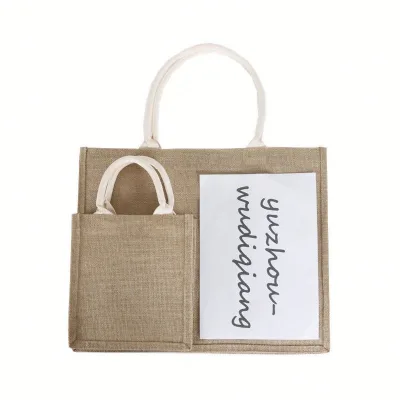
Promotional Eco Friendly Cotton Burlap Bag Jute Gifts Bag Beach with Pocket
$1.53 - $2.65
MOQ: 500 Pieces





Comprehensive Sourcing Guide
Eco-Friendly Burlap Gift Bag Supplier Concentration and Factory Types
When evaluating the landscape for Eco-Friendly Burlap Gift Bag sourcing, it is critical to distinguish between manufacturing capabilities and trading structures, as this distinction directly impacts cost control and quality assurance. The available data indicates a mix of company types, with some entities operating as Manufacturer/Factory entities while others function as Trading Companies. This structural difference is significant because factories typically offer more direct control over raw material sourcing, such as jute fabric quality, and production processes like weaving techniques. In contrast, trading companies may aggregate products from multiple sources, potentially offering a broader range of styles but with less visibility into the actual manufacturing conditions. Buyers must carefully review the company type designation to understand who holds the primary responsibility for production integrity. For instance, one observed supplier type is listed as a Manufacturer/Factory, which suggests an in-house production capability for items like jute bags and burlap table runners. Another observed entity is identified as a Trading Company, which may focus on assembling diverse inventory such as bangle accessories or cooler bags alongside textile packaging. Understanding this distinction helps buyers determine whether they are dealing with the source of production or an intermediary, which influences negotiation leverage and communication efficiency during the sourcing process.
The concentration of suppliers in specific geographic regions also plays a pivotal role in the sourcing strategy for these textile products. Current results highlight a location in China Zhejiang, which serves as a notable hub for this category. Zhejiang is historically known for its robust textile and packaging industries, providing a cluster effect that can streamline logistics and reduce shipping times for finished goods. When a location is confirmed, buyers can leverage this regional expertise to verify supplier legitimacy and assess the local supply chain maturity. However, not all suppliers display explicit location data in every result, requiring buyers to proactively request this information to ensure alignment with their logistical preferences. The presence of a Zhejiang-based manufacturer suggests access to established infrastructure for jute fabric processing and bag assembly. Buyers should prioritize suppliers in such established clusters when seeking consistent quality and reliable production schedules. If location data is missing, buyers should inquire about the factory’s address to verify if it resides in a known industrial zone. This verification step ensures that the supplier is not merely a virtual entity but has a physical presence capable of supporting large-scale orders. By focusing on suppliers with confirmed regional presence, buyers can mitigate risks associated with unverified operations and ensure a more transparent sourcing experience.
How to Verify Eco-Friendly Burlap Gift Bag Suppliers
Verification is the cornerstone of mitigating risk when sourcing eco friendly burlap gift bags, as the market contains a diverse array of entities with varying levels of credibility. Buyers should prioritize suppliers that have undergone third-party verification processes, as these audits provide an independent assessment of the supplier’s business legitimacy and operational capabilities. The available data shows that some suppliers hold BV verification, while others possess SGS or TUVRHEINLAND credentials. These certifications indicate that the supplier has met specific standards for business operations, quality management, or product safety. For example, one supplier is verified by BV, suggesting a baseline level of trustworthiness in their business practices. Another supplier holds SGS verification, which often involves rigorous testing of materials and processes. Additionally, TUVRHEINLAND verification is noted for other suppliers, indicating compliance with international standards. Buyers should actively seek out these verification badges when reviewing supplier profiles, as they serve as a preliminary filter for reliability. It is important to note that verification status can change, so buyers should confirm the current validity of these credentials before committing to any agreements. Relying on unverified suppliers increases the risk of encountering fraudulent entities or companies with inconsistent quality control. Therefore, prioritizing verified suppliers is a prudent strategy for ensuring a secure sourcing partnership.
Beyond verification badges, buyers must scrutinize the specific product evidence and attributes provided by suppliers to ensure alignment with their requirements. Detailed product listings offer insights into the supplier’s actual capabilities and attention to detail. For instance, product attributes such as style, technics, and customization options are clearly defined in some listings. One product is described as having a Plain style and Woven technics, with Single yarn count, indicating a specific manufacturing approach. Another product features a Fashionable style with Square shape, suitable for various usages like gifts or arts and crafts. These details help buyers assess whether the supplier can meet their specific design and functional needs. Buyers should also look for evidence of customization availability, as this indicates flexibility in production. Some products list Customization as Available, which is crucial for brands seeking unique branding or specific dimensions. Additionally, product origin is often specified, such as China or Zhejiang, China, providing transparency about the manufacturing location. Buyers should compare these attributes across multiple suppliers to identify those with the most relevant experience and capabilities. By thoroughly examining product evidence, buyers can make informed decisions based on concrete data rather than marketing claims. This due diligence ensures that the selected supplier can deliver products that meet the buyer’s quality and design expectations.
What to Compare Across Eco-Friendly Burlap Gift Bag Suppliers
When comparing suppliers for eco friendly burlap gift bags, lead time is a critical metric that impacts inventory management and market responsiveness. The data reveals significant variation in lead times among different suppliers, ranging from 15 days to 45 days. A supplier with a 15-day lead time, such as one identified as a Trading Company, may offer faster turnaround for standard items, which is beneficial for urgent orders or seasonal campaigns. In contrast, a Manufacturer/Factory with a 45-day lead time might require more planning but could offer better pricing or customization options due to direct production control. Buyers should align their order timelines with the supplier’s stated lead times to avoid stockouts or delays. It is essential to clarify whether the lead time includes production, quality control, and shipping, as these factors can vary. Some suppliers may have shorter production times but longer shipping durations, affecting the total delivery window. Buyers should request detailed production schedules to understand the breakdown of the lead time. Comparing lead times across multiple suppliers helps buyers identify those that best fit their operational rhythm. For instance, if a buyer needs rapid replenishment, a supplier with a 15-day lead time might be preferable. Conversely, for planned seasonal launches, a 45-day lead time may be acceptable if it allows for more thorough quality checks. Understanding these differences enables buyers to make strategic decisions that balance speed and cost.
Response time and minimum order quantity (MOQ) are other vital factors that influence the feasibility of a sourcing partnership. The available data shows response times ranging from 3.30 to 23.43, indicating varying levels of customer service efficiency. A supplier with a 3.30 response time likely offers quicker communication, which is advantageous for resolving issues or negotiating terms promptly. In contrast, a 23.43 response time may indicate slower communication, potentially leading to delays in decision-making. Buyers should consider response time as an indicator of the supplier’s operational efficiency and commitment to customer support. Additionally, MOQs vary significantly, with some suppliers requiring as few as 50 units, while others demand 1000 or more. A lower MOQ, such as 50, is suitable for testing new markets or small-scale campaigns, whereas a higher MOQ, like 1000, may be necessary for cost-effective bulk production. Buyers should evaluate their order volume requirements against the supplier’s MOQ to ensure compatibility. For example, a buyer planning a small promotional event might prefer a supplier with a 50-unit MOQ, while a retailer restocking shelves might opt for a supplier with a 1000-unit MOQ to achieve better unit economics. Comparing these metrics helps buyers identify suppliers that align with their business scale and operational needs. By carefully assessing lead times, response speeds, and MOQs, buyers can select partners that support their strategic objectives and minimize operational friction.
Common Eco-Friendly Burlap Gift Bag Sourcing Risks
One of the primary risks in sourcing eco friendly burlap gift bags is the inconsistency in product quality and material specifications. Burlap and jute are natural fibers that can vary in texture, strength, and appearance depending on the source and processing methods. Buyers must be vigilant about verifying the exact material composition and construction details of the products offered. For instance, some products are described as having a Single yarn count and Woven technics, which may result in a specific durability profile. Others might feature different fabric weights or weaving patterns that affect the bag’s strength and aesthetic appeal. Without clear specifications, buyers risk receiving products that do not meet their quality expectations or functional requirements. It is crucial to request samples to physically assess the material quality before placing large orders. Additionally, buyers should confirm the customization options available, such as logo printing or specific dimensions, to ensure the final product aligns with their branding needs. Some suppliers list Customization as Available, but the extent of this customization may vary. Buyers should clarify the limitations and costs associated with customizations to avoid unexpected expenses or delays. By proactively addressing quality concerns through sample testing and detailed specification reviews, buyers can mitigate the risk of receiving substandard products. This due diligence ensures that the final goods meet the buyer’s standards for durability and appearance.
Another significant risk is the potential for miscommunication regarding commercial terms and logistical arrangements. Suppliers may have different policies on payment terms, shipping methods, and return procedures, which can lead to disputes if not clearly defined. For example, some suppliers may offer specific shipping options like DHL, UPS, or TNT, while others might have different logistics partners. Buyers should verify the available shipping methods and associated costs to ensure they align with their budget and delivery requirements. Additionally, the presence of certifications such as SGS, BV, or Intertek can provide assurance of product safety and compliance, but buyers should confirm the scope of these certifications. Some products list Certificates like SGS, BV, Intertek, indicating adherence to certain standards, but buyers should verify if these certifications cover the specific products they intend to purchase. Furthermore, the weight limit and hardness of the bags, such as a 5-10 kg weight limit and Soft hardness, are important functional attributes that must be confirmed. Misunderstandings about these details can result in products that are unsuitable for their intended use. Buyers should maintain clear and documented communication with suppliers regarding all commercial and logistical terms. This includes confirming the production standard, packing method, and any additional fees. By establishing clear agreements and verifying all details, buyers can reduce the risk of misunderstandings and ensure a smooth transaction process.
Eco-Friendly Burlap Gift Bag Regional Sourcing and Logistics
Sourcing from specific regions like China Zhejiang offers distinct logistical advantages for eco friendly burlap gift bags, primarily due to the established infrastructure and supply chain maturity in these areas. Zhejiang is a major hub for textile and packaging manufacturing, providing buyers with access to a wide range of suppliers and raw materials. This concentration of suppliers facilitates easier comparison and negotiation, as buyers can evaluate multiple options within a single geographic region. Additionally, the proximity to ports and transportation networks in Zhejiang can reduce shipping times and costs for international buyers. However, buyers must also consider the potential challenges associated with regional sourcing, such as language barriers and cultural differences in business practices. Effective communication is essential to ensure that product specifications and order details are accurately understood. Buyers should leverage the supplier’s location data to assess the logistical feasibility of their orders. For instance, a supplier located in Zhejiang, China, may have established relationships with local freight forwarders, which can streamline the shipping process. Buyers should inquire about the supplier’s experience with international shipping and their preferred logistics partners. This information helps buyers anticipate potential delays or complications and plan accordingly. By understanding the logistical landscape of the supplier’s region, buyers can
FAQs
What is the price range for burlap gift bags?
Prices vary by size and customization. Small 4x6 inch bags range from $0.15 to $0.18 each. Larger 8x12 inch options cost $0.76 to $0.81. Custom shopping totes are priced between $1.10 and $2.68. Buyers should check specific product listings for exact quotes based on order volume and design requirements.
What are the minimum order quantities for these bags?
MOQs depend on the specific product type. Standard small burlap sacks require a minimum of 500 units. Custom printed shopping bags have an MOQ of 100. Some decorative drawstring bags start at just 50 pieces. Buyers seeking bulk wholesale should verify the specific MOQ listed for their chosen bag style and customization level.
How long does production take for custom orders?
Lead times vary by supplier type. Manufacturers typically require 45 days for production. Trading companies may offer faster turnaround times of 15 days. Some suppliers list lead times around 23 days. Buyers should confirm the exact production schedule with the supplier before placing orders to ensure timely delivery for events.
Can I customize the logo and design on the bags?
Yes, customization is widely available. Many suppliers offer logo printing and custom designs. Buyers can choose from plain woven styles or fashionable printed options. Custom shapes and sizes are also possible. Suppliers support OEM and ODM services to meet specific branding needs for gifts, weddings, or promotional events.
What certifications do these suppliers hold?
Suppliers hold various third-party verification certifications. Some are verified by BV, while others hold SGS or TÜV Rheinland credentials. Product certificates may include SGS, BV, and Intertek. Buyers should request specific certification documents to ensure compliance with international quality and safety standards for their target markets.
Where are these burlap bag suppliers located?
Most suppliers are located in China, specifically in the Zhejiang province. Products originate from this region. Buyers can filter results by this location to find manufacturers and trading companies. Sourcing from this area often provides access to established textile and packaging supply chains with competitive pricing.