Electric Paper Creasing Machine Suppliers and Manufacturers
Explore 27 verified Electric Paper Creasing Machine suppliers in China Zhejiang and Henan. Compare response times, lead times, certifications, and product specifications like width and automation. Contact suppliers directly to request quotes for your specific needs; review the available evidence before requesting comparable quotations from suitable candidates.
Suppliers List

Hangzhou Caide Office Equipment Co., Ltd.
- Verified by SGS
- Combined
- China Zhejiang
- Lead time15 days
- Avg. response≤ 6h
Main productsPaper Cutter, Glue Binder, Binding Machine, Roll Laminator, Folding Machine, UV Coating Machine, Paper Creasing Machine, Album Maker, Pressing Machine, Paper Stapler
Main marketsSouth America,Africa,Southeast Asia/ Mideast,East Asia(Japan/ South Korea),Domestic,Europe,Australia,North America

Zhengzhou Zomagtc Company Ltd.
- Verified by CTI
- Combined
- China Henan
- Lead time30 days
- Avg. response≤ 4h
Main productsPrinting Machine, Packaging Machine, Paper Making Machine, Label Printing Machine, Rotogravure Printing Machine, Gluing Machine, Paper Cup Machine, Paper Production Machinery, Roto Gravure Printing Machine, Hologram Printer Machine
Main marketsAfrica,Southeast Asia/ Mideast,East Asia(Japan/ South Korea)


660mm Manual Feeding Electric Paper Creasing Machine Paper Perforating Machine
$490.00 - $585.00
MOQ: 1 Pieces

Zm-Rd480 Best Selling Electric Paper Creasing and Perforating Machine
$1090.00 - $1290.00
MOQ: 1 Pieces

Automatic A3 Paper Creasing Perforating Machine Paper Folding Machine for Notebook
$3600.00 - $4285.00
MOQ: 1 Pieces

Factory Direct Sale Multifunction Electric Paper Creasing and Indentation Machine Zm-Yh360
$2650.00 - $3000.00
MOQ: 1 Sets

Hangzhou Befitter Machinery & Electronic Co., Ltd.
- Trading Company,Manufacturer/Factory
- China Zhejiang
- Lead time23 days
- Avg. response≤ 8h
Main productsLaminating Machine, Paper Cutting Machine, Roll Laminator, Perfect Glue Binding Machine, Automatic Binding Machine, Die Cutting Machine, Book Binding Machine, Label Cutting Machine, Creasing Machine, Binding Machine
Main marketsSouth America,Eastern Europe,Mid East,Southeast Asia,Eastern Asia,Western Europe,Africa


460mm Electric manual multifunction paper perforating creasing machine
$120.00 - $135.00
MOQ: 1 Pieces


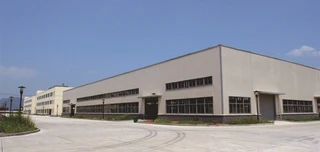
- Manufacturer, Trading Company
- Guangdong, China
- Lead time45 days
- Avg. response≤ 6h
Main productsPrinters,Printer spares,perfect binding machine,Laminating machine,creasing machine
Main marketsSoutheast Asia(40.00%), North America(30.00%), Mid East(10.00%), Eastern Europe(8.00%), South Asia(5.00%), South America(5.00%), Domestic Market(2.00%)
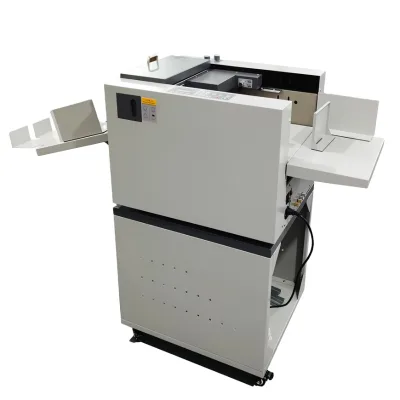
3500 Sheets Per Hour Auto Electric Paper Creasing Machine
$1450.00 - $1700.00
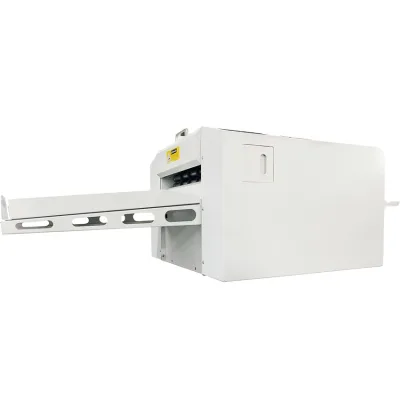
Numbering Paper Creasing and Perforating Machine Electric Perforating Crease
$1450.00 - $1500.00

Zhengzhou Allraise Company Ltd.
- Verified by TUVRHEINLAND
- Manufacturer/Factory
- China Henan
- Lead time0 days
- Avg. response≤ 3h
Main productsPrinting Machine, Packaging Machine, Paper Making Machine, Label Printing Machine, Rotogravure Printing Machine, Gluing Machine, Paper Cup Machine, Paper Production Machinery, Roto Gravure Printing Machine, Hologram Printer Machine
Main marketsSouth America,Eastern Europe,Mid East,North America,Southeast Asia,Eastern Asia,Oceania,Western Europe,Africa

Electric Manual Creasing Machine A2 A3 Size Paper Creasing and Perforating Machine
$320.00 - $350.00
MOQ: 1 Pieces


Automatic Creasing and Perforating Machine Paper Creasing Perforating Machine
$2100.00 - $2480.00
MOQ: 1 Pieces
Hangzhou Caide Office Equipment Co., Ltd.
- Verified by TüVRheinland
- Manufacturer, Trading Company
- Lead time5 days
- Avg. response≤ 3h
Main productsPaper Cutting Machine, Perfect Glue Binder, Laminating Machine, Paper Creasing Machine, Notebook Stapler
Main marketsSouth America(30%), Western Europe(25%), Northern Europe(20%)

Ningbo Bs Printing Machinery Equipment Co., Ltd.
- Verified by BV
- Trading Company
- China Zhejiang
- Lead time15 days
- Avg. response≤ 4h
Main productsDouble Wire Binding Machine, Punching Machine, Paper Cutting Machine, Stamping Machine, Glue Binding Machine, Lamnation Machine
Main marketsNorth America

660e A2 Paper Electric Folding and Perforating and Paper Creasing Machine
$316.00 - $390.00
MOQ: 1 sets

3 in 1 Electric Paper Creasing Machine Yh660 Electric Paper Creasing Machine
$316.00 - $390.00
MOQ: 1 sets


Automatic Feed Paper Creasing Machine Multi-Function Paper Processing Machinery
$1400.00
MOQ: 1 pieces

Guangzhou Disen Electronic Equipment Co., Ltd.
- Verified by SGS
- Trading Company
- China Guangdong
- Lead time15 days
- Avg. response≤ 3h
Main productsEmbroidery Machine, Dtf Printer, Large Format Printer, Rhinestone Machine, UV Flatbed Printer, DTG Printer, Heat Press Machine, Laser Engraving Machine, Laminating Machine, Pad Printer
Main marketsAfrica

$560.00 - $600.00
MOQ: 1 sets

$1250.00 - $1450.00
MOQ: 1 sets

Fy330 Good Quality A4 Electric Creasing Machine 330mm Digital Automatic Paper Creaser for Sale
$460.00 - $500.00
MOQ: 1 sets

Zfy330 Digital Automatic Creasing Machine Low Price Good Quality 330mm Electric Creasing Machine
$720.00 - $780.00
MOQ: 1 sets
Henan Zonelion Heavy Industry Co., Ltd.
- Verified by TüVRheinland
- Trading Company
- Lead time7 days
- Avg. response≤ 3h
Main productsCutting Machine, Polishing Machine, Grinding Wheel Manufacturing Machine, Pressure Machine, Fixed Machine
Main marketsNorth America(8%), South America(8%), Eastern Europe(8%)

Hangzhou Fuyang Huibo Hansway (BOWAY) Trading Co., Ltd.
- Combined
- China Zhejiang
- Lead time30 days
- Avg. response≤ 16h
Main productsPaper Cutter, Perfect Binder, Roll Laminator, Creasing Perforation, Guillotine, Book Binder, Glue Binding Machine, Card Cutter, Paper Cutting Machine, Foil Printer
Main marketsSouth America,Africa,Southeast Asia/ Mideast,Europe,Australia,North America


650mm Width Electric Multi-Purpose Offset Coated Album Paper Creasing Perforating Machine
Contact supplier
MOQ: 10 Pieces

600mm Width Electric Multi-Purpose Offset Coated Album Paper Creasing Perforating Machine
Contact supplier
MOQ: 1 Pieces


Dongguang County Daqi Packaging Machinery Manufacturing Co., Ltd.
- Verified by SGS
- Combined
- China Hebei
- Lead time30 days
- Avg. response≤ 2h
Main productsCarton Making Machine, Carton Box Machine, Carton Machine, Corrugated Cardboard Production Line, Printing Equipment, Molding Equipment, Binding Equipment, Auxiliary Equipment
Main marketsDomestic

- Verified by TUVRHEINLAND
- Trading Company,Manufacturer/Factory
- China Zhejiang
- Lead time23 days
- Avg. response≤ 16h
Main productsSoft Cover Book Machines, Hard Cover Book Machines, Exercise Book Machines, Spiral Binding Book Machines, Postpress Machines, Color Boxes Making Machines, Rigid Box Making Machines, Paper Bag Machine Machines
Main marketsSouth America,Eastern Europe,Mid East,North America,Southeast Asia,Eastern Asia,Oceania,Western Europe,Africa


Electric Paper Creasing Machine with Folding Function for Marketing Materials
$9000.00 - $10000.00
MOQ: 1 Pieces


Hangzhou Supu Business Machine Co., Ltd.
- Manufacturer, Trading Company
- Zhejiang, China
- Lead time20 days
- Avg. response≤ 3h
Main productsBinding Machine,Punching Machine,Perfect Binder,laminating machine,shredder
Main marketsNorth America(20.00%), Southern Europe(15.00%), Western Europe(15.00%), Mid East(10.00%), Northern Europe(10.00%), Central America(10.00%), South America(10.00%), Eastern Asia(10.00%)
Dongguan Strong Machinery Engineering Co., Ltd.
- Trading Company
- Guangdong, China
- Lead time0 days
- Avg. response≤ 4h
Main productsPacking Machine
Main marketsEastern Asia(8.00%), Mid East(8.00%), Africa(8.00%), South Asia(8.00%), Southeast Asia(8.00%), South America(8.00%), Central America(8.00%), North America(8.00%), Domestic Market(6.00%), Oceania(6.00%), Eastern Europe(6.00%), Southern Europe(6.00%), Northern Europe(6.00%), Western Europe(6.00%)
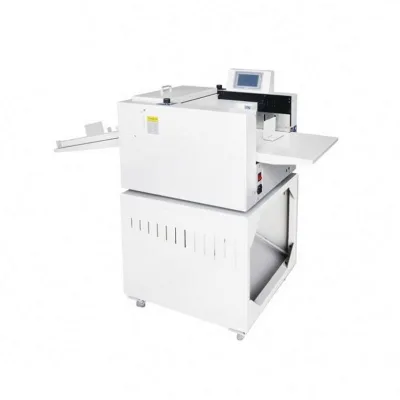
339 Digital Touch Screen Customized Electric Automatic Paper Creasing Machine for Book Cover
$998.83 - $1141.52
MOQ: 1 pieces
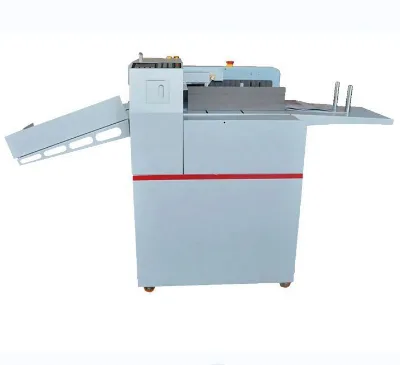
$1783.63 - $2140.35
MOQ: 1 pieces

Shanghai Kesi Packaging Machinery Co., Ltd.
- Trading Company,Manufacturer/Factory
- China Shanghai
- Lead time38 days
- Avg. response≤ 13h
Main productsFilling Machine, Labeling Machine, Capping Machine, Liquid Filling Machine, Filling Line, Sealing Machine, Packaging Machine, Folding Machine, Coding Machine, Labeling Machinery
Main marketsSouth America,Eastern Europe,Mid East,North America,Southeast Asia,Eastern Asia,Western Europe,Africa
Henan Yingsheng Supply Chain Management Co., Ltd.
- Trading Company
- Henan, China
- Lead time10 days
- Avg. response≤ 2h
Main productsSewing machine,Laminating Machine,Die Cutting Machine,Printing Machine,Office equipment
Main marketsAfrica(12.00%), Southeast Asia(10.00%), Mid East(10.00%), South Asia(10.00%), Southern Europe(8.00%), Eastern Europe(8.00%), Northern Europe(8.00%), Western Europe(8.00%), Eastern Asia(5.00%), South America(5.00%), Central America(5.00%), North America(5.00%), Domestic Market(3.00%), Oceania(3.00%)

HEBEI DONGGUANG NORTH PACK CO., LTD.
- Trading Company,Manufacturer/Factory
- China Hebei
- Lead time38 days
- Avg. response≤ 13h
Main productsCarton Machinery, Packaging Machinery, Single Facer, Corrugation Machine, Corrugated Cardboard Production Line, Printing Slotting Machine, Flexo Printing Machinery, Gluing Machine, Flute Laminator, Die-Cutting Machine
Main marketsSouth America,Eastern Europe,Mid East,Southeast Asia,Eastern Asia,Western Europe,Africa


Lead edge corrugated cardboard thin blade slitting and creasing machine
$6800.00 - $10500.00
MOQ: 1 Sets


Shanghai Easystar Machinery Co., Ltd.
- Trading Company
- Shanghai, China
- Lead time3 days
- Avg. response≤ 7h
Main productscutter machine,printing machine,binding machine,creasing machine,folding machine
Main marketsSoutheast Asia(20.00%), South America(15.00%), Mid East(10.00%), Domestic Market(5.00%), South Asia(5.00%), Southern Europe(5.00%), Northern Europe(5.00%), Central America(5.00%), Western Europe(5.00%), Eastern Asia(5.00%), Eastern Europe(5.00%), Oceania(5.00%), Africa(5.00%), North America(5.00%)
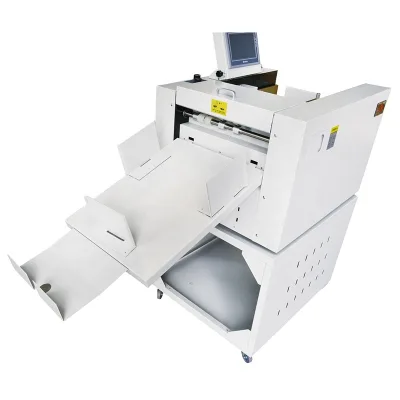
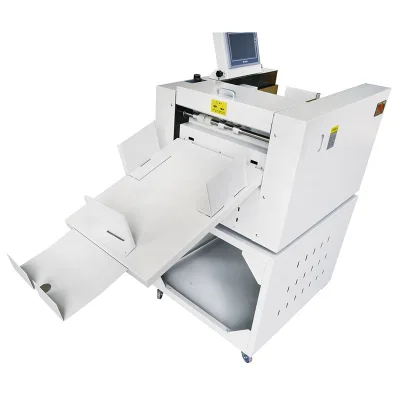
High-speed Electric Creasing Machine Folding Machine Crease Machine 330
$2352.00 - $2450.00
MOQ: 5 sets
- Verified by SGS Group
- Manufacturer, Trading Company
- Lead time15 days
- Avg. response≤ 2h
Main productsPaper Cutter, Paper Trimmer, Glue Binding Machine, Cold Laminating Machine, Roll Laminators
Main marketsWestern Europe(45%), Southeast Asia(20%), South America(10%)

Anhui Innovo Bochen Machinery Manufacturing Co., Ltd.
- Verified by TUVRHEINLAND
- Combined
- China Anhui
- Lead time30 days
- Avg. response≤ 5h
Main productsPrinting Machine, Printing Machinery, Stamping Machine, Paper Cutter, Laminater, UV Coater, Book Binding Machine, Stitching Machine, Punching Machine, Die Cutting Machine
Main marketsSoutheast Asia/ Mideast,Domestic,Europe,Australia,North America

Dongguan Cheung Wo Hing Printing Machinery Co., Ltd.
- Verified by TUVRHEINLAND
- Combined
- China Guangdong
- Lead time60 days
- Avg. response≤ 8h
Main productsNotebook Making Machine, Printing and Folding Machinery, Printing Machine, Exercise Book Making Machine, Rlue Back Binding Machine, Exercise Book Sewing and Spiral Forming Mahinery, Flexographic Printing Machine, Newbook Stitching Mahinery, Automatic Punching Machine, Book Sealing and Shrinkinng Machine
Main marketsDomestic

Cangzhou Xiaoyuan Carton Machinery Trade Co., Ltd.
- Verified by TUVRHEINLAND
- Trading Company,Manufacturer/Factory
- China Hebei
- Lead time23 days
- Avg. response≤ 4h
Main productsCarton Making Machine, Corrugated Cardboard Production Line, Cardboard Printing Slotting Machine, Folder Gluer, Flute Laminator, Carton Packaging Machine, Rotary Die Cutting Machine, Flat Die Cutter, Stitching Machine, Single Face Corrugation Machine
Main marketsMid East,Southeast Asia,Africa


High Performance Corrugated Paperboard Die Cutter and Creasing Machine
$5000.00 - $20000.00
MOQ: 1 Pieces

Easy to Operate Printing Box Paper Cardboard Die-Cutter and Creaser Machine
$5000.00 - $20000.00
MOQ: 1 Pieces

Die Cutting Creasing Machine Flat Bed Die Cutting Manual Corrugated Paper Cutting Machine
$10000.00 - $15000.00
MOQ: 1 Pieces


CHANGZHOU LOYALTY INDUSTRY CO.,LTD
- Verified by TUVRHEINLAND
- Trading Company
- China Jiangsu
- Lead time15 days
- Avg. response≤ 1h
Main productsSingle Needle Quilting Machine, Plastic Injection Molding Machine, Plasitc Extrusion Blowing Molding Machine, Plastic Injection Mould, Home Textile Sewing Machine, Ultrasonic Quilting Machine, Spunbond Nonwoven Fabric, Spun-Bonded Non Woven Production Line, Flexible LED Stripe Light with Water Proof Joint, Nonwoven Fabric Bag Making Machine
Main marketsAfrica,Southeast Asia/ Mideast,Europe
Shanghai Evergreen Printing Machinery Co., Ltd.
- Trading Company
- Shanghai, China
- Lead time10 days
- Avg. response≤ 11h
Main productsPaper Cutting Machine,binding machine,Paper sheeter machine,paper punching machine,screen printing machine
Main marketsMid East(10.00%), South Asia(7.69%), Southern Europe(7.69%), Northern Europe(7.69%), Central America(7.69%), Western Europe(7.69%), Eastern Asia(7.69%), Domestic Market(7.69%), Oceania(7.69%), Africa(7.69%), Southeast Asia(7.69%), South America(7.69%), North America(5.00%)

Zhejiang Huawei Machinery Co., Ltd.
- Verified by BV
- Combined
- China Zhejiang
- Lead time30 days
- Avg. response≤ 2h
Main productsAutomatic Blanking Machine, Automatic Flute Laminating Machine, Flute Laminator, Paper Laminating Machine, Stripping Machine, Box Die Cut Machine, Box and Label Stripping Machine, Waste Paper Blanking Machine, High Speed Blanking Machine, Drinking Straw Naking Machine
Main marketsSouth America,Southeast Asia/ Mideast,North America

San (Qingdao) International Trade Co., Ltd.
- Verified by SGS
- Trading Company,Manufacturer/Factory
- China Shandong
- Lead time60 days
- Avg. response≤ 23h
Main productsHoneycomb Paper Machine, Wet Tissue Machine, Paper Machine, Paper Cup Machine, Toilet Paper Making Machine, Paper Tube Machine, Paper Pulp Machine, Paper Edge Protector Machine, Paper Pulp Mould Machine, Household Paper Machine
Main marketsSouth America,Eastern Europe,Mid East,North America,Southeast Asia,Eastern Asia,Oceania,Western Europe,Africa

Wenzhou Winrich Machinery Co., Ltd.
- Manufacturer
- China Zhejiang
- Lead time60 days
- Avg. response≤ 25h
Main productsShower Membrane Machine, Film Lamimating Machine, Coating Machine, Extrusion Film Machine, Transverse Cutting Machine, Slitting Machine
Main marketsAfrica,Southeast Asia/ Mideast,North America










Comprehensive Sourcing Guide
Electric Paper Creasing Machine Supplier Concentration and Factory Types
The current supplier data indicates a concentration of manufacturers in China, specifically within the Zhejiang and Henan provinces. These regions host a mix of combined company types that offer both Original Design Manufacturing and Original Equipment Manufacturing capabilities. Fact records show that suppliers in Zhejiang often list diverse machinery portfolios including paper cutters, glue binders, and laminators alongside creasing units. This suggests a specialized industrial cluster where production lines may share components or engineering expertise across different paper processing categories. Buyers should verify if a specific factory focuses solely on creasing technology or operates as a broader machinery provider, as this impacts their depth of expertise in the Electric Paper Creasing Machine niche.
Factory types identified in the results include combined entities that manage both design and production, with some explicitly stating ODM and own-brand capacities. In contrast, other suppliers in the dataset are verified by third-party agencies like SGS or CTI, which adds a layer of credibility to their operational claims. The presence of these verification badges suggests that while the physical location is consistent, the operational maturity varies. Buyers must distinguish between trading companies and actual factories by examining the "company_type" field and cross-referencing it with the specific product evidence provided. A supplier listing a wide array of unrelated machinery might be a trading entity, whereas one specializing in creasing and cutting machines likely has deeper manufacturing roots.
How to Verify Electric Paper Creasing Machine Suppliers
Verification of suppliers relies heavily on third-party audit results and system certifications found in the data. Several suppliers in the current results hold ISO9001:2015 certificates, which indicates a standardized approach to quality management systems. Additionally, verification badges from agencies such as SGS and CTI provide external validation of the supplier's business legitimacy and operational capacity. Buyers should prioritize suppliers displaying these specific verification markers, as they confirm that an independent party has reviewed the company's credentials. However, the absence of a certification like ISO9001:2015 in some records does not automatically disqualify a supplier, but it requires the buyer to request direct proof of quality control processes before proceeding.
Beyond certifications, the response time and verification status serve as critical indicators of supplier reliability. The data shows response times ranging from approximately 3 to 5 hours, which reflects the efficiency of the communication channel. A faster response time often correlates with a more active sales team and better customer service readiness. Buyers should also examine the "is_verified" field to ensure the supplier has passed a rigorous background check. When a supplier lacks a visible verification badge or has a slow response time, it is prudent to request additional documentation, such as factory photos or recent client references, to confirm their ability to deliver the Electric Paper Creasing Machine as promised.
What to Compare Across Electric Paper Creasing Machine Suppliers
Comparing suppliers requires a detailed analysis of product specifications, pricing structures, and minimum order quantities. The available data reveals a wide price range for electric paper creasing machines, with some models listed between $40 and $220, while fully automatic units can reach $2,400. Buyers must align their budget with the specific automation level required, noting that manual models often have lower entry prices but higher labor costs, whereas automatic machines offer higher throughput. It is essential to compare the "price_min" and "price_max" fields to understand the negotiation room and the base cost for different configurations. Additionally, the "moq" varies significantly, with some suppliers requiring orders of 50 units while others accept single-unit purchases, directly impacting the initial investment required.
Lead times and customization capabilities are equally critical factors in the comparison process. The dataset indicates lead times of 15 to 30 days, which can vary based on the complexity of the order and the supplier's current production load. Suppliers offering ODM and OEM services provide flexibility for custom branding or specific technical modifications, which is vital for buyers seeking unique product features. Buyers should compare the "rd_capacity" field to determine if a supplier can adapt the machine to specific paper weights or widths, such as the 480mm or 460mm standards observed in the product attributes. A supplier with a shorter lead time and lower MOQ might be preferable for testing the market, while a supplier with robust customization options is better for long-term production scaling.
Common Electric Paper Creasing Machine Sourcing Risks
One significant risk involves the discrepancy between advertised specifications and actual product performance, particularly regarding automation levels. The data shows a mix of manual, semi-automatic, and fully automatic machines, with some listings explicitly stating "Computerized: No" while others claim "Automatic Grade: Automatic." Buyers risk receiving a manual unit if they do not carefully verify the "Automation" attribute in the product details. This confusion can lead to production bottlenecks if the machine cannot handle the required volume or paper thickness, such as the 450GSM limit noted in some specifications. It is crucial to cross-reference the "prod_attributes" with the product description to ensure the machine matches the intended operational requirements.
Another risk stems from inconsistent packaging and shipping standards, which can affect the condition of the machinery upon arrival. The records indicate varying packing methods, ranging from "Carton Case" to "Wooden Case," depending on the model and size of the machine. Larger, fully automatic units like the WD-365 are packed in wooden cases, likely due to their weight and complexity, while smaller manual models use standard cartons. If a buyer does not specify the required packaging standard, there is a risk of damage during transit, especially for heavy components like the 13kg or larger units. Buyers must explicitly confirm the packing method in the order details to ensure the machine arrives in optimal condition, particularly when sourcing from regions with long shipping distances.
Electric Paper Creasing Machine Regional Sourcing and Logistics
Sourcing from China, specifically the Zhejiang and Henan provinces, offers access to a mature manufacturing ecosystem for paper processing machinery. The concentration of suppliers in these regions suggests established logistics networks and a high density of component suppliers, which can streamline the production process. However, buyers must account for the geographical distance when planning logistics, as shipping times and costs will vary based on the specific port of origin. The data confirms that the origin of these products is China, and buyers should verify the specific city or province to estimate freight charges accurately. Understanding the regional logistics capabilities is essential for calculating the total landed cost of the Electric Paper Creasing Machine.
Logistics planning also involves managing the lead time and the physical dimensions of the shipment. The product attributes list various overall sizes, from compact 585380240mm units to large 16006201010mm automatic machines. These dimensions directly impact the shipping method, whether by sea or air, and the required container space. Buyers should compare the "lead_time" of 15 to 30 days against their production schedule to ensure timely delivery. Additionally, the "prod_packing" details, such as carton or wooden cases, influence the volume and weight calculations for freight forwarding. A thorough understanding of these logistical factors helps prevent delays and ensures that the machinery arrives ready for installation at the buyer's facility.
Electric Paper Creasing Machine Commercial Terms and Order Planning
Commercial terms for electric paper creasing machines vary significantly based on the supplier's capacity and the order volume. The data shows that some suppliers offer customization services, while others provide non-customized, standard models. Buyers must clarify the "Customization" attribute early in the negotiation to avoid misunderstandings regarding branding or technical modifications. Furthermore, the "prod_standard" field, which includes certifications like CE or specific model standards, should be confirmed to ensure compliance with local regulations in the buyer's country. These commercial details are foundational to the contract and must be explicitly stated to protect both parties.
Order planning requires a strategic approach to managing the minimum order quantity and payment terms. With MOQs ranging from 1 to 50 units, buyers can tailor their initial orders to their risk tolerance and market demand. For those testing the market, suppliers with an MOQ of 1 offer a low-risk entry point, while larger orders may unlock better pricing tiers. Buyers should also consider the "response_time" of the supplier, as a faster response can facilitate quicker resolution of any issues during the order fulfillment process. By carefully aligning the order size with the supplier's capabilities and the buyer's financial constraints, the procurement process becomes more efficient and less prone to disruption.
FAQs
What is the price range for electric paper creasing machines?
Electric paper creasing machines typically range from $190 to $220 for entry-level models like the WD-P480. Higher-end automatic units, such as the WD-365, are priced around $2400. Manual alternatives are available for as low as $40. Prices vary based on automation level, power, and specific functional requirements for your production line.
What is the minimum order quantity for these machines?
Minimum order quantities vary significantly by model. Some electric creasing machines have an MOQ of just one unit, allowing for easy sampling. Other models, particularly manual variants, may require an MOQ of 10 or 50 units. Buyers should check specific product listings to confirm the exact MOQ applicable to their desired machine type.
How long does delivery take for these machines?
Standard lead times for these machines are approximately 15 days for some suppliers and up to 30 days for others. The actual delivery duration depends on the specific manufacturer and their current production schedule. Buyers should confirm the exact lead time with the supplier before placing an order to ensure it aligns with their project timeline.
Are these machines certified for international standards?
Many electric paper creasing machines carry CE certification, ensuring compliance with European safety standards. Some suppliers also hold ISO9001:2015 system certifications for quality management. Verification services like SGS or CTI may also be available. Buyers should request specific certification documents to verify compliance with their local regulatory requirements before purchasing.
What is the maximum paper width these machines handle?
Electric paper creasing machines generally handle widths up to 480mm or 18 inches. Specific models like the WD-P480 support a width of 480mm, while others may handle up to 470mm. Buyers should verify the maximum work width for their specific paper size requirements to ensure the selected machine meets their operational needs.
Where are these machines manufactured?
These machines are primarily manufactured in China, with suppliers located in regions such as Zhejiang and Henan. The origin is consistently listed as China for these products. Buyers can expect manufacturing from these established industrial hubs, which are known for producing a wide range of paper processing and binding machinery.