Electric Shoe Dryer Suppliers and Manufacturers
Compare 11 verified Electric Shoe Dryer suppliers from China based on location, lead times, certifications, and response times. Review product specifications like material and warranty before contacting factories for quotes; review the available evidence before requesting comparable quotations from suitable candidates.
Suppliers List

Henger Manufacturing (Shandong) Machinery Technology Co., Ltd.
- Verified by BV
- Combined
- China Shandong
- Lead time30 days
- Avg. response≤ 1h
Main productsSlaughter Equipment, Meat Processing Machine, Meat Packaging Machine, Meat Cutting and Deboning Line, Crate Washing Machine, Meat Press Machine, Air Shower, Meat Trolley Washing Machine, Hygiene Station, Workshop Stainless Steel Tools
Main marketsSoutheast Asia/ Mideast,Europe

Zhejiang Baixiande Technology Co., Ltd.
- Verified by BV
- Combined
- China Zhejiang
- Lead time30 days
- Avg. response≤ 3h
Main productsClothing Care Machine
Main marketsNorth America

Zhengzhou Honest Machinery Co., Ltd.
- Trading Company,Manufacturer/Factory
- China Henan
- Lead time15 days
- Avg. response≤ 6h
Main productsFood Machinery, Packing Machines, Microwave Equipment, Drying Machines, Grain Product Making Machines, Commodity Making Machines, Texitle Machines, Construction Machinery
Main marketsSouth America,Eastern Europe,Mid East,North America,Southeast Asia,Eastern Asia,Oceania,Western Europe,Africa

- Verified by SGS
- Trading Company
- China Zhejiang
- Lead time15 days
- Avg. response≤ 13h
Main productsFan, Heater Fan, Air Fryer, Toaster, Rice Cooker, Vacuum Cleaner, Coffee Machine, Hairdressing Appliance, Electric Toothbrush, Steam Iron
Main marketsEurope,Australia

Timing Shoe Dryer Constant Temperature Dehumidification Odor New Designed Shoe Dryer
$4.95 - $28.00
Moq: 200


Nantong Zhenhuan Trade Co., Ltd.
- Trading Company
- China Jiangsu
- Lead time45 days
- Avg. response≤ 5h
Main productsRoll Forming Machine, Metal Processing Machine, Cutting & Slitting Machines, HVAC Duct Machine, Transformer Making Machine, Wire Bending Machine, Tube / Pipe Making Machine, Tube/ Pipe Processing Machine, Battery Making Machine, Motor Making Machine
Main marketsSouth America,Africa,Southeast Asia/ Mideast,East Asia(Japan/ South Korea),Europe,North America
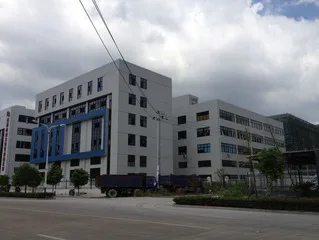
Wenzhou Chuanmei Electronic Scienec& Technology Co., Ltd.
- Manufacturer, Trading Company
- Zhejiang, China
- Lead time0 days
- Avg. response≤ 4h
Main productsMassager,Beauty Instrument,Hair Tools; Hair Remover,Home Appliances
Main marketsEastern Asia(100.0%), Mid East(100.0%), Oceania(100.0%), South Asia(100.0%), Africa(100.0%), Central America(100.0%), South America(100.0%), Domestic Market(50.0%), North America(15.0%), Northern Europe(10.0%), Western Europe(10.0%), Southeast Asia(5.0%), Southern Europe(5.0%), Eastern Europe(5.0%)
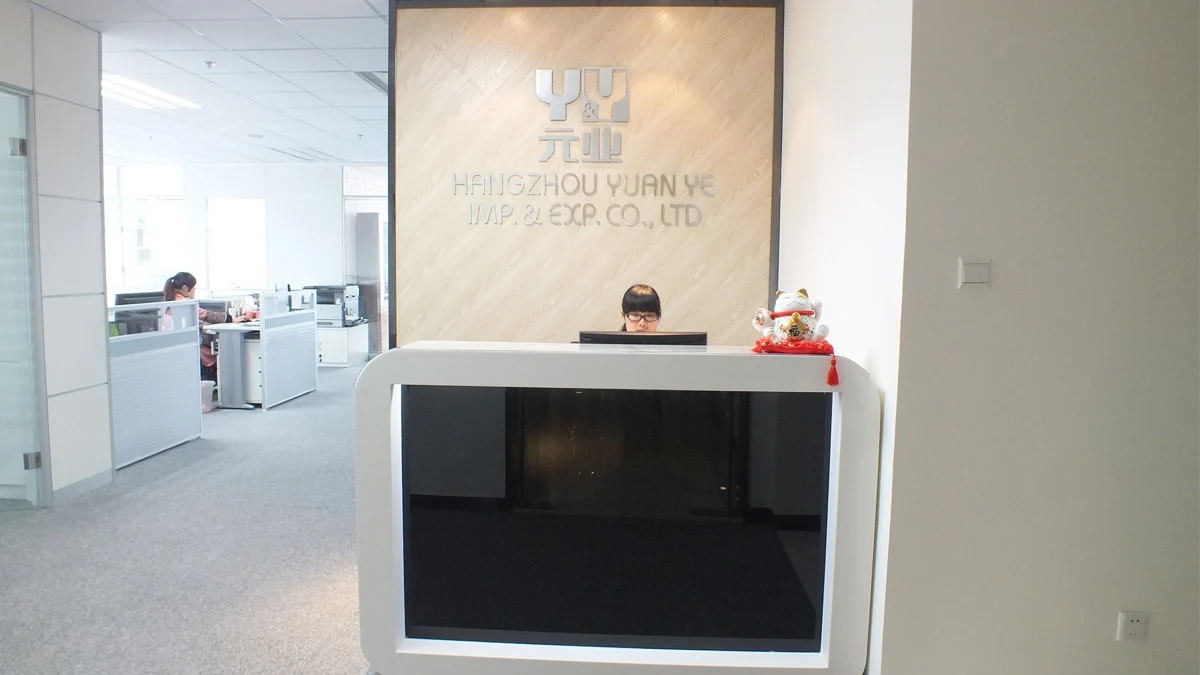
Hangzhou Yuan Ye Imp. & Exp. Co., Ltd.
- Trading Company
- Zhejiang, China
- Lead time30 days
- Avg. response≤ 5h
Main productsShoe and boot Dryer,Shoe Freshener,Hair Dryer,Hair Straightener,Bathroom Mirror
Main marketsNorth America(33.0%), Northern Europe(20.0%), Western Europe(15.0%), Southeast Asia(15.0%), South America(12.0%), Southern Europe(5.0%)

Taizhou Dumile Mechanical&Electrical Co., Ltd
- Trading Company
- China Zhejiang
- Lead time15 days
- Avg. response≤ 6h
Main productsAerator, Pump, Fan, Washer, Feeder, Solar Aerator, Solar Pump, Paddle Wheel Aerator, Impeller Aerator, Motor
Main marketsSouth America,Southeast Asia/ Mideast,Europe,North America

Shenzhen Muren Technology Co., Ltd.
- Verified by BV
- Trading Company
- China Guangdong
- Lead time15 days
- Avg. response≤ 4h
Main productsScrubs, Nursing Shoe, Nipple Covers, Textiles
Main marketsSouth America,Africa,Southeast Asia/ Mideast,East Asia(Japan/ South Korea),Europe,Australia,North America

Guangdong Huashiwei Technology Industrial Co., Ltd
- Verified by TUVRHEINLAND
- Combined
- China Guangdong
- Lead time15 days
- Avg. response≤ 3h
Main productsWater Treatment, LED
Main marketsDomestic

Ningbo Jiangbei Ringlong Import & Export Co., Ltd.
- Verified by BV
- Combined
- China Zhejiang
- Lead time23 days
- Avg. response≤ 3h
Main productsKitchenware, Textile, Memory Foam Series, Household Items, Outdoor Products, Packing Box, Air Conditioning System, TV Products, Fitness, Baby Products
Main marketsEurope





Comprehensive Sourcing Guide
Electric Shoe Dryer Supplier Concentration and Factory Types
Supplier listings for electric shoe dryers show two clearly different production profiles. One group of suppliers is based in Shandong, China, and lists slaughter equipment, meat processing machines, hygiene stations, and crate washing machines among its main products. For these factories, the boot and shoe dryer is a hygiene-adjacent item: floor-mounted stainless steel racks built for slaughterhouses, food industrial sites, and seafood processing workshops, typically sized for 20, 32, or 40 pairs. A second profile comes from Zhejiang, where the supplier's main product line is clothing care machines and the dryers are compact household or hotel units with intelligent timers, deodorizing, and UV functions. Recognizing which profile a listing represents is the first step in shortlisting.
The factory-type distinction matters as much as geography. Shandong-style industrial suppliers describe themselves as combined manufacturers with ODM, OEM, and own-brand capability, an ISO9001:2015 certificate, and third-party verification, positioning the dryer as part of workshop hygiene infrastructure. Zhejiang-style care-machine suppliers sell consumer appliances at a fraction of the price, with low minimum orders and carton packaging. Neither type is inherently better; a buyer outfitting a food plant needs stainless steel construction, ozone sterilization, and floor mounting, while a retailer needs household styling and retail-friendly packaging. Match the supplier's dominant product line to your application before comparing anything else, because a supplier's core business usually predicts its engineering depth and after-sales support.
How to Verify Electric Shoe Dryer Suppliers
Verification should begin with the supplier-level evidence shown in the listing, then move to what the listing cannot prove. Useful displayed signals include company type (manufacturer, trading company, or combined), third-party verification such as a BV-assessed profile, system certification such as ISO9001:2015, and response-time figures — in current results these range from roughly half an hour to nearly three hours, which tells you how quickly a supplier handles pre-sales questions. Main product lists are equally telling: a supplier whose catalog is dominated by meat processing and slaughter equipment will treat your dryer order differently from a clothing-care appliance specialist. Do not assume every supplier displays all of these attributes; some show no system certification at all.
Next, verify the product-level claims directly. One Shandong listing states a CE/ISO9001 certificate on the product itself, while other listings from the same region mention ozone sterilization, 220V voltage, and SUS304 stainless steel — ask for the actual certificate documents and confirm the scope covers your model, not just the factory. Request material declarations for stainless steel grades, since "stainless steel" spans several compositions. For suppliers offering customization, ask what customization actually covers: dimensions, pair capacity, voltage, or branding. Finally, confirm the warranty term in writing — current listings show one year — and ask who performs warranty service in your market. Any attribute a listing asserts but cannot document should be treated as unconfirmed until proven otherwise.
What to Compare Across Electric Shoe Dryer Suppliers
Build a comparison table using the dimensions suppliers actually display, without assuming every supplier reports every field. Location matters because Shandong and Zhejiang suppliers serve different use cases and price tiers. Lead time is a hard differentiator: one verified Shandong supplier currently shows a 30-day lead time, which you should confirm applies to your specific model and order size. Response time gives a proxy for account management quality, and the gap between suppliers can be several hours — meaningful when you are iterating on customization drawings. Establishment year, where displayed, indicates how long a supplier has survived export cycles; ask for it directly if the profile omits it.
On the product side, compare quoted ranges rather than single numbers. Current industrial-style listings show prices from about 500 to 800 US dollars with minimum orders as low as one unit, while household-style units run roughly 40 to 80 dollars with a minimum of ten. Compare what that price buys: stainless steel grade, pair capacity (regular models at 20/32/40 pairs), ozone versus UV sterilization, timer control, floor-mounted versus wall-mounted installation, and packaging method — one supplier specifies plastic film wrapping followed by wooden packing, another standard packaging, another carton boxes. Customization availability, condition, warranty length, and stated application environments (slaughterhouse, seafood, home, shop) should sit in the same table so you compare complete offers, not headline prices.
Common Electric Shoe Dryer Sourcing Risks
The most common risk in this category is application mismatch. A household dryer from a clothing-care supplier will not survive a wet, corrosive food-processing environment, and an industrial ozone unit priced near 700 dollars is poor value in a hotel corridor. Related to this is specification ambiguity: several listings use overlapping model codes (such as HE-20/32/40 or HE-Pairs20/32) and similar product names, so confirm exactly which model, pair capacity, dimensions, and voltage you are quoting. One listing states 220V — if your market runs on a different voltage, that must be agreed explicitly, since not every listing states electrical specifications at all.
Certification and quality risks follow. Product-level certificate claims (CE/ISO9001 on one listing) and supplier-level claims (ISO9001:2015 on another) are not the same thing, and some supplier profiles display no system certification at all — verify each document yourself rather than trusting the badge. Warranty terms are typically one year in current listings, but clarify what failures are covered and whether spare parts ship with the order. Dimensional listings can also mislead: a stated footprint of 1500 by 500 by 1500 millimeters should be checked against your floor plan, and one household listing shows a 30 by 33 by 40 centimeter unit, illustrating how widely sizes vary. Finally, low minimums can tempt buyers to skip sampling; treat the sample unit as your primary risk control before any volume order.
Electric Shoe Dryer Regional Sourcing and Logistics
The evidence on this page supports a two-cluster picture. Shandong suppliers anchor the industrial hygiene segment: their dryer racks are floor-mounted stainless steel units for slaughterhouses and food plants, often weighing substantially more than household units and packed in wooden crates after film wrapping. That packaging choice signals freight realities — these are not pocket-sized parcels but machinery shipments. The Zhejiang cluster serves the consumer and hospitality side, with compact automatic units around 30 by 33 by 40 centimeters shipped in carton boxes. Both provinces are established export bases within China, but your sourcing decision should follow the application: workshop hygiene procurement and appliance retail rarely benefit from being forced into the same region.
Plan logistics around the shipment profile each type creates. Industrial units at roughly 500 to 800 dollars each, ordered in single-unit minimums, may still be economical as samples by air, but volume orders of heavy stainless racks need sea freight and clear terms on who arranges booking, insurance, and customs paperwork. Confirm the actual gross weight, packed dimensions, and palletization options — a 1500-millimeter-tall rack cabinet affects container loading plans. Household units in cartons consolidate easily and suit mixed-container loading. Ask each supplier for its standard export port and experience shipping to your country, and confirm the 30-day lead time you may see quoted starts from deposit, not from inquiry, before you build delivery promises into your own project schedule.
Electric Shoe Dryer Commercial Terms and Order Planning
Commercial terms in this category are wider than buyers often expect. On the industrial side, current listings show single-unit minimums at 500 to 800 dollars, which makes pilot orders unusually accessible for capital equipment; on the consumer side, expect roughly 40 to 80 dollars with minimums around ten units. Customization is advertised as available on most listings, but scope it in the contract: confirm whether model variants (such as 20, 32, or 40 pairs), dimensions, voltage, branding, and packaging can be changed, and what each change does to price and lead time. The 30-day lead time displayed by one verified supplier is a useful benchmark — ask every candidate supplier to state its own lead time for your exact configuration in writing.
Payment and order structure should follow standard trade practice adapted to this category's sample-friendly pricing. Because a functional sample of an industrial dryer can cost under a thousand dollars, a sample-then-batch sequence is affordable and should be your default; use the sample to validate drying performance, ozone or UV function, build quality, and noise before committing volume. Agree warranty handling — one year appears in current listings — including spare-parts availability and who bears return freight. Confirm packing specification (wooden crate versus carton), the certificate documents delivered with shipment, and a pre-shipment inspection right for volume orders. Put model codes, dimensions, voltage, material grade, and capacity figures from the quotation into the purchase contract so the shipped goods match what was quoted rather than what a generic listing described.
FAQs
What is the price range for industrial electric shoe dryers?
Industrial electric shoe dryers typically range from $500 to $800 per unit. Prices vary based on capacity, such as 20, 32, or 40 pairs, and features like ozone sterilization. Smaller commercial models may start around $700, while specialized units with advanced automation can reach higher price points depending on customization needs.
What is the minimum order quantity for these machines?
The minimum order quantity varies by supplier and product type. Some industrial stainless steel boot dryers allow orders as low as one unit, making them suitable for trial purchases. Other models, particularly smaller consumer-grade dryers, may require a minimum order of ten units to qualify for standard pricing and shipping terms.
How long does production and delivery take?
Standard lead times for industrial electric shoe dryers are approximately 30 days. This timeframe covers manufacturing and preparation for shipment. Buyers should confirm specific delivery schedules with suppliers, as customizations or high-volume orders may extend the production period beyond the standard thirty-day window for completion and dispatch.
Are these dryers made from stainless steel?
Yes, most industrial electric shoe dryers are constructed from stainless steel, specifically SUS304 grade. This material ensures durability, corrosion resistance, and hygiene compliance for slaughterhouses and food processing facilities. The stainless steel construction supports easy cleaning and maintains structural integrity in wet or high-humidity industrial environments.
What certifications do these suppliers hold?
Many suppliers hold ISO9001:2015 system certifications, ensuring quality management standards are met. Some products also carry CE certificates, indicating compliance with European safety requirements. Buyers should verify specific certification documents for each model, as not all units may include every listed certification depending on the manufacturer and target market.
Where are these manufacturers located?
Manufacturers of electric shoe dryers are primarily located in China, with significant production hubs in Shandong and Zhejiang provinces. Shandong suppliers often focus on heavy-duty industrial equipment, while Zhejiang producers may offer more compact or consumer-oriented models. Buyers can filter results by these specific regions to align with logistical preferences.
Do suppliers offer customization services?
Yes, many suppliers offer OEM, ODM, and custom branding services. Buyers can often customize dimensions, voltage, and functional features like ozone generation or timer settings. Customization availability should be confirmed directly with the supplier, as standard models may have fixed specifications while bespoke orders require additional lead time and pricing adjustments.