Folding Black Kitchen Storage Rack Suppliers and Manufacturers
Explore 20 verified options for the Folding Black Kitchen Storage Rack from China. Compare lead times, certifications like BSCI and ISO 9001, and material specifications to find the right factory. Contact suppliers directly to request quotes; review the available evidence before requesting comparable quotations from suitable candidates.
Suppliers List

CAO COUNTY DAWANG ARTS AND CRAFTS CO., LTD.
- Verified by TUVRHEINLAND
- Manufacturer/Factory
- China Shandong
- Lead time23 days
Main productsWooden Cabinet, Iron Furniture, Wall Shelf
Main marketsEastern Europe,North America,Western Europe


High Quality Kitchen Storage Rack
MOQ: 1500 Pieces


Kitchen Storage Rack Kitchen Shelf Wooden Plate Rack
MOQ: 1500 Pieces

Kitchen Storage Rack Display Kitchen Shelf Wooden Plate Rack
MOQ: 1500 Pieces


Xuzhou Risen Industry and Supply Co., Ltd
- Verified by TUVRHEINLAND
- Trading Company
- China Jiangsu
- Lead time30 days
Main productsHousehold Adornment, Household Supplies, Home Decoration, Compressed Sofa, Dining Furniture, Bothroom Organizer, Kitchen Storage, Glass Ornaments, Ceramic Tableware, Home Fragrance
Main marketsSouth America
Tianjin Shining International Trade Co., Ltd.
- Verified by SGS
- Trading Company,Manufacturer/Factory
- China Tianjin
- Lead time30 days
Main productsStorage Rack&Shelving, Drying Rack, Utility Cart, Dish Rack, Coffee Table, Hotel Chairs&Tables, Church Chairs, Office Chairs
Main marketsSouth America,Eastern Europe,Mid East,Southeast Asia,Eastern Asia,Oceania,Western Europe,Africa

Hot Sale Kitchen Folding Storage Rack Featuring Steel Kitchen Shelves Storage Racks
$8.00 - $10.00
MOQ: 50 pieces


Dongguan Simply Metal Products Co., Ltd.
- Trading Company
- China Guangdong
- Lead time23 days
Main productsWire Shelving, Wire Shelving Units, Shelving, Shelf, Wire Wall Shelf, Wire Rack Shelving, Wire Storage Racks, Wire Racks, Metal Wire Shelving, Wire Storage Shelves
Main marketsSouth America,Africa,Southeast Asia/ Mideast,Europe,Australia,North America


$5.00 - $10.00
MOQ: 100 Pieces

Shandong Shenglang Kitchen Co., Ltd.
- Verified by TUVRHEINLAND
- Combined
- China Shandong
- Lead time15 days
Main marketsSoutheast Asia/ Mideast


Durable Stainless Steel Kitchen Rack with Adjustable Shelves for Organized Storage
$100.00 - $3000.00
MOQ: 10 Pieces

Multi-Tier Kitchen Storage Shelf with Adjustable Height and Durable Design
$100.00 - $3000.00
MOQ: 10 Pieces

Guangdong Victory Industry Limited
- Trading Company
- China Guangdong
- Lead time15 days
Main productsTrash Can, Dustbin, Waste Bin, Toilet Brush, Paper Holder, Compost Bin, Kitchen Paper Towel Holder, Makeup Mirror, Towel Rack, Bathroom Accessories
Main marketsEurope,North America

4-Tier Foldable Kitchen Standing Shelves Metal Storage Folding Rack with Wheels
$16.00 - $30.00
MOQ: 300 Pieces


Guangzhou Welldo Hardware Manufacturing Co.,Ltd.
- Trading Company,Manufacturer/Factory
- China Guangdong
- Lead time45 days
Main productsKitchen Pull-out Basket, Kitchen Wire Basket, Pull out Basket, Kitchen Cabinet Organiser, Wardrobe Accessories, Kitchen Rack, Storage Basket, Kitchen Accessories, Pantry Unit, Tall Unit
Main marketsSouth America,Eastern Europe,Mid East,North America,Western Europe,Africa

Beijing Tianyuan Rongli Technology Co., Ltd.
- Verified by SGS
- Trading Company
- China Beijing
- Lead time15 days
Main productsMelamine Board, Chipboard, MDF, Solid Wood Pellet Board, Custom-Made Furniture, Dining Room Furniture, Living Room Furniture, Steel-Wood Furniture
Main marketsSoutheast Asia/ Mideast


Rolling Kitchen Storage Rack with Multi-Tier Shelves and Casters for Practical Organization
$6.14 - $7.48
MOQ: 500 Pieces


Foshan Broadjoy Household Building Material Co., Ltd.
- Manufacturer/Factory
- China Guangdong
- Lead time23 days
Main productsPull out Basket, Kitchen Cabinet Organization, Storage Basket, Dish Rack, PVC Trunking, PVC Conduit, PVC Corrugated Conduit, PVC Fittings
Main marketsSouth America,Eastern Europe,Mid East,North America,Southeast Asia,Eastern Asia,Oceania,Western Europe,Africa

Shandong Boxing Wangquan Commercial Kitchenware Co., Ltd.
- Verified by SGS
- Combined
- China Shandong
- Lead time15 days
Main productsStainless Steel Sink, Stainless Steel Table, Shelf, Stainless Steel Cabinet / Locker, Stainless Steel Cart and Trolley, Stinless Steel Tableware / Utensils
Main marketsDomestic

Ningbo General Union Co., Ltd.
- Verified by BV
- Trading Company
- China Zhejiang
- Lead time30 days
Main productsCleaning Brush, Bottle, Kitchenware, Storage Box, Outdoor, Pet, Fitness Equipment, Digital Devices, Camping, Pet Bottle
Main marketsSouth America,Africa,Southeast Asia/ Mideast,East Asia(Japan/ South Korea),Europe,Australia,North America

Multi-Tier Metal Kitchen Foldable Storage Rack with Wheels and Dense Mesh Frames
$11.90 - $13.56
MOQ: 100 Pieces

Guangdong Shunde Caijun Metal Manufacturing Co., Ltd.
- Manufacturer, Trading Company
- Guangdong, China
- Lead time30 days
- Avg. response≤ 2h
Main productsKitchen Rack,Storage Shelf,Dish Rack,Display stand,Kitchen organizer
Main marketsNorth America(60.00%), Eastern Europe(30.00%), Southeast Asia(10.00%)
Shangdong Boxing Changtai Environmental Protection Technology Co., Ltd.
- Verified by SGS
- Combined
- China Shandong
- Lead time15 days
Main marketsSouth America,Africa,Southeast Asia/ Mideast,Europe,Australia,North America


Kitchen Stainless Steel Rack Shelf Commercial Stainless Steel Restaurant Rack
$71.00 - $171.00
MOQ: 1 Pieces
Dongguan Zhixin Household Products Co., Ltd.
- Verified by SGS Group
- Manufacturer, Trading Company
- Lead time30 days
- Avg. response≤ 2h
Main productsMetal Shelves, Metal Storage Racks, Metal Storage Boxes
Main marketsSoutheast Asia(30%), Western Europe(30%), North America(5%)

Jinhua Hengyang Cross-Border Trade Limited Liability Company
- Verified by SGS
- Trading Company
- China Zhejiang
- Lead time15 days
Main productsCoffee Maker Air Fryer Storage Box Knife Set, Silicone Baking Mold Robot Vacuum Cleaning Table, Shower Head Non-Slip Shower Curtain Vacuum Stora, Collapsible Laundry Basket Bohemian Wall Tapestr, Fringe Pillow Cover Bedding Set Memory Foam Pill, Bamboo Tissue Biodegradable Trash Bags LED Fair, Smart Plug Fairy Lights Pet Food Bowl, Household Daily Necessities Kitchen Cleaning, Bathroom Storage and Care Fabric Home Decor, Bedding Daily Chemical Paper Products
Main marketsEurope

Home Countertop Multifunctional Kitchen Bowl Rack, Drain Rack, Storage Rack
$2.78 - $3.48
MOQ: 100 Pieces

Storage Rack Wall Mounted Storage Rack Multi Layer Adjustable Kitchen Cabinets
$3.82 - $4.78
MOQ: 66 Pieces

Quanzhou Anxi Jiangou Home Furnishing Co., Ltd
- Verified by SGS
- Trading Company
- China Fujian
- Lead time0 days
Main productsStorage Rack, Dog Crate, Wine Rack, Table Leg, Wall-Mounted Shelf, Clothing Rack, Plant Stand

Taizhou Shangyi Plastic Co., Ltd.
- Verified by TUVRHEINLAND
- Trading Company
- China Zhejiang
- Lead time23 days
Main productsFood Container, Storage Container, Lunch Box, Bento Box, Plastic Laundry Basket, Plastic Storage Container, Plastic Cutting Board
Main marketsSouth America,Southeast Asia/ Mideast


Kitchen Plastic Rack Shelf. Shelf Plastic, Closet Storage Plastic Shelf
$2.99 - $3.05
MOQ: 2000 Pieces

Jinan Unic Industry Trade Co., Ltd
- Verified by SGS
- Trading Company
- China Shandong
- Lead time30 days
Main productsSide Table, Coffee Table, Dressing Tabloe, Storage Basket, Storage Cart, Ottoman, Stool, Plant Stand
Main marketsEurope

Multi-Tier Kitchen Storage Rack with Wheels for Home and Kitchen Organization
$6.20 - $6.90
MOQ: 500 Pieces

Multi Purpose Storage Rack Easy Assembly Adjustable Shelf for Home Kitchen
$19.90 - $21.90
MOQ: 300 Pieces
- Verified by BV
- Combined
- China Guangdong
- Lead time30 days
Main productsFolding Table, Folding Ladder, BBQ Grill, Kitchen Shelf, Wooden Table
Main marketsEast Asia(Japan/ South Korea)
Foshan Shunde Yalati Hardware Products Co., Ltd.
- Verified by TUVRHEINLAND
- Manufacturer/Factory
- China Guangdong
- Lead time15 days
Main productsKitchen Basket
Main marketsSouth America,Eastern Europe,Mid East,North America,Southeast Asia,Eastern Asia,Oceania,Western Europe,Africa


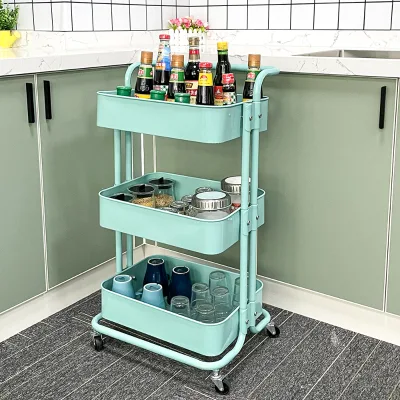
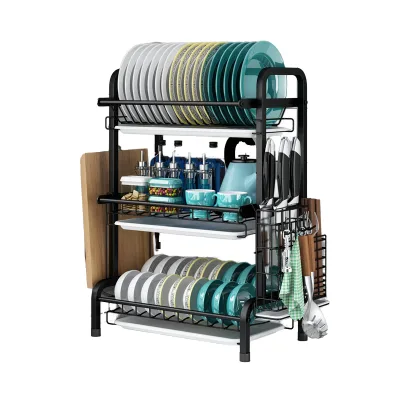
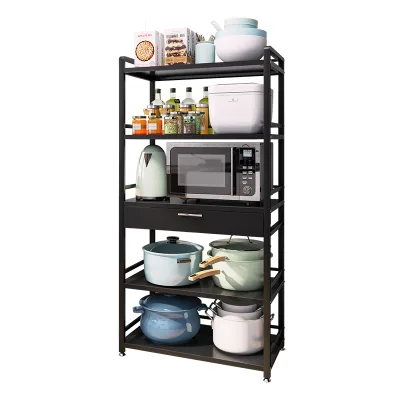
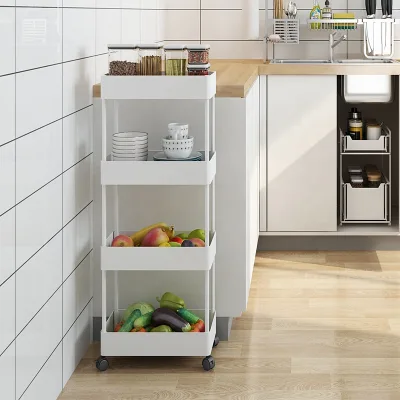


Comprehensive Sourcing Guide
Folding Black Kitchen Storage Rack Supplier Concentration and Factory Types
Current data indicates manufacturing activity concentrated in specific Chinese provinces, with Shandong and Jiangsu emerging as notable hubs for storage solutions. Suppliers in Shandong often operate as manufacturers or factories, producing items like wooden cabinets and iron furniture alongside storage racks. These entities typically possess their own brands and offer OEM and ODM capabilities, suggesting a direct production line for custom orders. In contrast, suppliers located in Jiangsu frequently identify as trading companies, focusing on household adornment and supplies while sourcing from various factories. This distinction is critical for buyers seeking direct factory pricing versus those needing a broader catalog of mixed materials.
When evaluating the factory type, buyers must distinguish between entities that manufacture the steel or metal components and those that aggregate products from multiple sources. The presence of certifications like BSCI and ISO 9001 often correlates with manufacturer status, whereas trading companies may hold similar certifications to validate their supply chain management. Some suppliers in Tianjin appear to operate as hybrid entities, functioning as both trading companies and manufacturers. This dual role can offer flexibility in production but requires verification of actual factory ownership. Buyers should request proof of facility ownership or direct production records to confirm the supplier's classification before committing to large orders.
How to Verify Folding Black Kitchen Storage Rack Suppliers
Verification processes should prioritize third-party audit reports and system certifications to ensure supplier legitimacy. Several suppliers in the current results have undergone verification by recognized bodies such as TÜV Rheinland and SGS. These audits often cover quality management systems, social compliance, and factory conditions. For instance, a supplier with ISO 9001 certification demonstrates adherence to international quality standards, which is essential for consistent product output. Buyers should request the latest audit reports to confirm that the certification is current and covers the specific production lines relevant to folding racks. Relying solely on self-declared claims without third-party validation introduces significant risk into the sourcing process.
Beyond certifications, buyers must verify the supplier's capacity to handle customization and specific product attributes. Evidence shows that some suppliers offer customization for size, material, and packaging, while others provide fixed models. A supplier claiming to offer custom folding racks should demonstrate the ability to modify dimensions or finishes, such as the black color specified in the product keywords. Buyers should ask for samples of previous custom work or detailed technical drawings to validate these claims. Additionally, checking the supplier's response time and communication history can reveal their operational efficiency. A supplier that responds quickly and provides detailed technical information is more likely to deliver on complex customization requests than one with vague or delayed responses.
What to Compare Across Folding Black Kitchen Storage Rack Suppliers
Comparing suppliers requires a systematic analysis of lead times, minimum order quantities, and pricing structures. Lead times vary significantly, with some suppliers indicating a 23-day production window while others suggest 30 days or a range of 15 to 30 days. These differences impact inventory planning and delivery schedules, making it essential to align supplier capabilities with project timelines. Minimum order quantities also differ, ranging from 100 pieces to 1,500 pieces depending on the supplier and product type. Buyers must calculate whether their order volume meets these thresholds to avoid unnecessary costs or rejected orders. Pricing data shows a range from $5 to $18 per unit, influenced by material, size, and customization levels.
Material composition and product features are another critical comparison point. The search results include options made from wood, metal, steel, and plastic, each with distinct durability and aesthetic properties. Some suppliers offer folding racks with wheels, while others provide fixed structures. Buyers should compare the specific attributes listed, such as disassembly capabilities, color options, and load-bearing features. For example, a supplier offering a black metal rack with a modern style may differ significantly from one providing a wooden rack with a common shape. Evaluating these attributes ensures the selected product meets the functional requirements of the end-user. Additionally, comparing packaging methods, such as single packaging versus cartons, helps assess shipping costs and product protection during transit.
Common Folding Black Kitchen Storage Rack Sourcing Risks
One primary risk involves the discrepancy between claimed capabilities and actual production capacity. Suppliers may advertise OEM and ODM services but lack the necessary machinery or skilled labor to execute complex customizations. This is particularly relevant for folding mechanisms, which require precise engineering to ensure safety and longevity. Buyers should verify the supplier's ability to produce the specific folding mechanism required, rather than accepting generic claims. Another risk is the inconsistency in product quality, especially when sourcing from trading companies that aggregate products from multiple factories. Without direct oversight, the quality of the final product may vary, leading to customer complaints or returns.
Logistical risks also pose a significant threat, particularly regarding lead time adherence and shipping reliability. Some suppliers list delivery times of 15 to 30 days, but actual production delays can occur due to material shortages or capacity constraints. Buyers should establish clear penalties for late deliveries in their contracts to mitigate this risk. Furthermore, the use of different materials, such as steel versus plastic, can affect the product's performance in specific environments. A supplier claiming to offer high-quality steel racks might use lower-grade materials if not strictly monitored. Buyers must request material test reports or third-party quality inspections to ensure the product meets the specified standards. Ignoring these risks can lead to financial losses and damaged brand reputation.
Folding Black Kitchen Storage Rack Regional Sourcing and Logistics
Regional sourcing strategies should leverage the specific advantages of different manufacturing clusters. Suppliers in Shandong often focus on wooden and iron furniture, which may offer unique design options for storage racks. Their proximity to raw material sources can reduce production costs and lead times for certain materials. In contrast, suppliers in Jiangsu and Tianjin may offer a broader range of metal and plastic products, catering to diverse market needs. Buyers should consider the logistical implications of sourcing from these regions, including shipping distances and customs procedures. Selecting a supplier closer to the port of entry can reduce freight costs and transit times, improving overall supply chain efficiency.
Logistics planning must account for the specific packaging requirements of folding racks. Some suppliers use single packaging, while others utilize cartons for better protection during transit. The choice of packaging affects the number of units that can be loaded into a container, influencing shipping costs. Buyers should negotiate packaging standards that balance product protection with cost efficiency. Additionally, the weight and dimensions of the racks impact freight charges, especially for air freight or expedited shipping. Buyers should calculate the total landed cost, including duties and taxes, to ensure the final price remains competitive. Understanding the regional logistics landscape helps buyers make informed decisions about supplier selection and order planning.
Folding Black Kitchen Storage Rack Commercial Terms and Order Planning
Commercial terms should be clearly defined to protect both parties and ensure smooth transaction execution. Buyers must negotiate payment terms that align with their cash flow, such as using escrow services for initial orders. Escrow provides a secure method of payment, releasing funds only after the supplier meets the agreed-upon delivery and quality standards. This is particularly important for first-time transactions or when dealing with new suppliers. Buyers should also clarify the terms for customization, including any additional costs for design changes or tooling. Clear communication of these terms prevents misunderstandings and disputes later in the process.
Order planning requires a detailed understanding of the supplier's production capacity and lead times. Buyers should create a timeline that accounts for production, quality checks, and shipping. For suppliers with a 23-day lead time, planning should begin well in advance to avoid stockouts. Buyers should also consider the impact of seasonal demand on production schedules, as peak seasons may extend lead times. Establishing a buffer stock or safety inventory can mitigate the risk of delays. Additionally, buyers should plan for potential changes in material costs or exchange rates, which can affect the final price. A robust order planning strategy ensures that the supply chain remains resilient and responsive to market fluctuations.
FAQs
What is the typical lead time for folding kitchen storage racks?
Lead times vary by supplier and location. Some manufacturers in Shandong China offer a 23-day lead time, while others in Jiangsu or Tianjin may require 30 days. Buyers should confirm specific delivery windows before placing orders to ensure timely arrival.
What are the minimum order quantities for these racks?
Minimum order quantities differ across suppliers. Wooden models often require 1500 units, whereas metal or plastic options may start at 100 pieces. Buyers must check individual product listings to verify the exact MOQ required for their specific material and design choice.
Which certifications do these suppliers hold?
Many suppliers hold BSCI and ISO 9001 certifications. Some facilities are verified by third parties like TÜV Rheinland or SGS. These credentials indicate adherence to quality management systems and social compliance standards, which buyers should verify directly on supplier profiles.
What materials are used for kitchen storage racks?
Racks are available in wood, metal, steel, and plastic. Wooden options often feature solid wood with varnish, while metal racks come in black or white finishes. Buyers should review product attributes to confirm the specific material composition suitable for their kitchen environment.
Are customization options available for these storage racks?
Customization is widely available for size, color, and design. Suppliers in Shandong and Jiangsu offer OEM and ODM services for branded or modified products. Buyers can request specific dimensions or features, but they must confirm availability and any additional costs with the manufacturer.
What is the price range for folding kitchen storage racks?
Prices range from 5 to 18 dollars per unit depending on material and features. Wooden racks may cost between 10 and 13 dollars, while metal or plastic models can be priced lower or higher based on complexity. Buyers should compare specific product listings for accurate pricing.
Where are the main manufacturing locations for these racks?
Manufacturing is concentrated in Shandong, Jiangsu, and Tianjin provinces in China. Suppliers in these regions offer various types of storage solutions including wooden cabinets and metal shelves. Buyers should filter results by location to find suppliers closest to their logistics needs.