For Pontiac Pursuit Brake Pad Suppliers and Manufacturers
Compare 13 verified suppliers offering For Pontiac Pursuit Brake Pad with details on location, lead times, certifications, and pricing. Review product specifications and response times to select the right partner for your needs; review the available evidence before requesting comparable quotations from suitable candidates.
Suppliers List

Wenzhou Yize Industrial Co., Ltd.
- Trading Company,Manufacturer/Factory
- China Zhejiang
- Lead time0 days
- Avg. response≤ 15h
Main productsAutomobile Pumps, Suspension Parts, C. V. Joint, Auto Parts, Car Parts, Air Filter, Auto Filter, Wheel Hub Bearing, Shork Absorber, Brake Pad
Yancheng Antec Auto Parts Co., Ltd.
- Verified by TüVRheinland
- Trading Company
- Lead time35 days
- Avg. response≤ 3h
Main productsBrake Pads, Brake Shoes, Clutch Disc, Clutch Cover, Clutch Kits
Main marketsSouth America(30%), Southeast Asia(30%), Western Europe(15%)
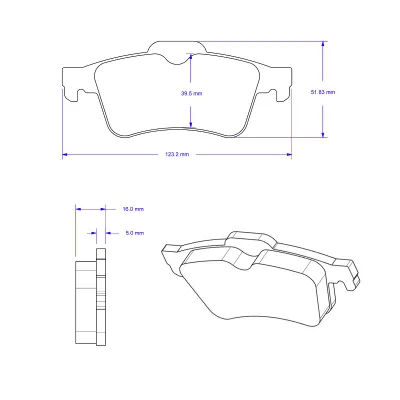
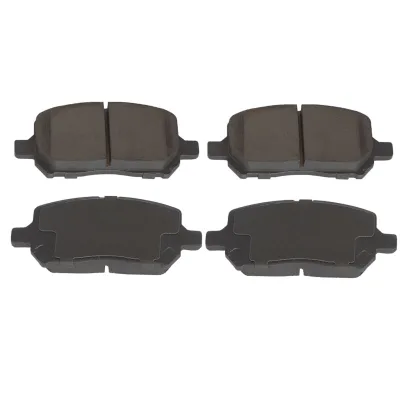
Front Semi-Metallic Disc Brake Pads D956-7855 for Chevrolet Cobalt Pontiac G5 Saturn Ion Pursuit
$3.20 - $4.13
MOQ: 50 sets

Zibo Baiwang Machinery Co., Ltd.
- Trading Company,Manufacturer/Factory
- China Shandong
- Lead time23 days
- Avg. response≤ 10h
Main productsBrake Discs Pad, Brake Drum S-Camshafts, Auto Brake Parts, Auto Parts for Byd Chery Jetour Tiggo, Milking Machine, Machining Parts, Auto Accessories, Secondhand Used Cars, Auto Parts of HOWO FAW Dongfeng Foton Haval, Accessories for Maxus Mg Baic Wuling
Main marketsSouth America,Eastern Europe,Mid East,North America,Southeast Asia,Eastern Asia,Oceania,Western Europe,Africa
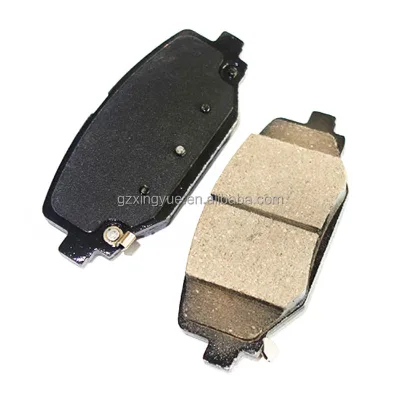
Guangzhou Xingyue Auto Parts Distributor
- Trading Company
- Guangdong, China
- Lead time10 days
- Avg. response≤ 7h
Main productsChassis Parts:,Ball Joint,Tie Rod End,Rack End,Control Arm
Main marketsSoutheast Asia(20.00%), Africa(15.00%), Mid East(15.00%), Oceania(10.00%), South Asia(10.00%), Eastern Asia(10.00%), Western Europe(5.00%), Eastern Europe(5.00%), North America(5.00%), South America(5.00%)

Hengshui Yongxin Brake Materials Co., Ltd
- Verified by BV
- Combined
- China Hebei
- Lead time23 days
- Avg. response≤ 6h
Main productsBrake Pad, Brake Shoe
Main marketsDomestic


Brake Padsbrand Quality Original Spare Parts Breaks Pad Auto Brake Systems Brake Pads for Chevrolet
$1.60 - $3.00
MOQ: 10 sets


Yancheng Terbon Auto Parts Co., Ltd
- Verified by SGS
- Trading Company
- China Jiangsu
- Lead time30 days
- Avg. response≤ 5h
Main marketsSouth America,Domestic,Europe,North America

Brake Pads Auto Brake System Car Spare Parts for Chevrolet Pontiac Oldsmobile
$6.51 - $7.50
MOQ: 100 Sets

Brake Pads 7574-D699 7693-D818 for Buick Cadillac Chevrolet Oldsmobile Pontiac
$6.25 - $7.10
MOQ: 100 Sets

Auto Brake Systems Front Spare Parts Car Brake Pads 8882-D1653 Pad1899 Dg9c-2001-a for Ford Lincoln
$7.71 - $9.11
MOQ: 100 Sets


Nanpi County Bo Hao Hardware Manufacturing Co., Ltd.
- Verified by BV
- Combined
- China Hebei
- Lead time23 days
- Avg. response≤ 24h
Main productsbrake pad clip
Main marketsDomestic,North America


Brake Pads Auto Parts Brake Pad Manufacturers Ceramic Brake Pads
MOQ: 2000 Pieces

Brake Pad OEM Performance Brakes Auto Brake Pad
MOQ: 2000 Pieces

Brake OEM Performance Brakes Auto Brake Pad
MOQ: 2000 Pieces

Quanzhou Fanghua Import Export Co., Ltd.
- Verified by BV
- Trading Company
- China Fujian
- Lead time30 days
- Avg. response≤ 9h
Main productsBrake Pad, Brake Shoe, Starter, Alternator, ABS Wheel Speed Sensor, Brake Pad Sensor, Brake Pads Wire, Auto Brake Shoes, Auto Brake Pads, ABS Sensor
Main marketsSouth America,Africa,Southeast Asia/ Mideast,Europe,North America

Guangzhou Lihua Brake Equipment Co., Ltd.
- Combined
- China Guangdong
- Lead time0 days
- Avg. response≤ 14h
Main productsBrake Shoes, Brake Pads, Brake Linings, BMK, Power-King, Auto Parts, Flat Sheet, Ceramic Brake Pad, Non-Asbestos Brake Shoe, Non-Asbestos Brake Lining


Adanced Quality Brake Pad (D3109)
MOQ: 200 Pieces

Adanced Quality Brake Pad (D3132)
MOQ: 200 Pieces

High Quality Brake Pad (LD30053) for American Car
MOQ: 200 Pieces
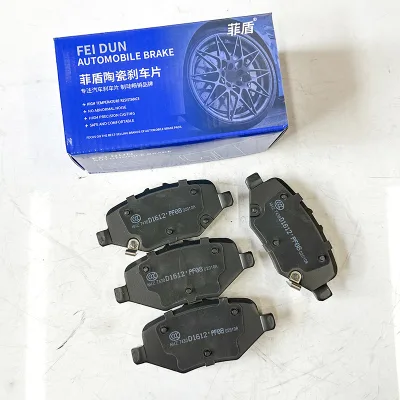
Feidun Technology (guangzhou) Co., Ltd.
- Manufacturer, Trading Company, Distributor/Wholesaler
- Guangdong Province, China
- Lead time0 days
- Avg. response≤ 1h
Main productsBrake disc,Brake pads,Brake caliper,Brake line,Brake Sensor
Main marketsDomestic Market(70.00%), Eastern Europe(20.00%), Southeast Asia(10.00%)

SHANDONG CHANGXU AUTO PARTS CO.,LTD.
- Verified by CTI
- Combined
- China Shandong
- Lead time30 days
- Avg. response≤ 8h
Main productsBrake Pad, Brake Disc, Brake Shoe, Steel Back, Drum Brake, Wiper, Auto Parts, Brake Accessories, Brake Line, Ceramic Brake Pad
Main marketsSouth America,Africa,Southeast Asia/ Mideast,East Asia(Japan/ South Korea),Domestic,Europe,North America


Propad D1093-7999 Brake Pad for Gl8 I MPV / Terraza / Chevrolet Uplander / Pontiac Montana
$4.27 - $5.05
MOQ: 20 Sets

Qingdao Pudong Train&Car Accessories Co., Ltd.
- Manufacturer
- China Shandong
- Lead time0 days
- Avg. response≤ 5h
Main productsBrake Pad, Bus Brake, Brake, Train Brake Pad, Brake Block, Locomotive Brake, Brake Shoes, Truck Brake, Motorcycle Brake Pad, Mechinery Friction Material

Hangzhou lizhong shengteng Auto Parts Co., Ltd.
- Verified by TUVRHEINLAND
- Trading Company
- China Zhejiang
- Lead time23 days
- Avg. response≤ 8h
Main productsAuto Bumper, Auto Rear Bumper Cover, Auto Rear Mirror, Auto Hood, Auto Head Lamp, Auto Cooling Fan Cover, Auto Radiator
Main marketsSouth America,Eastern Europe,Mid East,North America,Southeast Asia,Eastern Asia,Western Europe






Comprehensive Sourcing Guide
For Pontiac Pursuit Brake Pad Supplier Concentration and Factory Types
The current supplier landscape for automotive brake components shows a concentration of manufacturers and trading companies primarily located in China, with specific activity noted in Zhejiang and Jiangsu provinces. These regions host facilities that produce a wide range of vehicle parts, including suspension components, wheel hub bearings, and various brake systems. Some entities operate as trading companies, while others function as manufacturers with their own brands or OEM capabilities. This mix allows buyers to access both direct factory pricing and the logistical support of intermediaries. The presence of these diverse company types suggests a robust supply chain capable of handling different order volumes and customization requests.
When evaluating the factory types, it is essential to distinguish between pure trading entities and those with manufacturing capacity. Some suppliers list capabilities such as sample processing, graphic processing, and customized on-demand production, indicating a higher level of in-house control. Others may focus on sourcing and distribution. The main products listed often include brake pads, brake shoes, clutch discs, and related automotive systems. Buyers should verify if a supplier's primary focus aligns with their specific needs for Pontiac Pursuit components. Understanding whether a partner is a manufacturer or a trader helps in assessing their ability to manage quality control, handle technical inquiries, and scale production during peak demand periods.
How to Verify For Pontiac Pursuit Brake Pad Suppliers
Verification of suppliers requires a careful examination of their system certifications and third-party audit reports. Several observed listings indicate compliance with ISO 9001 standards, while others reference TS16949 quality systems or EAC certifications. Some suppliers display verification badges from recognized bodies like TüVRheinland, which adds a layer of credibility to their operational claims. Buyers must cross-reference these certifications with the specific product attributes, such as the E11 ECE R90 certification mentioned for certain brake pad models. It is crucial to confirm that the certification applies to the specific manufacturing site and product line rather than being a generic company-wide claim.
Beyond certifications, response times and verification status provide immediate indicators of supplier reliability. Data shows response times varying significantly, with some suppliers responding within three hours while others take nearly fifteen hours. A faster response time often correlates with better communication channels and more active account management. Buyers should also check if a supplier is marked as verified, as this status often implies a baseline level of due diligence has been performed by the platform. However, verification status alone is not a guarantee of product quality. It is advisable to request specific test reports or quality assurance documents for the brake pads intended for the Pontiac Pursuit to ensure they meet the necessary safety and performance standards before committing to an order.
What to Compare Across For Pontiac Pursuit Brake Pad Suppliers
Comparing suppliers involves analyzing key operational metrics such as minimum order quantities, lead times, and pricing structures. The observed data reveals a wide range of MOQs, from as low as 50 sets to higher thresholds like 300 or 100 units. Lead times also vary, with some suppliers indicating immediate availability or very short turnaround, while others specify delivery windows of 30 to 45 days. Pricing per unit fluctuates based on material composition, such as semi-metallic or ceramic options, and ranges from approximately $3.30 to $6.50. Buyers must weigh these factors against their inventory needs and budget constraints to determine the most cost-effective partner.
In addition to cost and volume, customization options and product specifications are critical comparison points. Some suppliers offer customization services, allowing for specific branding or packaging requirements, while others provide standard "Powersteel Brand Packing" or appointed packing. The material composition, such as semi-metallic or ceramic, directly impacts performance and price. Buyers should also compare the warranty terms, which can range from 30,000 to 100,000 kilometers, and the specific OE numbers or reference numbers associated with the parts. Ensuring that the supplier's product attributes match the exact requirements of the Pontiac Pursuit is essential for compatibility and long-term reliability.
Common For Pontiac Pursuit Brake Pad Sourcing Risks
One significant risk in sourcing brake pads is the potential mismatch between product specifications and vehicle requirements. While many listings claim compatibility with American cars, including Chevrolet and Pontiac, the specific model years and engine types can vary. Some products are listed for the Pontiac G5 or Saturn Ion, which share platforms with the Pursuit, but buyers must verify the exact fitment for their specific vehicle configuration. Relying solely on broad keywords like "American Car Brake" without checking detailed application lists can lead to receiving parts that do not fit correctly, causing installation delays and additional costs.
Another risk involves the variability in lead times and the reliability of delivery schedules. While some suppliers list a lead time of zero, others specify a 35-day or 30-45-day window. This discrepancy can disrupt supply chains, especially for businesses requiring just-in-time inventory. Furthermore, the presence of different certifications like ISO 9001 versus TS16949 suggests varying levels of quality management systems. A supplier with a lower-tier certification might not adhere to the rigorous standards required for critical safety components like brake pads. Buyers should be cautious of suppliers who do not provide clear documentation on their quality control processes or who offer vague warranty terms that do not cover specific failure modes.
For Pontiac Pursuit Brake Pad Regional Sourcing and Logistics
The primary sourcing region for these automotive components is China, with specific manufacturing hubs identified in Zhejiang and Jiangsu provinces. These locations are known for their dense clusters of automotive parts manufacturers and trading companies. The concentration of suppliers in these areas facilitates efficient logistics and access to a wide variety of raw materials. However, buyers should be aware that shipping times and costs can vary depending on the specific port of origin and the destination country. Understanding the logistics network of the supplier is crucial for planning inventory replenishment and managing cash flow.
Logistics planning also involves considering the packaging and handling requirements of the products. Some suppliers use standard brand packing, while others offer appointed packing to meet specific client needs. The physical dimensions of the brake pads, such as the 12552.317.5mm size noted for certain models, affect how they are stacked and shipped. Buyers should verify if the supplier has experience with international shipping and if they can provide tracking information. Additionally, the origin of the product, whether it is explicitly stated as "Made in China" or "Jiangsu, China," can impact customs duties and import regulations. Ensuring that the supplier can handle the necessary documentation and compliance requirements is essential for a smooth import process.
For Pontiac Pursuit Brake Pad Commercial Terms and Order Planning
Commercial terms for brake pad orders often include specific pricing structures based on volume and material type. The observed price ranges indicate that semi-metallic options can cost between $3.30 and $6.50 per unit, depending on the supplier and order size. Buyers should negotiate based on the total volume required, as higher quantities often secure better unit prices. It is also important to clarify payment terms, such as whether escrow services are available to protect the buyer's funds until the goods are received and inspected. Understanding the financial terms helps in budgeting and managing the overall cost of the procurement process.
Order planning must account for the minimum order quantities and the production lead times provided by the supplier. With MOQs ranging from 50 to 300 units, buyers need to align their order sizes with their sales forecasts to avoid overstocking or stockouts. The lead times, which can vary from immediate availability to 45 days, should be factored into the inventory planning cycle. Buyers should also consider the warranty periods, which can extend up to 100,000 kilometers, as this affects the long-term value of the purchase. By carefully analyzing these commercial terms and planning orders accordingly, buyers can optimize their supply chain efficiency and ensure a steady flow of high-quality brake pads for the Pontiac Pursuit.
FAQs
What is the minimum order quantity for Pontiac Pursuit brake pads?
The minimum order quantity varies by specific product model. Some listings require 50 sets, while others start at 100 or 200 units. Buyers should check the specific product page for the exact MOQ applicable to their selected brake pad model and supplier.
Are these brake pads compatible with Chevrolet Cobalt and Pontiac G5?
Yes, specific brake pad models are listed as compatible with Chevrolet Cobalt, Pontiac G5, Saturn Ion, and Pontiac Pursuit. These parts are designed to fit multiple American car models, ensuring broad applicability for buyers sourcing replacement parts for these specific vehicle lines.
What certifications do the brake pads meet for quality assurance?
Many brake pads listed carry ISO 9001 certification, ensuring adherence to quality management standards. Some specific products also meet E11 ECE R90 standards or TS16949 quality systems. Buyers should verify the specific certification listed on the product details page for their chosen item.
What is the typical lead time for shipping these auto parts?
Lead times vary significantly between suppliers. Some listings indicate a delivery time of 30 to 45 days, while others show a lead time of 35 days. Buyers must confirm the specific shipping duration with the supplier before placing an order to ensure timely delivery.
Where are these brake pads manufactured and shipped from?
The brake pads are manufactured in China, with specific origins noted in Jiangsu and Zhejiang provinces. All listed products originate from these regions, ensuring consistent sourcing from Chinese manufacturing hubs known for producing automotive replacement parts and accessories for global markets.
What material composition is used for these semi-metallic brake pads?
The brake pads are primarily made from semi-metallic material, offering durability and performance. Some listings also mention ceramic options or semi-metallic-ceramic combinations. Buyers should review the material specifications on the product page to confirm the exact composition for their vehicle needs.
Do suppliers offer customization options for these brake pad products?
Customization is available for many of the listed brake pad models. Suppliers can accommodate specific branding or packaging requirements, such as Powersteel Brand Packing or appointed packing. Buyers should contact the supplier directly to discuss specific customization needs and any associated costs.
What is the price range for purchasing these brake pads in bulk?
Prices range from approximately 3.30 to 6.50 per unit depending on the model and specifications. Specific models like D1364 start at 5.00, while others range between 4.00 and 6.00. Bulk pricing may vary, so buyers should check the current price list for their selected product.