For Nissan Disc Brake Pads Suppliers and Manufacturers
Source For Nissan Disc Brake Pads from 16 verified suppliers in China. Compare ISO 9001 and TS 16949 certified factories with response times under 5 hours. Review pricing from $1.00 to $8.00 and MOQs starting at 50 units to find the right partner.
Suppliers List

- Verified by SGS
- Manufacturer/Factory
- China Zhejiang
- Lead time45 days
- Avg. response≤ 4h
Main productsFriction Disc, Racing Disc, Clutch Button, Clutch Facing, Clutch Disc, Rivets
Main marketsSouth America,Eastern Europe,Mid East,North America,Southeast Asia,Eastern Asia,Oceania,Western Europe,Africa

Suzhou Kamien Auto Parts Co., Ltd.
- Verified by TUVRHEINLAND
- Trading Company,Manufacturer/Factory
- China Jiangsu
- Lead time45 days
- Avg. response≤ 5h
Main productsBrake Pad, Brake Shoe, Brake Disc, Brake Repair Kits, Brake Caliper, Air Disc Brkae Pad, Brake Drum, Brake Lining, Brake Hardware Kit
Main marketsSouth America,Eastern Europe,Mid East,North America,Southeast Asia,Eastern Asia,Oceania,Western Europe,Africa

No Dust Auto Brake Pads Manufacturer Brake Pads for Auto Car Disc Brake Pads
$2.00 - $8.00
MOQ: 50 Sets


Quanzhou Fanghua Import Export Co., Ltd.
- Verified by BV
- Trading Company
- China Fujian
- Lead time30 days
- Avg. response≤ 10h
Main productsBrake Pad, Brake Shoe, Starter, Alternator, ABS Wheel Speed Sensor, Brake Pad Sensor, Brake Pads Wire, Auto Brake Shoes, Auto Brake Pads, ABS Sensor
Main marketsSouth America,Africa,Southeast Asia/ Mideast,Europe,North America

Hengshui Yongxin Brake Materials Co., Ltd
- Verified by BV
- Combined
- China Hebei
- Lead time23 days
- Avg. response≤ 6h
Main productsBrake Pad, Brake Shoe
Main marketsDomestic
Shandong Frontech Auto Parts Co., Ltd.
- Verified by TüVRheinland
- Manufacturer, Trading Company
- Lead time45 days
- Avg. response≤ 1h
Main productsBrake Pad, Truck Brake Pad, Brake Disc, Brake Calipers
Main marketsSouth America(20%), Western Europe(20%), North America(15%)

Zibo Baiwang Machinery Co., Ltd.
- Trading Company,Manufacturer/Factory
- China Shandong
- Lead time23 days
- Avg. response≤ 11h
Main productsBrake Discs Pad, Brake Drum S-Camshafts, Auto Brake Parts, Auto Parts for Byd Chery Jetour Tiggo, Milking Machine, Machining Parts, Auto Accessories, Secondhand Used Cars, Auto Parts of HOWO FAW Dongfeng Foton Haval, Accessories for Maxus Mg Baic Wuling
Main marketsSouth America,Eastern Europe,Mid East,North America,Southeast Asia,Eastern Asia,Oceania,Western Europe,Africa

Qingdao Yonghu Auto Parts Co., Ltd.
- Trading Company
- China Shandong
- Lead time0 days
- Avg. response≤ 21h
Main productsAutomible Brake Disc

Jinan Sunrise New Material Technology Co., Ltd.
- Verified by SGS
- Trading Company
- China Shandong
- Lead time30 days
- Avg. response≤ 7h
Main productsCoating Steel Material, Stainless Steel Material, Anti-Noise Shim, FKM & NBR Coating Gasket, Steel Coil & Strip, Steel Materials, Steel Coil, Metallurgical Minerals and Energy, Back Plate, Abutment Hardware Kit
Main marketsOthers(foreignTradeCapacity.exportBusinessCapacityMarketOther),Southeast Asia/ Mideast,Europe

GREEN POWER INDUSTRY CO.LIMITED
- Verified by TUVRHEINLAND
- Trading Company
- China Zhejiang
- Lead time30 days
- Avg. response≤ 22h
Main productsBrake Pad, Brake Block, Brake Lining Roll, Brake Shoe, Brake Lining, Clutch Over, Clutch Facing, Clutch Button, Clutch Disc, Motorcycle Brake Lining
Main marketsSoutheast Asia/ Mideast

Zhe Jiang Yue Ding Corrugated Tube Co., Ltd.
- Verified by SGS
- Combined
- China Zhejiang
- Lead time15 days
- Avg. response≤ 5h
Main productsExhaust Flexible Pipe, Exhaust Clamp, Hose Clamp, Exhaust X/Y Pipe, Truck Exhaust Pipe, Pipe & Cable Clamps, Exhaust Elbow, Exhaust Accessories, Exhaust Tip, Metal Bellow
Main marketsSoutheast Asia/ Mideast,Europe,Australia

Hebei Oudu Technology Co., Ltd
- Verified by CTI
- Trading Company
- China Hebei
- Lead time23 days
- Avg. response≤ 4h
Main productsAutomotive Drive Belts, Brake Pads, Brake Shoes, Brake Pump, Spark Plug, Oil Filter, Air Conditioning Filter, Air Filter
Main marketsSoutheast Asia/ Mideast,Domestic,Europe,North America

High Quality Brake Pads/Ceramic Brake Pad/Car Disc Break System Pads for All Models
$2.80 - $5.60
MOQ: 50 Sets


Ningbo Joy International Trade Co., Ltd.
- Verified by BV
- Trading Company
- China Zhejiang
- Lead time30 days
- Avg. response≤ 9h
Main marketsEurope

Nanpi County Bo Hao Hardware Manufacturing Co., Ltd.
- Verified by BV
- Combined
- China Hebei
- Lead time23 days
- Avg. response≤ 24h
Main productsbrake pad clip
Main marketsDomestic,North America


$0.50 - $10.00
MOQ: 20 Pieces


Brake Pad Chinese Auto Parts Brake Pad Car Brake Pad
MOQ: 2000 Pieces


Brake OEM Performance Brakes Auto Brake Pad
MOQ: 2000 Pieces

Wenzhou Yize Industrial Co., Ltd.
- Trading Company,Manufacturer/Factory
- China Zhejiang
- Lead time0 days
- Avg. response≤ 16h
Main productsAutomobile Pumps, Suspension Parts, C. V. Joint, Auto Parts, Car Parts, Air Filter, Auto Filter, Wheel Hub Bearing, Shork Absorber, Brake Pad

MOQ: 100 Pieces

MOQ: 100 Pieces

MOQ: 100 Pieces

RG MECHANICAL EQUIPMENT CO.LTD
- Verified by SGS
- Trading Company
- China Shandong
- Lead time15 days
- Avg. response≤ 1h
Main productsEngine Spare Parts, Mini Excavator, Excavator Spare Parts, Used Agricultural Machinery, New and Used Tractors, New and Used Forklifts, Construction Machinery Spare Parts, New and Used Bulldozers and Spare Parts, New and Used Loaders and Spare Parts
Main marketsDomestic

Brake Discs Automotive Components Parts Brake Pad Brake System Friction Pads Auto Parts
$1.00 - $999.00
MOQ: 1 Sets


Hangzhou lizhong shengteng Auto Parts Co., Ltd.
- Verified by TUVRHEINLAND
- Trading Company
- China Zhejiang
- Lead time23 days
- Avg. response≤ 8h
Main productsAuto Bumper, Auto Rear Bumper Cover, Auto Rear Mirror, Auto Hood, Auto Head Lamp, Auto Cooling Fan Cover, Auto Radiator
Main marketsSouth America,Eastern Europe,Mid East,North America,Southeast Asia,Eastern Asia,Western Europe


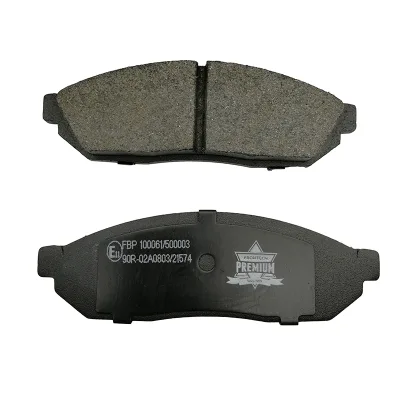
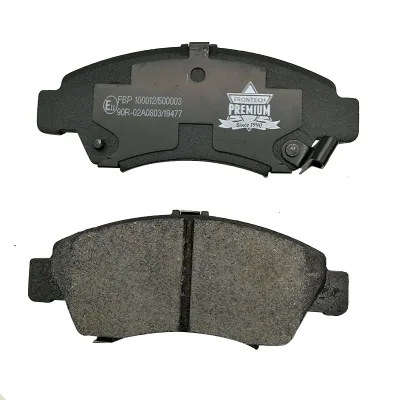


Comprehensive Sourcing Guide
For Nissan Disc Brake Pads Supplier Concentration and Factory Types
When sourcing For Nissan Disc Brake Pads, the supplier landscape on B2B platforms typically mixes three company types: pure manufacturers/factories, trading companies, and hybrid trading-and-manufacturing entities. The distinction matters because it affects pricing depth, customization flexibility, and accountability. A factory profile will usually list main products concentrated around brake hardware—brake pads, brake shoes, brake discs, brake linings, brake drums, calipers, and repair kits—while a trading company may spread across unrelated categories such as starters, alternators, and ABS wheel speed sensors alongside brake components. Hybrid profiles can be useful when a buyer wants consolidated shipments of multiple part types.
Cluster identification should start with the location field on each supplier profile rather than assumptions. Observed profiles in this category list locations in China including Zhejiang, Jiangsu, and Fujian, which suggests these provinces participate in brake component supply, but the buyer should treat each profile's stated location as the working fact and verify plant addresses during due diligence. Where a location is not displayed, ask the supplier directly for the manufacturing address and cross-check it against business registration records. Also note whether the profile claims OEM or ODM capability: some observed profiles state ODM/OEM services, one lists an own brand with OEM in development, and one trading-only profile offers OEM support through partner factories. Matching your volume and branding needs to the correct entity type prevents paying trading margins for factory work or overestimating a trader's production control.
How to Verify For Nissan Disc Brake Pads Suppliers
Verification begins with third-party verification badges and system certifications shown on the profile. In the observed results, suppliers carry verification labels such as SGS, TÜV Rheinland, and BV, and system certifications including ISO 9001 and TS 16949. These are meaningful screening signals: an ISO 9001 system certification indicates a documented quality management system, while TS 16949 (the automotive quality standard) is stronger evidence of automotive-sector process control. However, a badge on a profile is a claim, not proof—request the actual certificate copies, confirm the certifying body, and check certificate validity and scope before relying on them.
Beyond paperwork, verify product-level compliance. One observed supplier lists product attributes citing IATF-ECE, AMECA, Emark R90, and IATF16949 certifications for brake pads, and another lists ISO certification with non-asbestos material and a GB/T 5764-1998 product standard. For Nissan fitment parts destined for regulated markets, ask specifically whether Emark R90 or equivalent homologation covers the exact friction formulation you will buy, since approval is formulation-specific. Request material safety data confirming non-asbestos composition, dimensional drawings matching the declared specifications (one observed product lists a 141.9x58.7x16.8MM standard; another 165.6x54.1x17MM), and sample units for independent friction and wear testing. Finally, verify the entity itself: business license, export history, and whether "100% tested" and "sample available" claims in product listings can be substantiated with test reports and physical samples shipped before any bulk commitment.
What to Compare Across For Nissan Disc Brake Pads Suppliers
Build a comparison matrix from the attributes actually displayed on profiles, without assuming every supplier shows every field. Comparable dimensions in this category include: location (observed profiles span Zhejiang, Jiangsu, and Fujian), company type (manufacturer, trading company, or both), main products breadth, system certifications, third-party verification label, average response time, stated lead time, MOQ, and R&D or OEM/ODM capacity. Observed values illustrate the spread: response times around 3.61, 4.26, and 9.11 hours; lead times of 45 days and 30 days; MOQs ranging from 50 to 200 pieces; and product price ranges such as roughly $1.00–$1.60, $2.00–$8.00, $2.80–$2.90, $4.00–$15.00, $5.43–$5.82, and $5.98–$6.72 per unit depending on product type.
Interpret these numbers in context rather than ranking them naively. A 9-hour response time is slower than 3–4 hours and may matter for time-critical projects; a 45-day lead time doubles a 30-day one and affects reorder planning. Lower MOQs (50 pieces) suit trial orders, while 100–200 piece minimums may reflect factory economics. Price ranges must be normalized: a $2.00–$8.00 band for ceramic-fiber disc pads is not directly comparable to a $4.00–$15.00 band for steel rear brake discs. Also compare packing (box+carton, box+pallet, neutral or branded packaging), customization availability, and whether the supplier manufactures the exact part family—pads, discs, linings—or only some of them.
Common For Nissan Disc Brake Pads Sourcing Risks
The most frequent risk in this category is certification mismatch. A supplier may hold an ISO 9001 system certificate while the specific brake pad formulation lacks the Emark R90 or equivalent homologation your destination market requires. Because friction materials are approved per formulation, a valid certificate for one product line does not extend to a customized or reformulated pad. Always match the certificate number to the exact product model (observed model identifiers include D1338-8449, D1911-9141, EQ-1094, and 40206MB000) and confirm the approval scope in writing.
Other recurring risks include entity ambiguity and material substitution. Hybrid trading-manufacturing profiles can blur responsibility when a defect originates at a subcontracted factory; clarify in the contract which entity bears warranty liability. Trading-only suppliers listing OEM capability depend on partner plants whose quality you cannot directly audit—request disclosure of the producing factory. Material risks center on asbestos claims: several observed listings emphasize non-asbestos material, so verify with independent lab testing on production samples, not just pre-shipment golden samples. Dimensional errors are another practical risk; Nissan fitment depends on precise backing-plate dimensions, so insist on first-article inspection against the declared standards. Finally, beware of slow communication compounding delays—one observed profile shows a 9.11-hour average response time—which stretches problem resolution during production. Mitigate by setting contractual response-time expectations, staged payment tied to inspection gates, and retention of tooling and formulation ownership in writing.
For Nissan Disc Brake Pads Regional Sourcing and Logistics
Regional signals on observed profiles point to three Chinese provinces: Zhejiang, Jiangsu, and Fujian. Zhejiang profiles in this category concentrate on friction materials—friction discs, racing discs, clutch buttons, facings, clutch discs, and rivets—suggesting a friction-product orientation. Jiangsu profiles combine manufacturer and trading roles with broad brake coverage including pads, shoes, discs, drums, calipers, and air disc brake pads, and carry TS 16949 and ISO 9001 certifications. Fujian profiles lean toward trading companies handling pads, shoes, sensors, starters, and alternators with ODM/OEM services. These are observations from current profiles, not a map of all capacity; buyers should survey each candidate's actual location and plant capability rather than assuming provincial specialization.
Logistically, plan around the displayed lead times and packing methods. Observed lead times of 30 and 45 days set different reorder cadences; the longer figure leaves little slack if sea freight to your port adds several weeks, so build buffer stock or negotiate expedited slots for repeat orders. Packing matters for brake components: observed options include box+pallet, carton packing, color boxes, and neutral or custom-branded packaging—confirm export-grade palletization and corrosion protection for rotors, which are typically steel and can rust in humid transit. Heavy brake discs and drums push freight cost per unit up, so compare CIF versus FOB quotes and consolidated loading. For mixed orders across suppliers in different provinces, decide whether to consolidate at one forwarder or ship separately, weighing consolidation savings against added handling and delay risk.
For Nissan Disc Brake Pads Commercial Terms and Order Planning
Order planning should begin with the MOQ and price bands displayed on candidate products, then test whether those numbers flex. Observed MOQs in this category range from 50 pieces on ceramic-fiber disc pads up to 200 pieces on brake lining products, and listed unit price ranges span roughly $1.00–$15.00 depending on product type and specification. Use low-MOQ listings for trial and fitment validation, then negotiate scale pricing against a forecast. Confirm in writing what the quoted range includes: whether it covers the declared material (ceramic or non-asbestos formulation), the certification level, the packaging type, and Nissan-specific model references, since each variable moves the price.
Structure payment and milestone terms to match the risk profile of brake components. A practical sequence is sample payment, first-article approval, a production deposit, balance against a passed pre-shipment inspection, and retained documentation—material certs, homologation copies where applicable, and dimensional reports referencing the declared standards. Tie delivery commitments to the supplier's stated lead time (observed examples: 30 and 45 days) with a defined late-delivery remedy. For ongoing programs, plan replenishment around response-time performance: profiles showing 3.6–4.3 hour average responses support faster iterations than one at 9.1 hours. Finally, define reorder economics early—tooling ownership, formulation exclusivity for your Nissan line, packaging artwork rights, and price-validity windows—so that repeat orders at 100, 200, or larger quantities inherit negotiated terms rather than restarting from list-price quotations each cycle.
FAQs
What is the price range For Nissan Disc Brake Pads?
Prices For Nissan Disc Brake Pads typically range from $1.00 to $8.00 per unit depending on material and specifications. Non-asbestos linings start around $1.00, while ceramic fiber options may cost up to $8.00. Buyers should verify exact pricing based on order volume and customization requirements.
What is the minimum order quantity for brake pads?
The minimum order quantity varies by supplier, with options available starting at 50 units for some manufacturers. Other suppliers require a minimum of 100 or 200 units per order. Buyers should confirm specific MOQs with their chosen supplier to ensure alignment with their procurement needs.
How long does production take for brake pads?
Production lead times generally range from 30 to 45 days for standard orders. Some suppliers offer faster turnaround times, while others may require longer periods for customized specifications. Buyers should confirm exact lead times with their supplier before placing orders to manage inventory effectively.
What certifications do brake pad suppliers hold?
Suppliers commonly hold ISO 9001, TS 16949, IATF-ECE, and AMECA certifications. Some products also meet Emark R90 standards. These certifications ensure quality management and product safety compliance. Buyers should verify specific certifications relevant to their target markets and regulatory requirements.
Where are brake pad manufacturers located?
Manufacturers are primarily located in China, specifically in Zhejiang, Jiangsu, and Fujian provinces. These regions host both trading companies and direct manufacturers. Buyers can source from these locations to access a wide range of brake pad products and competitive pricing options.
What materials are used in Nissan brake pads?
Brake pads are available in non-asbestos, ceramic fiber, and steel materials. Non-asbestos options are common for standard applications, while ceramic fiber offers enhanced performance. Buyers should select materials based on their vehicle requirements and performance expectations for optimal braking efficiency.