High Efficiency Egg Tray Suppliers and Manufacturers
Source High Efficiency Egg Tray production lines and plastic trays from 12 verified suppliers in China. Compare key dimensions including CE certification, ISO standards, response times, and pricing to identify the right partner. Request quotes today; review the available evidence before requesting comparable quotations from suitable candidates.
Suppliers List

Hebei Baiyu Technology Co., Ltd.
- Verified by SGS
- Trading Company
- China Hebei
- Lead time30 days
- Avg. response≤ 3h
Main productsChicken Cage, Layer Cage, Chicken House
Main marketsAfrica

Anping County Yize Metal Products Co., Ltd.
- Verified by CTI
- Combined
- China Hebei
- Lead time30 days
- Avg. response≤ 3h
Main productsWire Mesh, Fence, Animal Cage, Farm Fence, Decorative Mesh, Wire, Greenhouse, Poultry Equipment, Metal Mesh, Livestock Equipment
Main marketsSouth America,Africa,Southeast Asia/ Mideast,East Asia(Japan/ South Korea),Domestic,North America

Qingdao Intelligent Poultry Investment Development Co., Ltd.
- Verified by TUVRHEINLAND
- Combined
- China Shandong
- Lead time30 days
- Avg. response≤ 8h
Main productsPoultry House
Main marketsSoutheast Asia/ Mideast

Qingdao Rearun Industrial Co., Ltd.
- Verified by CTI
- Combined
- China Shandong
- Lead time30 days
- Avg. response≤ 3h
Main productsPlastic Injection, Plastic Pallet, Plastic Accessories for Household Appliances, Plastic Folding Box, Disposable Food Lunch Box, Logistics Breeding Turnover Box, Plastic Tiles for Parking Lot, Plastic Food Container, Plastic Tray, Livestock Products
Main marketsDomestic

Qingdao Kemiwo Industrial Technology Co., Ltd.
- Verified by SGS
- Trading Company
- China Shandong
- Lead time30 days
- Avg. response≤ 3h
Main productsPig Equipment, Ventilation Windows, Cattle Pens, Sheep Pens, Horse Pens, Feeders, Plastic Plank, Fiberglass Support, Deodorizing Wet Curtain, Plastic Flooring
Main marketsSoutheast Asia/ Mideast,Europe

Globalink International Limited
- Verified by SGS
- Trading Company,Manufacturer/Factory,Other
- China Shandong
- Lead time45 days
- Avg. response≤ 13h
Main productsPlastic Packaging, Food Container, Fruit packaging, Paper Bags, Paper Packaging, Plastic Bags, Plastic Tape, Egg Tray, Aluminum Foil, Sushi Container
Main marketsSouth America,Eastern Europe,Mid East,North America,Southeast Asia,Eastern Asia,Oceania,Western Europe,Africa


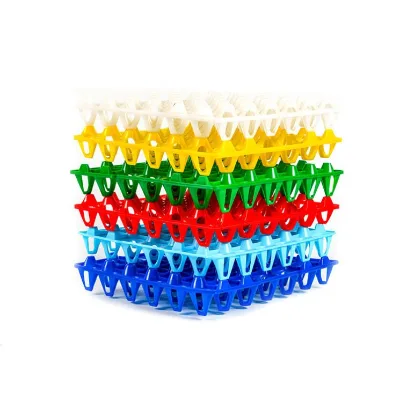
Good Quality Disposable Plastic Egg Tray 12 Eggs
Contact supplier

Good Quality Clear Disposable Plastic Egg Tray 6 Slots
Contact supplier

Hebei Wongs Machinery Equipment Co., Ltd.
- Verified by TUVRHEINLAND
- Combined
- China Hebei
- Lead time30 days
- Avg. response≤ 1h
Main productsEgg Tray Machine, Egg Tray Production Line, Small Egg Tray Machine, Egg Tray Making Line, Paper Pulp Molding Egg Tray Machine, Full Automatic Egg Tray Production Line, Semi-Automatic Egg Tray Machine, Egg Tray Machine Price, 30 Holes Egg Tray Machine, Egg Tray Molds
Main marketsSouth America,Africa,Southeast Asia/ Mideast

China Factory Direct Supply Egg Tray Mold Low Price, High Quality, Customizable
$200.00 - $300.00
MOQ: 1 Sets


Zhejiang Sayeah Machinery Co., Ltd
- Verified by SGS
- Manufacturer/Factory
- China Zhejiang
- Lead time90 days
- Avg. response≤ 6h
Main productsPlastic Extruder, Thermoformiing Machine, Plastic Cup Making Machine
Main marketsSouth America,Eastern Europe,Mid East,North America,Southeast Asia,Eastern Asia,Oceania,Western Europe,Africa


Upgrade Attractive Good Price Fully Automatic Plastic Egg Tray with Cover Making
$77680.00 - $80000.00
MOQ: 1 Sets

NINGBO EVERFINE PLASTICS CO., LTD.
- Verified by SGS
- Manufacturer/Factory
- China Zhejiang
- Lead time30 days
- Avg. response≤ 12h
Main productsPaper Straws, Plastic Cutlery & Cutlery Kits, Portion Cups with Lids, Plastic Straws, Plastic Soup Containers, Party Cups
Main marketsSouth America,Eastern Europe,Mid East,North America,Southeast Asia,Eastern Asia,Oceania,Western Europe,Africa

Zhengzhou Sinoder Indutech Machinery Co., Ltd.
- Verified by BV
- Trading Company
- China Henan
- Lead time60 days
- Avg. response≤ 15h
Main productsOil Press Machine, Oil Refining Machine, Oil Solvent Extraction Plant, Oil Extraction Machine, Fertilizer Machine, Egg Tray Machine, Pellet Mill, Animal Feed Plant, Load Cell, Sensor Meter
Main marketsAfrica,Southeast Asia/ Mideast
Qingdao Haimu Husbandry Machinery Co., Ltd.
- Verified by TüVRheinland
- Manufacturer, Trading Company
- Lead time15 days
- Avg. response≤ 3h
Main productsPoultry Feeder And Drinker, Transport Crate, Chicken Nest Box
Main marketsNorth America(58%), South America(10%), Eastern Europe(5%)

Dongguan Yelui Packaging Products Company Limited
- Verified by CTI
- Combined
- China Guangdong
- Lead time30 days
- Avg. response≤ 2h
Main marketsAfrica,Southeast Asia/ Mideast,Domestic,Europe,Australia,North America




Comprehensive Sourcing Guide
High Efficiency Egg Tray Supplier Concentration and Factory Types
Current data indicates a concentration of manufacturing activity in China Hebei, where suppliers list main products including chicken cages, layer cages, and chicken houses alongside egg tray machinery. This region appears to host a mix of trading companies and combined entities that offer diverse product lines ranging from poultry equipment to industrial paper production machinery. Some suppliers in this cluster have established capabilities for ODM services, suggesting they can adapt machinery designs to specific buyer requirements rather than offering only standard catalog items. The presence of multiple product categories within single supplier profiles implies a supply chain that integrates raw material processing with final equipment assembly, potentially streamlining the procurement process for buyers needing both the machine and the output trays.
In contrast, other results point to manufacturing hubs in China Shandong, where the primary focus is on poultry housing structures. While this location is verified, the specific concentration of high-efficiency egg tray machinery is less explicitly detailed in the provided facts compared to Hebei. Buyers should investigate whether these Shandong-based entities have expanded their portfolios to include pulp molding or plastic tray production lines. The distinction between trading companies and combined suppliers is critical here, as combined entities may offer broader logistical support or integrated solutions for farm setup. Without explicit confirmation of factory ownership for every listing, buyers must verify if the supplier is a direct manufacturer or an intermediary to understand the true depth of their technical support and production capacity for high-efficiency equipment.
How to Verify High Efficiency Egg Tray Suppliers
Verification status is a primary indicator of supplier reliability, with current results showing specific third-party validations such as SGS, CTI, and TÜV Rheinland. These certifications suggest that the suppliers have undergone external audits for quality management systems or product safety, which is essential when sourcing complex machinery like egg tray production lines. For instance, one supplier profile explicitly lists ISO9001:2015 and ISO14001:2015 certificates, indicating adherence to international standards for quality and environmental management. Buyers should prioritize suppliers displaying these specific verification badges, as they provide a baseline assurance that the company operates under a documented quality control framework rather than relying solely on self-declared claims.
Beyond third-party verification, response time serves as a practical metric for assessing supplier engagement and operational readiness. The observed data includes response times around 2.71 to 2.98, which can be used to gauge how quickly a potential partner communicates regarding technical inquiries or order status. A faster response often correlates with a more active sales team and better project management capabilities, which are vital when coordinating the shipment of heavy industrial machinery. Buyers should also examine the supplier type, distinguishing between trading companies and combined entities, as the latter may offer more direct access to production schedules. It is crucial to confirm that the verification badge applies to the specific entity being contacted, ensuring that the credentials are current and relevant to the high-efficiency egg tray machinery being sourced.
What to Compare Across High Efficiency Egg Tray Suppliers
When evaluating potential partners, buyers must compare lead times, which are explicitly listed as 30 days in the current results. This duration represents the production window before shipment and is a critical factor for project planning, especially for large-scale farm setups requiring immediate equipment deployment. Alongside lead time, the minimum order quantity (MOQ) varies significantly across product types, ranging from a single unit for machinery to 500 or 1000 pieces for plastic or paper trays. Understanding these thresholds helps buyers determine if a supplier can accommodate their specific volume needs without requiring excessive inventory investment or waiting for a larger batch to be produced.
Price and customization options are equally vital dimensions for comparison, with some machinery listings showing a fixed price point of 9000.00 while tray products range from 0.05 to 0.45 per unit. Buyers should analyze whether the price includes essential features like computer control panels, drying functions, or automatic grading, as these attributes directly impact the efficiency of the production line. The availability of customization is another key differentiator, with several suppliers offering tailored shapes, colors, and raw material inputs such as waste paper or cardboard. Comparing these technical specifications ensures that the selected supplier can meet the specific operational requirements of the buyer's facility, rather than forcing a compromise on machine performance or output quality.
Common High Efficiency Egg Tray Sourcing Risks
One significant risk involves the ambiguity of supplier types, where trading companies may not possess direct manufacturing control over the machinery they sell. This separation can lead to communication gaps regarding technical specifications, maintenance requirements, or spare parts availability, potentially delaying production startup. Buyers must verify if the supplier has in-house R&D capabilities, as indicated by ODM or OEM designations, to ensure they can provide genuine technical support. Without direct factory access, resolving complex mechanical issues or customizing the machine for specific raw material inputs becomes more difficult and time-consuming, increasing the overall risk of project failure.
Another risk stems from inconsistent product attributes and certification claims across different listings. While some products list CE certification and specific voltage requirements like 220/380V, others may lack detailed technical data or have vague descriptions regarding their automatic grade or raw material compatibility. This inconsistency can lead to the procurement of equipment that is incompatible with local power grids or unsuitable for the intended raw materials, such as waste paper versus cardboard. Additionally, the lack of standardized packaging or weight specifications in some entries creates uncertainty about shipping costs and handling requirements. Buyers must rigorously cross-reference product attributes to avoid receiving machinery that does not meet the operational standards required for high-efficiency production.
High Efficiency Egg Tray Regional Sourcing and Logistics
The geographical concentration of suppliers in China Hebei and China Shandong presents distinct logistical considerations for international buyers. Hebei-based suppliers often handle a wide array of products, from poultry cages to paper production machinery, which may allow for consolidated shipping if multiple items are required. However, the distance from these inland manufacturing hubs to major ports can add transit time and cost to the overall delivery schedule. Buyers should calculate the total logistics cost by factoring in inland transportation fees, as the location of the factory directly impacts the final landed cost of the equipment.
In contrast, sourcing from Shandong may offer different logistical advantages depending on the proximity to specific shipping lanes, though the primary focus there appears to be poultry housing. When evaluating regional options, buyers must verify the origin details provided in product attributes, such as "Hebei, China" or "China," to ensure accurate freight calculations. The standard packing methods, like woven bags for trays or standard packing for machinery, also influence how goods are loaded and secured during transit. Understanding these regional nuances helps buyers anticipate potential delays or additional handling fees, ensuring that the supply chain remains efficient from the factory floor to the final destination.
High Efficiency Egg Tray Commercial Terms and Order Planning
Commercial terms regarding pricing and order volume are critical for effective budget management and supply chain stability. Current data shows a wide range of pricing structures, with machinery listed at fixed prices like 9000.00 and consumable trays priced per unit between 0.05 and 0.45. Buyers must carefully align their order planning with the specific MOQs associated with each product, as ordering below the threshold may not be feasible or may incur higher unit costs. For machinery, the single-unit MOQ allows for smaller initial investments, whereas tray production requires larger batch orders to achieve cost efficiency, necessitating a clear forecast of long-term demand.
Lead time and response speed are also integral to order planning, with a standard production window of 30 days observed in the data. This timeline must be integrated into the buyer's project schedule to ensure that equipment arrives before the farm or processing facility is ready for operation. A response time of approximately 2.7 to 2.98 suggests a moderate level of engagement, but buyers should confirm if this speed is maintained during the order fulfillment phase. Additionally, the availability of customization and specific certifications like CE or ISO9001:2015 should be confirmed in the final contract to ensure that the delivered product meets all regulatory and operational requirements, preventing costly delays or compliance issues upon arrival.
FAQs
What is the lead time for egg tray machines?
The lead time for egg tray machines is 30 days based on current supplier data. This duration applies to the automatic pulp molding equipment listed. Buyers should confirm specific delivery schedules with the supplier before placing an order to ensure alignment with project timelines.
What certifications do the egg tray machines have?
The egg tray machines carry CE certification as a standard requirement for the listed models. Some suppliers also hold ISO9001:2015 and ISO14001:2015 system certifications. These credentials verify compliance with safety and quality management standards for industrial machinery operations.
What is the minimum order quantity for egg trays?
Minimum order quantities vary by product type, ranging from 1 unit for machines to 500 units for plastic trays. Paper pulp trays typically require a minimum of 1000 pieces. Buyers must check specific product listings to determine the exact MOQ applicable to their needs.
Where are the egg tray suppliers located?
Suppliers are located in China, specifically in Hebei and Shandong provinces. These regions are known for manufacturing poultry equipment and paper production machinery. Buyers should verify the exact factory address during the inquiry process to assess logistics and shipping costs accurately.
What is the response time for supplier inquiries?
Supplier response times are recorded at approximately 2.71 to 2.98 hours for active listings. This indicates a relatively quick turnaround for initial communication regarding product specifications and pricing. Buyers can expect timely updates when contacting these verified trading companies directly.
What materials are used for egg tray production?
Egg trays are produced using waste paper, cardboard, or plastic materials like PP and PET. Machines can process raw materials such as recycled pulp for paper trays or plastic pellets for durable options. The choice depends on the specific machine model and the desired end product characteristics.
What is the price range for egg tray machines?
The price for low investment egg tray machines starts at 9000 USD per unit. This figure represents the minimum price point for the automatic pulp molding equipment available. Buyers should note that prices may vary based on customization options and specific production capacity requirements.