Honeycomb Hexagon Led Lights Suppliers and Manufacturers
Compare 25 verified suppliers of Honeycomb Hexagon Led Lights based on location, lead times, certifications, and pricing. Review product specs like voltage and IP ratings, then request quotes directly from the listed factories; review the available evidence before requesting comparable quotations from suitable candidates.
Updated
Suppliers List

Shanghai Lanyou Lighting Co., Ltd.
- Verified by CTI
- Trading Company
- China Anhui
- Lead time15 days
- Avg. response≤ 6h
Main productsLED Channel Letters, Acrylic Signs, Metal Sign Letters, Wayfinding Signs, Outdoor Signage
Main marketsSouth America,Africa,Southeast Asia/ Mideast,East Asia(Japan/ South Korea),Europe,Australia,North America


LED Hexagon Lights Hex Lights for Garage Ceiling Honeycomb Lamp LED Light
$61.90 - $124.90
MOQ: 1 Pieces

Honeycomb Auto Detailing Working Light Ceiling Design Hexagonal LED Lights
$61.90 - $154.90
MOQ: 1 Pieces


Manufacturer Customized Honeycomb Wall Ceiling Light Hexagon Lights Garage Hex Hexagonal LED Lights
$50.00 - $112.00
MOQ: 1 Pieces

LED Hexagon Wall Light Honeycomb Ceiling LED Light for Garage Honeycomb Garage Light
$90.00 - $135.00
MOQ: 40 Pieces

Hubei LiBaiChang Technology Co., Ltd.
- Verified by CTI
- Manufacturer/Factory
- China Hubei
- Lead time15 days
- Avg. response≤ 3h
Main productsSolar Home System, Outdoor Lighting, Emergency Products, Solar Aerator Pump, Solar Panel, Commercial Lighting Light, Solar Inverter, Indoor Light, Solar Fan, Solar Insect Killer Light
Main marketsSouth America,Eastern Europe,Mid East,North America,Southeast Asia,Eastern Asia,Oceania,Western Europe,Africa

LED Hexagon Lights Hex Lights for Garage Ceiling Honeycomb Auto Detailing Lamp Hexagonal LED Light
$21.00 - $126.77
MOQ: 10 Pieces

Honeycomb LED Bathroom Light IP65 Waterproof Ceiling Panel Hexagonal LED Light
$21.00 - $126.77
MOQ: 10 Pieces
Guangzhou Jiguang Lighting Co., Ltd.
- Verified by SGS Group
- Manufacturer, Trading Company
- Lead time15 days
- Avg. response≤ 5h
Main productsLED Light
Main marketsNorth America(80%), Eastern Asia(10%), Southeast Asia(5%)
Lu'an Mucheng Advertising Logo Co., Ltd.
- Verified by TüVRheinland
- Manufacturer, Trading Company
- Lead time0 days
- Avg. response≤ 1h
Main productsLuminous Character, Neon Light, Neon Marquee Letter, Spirit Fortress
Main marketsNorth America(26%), Eastern Europe(10%), Oceania(10%)
Changsha Jpungsun Sci & Tech Co., Ltd.
- Verified by Intertek
- Trading Company
- Lead time7 days
- Avg. response≤ 2h
Main productsFan Lights, Pendant Lights, Wall Lights, Pool Lights, Down Lights
Main marketsNorth America(20%), South America(20%), Central America(20%)

Guangzhou Super Lightings Co., Ltd
- Combined
- China Guangdong
- Lead time30 days
- Avg. response≤ 5h
Main productsLED Light Manufacturer, LED Linear Light, Aluminum LED Profile, LED Lighting Fixture, LED Pendant Recessed Ceiling Light, Customized Linear Lighting, Linear LED Light, LED Linear Lighting
Main marketsSoutheast Asia/ Mideast,Australia
Xiamen Homejoy Technology Co., Ltd.
- Manufacturer, Trading Company
- Fujian, China
- Lead time25 days
- Avg. response≤ 8h
Main productsLED lights,Electronic devices,Home using appliance,Smart door lock
Main marketsWestern Europe(25.00%), Southeast Asia(25.00%), Eastern Europe(15.00%), North America(15.00%), Northern Europe(10.00%), Africa(10.00%)


$14.45 - $117.30
MOQ: 2 Minimum
$34.6106 - $256.6292
MOQ: 2 Minimum
$15.0329 - $122.0295
MOQ: 2 Minimum
Lu'an Baona Import And Export Trade Co., Ltd.
- Trading Company
- Anhui, China
- Lead time7 days
- Avg. response≤ 1h
Main productsSports Flooring,Gym Flooring,Interlocking Floor Tiles,Sport facility,Drop Pad for Gym
Main marketsNorth America(55.00%), Africa(17.00%), Western Europe(11.00%), Southeast Asia(9.00%), Mid East(3.00%), Oceania(3.00%), Eastern Europe(2.00%)
Custom Made Hexagon Decor Light Led Rgb Hexagonales Honeycomb Led Flood Light
$90.00 - $135.00
MOQ: 1 packs
Shenzhen Bond Optoelectronic Co., Ltd.
- Verified by TüVRheinland
- Manufacturer, Trading Company
- Lead time7 days
- Avg. response≤ 4h
Main productsLED Module, LED Signs, LED Pixel Light, Custom Neon Sign, LED Illuminated Sign
Main marketsNorth America(30%), Southeast Asia(25%), Mid East(20%)
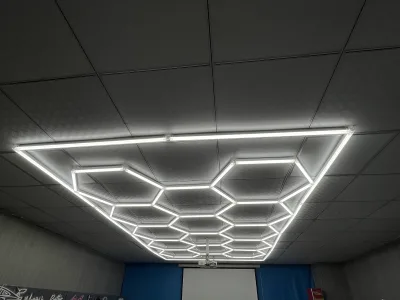
New Style Smart Rgb Hexagonal Light Types Hexagon Shape Honeycomb Led Modular Lights Touch
$75.00 - $85.00
MOQ: 10 sets
$94.05 - $99.00
MOQ: 10 pieces

Lu'an Woma Import and Export Co., Ltd.
- Verified by SGS
- Trading Company
- China Anhui
- Lead time15 days
- Avg. response≤ 5h
Main productsLED Channel Letters, Acrylic Signs, Metal Sign Letters, Wayfinding Signs, Outdoor Signage
Main marketsEast Asia(Japan/ South Korea)

$50.00 - $90.00
MOQ: 1 Pieces

Car Detailing Shop Ceiling Hexagon LED Light Lamp Honeycomb Shape Light
$29.00 - $75.00
MOQ: 50 Pieces

Hexagon Detailing Workshop Ceiling LED Lights for Car Shop and Garage Honeycomb Lights
$50.11 - $83.55
MOQ: 50 Pieces

High Brightness Honeycomb Hexagon LED Light for Garage Detailing Workshop
$20.00 - $25.00
MOQ: 10 Pieces

Wholesale Honeycomb Car Parking Garage Lights Hex LED Garage Lights Ceiling Hexagon Garage Light
$50.11 - $89.88
MOQ: 50 Pieces

Modern Slim Aluminum Honeycomb Hexagon LED Light for Garage Repair Shop
$50.00 - $55.00
MOQ: 10 Pieces

Shenzhen BBier Lighting Co., Ltd.
- Verified by BV
- Combined
- China Guangdong
- Lead time15 days
- Avg. response≤ 4h
Main productsE40/E27 LED Corn Lights, E40/E27 LED Garden Lights, E40/E27 LED High Bay Lights, Parking Lot LED Retrofit Kits, LED Wall Pack Lights, LED Canopy Lights, LED Gas Station Lights, LED Shoebox Street Lights, 360deg LED Tube Lights, 210deg LED Tube Lights
Main marketsSouth America,Africa,Southeast Asia/ Mideast,East Asia(Japan/ South Korea),Europe,Australia,North America
Shenzhen Euleep Technology Co., Limited
- Manufacturer
- Guangdong, China
- Lead time10 days
- Avg. response≤ 3h
Main productsled linear light,led chandeliar light,led pandent light,led ceiling light,led tube light
Main marketsCentral America(20.00%), Oceania(15.00%), Northern Europe(15.00%), Eastern Europe(10.00%), Western Europe(10.00%), South Asia(5.00%), Southern Europe(5.00%), South America(5.00%), North America(5.00%), Southeast Asia(5.00%), Eastern Asia(5.00%)
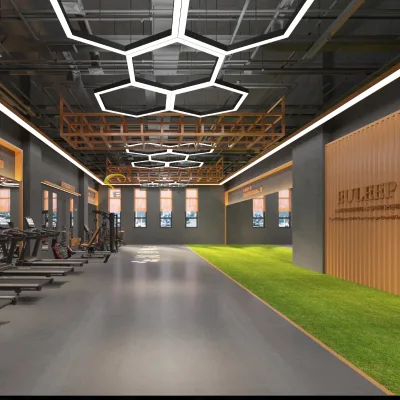
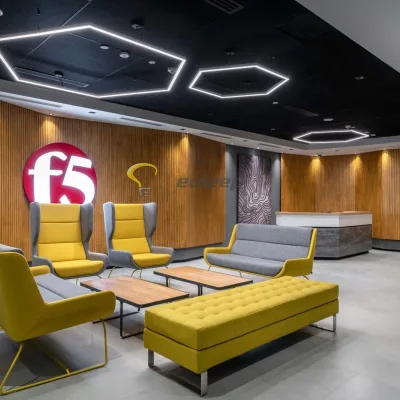
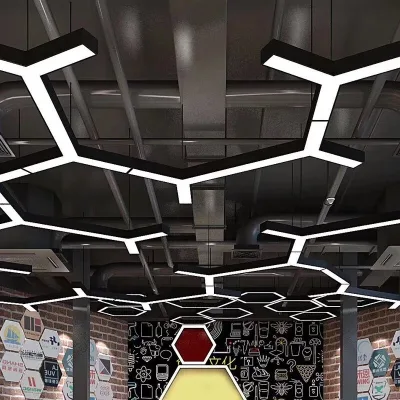
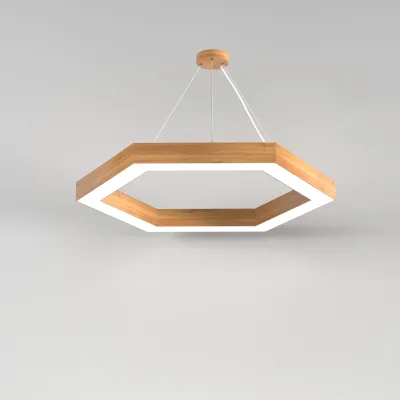
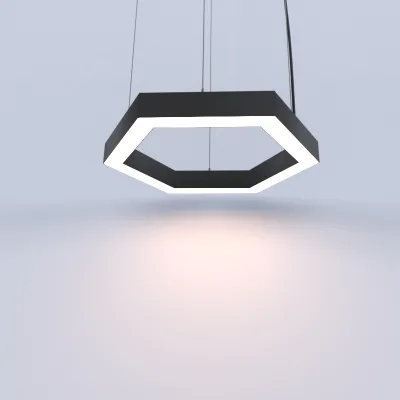
Office modern lighting pendant hexagon shop light dimmable honeycomb lamp six Y shape hexagen lights
$26.60 - $59.60
MOQ: 1 pieces
Lu'an Baona Import And Export Trade Co., Ltd.
- Trading Company
- Lead time旺季: "1 - 10":3,"11 - 100":7,"101 - 1000":14,"> 1000":"To be negotiated", 淡季: "1 - 10":3,"11 - 100":7,"101 - 1000":14,"> 1000":"To be negotiated"
- Avg. response≤ 1h
Main productsGarage Floor Tiles, Led Work Lights, Tool Cabinet
Zhongshan Aier Lighting Technology Co., Ltd.
- Verified by TüVRheinland
- Manufacturer, Trading Company
- Lead time7 days
- Avg. response≤ 3h
Main productsCeiling Light, LED Tube, LED Cabinet Light, LED Panel Light, LED High Bay Light
Main marketsNorth America(20%), Southeast Asia(20%), South America(10%)
Shenzhen ETOP Technology Company Ltd.
- Verified by SGS Group
- Manufacturer, Trading Company
- Lead time7 days
- Avg. response≤ 5h
Main productsLED Pixel, LED Strip, LED Connector, Permanent Lights, Hexagon Lights
Main marketsNorth America(75%), Western Europe(15%), Oceania(10%)
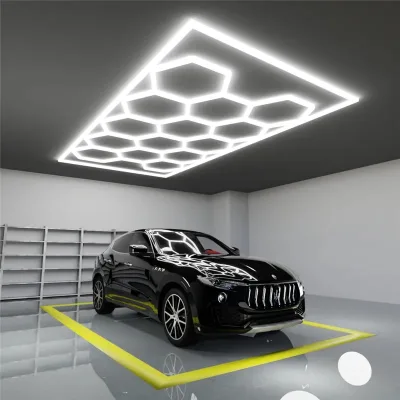
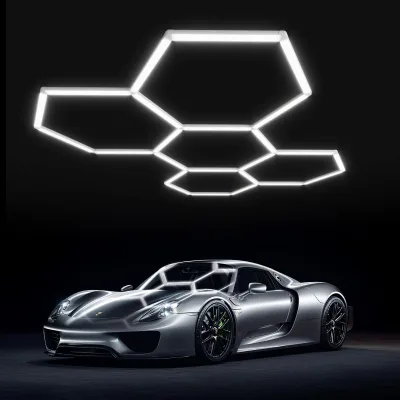
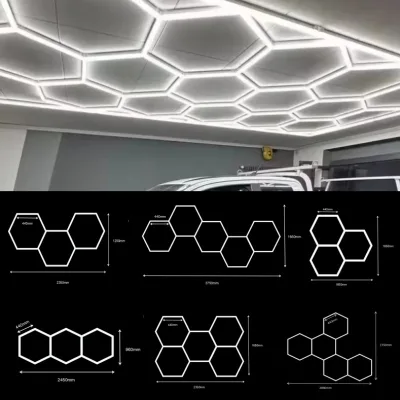
$42.00 - $50.00
MOQ: 1 pieces

Ningbo General Union Co., Ltd.
- Trading Company
- China Zhejiang
- Lead time23 days
- Avg. response≤ 12h
Main productsTable Lamp, Heat Press Machine, Home Appliance, Alarm Clock, Fans, Night Light, Solar Light, Kitchen Appliance, Pet Product, Sport Equipment
Main marketsSouth America,Eastern Europe,Mid East,North America,Southeast Asia,Eastern Asia,Oceania,Western Europe,Africa

LED Rgbnight Lamp Hexagonal Magnetic Touch Light Decoration Honeycomb Light
$27.00 - $29.50
MOQ: 20 Pieces

Color Atmosphere Decorative Quantum Touch Sensitive Honeycomb Hexagon Splicing LED Night Light
$4.56 - $5.53
MOQ: 100 Pieces

- Verified by TUVRHEINLAND
- Trading Company
- China Zhejiang
- Lead time15 days
- Avg. response≤ 14h
Main productsLED Solar Light, Festival Lights, Table Lamp, LED Grow Lights, LED Light Strip, Smart Lights, LED Light String, Decorative Light, LED Head Light, LED Professional Lights
Main marketsSouth America,Europe,North America
Wald Import And Export (jiangxi) Co., Ltd.
- Verified by Intertek
- Trading Company
- Lead time0 days
- Avg. response≤ 1h
Main productsHoneycomb Light, Nine-palace Lattice Lamp, Mechanical Position Light, Car Cleaning Tools
Main marketsSoutheast Asia(50%), South America(15%), North America(15%)
$52.3905 - $79.1045
MOQ: 1 sets

Henan Hanyin Industrial Co., Ltd.
- Verified by CTI
- Trading Company
- China Henan
- Lead time30 days
- Avg. response≤ 3h
Main productsCar Cleaning Kit, Automatic Car Wash Machine, Car Wash Towel, Auto Detailing Cart, Snow Foam Cannon C
Main marketsEurope

Honeycomb Garage Lamp LED Hexagon Ceiling Lights Hanging Detailing Garage Lamp
$22.00 - $29.00
MOQ: 1 Square Meters

Interlocking Hexagon LED Lights Flexible Combination for Custom Lighting Layout
$22.00 - $29.00
MOQ: 1 Square Meters

5 Years Free Replacement Parts Honeycomb LED Light for Global Distributors
$22.00 - $29.00
MOQ: 1 Square Meters

High Luminous Efficacy Honeycomb LED Panel Light Energy Saving for Large Warehouses
$22.00 - $29.00
MOQ: 1 Square Meters

Magnetic Mount Quick Install Hexagon LED Light for Temporary Workshop Lighting
$22.00 - $29.00
MOQ: 1 Square Meters

Limitless Modular Splicing Hexagon LED Light for Customized Garage Lighting Layout
$22.00 - $29.00
MOQ: 1 Square Meters
Shenzhen Aoying Technology Co., Ltd.
- Trading Company
- Guangdong, China
- Lead time15 days
- Avg. response≤ 5h
Main productsLED Point Light, COB LED Strip, Hexagon LED Light, Pebble Light
Main marketsNorth America(44.00%), Western Europe(15.00%), Oceania(10.00%), Africa(5.00%), Eastern Europe(5.00%), Southeast Asia(5.00%), Southern Europe(3.00%), Central America(3.00%), Northern Europe(3.00%), Domestic Market(3.00%), Mid East(2.00%), Eastern Asia(1.00%), South America(1.00%)
$87.9383 - $102.4217
MOQ: 1 sets
Shenzhen Chengguang Lighting Technology Co., Ltd.
- Verified by TüVRheinland
- Trading Company
- Lead time10 days
- Avg. response≤ 2h
Main productsHexagonal Hexagonal Lights, Track Lights, Working Lights, Chandeliers & Pendant Lights, Downlights
Main marketsNorth America(35%), South America(15%), Eastern Europe(8%)

Shenzhen Enrich Lighting Co., Ltd.
- Trading Company,Manufacturer/Factory,Group Corporation,Other
- China Guangdong
- Lead time23 days
- Avg. response≤ 7h
Main productsLED Linear Light, LED Ceiling Light, Modern LED Pendant Lamp, LED Circular Chandeliers Light, LED Curved Profile Lighting, LED Curved Profile Light, LED Ring Suspended Light, LED Circular Suspended Light, LED Aluminium Profile Light, LED Ring Chandeliers Light
Main marketsSouth America,Eastern Europe,Mid East,North America,Southeast Asia,Eastern Asia,Oceania,Western Europe,Africa


Free Combination Suspended LED Hexagonal Hanging Light with Hollow/Full Lighting
$50.00 - $200.00
MOQ: 10 Pieces


100cm Diameter Suspended Hexagonal LED Pendant Light with Customized Design
$50.00 - $200.00
MOQ: 10 Pieces


Zhongshan Ray-soft Lighting Co., Ltd
- Manufacturer/Factory
- China Guangdong
- Lead time23 days
- Avg. response≤ 2h
Main productsWall Light, Garden Light, Solar Street Light, LED Step Light, LED Bollard Light, LED Spike Spotlight, LED Tree Light, LED Underground Light, LED Underwater Light, Solar Garden Light
Main marketsSouth America,Eastern Europe,Mid East,North America,Southeast Asia,Eastern Asia,Oceania,Western Europe,Africa
Lu'an Arlott Composite Materials Technology Co., Ltd.
- Verified by SGS Group
- Trading Company
- Lead time15 days
- Avg. response≤ 1h
Main productsGarage Floor Tiles, Hexagon Led Work Light
Main marketsWestern Europe(35%), North America(20%), South America(5%)

Sino Star Automotive Equipment Co., Ltd.
- Verified by BV
- Trading Company
- China Jiangsu
- Lead time23 days
- Avg. response≤ 5h
Main productsCar Wash Machine, Car Lift, Tire Changer, Wheel Balancer, 3D Wheel Alignment, Blue-Point Tools, Car Wash Shampoo, Hydraulic Jacks, Car LED Light
Main marketsSouth America,Southeast Asia/ Mideast,Domestic,Europe,Australia


High Lightness Deformable DIY Assembled LED Hexagon Lights Hex Lights for Garage Ceiling
$68.00 - $129.20
MOQ: 3 Pieces



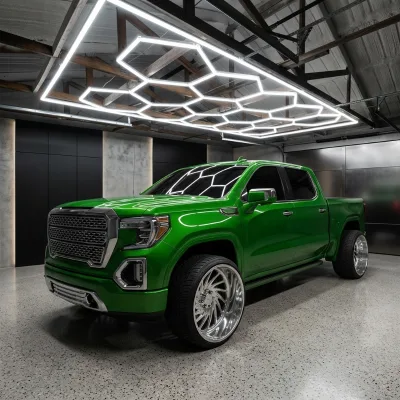
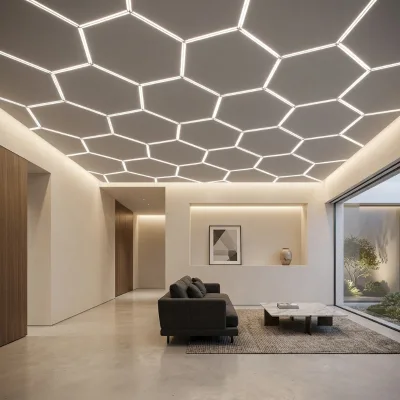
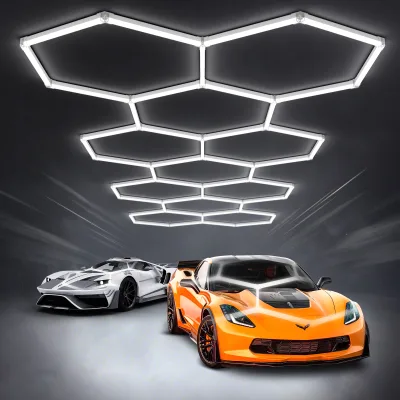
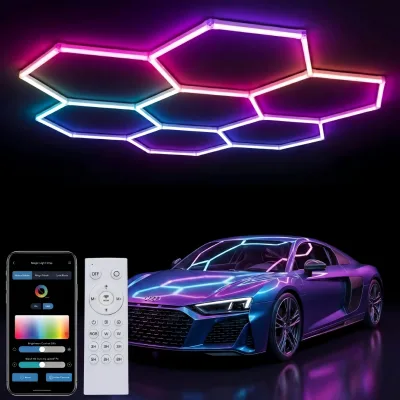




Comprehensive Sourcing Guide
Honeycomb Hexagon Led Lights Supplier Concentration and Factory Types
When buyers search for Honeycomb Hexagon Led Lights, the supplier pool on major B2B platforms tends to cluster in a small number of Chinese provinces. The current results point to Anhui as a sourcing location for this category, and buyers should treat provincial labels as a starting signal rather than proof of a factory address. Trading companies are also visible in this category; the supplied results include a company self-labeled as a Trading Company, which matters because trading intermediaries may consolidate hexagon light modules from several workshops while presenting a unified catalog. Neither model is automatically better, but each changes how you verify production capability and who controls tooling.
Beyond the observed Anhui presence, buyers should identify clusters themselves by sampling twenty to thirty listings and mapping the stated origins, then asking shortlisted companies directly whether they manufacture or trade. Ask for the plant address, the production line count for honeycomb-style ceiling lighting, and whether hexagon panel assembly, driver sourcing, and aging tests happen in-house. Suppliers in this category often list adjacent products such as LED channel letters, acrylic signs, and metal sign letters, which can indicate a signage-focused workshop adapting hexagon garage lights as a side line. That is acceptable, but it should shift your technical questions toward electrical safety and driver quality, since signage specialists may outsource the light engines that determine the lifespan of a hexagon honeycomb installation.
How to Verify Honeycomb Hexagon Led Lights Suppliers
Verification for this category starts with platform-recognized credentials. In the current results, one supplier displays a CTI verification badge, which is a third-party inspection identity check rather than a quality certification; buyers should still confirm whether that verification covered the legal entity behind the honeycomb hexagon LED listing. Company type is a second check: a self-declared trading company should be asked which factories produce the hexagon modules and whether you may audit them directly. Response behavior is a practical, observable signal; a displayed response time of roughly five hours indicates an active sales desk, but you should test it yourself with a technical question about driver brands, CRI, or CCT consistency across panels rather than a generic price request.
Documentation checks should match the claimed attributes. Several listings in this category state CCC, CE, and RoHS certifications, so request the certificate numbers and verify them against the issuing bodies, confirming the certificate holder name matches the company you are contracting with. Ask for a sample set, a short video of the panels lit at full output, and photometric data supporting the luminous flux figures in the listing. For claims such as a 50,000-hour lifespan or a two-year warranty, ask what the warranty covers—drivers, chips, and connectors often differ. Finally, cross-check the shipping origin on the packing specification against the stated province, because a mismatch between the listed origin and the actual dispatch point is a common sign of hidden subcontracting in this light-fitting category.
What to Compare Across Honeycomb Hexagon Led Lights Suppliers
Build a comparison sheet from attributes that platforms actually display, then fill gaps through direct questions. Observable dimensions in the current results include lead time, MOQ, response time, company type, location, verification status, and main product lines. One supplier shows a fifteen-day lead time and product MOQs ranging from a single set to ten sets, while others display MOQs of one set; treat these as a spread, not a norm, because results change and not every supplier publishes every attribute. Response time around five hours is fast by category standards, but only meaningful if the answers are substantive. Location matters most when the buyer needs factory visits; an Anhui address affects travel planning differently than an origin in a coastal cluster.
Product-level comparison should focus on the technical fields visible in listings. Compare input voltage ranges, with observed listings spanning AC110-265V and AC100-240V, along with CRI ratings of 90, color temperatures around 6000K, luminous efficacy figures from 100 to 110-120 lm/W, and lifespan claims of 50,000 hours. Certification sets differ too: some listings show CCC, CE, and RoHS together, others only RoHS and CE, which directly affects import eligibility in regulated markets. Customization is flagged as available on most current listings, so compare what "customized" means—panel count, frame finish, size, and light color are all mentioned. Price bands vary widely in this category, so quote identically specified configurations rather than comparing headline prices across different wattages and panel counts.
Common Honeycomb Hexagon Led Lights Sourcing Risks
The most frequent risk in this category is specification drift between the listing and the delivered goods. Listings may advertise Samsung-brand LED chips, CRI above 90, or a specific 6000K CCT, but substitute cheaper chips at production. Another structural risk is the trading-company layer: a supplier self-labeled as a trading company in the current results may have limited influence over driver and chip selection at the producing workshop, which complicates corrective actions when a batch arrives with flicker or color inconsistency across hexagon panels. Buyers should also watch for mismatched compliance claims, where CE or RoHS marks appear in listing attributes without transferable certificates naming the buyer's importing entity.
Logistics-driven risks are specific to this product shape. Honeycomb hexagon lights ship as assembled multi-panel units in relatively bulky cartons—one observed packing specification lists 123X35X30 cm—so under-declared dimensions and freight class errors are common cost traps. Fragile acrylic diffusers and aluminum frames are vulnerable to transit damage when sellers economize on packaging, even when a listing promises a "safe package." Warranty enforcement is a further risk: a stated two-year warranty is only useful if the supplier confirms in writing whether replacement parts, replacement units, or credits apply, and who pays freight for failed drivers. Finally, dimmer compatibility varies; at least one observed listing does not support dimming, so assume nothing and test with your installed control system before committing volume.
Honeycomb Hexagon Led Lights Regional Sourcing and Logistics
The confirmed regional signal in the current results is Anhui, China, which appears both as a company location and a product place of origin. Buyers unfamiliar with inland Chinese provinces should account for the logistics implications: departures may route through a coastal port, adding domestic trucking time before export. The observed fifteen-day lead time for one supplier is useful as a benchmark, but it presumably excludes ocean transit, so total delivery planning must add port dwell, sailing time, and destination customs. Buyers should ask each Anhui-based or other-province supplier to state the departure port and the ex-works versus FOB split of their quoted price, because these details vary more by province than buyers expect.
Packaging engineering deserves specific attention for honeycomb hexagon LED products. The observed carton dimension of 123X35X30 cm suggests long, flat assemblies that cube out freight quickly, so calculate chargeable weight, not just gross weight, before comparing quotes. Ask whether panels ship fully assembled or knocked down, because knock-down packing reduces damage and freight but shifts assembly labor to the buyer or installer. For sample-stage sourcing, air freight of long cartons is expensive, so request a single hexagon tile plus a driver as a sample rather than a complete multi-panel kit. Confirm working-temperature ratings against your installation environment—observed listings state -20 to 40 °C—which matters for unheated garages or exterior-adjacent spaces, and check IP-related claims carefully, since listing formats in this category are inconsistent and require clarification from the supplier.
Honeycomb Hexagon Led Lights Commercial Terms and Order Planning
Commercial planning for this category should start from the observed MOQ spread. Current listings show minimums of one set and ten sets depending on the product, which signals that pilot orders are feasible even before supplier negotiation. A sensible sequence is: one or two sample sets at list price, a small pilot batch to validate packaging and installability, then volume pricing tied to agreed specifications. Prices observed in the current results span roughly from the low tens of dollars up to the mid-hundreds per unit across differently configured hexagon products, so always fix panel count, driver specification, chip brand, CCT, and certification scope before requesting unit pricing. Ask whether customization fees apply to customized sizes or light colors, since several listings advertise customization as available.
Payment and milestone structure should reflect the verification findings. If the supplier is a verified trading company, consider escrow or platform-protected payment for the first orders, releasing funds against inspection of a randomly pulled carton. For repeat orders, a deposit-and-balance structure with a pre-shipment inspection clause is standard; tie the balance to passing checks on CRI, CCT consistency, and packaging dimensions. Contractually fix the warranty terms observed in listings—two years in at least one case—naming covered components and freight responsibility. Finally, plan reorders around the fifteen-day production benchmark by confirming capacity for replenishment during peak season, and reserve budget for spare drivers and connectors, which are the most commonly replaced parts in installed hexagon honeycomb systems.
(Word count: approximately 1,388)
FAQs
What is the price range for Honeycomb Hexagon Led Lights?
Prices typically range from $50 to $155 per unit depending on specifications. Some models start at $62 while others reach $125. Higher-end options with Samsung chips or specific certifications may cost more. Buyers should check individual listings for exact pricing based on quantity and customization needs.
What certifications are available for these LED lights?
Common certifications include CCC, CE, and RoHS. Some products also feature RoHS and CE compliance. These certifications ensure safety and environmental standards. Buyers should verify specific certificates for their target market. Customization is often available to meet regional regulatory requirements for professional lighting applications.
What is the minimum order quantity for these lights?
MOQs vary from 1 set to 10 sets. Some suppliers accept single sets for testing, while others require ten sets. This depends on the specific manufacturer and product model. Buyers seeking bulk discounts should confirm MOQs directly. Small orders are feasible for initial quality checks or small projects.
How long is the lead time for production?
Standard lead times are around 15 days. This duration applies to most standard orders. Customized products may require additional time. Buyers should confirm exact timelines with suppliers before placing orders. Production schedules can vary based on order volume and specific customization requirements.
Where are these honeycomb LED lights manufactured?
Manufacturing locations are primarily in Anhui, China. Suppliers in this region specialize in LED channel letters and signage. The origin is consistently listed as Anhui for many products. Buyers should verify specific factory locations for quality assurance. This region is known for lighting and signage production capabilities.
What is the lifespan of these LED hexagon lights?
Lifespan is typically 50,000 hours. This working lifetime ensures long-term reliability. The lights are designed for continuous use in garages or workshops. Buyers should consider this duration for maintenance planning. High-quality LEDs provide consistent performance over this extended operational period.