HRC58-60 Silding Guide Pillar Suppliers and Manufacturers
Compare 15 suppliers of HRC58-60 Silding Guide Pillar products using grounded dimensions such as material grades like 40CR and 20CR, hardness HRC 58-62, sizes, MOQs, lead times, and customization options. Review listed certifications and product evidence carefully, then request samples and quotes to verify each supplier before ordering.
Suppliers List

Youmude Precision Technology (Dongguan) Co., Ltd.
- Combined
- China Guangdong
- Lead time15 days
- Avg. response≤ 6h
Main productsPress Die Components, Plastic Mold Components, Automation Components, CNC Machining, Punches & Dies, Guide Pins & Bushings, Nitrogen Mould Spring, Oil-Free Slide Plates, Ejector Pin
Main marketsSouth America,Southeast Asia/ Mideast,East Asia(Japan/ South Korea),Europe,North America
Wenzhou Cungang Precision Technology Co., Ltd.
- Verified by TüVRheinland
- Manufacturer, Trading Company
- Lead time15 days
- Avg. response≤ 3h
Main productsGas Spring, Die Spring, Punch, Guide Pillar And Bush, Ejector Pin
Main marketsDomestic Market(45%), Southeast Asia(15%), North America(5%)
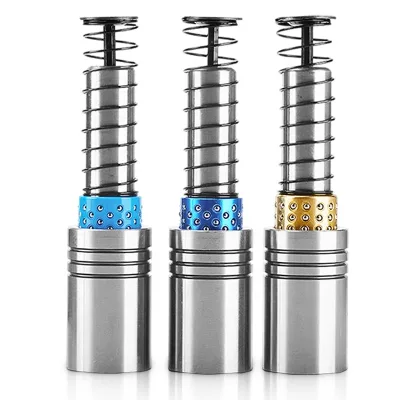
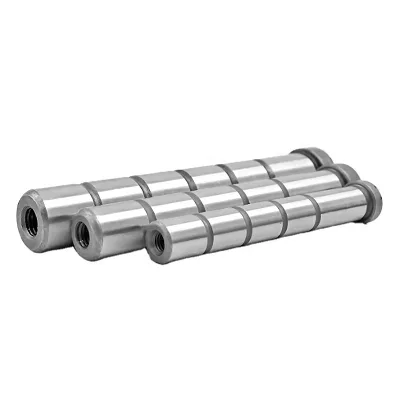
Long Life Independent Guide Pillar Standard High Tenacity CNC Guide Pillar for Industrial Molds
$2.78 - $4.64
MOQ: 10 pieces
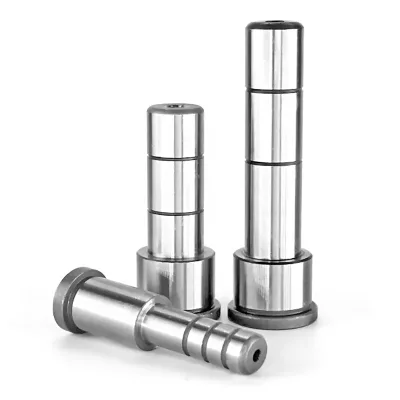
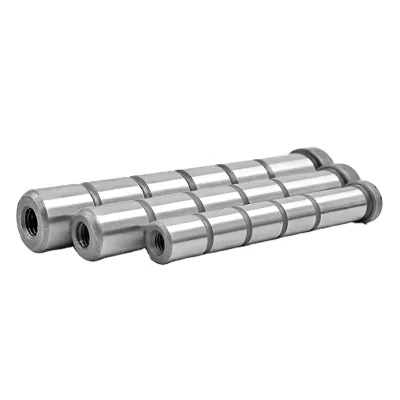
$1.89 - $2.88
MOQ: 10 pieces
Dongguan Tongsheng Metal Technology Co., Ltd.
- Verified by TüVRheinland
- Trading Company
- Lead time10 days
- Avg. response≤ 2h
Main productsInjection Molds, Stamping Dies, Injection Molding Parts, Stamping Parts, Rapid Prototyped Parts
Main marketsNorth America(60%), South America(10%), Western Europe(10%)

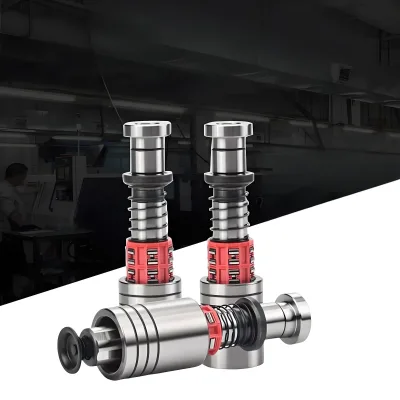
Needle Roller Guide Pillars Anti Rotation Guide Posts Heavy Duty RGKL Precision Mold Components
$2.90 - $9.90
MOQ: 2 Minimum
Ningbo Jiuyi Precision Mould Co., Ltd.
- Manufacturer
- Zhejiang, China
- Lead time10 days
- Avg. response≤ 3h
Main productsPunch,Mold,fastener,Stamped part,Hand tools
Main marketsDomestic Market(50.00%), Southeast Asia(13.00%), Mid East(10.00%), Central America(5.00%), Northern Europe(5.00%), North America(3.00%), Eastern Europe(3.00%), Western Europe(3.00%), Eastern Asia(2.00%), South Asia(2.00%), Africa(1.00%), Oceania(1.00%), Southern Europe(1.00%), South America(1.00%)

Wenzhou Jiangdun Metal Co., Ltd.
- Verified by SGS
- Combined
- China Zhejiang
- Lead time15 days
- Avg. response≤ 3h
Main productsMold Accessories, Gas Spring, Guide Pillar Guide Sleeve, Thimble, Punching Needle, Spring
Main marketsSouth America,Southeast Asia/ Mideast,Europe

High-Precision HRC58-60 Hardened 40cr Round-Headed Angle Guide Pillars for Plastic Die Casting Molds
$1.50 - $2.00
MOQ: 10 Pieces

Precision Engineered HRC58-60 Hardened Round Headed Angle Guide Pillars for Plastic Injection Mold
$1.50 - $2.00
MOQ: 10 Pieces

Standard High Rigidity Guiding Straight Stripper Guide Pin Guide Pillar for Press Die Components
$2.00 - $4.00
MOQ: 10 Pieces

$1.50 - $2.00
MOQ: 10 Pieces


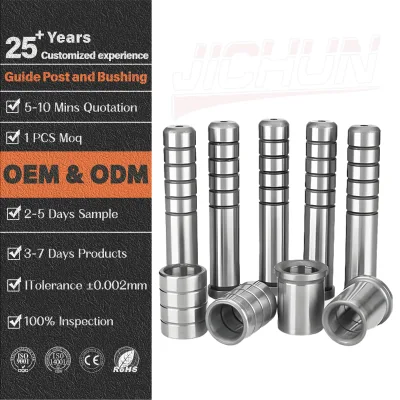
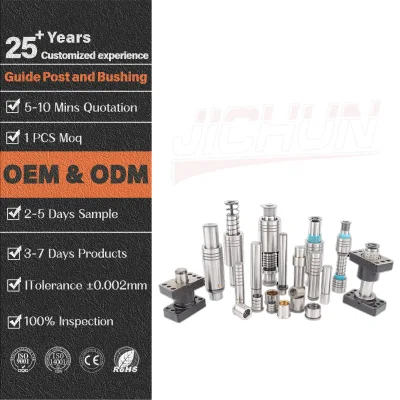
Dongguan Jichun Mold Standard Parts Co., Ltd.
- Verified by TüVRheinland
- Manufacturer, Trading Company
- Lead time7 days
- Avg. response≤ 2h
Main productsMold Accessories
Main marketsDomestic Market(30%), Eastern Asia(20%), Mid East(16%)
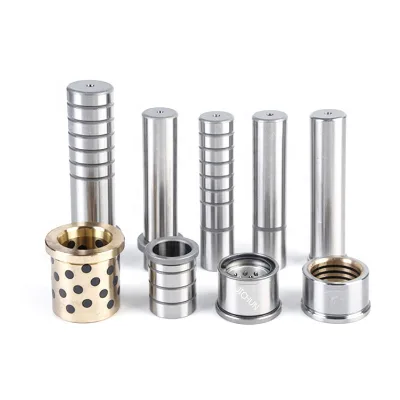
Mould Guide Post Set with Oil Type Sleeve Pillar for Metal Stamping Injection
$1.99 - $2.99
MOQ: 10 pieces
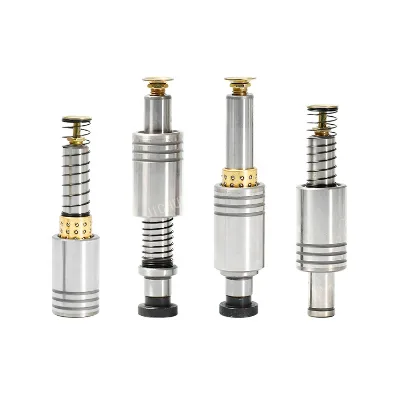
Punching Mold Die Pillar Sets Demountable Pillars Bushing Guide Guide Pillar Ball Bushing Guide Pins
$0.60 - $6.90
MOQ: 10 Minimum
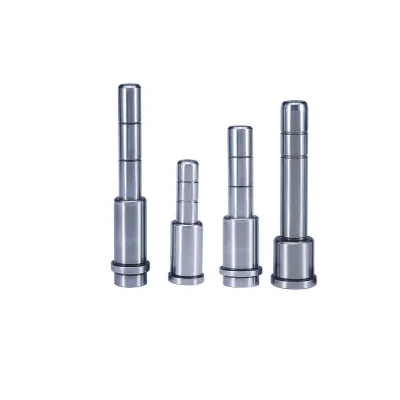
Precision Oil-Groove Guide Bush & Pillar Set for Injection Molds - OEM Available
$1.20 - $5.00
MOQ: 5 Minimum
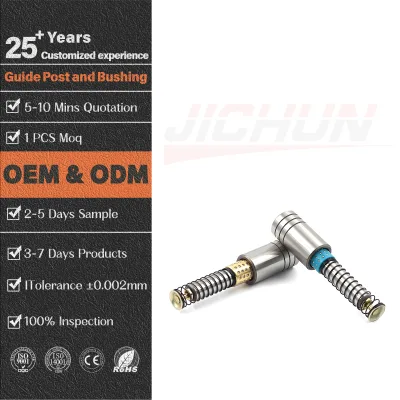

Cungang Mold Fittings Co., Ltd.
- Verified by SGS
- Combined
- China Zhejiang
- Lead time23 days
- Avg. response≤ 8h
Main productsGuiding Compnents Mold Part, Series Mold Parts with Guide Bush Punch, Excellent Aluminium Ballbearing Guide Post Ste
Main marketsAfrica,Southeast Asia/ Mideast,Europe,North America

Hot Selling Standard Customizable Long Service Life Suj2 HRC60 Sgp Sliding Guide Pillar Post
$5.00 - $8.00
MOQ: 100 Pieces

Factory Shipment Standard and Non-Standard Durable Suj2 HRC60 Sgp Sliding Guide Pillar Post
$5.00 - $8.00
MOQ: 100 Pieces

Cheap Wholesale High Quality Sgp Sliding Guide Pillars for CNC Processing
$3.89 - $5.89
MOQ: 10 Pieces

Dongguan Sinbolt Measuring Tools Co., Ltd.
- Manufacturer/Factory
- China Guangdong
- Lead time23 days
- Avg. response≤ 7h
Main productsPin Gauge, Plug Gauge, Block Gauge, Go/No Go Gauge, Ceramic Pin Gauge, Tungsten Steel Pin Gauge, Mold Accessories, Punch-Pin, Guide Pillars, Guide Pin
Main marketsSouth America,Eastern Europe,Mid East,North America,Southeast Asia,Eastern Asia,Oceania,Western Europe

Guide Pillar (straight guide post/shoulder-mounted guide post) /Guide Pin
$5.00 - $10.00
MOQ: 1 Pieces

Dongguan Gunri Precision Hardware Co., Ltd.
- Manufacturer, Trading Company
- guangdong, China
- Lead time8 days
- Avg. response≤ 2h
Main productsPress Die Component,Plastic Mold Component,Automation Component,machine processing parts,metal parts
Main marketsDomestic Market(73.00%), North America(5.00%), Western Europe(5.00%), South Asia(4.00%), Southeast Asia(4.00%), Eastern Europe(1.00%), Africa(1.00%), Southern Europe(1.00%), Northern Europe(1.00%), Central America(1.00%), South America(1.00%), Eastern Asia(1.00%), Mid East(1.00%), Oceania(1.00%)

Lishui Wangong Precision Machinery Co., Ltd.
- Verified by BV
- Combined
- China Zhejiang
- Lead time30 days
- Avg. response≤ 3h
Main productsLinear Shaft, Linear Guides, Linear Motion Systems, Ball Screw, Linear Slide Block, Linear Bearing, Cylinder Linear Rail, Roller Linear Guide, Linear Rail, Linear Guideway
Main marketsSouth America,Africa,Southeast Asia/ Mideast,East Asia(Japan/ South Korea),Europe,Australia,North America
Huizhou Zhenji Automation Technology Co., Ltd.
- Verified by Intertek
- Manufacturer, Trading Company
- Lead time10 days
- Avg. response≤ 2h
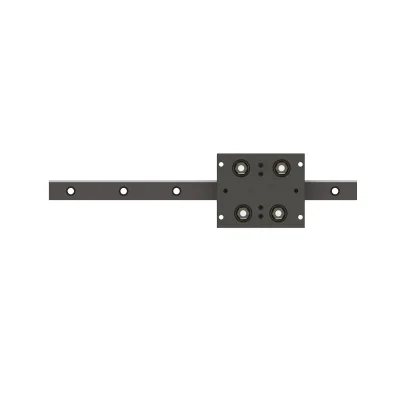
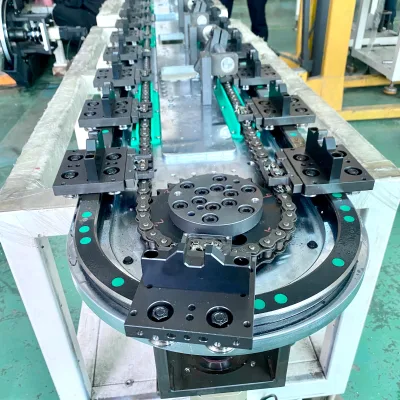
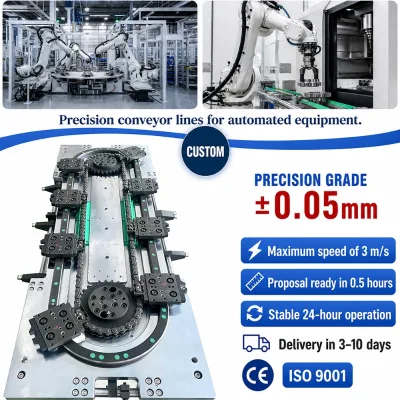
Main productsCircular Track Conveyor Line
Main marketsNorth America(40%), Southern Europe(30%), Southeast Asia(30%)
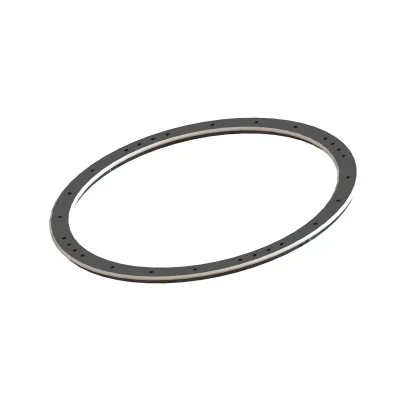
HRC55-58 High Precision Pressure Resistance 76mm Section Width Circular Guide Rail
$450.00 - $500.00
MOQ: 1 sets
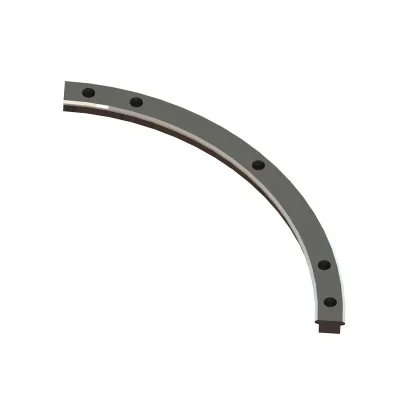
25mm Width 90 Degrees Rb25 Custom Diameter Circular Guideway Used in Production Lines
$463.07 - $514.52
MOQ: 1 sets
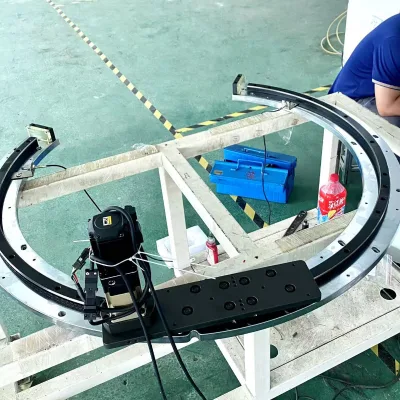

HENGERDA NEW MATERIALS (FUJIAN) CO., LTD.
- Trading Company,Manufacturer/Factory,Group Corporation
- China Fujian
- Lead time23 days
- Avg. response≤ 5h
Main productsRule Die Steel, Cutting Rules, Creasing Rules, Cermet Circular Saw Blade, Circular Saw Machine, Bandsaw Machine, Machining Centers, Carbide Band Saw Blade, Bi-Metal Band Saw Blade, Linear Guide
Main marketsSouth America,Eastern Europe,Mid East,North America,Southeast Asia,Eastern Asia,Oceania,Western Europe,Africa

Heavy Load Linear Guide Block with Durable Quality Various Size High Assembly Linear Guide
$10.00 - $40.00
MOQ: 10 Pieces

Linear Guide Block with Low Noise Smooth Movement High Assembly Linear Guide
$10.00 - $40.00
MOQ: 10 Pieces

Wholesale Price Linear Guide with High Rigidity High Assembly Linear Guide Block
$10.00 - $40.00
MOQ: 10 Pieces

High Assembly Linear Guide Block with Different Size High Precision Linear Guide
$10.00 - $40.00
MOQ: 10 Pieces

Durable Quality Linear Guideway Linear Guide with Square Block for CNC Machines
$10.00 - $40.00
MOQ: 10 Pieces

High Precision Linear Guideway High Assembly Linear Guide with Flange Square Block
$10.00 - $40.00
MOQ: 10 Pieces

Jiangsu Zcf Precision Technology Co., Ltd.
- Verified by BV
- Trading Company
- China Jiangsu
- Lead time30 days
- Avg. response≤ 17h
Main productsLinear Guide, Ball Screw, Lead Screw, Linear Module, CNC Ball Screw, Stainless Steel Guide Rail, Bearing Housing, Support Unit, Roller Linear Guide
Main marketsDomestic

Shenzhen Horizon Marina Co., Ltd.
- Manufacturer/Factory,Other
- China Guangdong
- Lead time38 days
- Avg. response≤ 12h
Main productsPontoon, Aluminium Pontoon, Steel Pontoon, WPC Decking, Mooring Cleat, Floating Dock, Gangway, Concrete Pontoon, PE Floating, Service Bollard
Shenzhen Hengtongxing Technology Co., Ltd.
- Verified by SGS Group
- Manufacturer, Trading Company
- Lead time10 days
- Avg. response≤ 2h
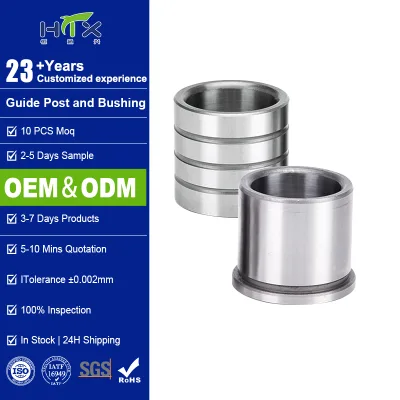
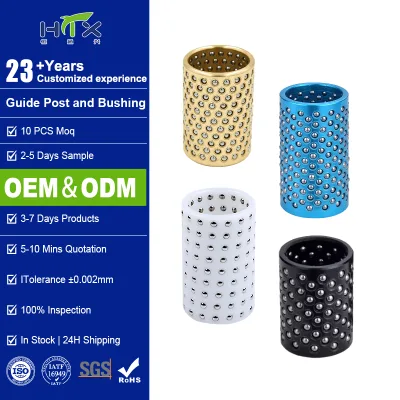
Main productsPunch Pins and Die Punches , Mold Spring, Guide Post and Bushing, Ejector Pin, Dowel Pin
Main marketsDomestic Market(71%), South America(5%), Southeast Asia(5%)




Comprehensive Sourcing Guide
HRC58-60 Silding Guide Pillar Supplier Concentration and Factory Types
When sourcing an HRC58-60 Silding Guide Pillar, the supplier landscape splits into two broad factory types: dedicated component manufacturers and combined manufacturer-trading companies. Manufacturers typically list main products built around die and mold hardware, such as gas springs, die springs, punches, guide pillars and bushings, and ejector pins, which signals in-house machining capability. Combined companies often carry a wider catalog spanning press die components, plastic mold components, automation components, CNC machining, punches and dies, guide pins and bushings, nitrogen mould springs, oil-free slide plates, and ejector pins. Both types can produce the hardness range you need, but the underlying capability profiles differ.
Geographically, the evidence in current listings points to two clusters: Guangdong and Zhejiang in China. Guangdong listings cover a broad fabrication portfolio, while Zhejiang listings emphasize CNC-machined guide pillars and pins with explicit material specifications, including 40CR steel hardened to HRC 58-62 and 20CR steel hardened to HRC 58-60. Where a location is not stated in a listing, buyers should not assume one; instead, ask the supplier directly for the city and province of the production site, cross-check with the shipment origin shown on quotations, and confirm whether the machining is done in-house or subcontracted. This matters because heat treatment to the HRC 58-60 window requires controlled process capability, and subcontracted hardening is a common source of hardness drift.
How to Verify HRC58-60 Silding Guide Pillar Suppliers
Verification should begin with third-party credentials visible on the platform listing. Some suppliers in this category carry a CE system certification, and some are verified by TüV Rheinland; note that others explicitly show no system certification at all, so a blank field should be treated as "unverified" rather than "incompliant." System certification is a baseline signal about management processes, not a product test, so it does not confirm that a specific guide pillar will arrive within HRC 58-60. Product-level claims such as "ISORoHS" shown in product attributes should be independently confirmed with certificate copies before relying on them.
The strongest verification tool is a documented hardness report on your own order. Ask each supplier to state the material grade they will actually use, the target hardness window, and the measurement method and sample size for outgoing inspection. Then request a first-article part and test it at an independent lab before mass production. Also verify whether customization is genuinely available: several listings state customization as an available product attribute and list ODM/OEM capability, but you should confirm dimensional tolerance, thread or shoulder details, and surface finish in writing. Finally, check response behavior during the quote stage. Listings show response times ranging from around three hours to just over five hours on average; a supplier that answers slowly during quoting will usually respond even more slowly during a hardness dispute or a shipment delay.
What to Compare Across HRC58-60 Silding Guide Pillar Suppliers
Build a comparison sheet with the dimensions actually displayed on listings rather than assumed ones. Useful fields include supplier type (manufacturer versus manufacturer-trading company or combined company), location, lead time, MOQ, average response time, system certification, third-party verification status, and R&D or customization capacity such as sample processing, graphic processing, customized-on-demand service, own brand, ODM, or OEM. Not every supplier publishes every field; record blanks as unknowns and close them by direct questioning, never by assuming the best value.
Then normalize the published numbers so they are comparable. Lead times vary meaningfully across listings in this category: one Guangdong supplier shows a general lead time of 15 days, while Zhejiang product-level listings show delivery windows of 7-10 days for step guide pillars and 7-15 days for guide pins and bushings. Confirm whether the quoted window covers only production or also heat treatment and finishing, since hardening and grinding are the steps most often omitted from headline figures. MOQs also differ: one listing shows a minimum order of just one piece, while others specify ten-piece minimums for standard and non-standard sizes. For a first trial order, a one-piece MOQ dramatically lowers qualification cost, but confirm whether unit pricing holds at larger volumes. Compare stated materials and hardness side by side, for example 40CR at HRC 58-62 versus 20CR at HRC 58-60, and weigh price quotes only after dimensions, material, hardness, and delivery scope are matched line by line.
Common HRC58-60 Silding Guide Pillar Sourcing Risks
The dominant risk in this category is hardness shortfall. Suppliers list hardened components with windows such as HRC 58-62 or HRC 58-60, but heat treatment is a batch process, and without an outgoing hardness report you cannot confirm the batch that ships to you. A related risk is material substitution: a listing may describe a pillar as 40CR or 20CR, yet the actual charge material can differ if the supplier buys bar stock from varying mills. Insist on material certificates and verify grades with spectrographic testing on first articles.
Dimensional and specification drift is the second cluster of risks. Many listings describe the same product loosely; one Guangdong listing even records "Metal" in a field labeled as the product standard, which is not a meaningful standard at all. Another listing flags both a "Plastic" product material and a "Steel" material in different attribute fields, an internal contradiction that signals careless listing data. Never rely on listing attributes for engineering decisions; use drawings with tolerances and a signed specification sheet. Trading-company intermediation is a further risk: when a combined manufacturer-trading company brokers the order, the machining and heat-treatment site may differ from the site you audited, weakening traceability. Finally, watch for generic catalog photos and stock titles such as "hot sales" or "modern design" listings; these are marketing framings, not engineering evidence, and they should carry no weight in supplier selection.
HRC58-60 Silding Guide Pillar Regional Sourcing and Logistics
Where location data is supplied, use it. The current listings place suppliers in Guangdong and Zhejiang, China. Guangdong offers a dense fabrication services environment, and its combined suppliers list broad mold-component catalogs, which is convenient if you want a single vendor to supply guide pillars alongside ejector pins, bushings, and springs. Zhejiang suppliers in these results present more granular engineering data on their products, including explicit material grades, hardness windows, CNC machining confirmation, and stated delivery windows of roughly seven to fifteen days, suggesting mature machining specialization in the province.
For logistics, look at what the listings actually disclose. Several Zhejiang products specify carton packing, sometimes with an inner plastic bag, and one lists a single gross weight around one kilogram and a small single-package size. Small, dense parts like guide pillars ship cheaply as cartons, but hardened steel surfaces are vulnerable to nicks and corrosion, so require protective end caps, rust-preventive oil, and sealed inner bags before shipment, and confirm the packing specification in the purchase contract rather than relying on the listing. Production sites in these provinces are inland or coastal in different degrees, so ask each supplier for the nearest consolidation port and the door-to-port transit mode they typically use, whether express, air, or sea freight. Because lead times shown range from roughly seven to fifteen days for production, add freight and customs time separately when planning, and never treat the production window as a delivery date.
HRC58-60 Silding Guide Pillar Commercial Terms and Order Planning
Commercial terms should be mapped to the verification stage of your project. Structure the first purchase as a qualification order: with MOQs as low as one piece on some listings and ten pieces on others, you can afford to buy a small sample quantity, run independent hardness and dimensional checks, and only then release a volume order. When comparing quotes, ask explicitly whether the unit price includes heat treatment, grinding, thread machining, inspection reports, and packing, because Zhejiang listings show published price ranges at the single-dollar level, and at such low unit values, small add-ons meaningfully change total cost. Avoid locking annual pricing before a hardness audit is passed.
Order planning should use the lead-time evidence as a starting point, not a guarantee. One Guangdong supplier shows a 15-day lead time, while product-level windows of 7-10 and 7-15 days appear for Zhejiang suppliers; confirm in each quotation whether those windows start from order confirmation, drawing approval, or receipt of payment, since the definition varies. If customization is offered, as several listings state, expect an additional drawing-review stage before the clock starts. Use escrow-style or platform payment protection where the marketplace offers it, and structure payments so a final balance is released only after incoming inspection. Plan a requalification cycle for repeat orders: heat-treatment batches change, so specify that each shipment include a hardness report, and retain golden samples from the approved first article for every future comparison.
FAQs
What does HRC58-60 hardness mean for a sliding guide pillar?
HRC58-60 is the Rockwell hardness range these guide pillars are hardened to, providing strong wear resistance for sliding contact in molds. Sellers typically list 40CR or 20CR steel pillars with hardness values like HRC 58-62 or HRC58-60. Because heat treatment affects lifespan, buyers should confirm hardness certificates or test reports before placing volume orders.
Which materials are commonly used for HRC58-60 sliding guide pillars?
The listed guide pillars are commonly made from 40CR and 20CR alloy steel, both of which support the HRC58-60 hardness range after heat treatment. 40CR is frequently used for step guide pillars, while 20CR appears in straight edge designs. Always confirm the exact steel grade and hardness testing method with the supplier for your application.
What is the typical MOQ when ordering guide pillars?
Minimum order quantities vary by listing. Some product listings show an MOQ of 10 pieces for step guide pillars, while other customized guide pillar listings allow orders starting from a single piece. Custom dimensions, coatings, or special hardness requirements often raise the minimum, so confirm the MOQ in writing before requesting a sample or quote.
How long does production and delivery usually take?
Lead times in current listings range from 7 to 10 days for 40CR step guide pillars and 7 to 15 days for threaded guide pins and bushes, while some suppliers state a 15-day lead time. Actual timing depends on quantity, customization, and shipping method, so ask each supplier to confirm production and transit time for your specific order.
Can guide pillars be customized to non-standard sizes?
Yes, customization is available. Listings describe standard and non-standard sizes, with one supplier offering diameters from 10 to 40 mm and lengths from 30 to 500 mm, and others stating customized sizes are supported. Provide your drawing with tolerances, hardness, and thread requirements, and confirm whether custom orders change the MOQ or lead time.
Do these guide pillars follow Hasco or Misumi standards?
Some listings reference Hasco and Misumi standards in their keywords and describe Misumi-standard threaded guide bushes, indicating familiarity with these mold base systems. However, standard compliance should be verified directly, since keyword references are not always certification. Request dimension drawings or a sample against your Hasco or Misumi specification before committing to a bulk purchase.
Which certifications should I verify before buying guide pillars?
Product listings mention ISO and RoHS on individual products, and one supplier carries CE system certification with TÜV Rheinland verification. Others show no system certification. Since factory-level credentials vary, ask each supplier for current certificates, hardness test reports, and material mill certificates, and verify their validity dates before finalizing a purchase agreement.
Where are these guide pillar suppliers located?
The suppliers offering these guide pillars are located in China, with listings indicating Guangdong and Zhejiang provinces. Both regions are established clusters for mold components and CNC machining services. Location affects shipping cost and transit time, so compare suppliers across both regions and confirm their nearest port and export experience during initial contact.