Candy Mold Suppliers and Manufacturers in China
Compare 15 verified Candy Mold suppliers in China and Fujian based on location, lead times, certifications, and response times. Review product specifications like ISO9001 and CE standards before contacting vendors for quotes; review the available evidence before requesting comparable quotations from suitable candidates.
Suppliers List

Shanghai Target Industry Co., Ltd.
- Verified by TUVRHEINLAND
- Combined
- China Shanghai
- Lead time30 days
- Avg. response≤ 8h
Main productsCake Production Machine, Biscuit Machine, Chocolate Machine, Candy Machine, Confectionery Machinery, Packing Machine, Marshmallow Machine, Candy&Biscuit&Chocolate Mould, Cookie Machine, Food Machine
Main marketsSoutheast Asia/ Mideast,North America


Hard Candy and Jelly Gummy Candy Stainless Steel Mould and Silicone Mould
$17.00 - $20.00
MOQ: 1 Pieces

Jinjiang Mo Li Jiang Xin Technology Co., Ltd.
- Trading Company
- Fujian, China
- Lead time0 days
- Avg. response≤ 2h
Main productschocolate mold,candy mold,Silicone mold,Pouring aluminum,cake mold
Main marketsSouth Asia(10.00%), Africa(10.00%), Southeast Asia(10.00%), Central America(10.00%), South America(10.00%), North America(10.00%), Domestic Market(5.00%), Oceania(5.00%), Southern Europe(5.00%), Northern Europe(5.00%), Eastern Europe(5.00%), Western Europe(5.00%), Eastern Asia(5.00%), Mid East(5.00%)
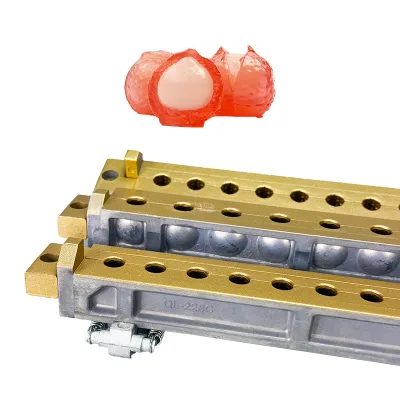
Stereoscopic Opening New Mold for Round Shape Hard and Gummy Gold Candy for Candy Machine
$14.00 - $17.00
MOQ: 100 pieces
$12.00 - $15.00
MOQ: 100 pieces
$14.00 - $17.00
MOQ: 100 pieces
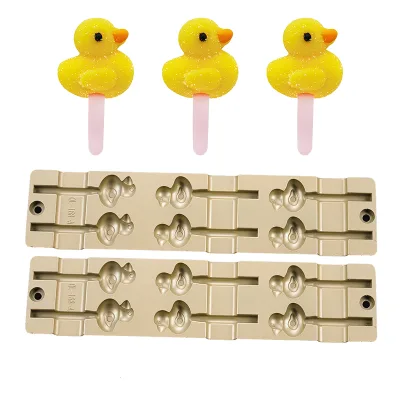
$12.00 - $15.00
MOQ: 100 pieces
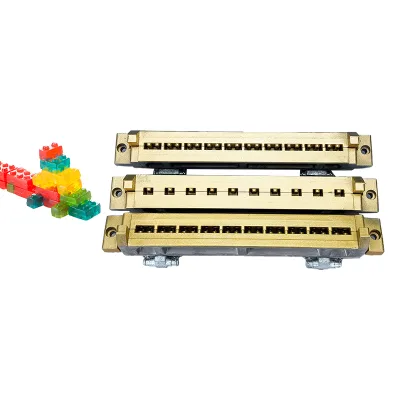

Ningbo Lufeng Mould Mechanical Co., Ltd.
- Manufacturer, Trading Company
- Zhejiang, China
- Lead time20 days
- Avg. response≤ 3h
Main productsCandy mould,Aluminum die casting,Alcohol furnace,Chocolate molds,Candy production line
Main marketsSouth America(12.50%), Northern Europe(12.30%), Southern Europe(12.00%), North America(11.80%), Southeast Asia(10.00%), Domestic Market(10.00%), Eastern Europe(8.60%), Eastern Asia(6.50%), Oceania(5.20%), Western Europe(2.80%), South Asia(2.80%), Central America(2.50%), Africa(2.00%), Mid East(1.00%)
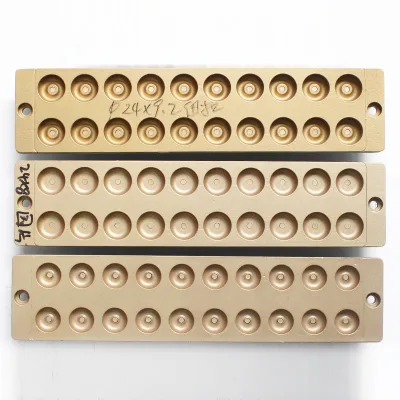
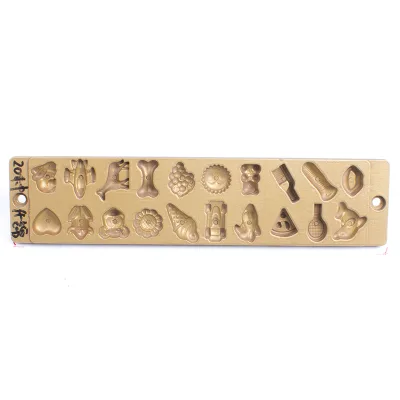
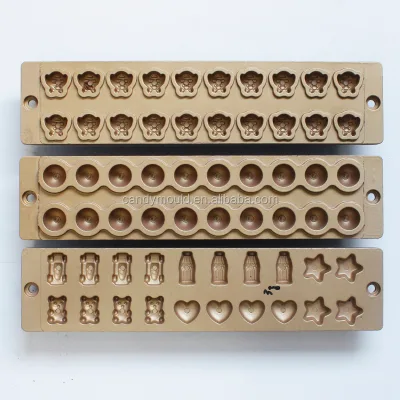
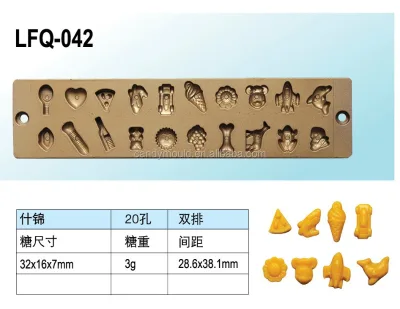
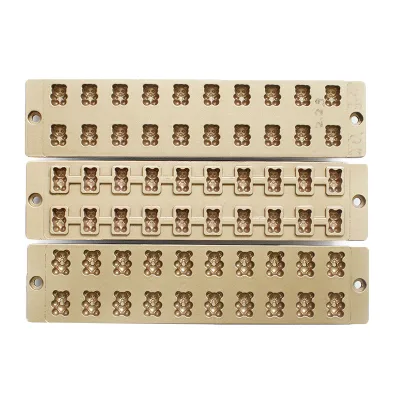
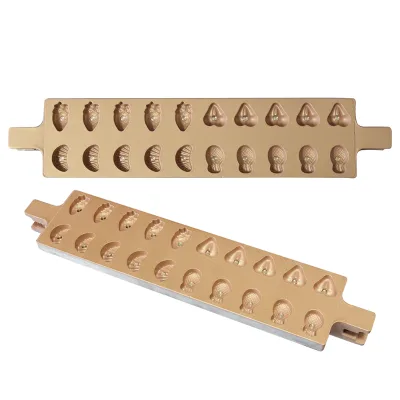
Factory Great-selling Interesting Gummies Mold and Candy Mold Towards the Foreign Countries
$10.00 - $12.00
MOQ: 100 Minimum

Chengdu LST Science and Technology Co., Ltd.
- Verified by TUVRHEINLAND
- Manufacturer/Factory
- China Sichuan
- Lead time90 days
- Avg. response≤ 6h
Main productsChocolate Machine, Chocolate Making Machine, Chocolate Equipment, Chocolate Production Line, Silicone Mold, Chocolate Mold, Chocolate Tempering Machine, Gummy Candy Making Machine, Silicone Mould, Jelly Candy Making Machine
Main marketsSouth America,Eastern Europe,Mid East,North America,Southeast Asia,Eastern Asia,Oceania,Western Europe,Africa

Ningbo Pack Imp. & Exp. Co., Ltd.
- Verified by SGS
- Trading Company,Manufacturer/Factory
- China Zhejiang
- Lead time30 days
- Avg. response≤ 8h
Main productsAluminum Jar, Aluminum Bottle, Tin Box, Glass Dropper Bottle, Glass Tube, Paper Box, Paper Tube, Plastic Pop Top Tube, Plastic Bottle, Silicone Gummy Mold
Main marketsSouth America,Eastern Europe,Mid East,North America,Southeast Asia,Eastern Asia,Oceania,Western Europe,Africa

YONGKANG HOMESHINE SILICONE PRODUCTS CO., LTD.
- Combined
- China Zhejiang
- Lead time23 days
- Avg. response≤ 24h
Main productsGlass Lid
Main marketsSouth America,East Asia(Japan/ South Korea),Domestic,Europe,North America

Yuyao Xianghao Mold Technology Company Limited
- Verified by BV
- Trading Company
- China Zhejiang
- Lead time30 days
- Avg. response≤ 9h
Main productsInjection Mold, Plastic Mold, Injection Molding, Rapid Prototyping, 3D Pritting, Manhole Cover Mold, Silicone Rubber Mould, Wire Rack, Car Air Compressor, LED Light
Main marketsNorth America


MOQ: 1 Pieces

Dongguan Kerun Rubber Products Co., Ltd.
- Verified by TUVRHEINLAND
- Combined
- China Guangdong
- Lead time15 days
- Avg. response≤ 3h
Main productsSilicone Baby Products, Silicone Kitchenware, Silicone Watch Band, Silicone Mold, Silicone Baking Supplies, Silicone Pet Supplies, Silicone Promotion Gifts, Rubber Product, Silicone Teether, Silicone Feeding Set
Main marketsDomestic


20 Hole Soft Candy Serpentine Silicone Resin Mold Silicon Chocolate Mold Soft Sweet Candy Resin Mold
$0.58 - $0.74
MOQ: 100 Pieces

$0.51 - $0.68
MOQ: 20 Pieces

$0.32 - $0.66
MOQ: 100 Pieces


Yangzhou Holly International Co., Ltd.
- Verified by BV
- Combined
- China Jiangsu
- Lead time15 days
- Avg. response≤ 15h
Main marketsSoutheast Asia/ Mideast,East Asia(Japan/ South Korea),Domestic,Europe

$0.28 - $0.38
MOQ: 500 Pieces

Mini 48 Cavity Donut Silicone Mold Gummy Mold Mini Donut Ring Chocolate Candy Molds
$0.35 - $0.50
MOQ: 100 Pieces
Shanghai Junyu Food Machinery Co., Ltd.
- Verified by TüVRheinland
- Manufacturer, Trading Company
- Lead time30 days
- Avg. response≤ 5h
Main productsBiscuit Equipment, Candy Equipment, Cake Equipment, Chocolate Equipment, Gummy Candy Production Line
Main marketsNorth America(15%), Domestic Market(15%), Mid East(10%)
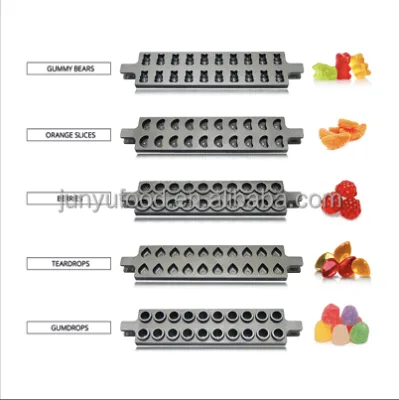
All Kinds of Candy Molds for Gummy and Hard Candies Stainless Steel Mold and Silicone Mould
$9000.00 - $30000.00
MOQ: 1
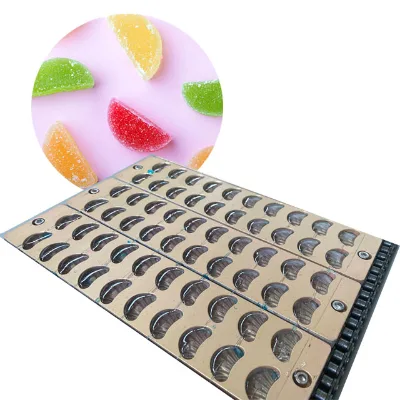

Ningbo D & R Machinery Co., Ltd.
- Verified by BV
- Combined
- China Zhejiang
- Lead time120 days
- Avg. response≤ 17h
Main productsCandy Machine, Candy Making Machine, Chocolate Machine, Layer Cake and Swiss Roll Plant, Starch Mogul Plant, Lollipop Machine, Hard Candy Machine, Candy Packing Machine, Candy Bar Production Line, Jelly Candy Depositing Machine
Main marketsAfrica,Southeast Asia/ Mideast,Europe,North America


Professional Silicon Toffee Mould Durable Moulds Design for Toffee Candy Machine
$100.00
MOQ: 1 Pieces

Professional Silicon Toffee Mould Durable Moulds Design for Toffee Candy Machine
$100.00
MOQ: 1 Pieces

Ningbo Youlu Machinery Technology Co., Ltd.
- Verified by BV
- Combined
- China Zhejiang
- Lead time30 days
- Avg. response≤ 17h
Main productsCandy Machine, Chocolate Machine, Candy Packing Machine, Chocolate Packing Machine, Hard Candy Machine, Toffee Candy Making Machine, Candy Production Line, Lollipop Production Line
Main marketsNorth America

Guangdong Tangshihoa Industry and Trade Co., Ltd.
- Verified by TUVRHEINLAND
- Combined
- China Guangdong
- Lead time23 days
- Avg. response≤ 12h
Main productsCake Decoration
Main marketsSoutheast Asia/ Mideast

Jinjiang Xiexiang Trade Corp., Ltd.
- Verified by CTI
- Trading Company
- China Fujian
- Lead time30 days
- Avg. response≤ 20h
Main productsCandy, Confectionary, Sweet, Chocolate, Snack, Food, Bubble Gum, Lollipop, Milk Candy, Spray Candy
Main marketsAfrica,Southeast Asia/ Mideast,East Asia(Japan/ South Korea)


MOQ: 1000 Boxes

MOQ: 1000 Boxes

MOQ: 2000 Boxes

MOQ: 1000 Pieces

MOQ: 2000 Boxes

- Verified by TUVRHEINLAND
- Trading Company,Manufacturer/Factory,Other
- China Guangdong
- Lead time0 days
- Avg. response≤ 15h
Main productsCandy, Lollipop, Biscuit, Chewing Gum, Olivary Gum, Pectol Mint Candy, Bubble Gum, Toy Candy, Hard Candy, Jelly


MOQ: 500 Boxes


Comprehensive Sourcing Guide
Candy Mold Supplier Concentration and Factory Types
Current data indicates a concentration of suppliers in China, specifically within Shanghai and Fujian regions. These locations host a mix of combined manufacturing entities and trading companies offering candy molds. Shanghai-based suppliers often list extensive product lines including cake production machines, biscuit machines, and chocolate machinery alongside specific candy molds. This suggests a cluster where industrial food processing equipment and specialized molds are developed in proximity. Buyers should verify if a supplier is a factory or a trading company by checking their company type designation, as this impacts direct communication with production lines.
Fujian suppliers also appear in the results, offering aluminum candy molds and silicone options. The presence of trading companies in these regions means they may aggregate products from various factories rather than manufacturing everything in-house. Combined companies in Shanghai typically offer ODM and OEM capabilities, allowing for custom branding and design modifications. When evaluating concentration, look for suppliers listing "Combined" as their type, which often implies broader capacity for both production and design services. Always confirm the specific origin listed for each product, as some items may originate from different facilities even within the same city.
How to Verify Candy Mold Suppliers
Verification is critical when sourcing candy molds, and several data points help confirm supplier legitimacy. Some suppliers display TUVRHEINLAND verification status, which serves as a third-party validation of their business operations. Additionally, system certifications like ISO9001:2015 are frequently cited in supplier profiles, indicating adherence to quality management standards. Buyers must cross-reference these claims with the specific product attributes, as some listings show certifications like ISOCE or ISOSAMET alongside CE standards. It is essential to request current certificates rather than relying solely on profile badges, as these documents verify the specific scope of the supplier's quality control.
Response time is another key metric for assessing supplier reliability and engagement levels. Data shows response times varying significantly, with some suppliers responding in approximately two hours while others take over seven hours. A faster response time often correlates with better communication channels and more active sales teams. Buyers should also check for escrow availability to ensure financial protection during the transaction. While not all suppliers explicitly list escrow options in the initial data, the presence of verified status often implies a platform-backed transaction safety net. Always ask for proof of these verifications before placing any deposit to ensure the supplier's claims are current and accurate.
What to Compare Across Candy Mold Suppliers
Comparing suppliers requires analyzing specific operational metrics such as lead time, minimum order quantity, and pricing structures. Lead times in the current data range from zero days to thirty days, indicating significant variation in production capacity and inventory levels. Some suppliers offer immediate availability for certain molds, while others require a month for manufacturing. Minimum order quantities also differ, with some listings showing an MOQ of one unit, while others require orders of 100 units or more. Buyers must align these constraints with their own inventory needs and budget to avoid overstocking or facing unfulfillable orders.
Pricing and customization options are equally vital for comparison. Product prices for candy molds vary widely, with some items listed at $15 while others reach $2,200 depending on material and complexity. Materials range from stainless steel to aluminum, directly influencing cost and durability. Customization is frequently available, with many suppliers offering tailored designs and branding. However, buyers should verify if customization affects the lead time or increases the minimum order quantity. Comparing the power source, automatic grade, and application fields across different suppliers helps identify the most suitable equipment for specific production lines. Always request detailed quotes that break down costs for materials, customization, and shipping to make an informed decision.
Common Candy Mold Sourcing Risks
One significant risk involves discrepancies between claimed certifications and actual product standards. While many suppliers list ISO9001 or CE certifications, some product attributes show conflicting or less recognized standards like ISOCE or ISOSAMET. Buyers must ensure that the certification applies to the specific mold model being purchased, as a factory may be certified for general machinery but not for specific mold components. Another risk is the variation in material quality, such as the difference between stainless steel and aluminum molds. Without clear specifications, buyers might receive molds that do not meet food safety requirements or durability expectations for their specific candy types.
Logistics and packaging risks also exist, particularly regarding the condition of goods upon arrival. Some suppliers use wooden cases for packing, which is generally robust, but others may use less protective packaging for smaller items. The warranty period, often listed as six months, is another area where claims may vary. Buyers should verify if the warranty covers manufacturing defects or only specific parts of the mold. Additionally, the "New" condition of products must be confirmed, as some listings might imply refurbished or used items. Always request photos of the actual packaging and product before shipment to mitigate the risk of damage or receiving incorrect items.
Candy Mold Regional Sourcing and Logistics
Sourcing from China, particularly Shanghai and Fujian, offers access to a dense network of manufacturers but requires careful logistics planning. Shanghai suppliers often handle complex machinery and molds, while Fujian focuses on aluminum and silicone options. The distance between these regions and international ports can impact shipping times and costs. Buyers should verify the specific port of origin for each product, as some items may ship from different locations within the same province. Understanding the regional logistics capabilities helps in estimating delivery times accurately and planning inventory replenishment schedules.
Shipping methods and packaging standards vary by region and supplier. Wooden cases are commonly used for larger molds and machinery, providing protection during transit. However, smaller items might be packed differently, requiring buyers to confirm packaging details. The lead time of 30 days for some suppliers includes production and potential shipping delays. Buyers should factor in customs clearance times and local delivery schedules when planning their orders. It is advisable to discuss shipping terms explicitly, such as FOB or CIF, to understand who bears the risk during transit. Clear communication about logistics ensures that the supply chain remains efficient and that products arrive in good condition.
Candy Mold Commercial Terms and Order Planning
Commercial terms for Candy Mold orders often include specific payment structures and warranty conditions. While some suppliers offer flexible terms, others may require full payment upfront or use escrow services for security. The warranty period, typically six months, should be clearly defined in the contract to cover potential manufacturing defects. Buyers must also consider the impact of customization on pricing and lead time. Customized molds often require longer production cycles and higher minimum order quantities. Understanding these terms helps in budgeting and managing cash flow effectively throughout the procurement process.
Order planning should account for the variability in lead times and minimum order quantities. Some suppliers offer immediate delivery for standard molds, while custom orders may take up to 30 days. Buyers should plan their production schedules to accommodate these variations, ensuring they have sufficient stock to meet demand. It is also important to verify the supplier's capacity to handle large orders without compromising quality. Regular communication with the supplier regarding production status can help mitigate delays. By carefully planning orders and understanding commercial terms, buyers can establish a reliable supply chain for their Candy Mold needs.
FAQs
What materials are candy molds commonly made from?
The most common Candy Mold materials are food-grade silicone, aluminum, and stainless steel. Silicone suits gummies, chocolates, and handmade confections because it releases products easily, while aluminum is typical for die-cast hard candy molds used with depositing machines. Listings often list stainless steel, sometimes with coatings, so confirm the exact grade and food-contact compliance before ordering.
What is the typical MOQ for candy molds?
MOQs on current listings vary widely, from as low as one piece for stainless steel or silicone molds to around 100 pieces for lower-priced molds. Aluminum molds priced in the hundreds of dollars are usually quoted per single piece. Always confirm the MOQ in writing, since it can change with customization level, size, and material choices.
How much do candy molds cost from Chinese suppliers?
Listed prices range from roughly twelve to fifteen dollars for basic aluminum molds, seventeen to twenty dollars for stainless steel and silicone molds, up to 1,800–2,200 dollars for larger aluminum gummy molds suited to production lines. Final pricing depends on size, shape complexity, material, and customization, so request a tailored quotation for your specific design.
Can suppliers customize Candy Mold shapes and sizes?
Yes, customization is widely offered. Many suppliers state that custom mold designs are available, including 2D, 3D, and 4D shapes, custom dimensions, and new design shapes for hard and jelly candies. Provide drawings or sample references, confirm die-casting feasibility, agree on tooling fees, and check expected tolerances before confirming the production order.
What certifications should I check when sourcing candy molds?
Look for CE and ISO9001 certification claims on the product listing, and verify that certificates are current and issued for the actual products you order. Some suppliers also hold ISO9001:2015 system certification and third-party verification. Ask for certificate copies, confirm scope, and clarify food-contact material compliance, which is often more critical than the machine-level certificates alone.
How long does production and shipping of candy molds take?
Lead times on verified listings range from around 30 days for mold suppliers combining manufacturing with trading, while some trading companies list much shorter turnaround. Confirm the lead time in writing before paying, including whether tooling, sampling, and quantity affect the schedule. Factor in shipping time and customs clearance separately when planning your production calendar.
Where are most Candy Mold suppliers located in China?
Current listings point to Shanghai and Fujian as active sourcing regions. Shanghai suppliers tend to be combined manufacturers offering candy machines, biscuit and chocolate equipment, and molds, while Fujian trading companies focus on aluminum die-cast candy molds. Match the supplier type to your needs: manufacturers suit large orders, trading companies often respond faster on smaller ones.
How can I judge a Candy Mold supplier's reliability before ordering?
Check verification badges such as third-party platform verification, and review response times, which currently range from about two hours to under eight hours on listed suppliers. Request product certifications, ask for a sample, and confirm warranty terms, which some suppliers state as six months. Compare several suppliers on these points rather than relying on a single listing.