Metal Forging Machinery Air Hammer Suppliers and Manufacturers
Source Metal Forging Machinery Air Hammer from 11 verified suppliers in China. Compare lead times, MOQs, certifications, and prices to find the right fit. Contact suppliers directly to request quotes and verify specifications; review the available evidence before requesting comparable quotations from suitable candidates.
Suppliers List

TENGZHOU MILLART MACHINE TOOL CO., LTD.
- Trading Company,Manufacturer/Factory
- China Shandong
- Lead time23 days
- Avg. response≤ 8h
Main productsCNC Machining Center, CNC Lathe Machine, Milling Machine, Lathe Machine, Drilling Machine, Sawing Machine, Grinding Machine, Sheet Metal Machine, Tube Profile Bending Machine, Press and Punching
Main marketsSouth America,Eastern Europe,Mid East,North America,Southeast Asia,Eastern Asia,Oceania,Western Europe,Africa

Metal Forging Machinery Air Hammer C41-75g C41-150g, Pneumatic Air Forging Hammer
$4600.00 - $5300.00
MOQ: 1 Pieces


C41-40kg C41-55kg Air Hammer, Pneumatic Air Forging Hammer, Press and Punching Machine
$2600.00 - $2800.00
MOQ: 1 Pieces

Zaozhuang Shenghuan Cnc Machine Co., Ltd.
- Verified by TUVRHEINLAND
- Trading Company,Manufacturer/Factory
- China Shandong
- Lead time38 days
- Avg. response≤ 6h
Main productsCNC Lathe Machine, CNC Machining Cener, CNC Milling Machine, Milling Machine, Lathe Machine, Band Saw Machine, Surface Grinding Machine, Drilling Machine
Main marketsSouth America,Eastern Europe,Mid East,North America,Southeast Asia,Eastern Asia,Oceania,Western Europe,Africa

Industrial C41-100kg Air Hammer Metal Forging Machinery Split Air Hammer
$2500.00 - $10000.00
MOQ: 1 Pieces

Air Hammer for Forging Metal C41-16kg/20kg/25kg/40kg Air Power Forging Hammer
$2200.00 - $3000.00
MOQ: 1 Pieces

Air Hammer for Forging Metal C41-16kg/20kg/25kg/40kg Monomer Type Metal Air Forging Hammer Machine
$2200.00 - $3000.00
MOQ: 1 Pieces

Metal Pneumatic Air Power Forging Hammer Machine C41-75kg Air Power Hammer for Sale
$2500.00 - $10000.00
MOQ: 1 Pieces

$2200.00 - $3000.00
MOQ: 1 Pieces

Metal Air Forging Hammer Machine C41-20kg China High Quality Air Hammer Machine
$2200.00 - $3000.00
MOQ: 1 Pieces

Henan Rowdai Machinery Equipment Co., Ltd.
- Verified by SGS
- Trading Company
- China Henan
- Lead time15 days
- Avg. response≤ 2h
Main productsElectric Tapping Machine, Machining Center, Gear Hobbing Machine, Surface Grinding Machine, Band Saw Machine, Drilling Machine, Milling Machine, Lathe Machine, CNC Machine Tool, Bending Machine
Main marketsSouth America,Africa,Southeast Asia/ Mideast,Europe

Industrial Pneumatic C41-75kg Air Hammer Metal Forging Machinery Split Air Hammer
$1400.00 - $1800.00
MOQ: 1 Pieces

Automatic Metal Forging-Air Forging Hammer Durable Motor Blacksmith Air Hammer
$1600.00 - $2200.00
MOQ: 1 Pieces


Air Forging Hammer Manufacturer Metal Hammer Forging Machines C41-16kg
$2400.00 - $2800.00
MOQ: 1 Pieces

Hot Sale Metal Forging Machinery Industrial Pneumatic 20kg 25kg 40kg Air Hammer
$1600.00 - $2200.00
MOQ: 1 Pieces


Shandong Dechang Machinery Co., Ltd.
- Verified by SGS
- Trading Company
- China Shandong
- Lead time30 days
- Avg. response≤ 3h
Main productsCNC Lathe, Vertical Machining Center, Lathe, Milling Machine, CNC Machining Center, Band Saw Machine, Drilling Machine, Surface Grinding Machine
Main marketsSouth America,Southeast Asia/ Mideast,Europe

Metal Electric Power Air Pneumatic Forging Hammer C41-20kg Air Hammer
$1000.00 - $5000.00
MOQ: 1 Pieces


Shanghai Shenji International Co., Ltd.
- Verified by BV
- Trading Company,Manufacturer/Factory
- China Shanghai
- Lead time23 days
- Avg. response≤ 20h
Main productsEngine Rebuilding, Machine Tools, Auto Maintenance, Lathe, Grinder, Metal Forming Machine, Grinding Machine, Honing Machine, Boring Machine, Measuring Instruments
Main marketsSouth America,Eastern Europe,Mid East,North America,Southeast Asia,Eastern Asia,Oceania,Western Europe,Africa

Shandong Shanshu Cnc Machine Tool Co., Ltd.
- Combined
- China Shandong
- Lead time15 days
- Avg. response≤ 1h
Main productsCNC Lathe, Band Saw, Drilling Machine
Main marketsDomestic


Sdcnc Air Hammer Machine Power Hammer Forging Machine Blacksmith Air Machine Forging Machine
$4250.00 - $5680.00
MOQ: 1 Pieces

Sdcnc Pneumatic Forging Press Power Hammer Air Hammer for Forging Machine
$1850.00 - $2880.00
MOQ: 1 Pieces

C41-75kg Air Power Forging Hammer Machine Hot Metal Pneumatic Machine
$4250.00 - $5680.00
MOQ: 1 Pieces

Hot Sale Separate Type Metal Pneumatic Air Power Forging Hammer Machine
$2580.00 - $3220215.00
MOQ: 1 Pieces

C41-25kg Air Power Hammer Metal Iron Forge Punching Air Pneumatic Hammer Machine
$2580.00 - $3220.00
MOQ: 1 Pieces
Henan Jane Machinery Co., Ltd.
- Manufacturer, Trading Company
- Henan, China
- Lead time0 days
- Avg. response≤ 1h
Main productsroof tile making machine,cz purlin making machine,light steel keel making machine,metal embossing machine,metal embossing machine
Main marketsSouth America(30.00%), Southeast Asia(20.00%), Northern Europe(10.00%), Central America(10.00%), North America(10.00%), Eastern Europe(10.00%), Western Europe(5.00%), Africa(5.00%)

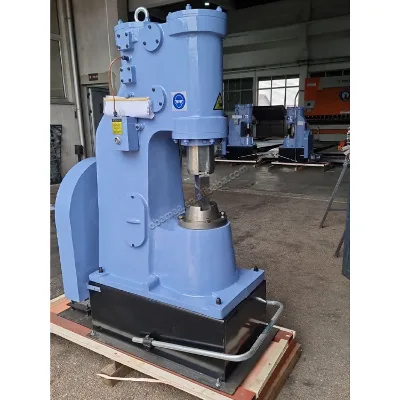
Automatic Air Hammer Backsmith Power Forging Hammer With Motor for Sale C41-75
$4800.00 - $5000.00
MOQ: 1 sets
$1700.00 - $1900.00
MOQ: 1 sets

Shandong Luzhong Machine Tool Co., Ltd.
- Verified by TUVRHEINLAND
- Combined
- China Shandong
- Lead time30 days
- Avg. response≤ 2h
Main productsCNC Lathe Machine, CNC Milling Machine, Lathe Machine, Milling Machine, Drilling Machine, Drilling & Milling Machine, Shaper/Slotting Machine, Band Saw Machine, Boring Machine, Grinder Machine
Main marketsSouth America,Africa,Southeast Asia/ Mideast,East Asia(Japan/ South Korea),Europe,Australia,North America


Small Air Hammer Machine C41-25kg power pneumatic hammer metal forging hammer
$2600.00 - $2800.00
MOQ: 1 Pieces


TENGZHOU HOYONG MACHINERY CO., LTD
- Verified by TUVRHEINLAND
- Trading Company
- China Shandong
- Lead time30 days
- Avg. response≤ 10h
Main productsMirror, Glass, Lathe Machine, Milling Machine, Drilling Machine, Grinding Machine, Sawing Machine, Press Machine, Sheet Metal Machines, Garage Equipment
Main marketsAfrica

Zhejiang Mingwen Intelligent Technology Co., Ltd.
- Verified by TUVRHEINLAND
- Trading Company,Manufacturer/Factory
- China Zhejiang
- Lead time60 days
- Avg. response≤ 4h
Main productsCNC Special Machine, CNC Lathe, Rotary Transfer Machines, Hot Forging Press Machines, Brass Rod Casting Machines, Hydraulic Press Machine, Vmc Machining Center
Main marketsSouth America,Eastern Europe,Mid East,North America,Southeast Asia,Oceania,Western Europe,Africa

Tengzhou Hoton Machinery Co., Ltd.
- Verified by TUVRHEINLAND
- Trading Company
- China Shandong
- Lead time30 days
- Avg. response≤ 7h
Main productsCNC Lathe Machine, Gap Bed Lathe, Turret Milling Machine, Milling Drilling Machine, Surface Grinders, Band Saw, Radial Drilling Machine, Sheet Metal Bending Machine, Shears, Press Machine
Main marketsSouth America,Southeast Asia/ Mideast


Comprehensive Sourcing Guide
Metal Forging Machinery Air Hammer Supplier Concentration and Factory Types
The current supplier landscape for Metal Forging Machinery Air Hammer reveals a distinct concentration of manufacturing and trading entities originating from China, specifically within the Shandong province. This regional clustering is significant because it indicates a mature industrial ecosystem where specialized components for pneumatic and air-driven forging hammers are readily available. Suppliers in this area often operate as either trading companies or direct manufacturers, offering buyers a choice between streamlined procurement services and direct factory engagement. The presence of established industrial zones in Shandong suggests that logistics infrastructure and supply chain networks for heavy machinery are well-developed, facilitating the export of large, heavy equipment like air hammers. Buyers should recognize that this geographic concentration does not guarantee uniform quality but rather provides a dense pool of potential partners who understand the specific technical requirements of metal forging operations. Understanding this distribution helps in narrowing down search parameters to regions with proven expertise in producing heavy industrial tools, thereby reducing the risk of sourcing from unverified or inexperienced markets.
Within this concentrated region, the types of companies vary, with some focusing on OEM production while others maintain their own brands such as Millart. This diversity allows buyers to select suppliers based on their specific needs for customization versus off-the-shelf availability. Manufacturers often hold system certifications like ISO 9001 and OHSAS/OHSMS 18001, which serve as baseline indicators of their operational standards and commitment to quality management systems. Trading companies may offer a broader range of related products, such as CNC machining centers or lathe machines, providing a one-stop solution for buyers outfitting entire workshops. However, the core competency for air forging hammers remains rooted in the manufacturing capabilities of the factories within this cluster. Buyers must distinguish between entities that merely resell products and those that actively engineer and assemble the machinery, as this distinction impacts warranty support, spare parts availability, and technical troubleshooting capabilities. The concentration of these specific factory types in Shandong underscores the region's role as a key hub for this niche of industrial machinery.
How to Verify Metal Forging Machinery Air Hammer Suppliers
Verifying the legitimacy and capability of suppliers for Metal Forging Machinery Air Hammer requires a multi-layered approach that goes beyond simple profile reviews. Buyers should prioritize suppliers who have undergone third-party verification processes, such as those conducted by TÜV Rheinland, which provides an additional layer of trust regarding the company's business scope and operational history. It is crucial to cross-reference the supplier's claimed certifications, such as ISO 9001, with official databases or request valid certificates directly from the supplier to ensure they are current and applicable to the specific product lines being considered. For air hammers, which are critical for metalworking operations, verifying the CE certification is equally important, as it indicates compliance with European health, safety, and environmental protection standards. This verification step is not merely administrative; it ensures that the machinery meets rigorous engineering benchmarks for electrical safety and mechanical integrity, which is vital for preventing workplace accidents during high-impact forging tasks.
Beyond certifications, buyers must assess the supplier's responsiveness and transparency in communication. The response time metric, which can vary significantly between suppliers, serves as an indicator of their operational efficiency and customer service commitment. A supplier with a faster response time, such as those averaging under six hours, is likely to be more agile in addressing technical queries, negotiating terms, and resolving post-sale issues. Additionally, buyers should request detailed product specifications and test reports for the specific air hammer models they are interested in, such as the C41 series. These documents should include data on beat weight, power consumption, and working height, which are critical for determining if the machine fits the buyer's production requirements. By demanding this level of documentation and observing how quickly and thoroughly the supplier responds, buyers can gauge the reliability of the partner before committing to a purchase. This due diligence helps mitigate the risk of engaging with suppliers who may lack the technical depth or operational stability required for long-term industrial partnerships.
What to Compare Across Metal Forging Machinery Air Hammer Suppliers
When evaluating multiple suppliers for Metal Forging Machinery Air Hammer, buyers must systematically compare key operational and commercial metrics to identify the most suitable partner. One of the primary dimensions for comparison is the lead time, which can range from approximately twenty-three days to thirty-eight days depending on the supplier's production capacity and current order backlog. A shorter lead time may be advantageous for buyers with urgent production needs, but it should be balanced against the supplier's ability to maintain quality under tight schedules. Another critical factor is the Minimum Order Quantity (MOQ), which in this category is often flexible, with some suppliers accepting orders as low as one unit. This flexibility is particularly beneficial for small workshops or testing phases, allowing buyers to procure single units without the burden of large inventory commitments. Comparing these logistical parameters helps buyers align supplier capabilities with their own supply chain constraints and budgetary planning.
In addition to logistical metrics, buyers should compare the technical specifications and warranty terms offered by different suppliers. For instance, air hammers may come with varying beat weights, such as 40kg, 75kg, or 150kg, each suited for different forging applications. The power source, typically pneumatic, and the associated power consumption, ranging from 4.5kw to 15kw, are also key differentiators that impact operational costs. Warranty periods can vary, with some suppliers offering twelve months while others provide twenty-four months of coverage, reflecting their confidence in product durability. Furthermore, the availability of customization options, such as specific dimensions or branding, should be assessed against the buyer's unique requirements. By creating a comparison matrix that includes these technical and commercial details, buyers can make informed decisions that balance performance, cost, and support, ensuring they select a supplier whose offerings align precisely with their operational goals.
Common Metal Forging Machinery Air Hammer Sourcing Risks
Sourcing Metal Forging Machinery Air Hammer from international suppliers introduces several risks that buyers must actively manage to ensure a successful procurement process. One significant risk is the potential discrepancy between the advertised specifications and the actual delivered product. For example, claims regarding beat weight, power output, or material quality may not always match the physical machine received, leading to operational inefficiencies or safety hazards. This risk is heightened when dealing with suppliers who have less transparent verification histories or those who rely heavily on generic product descriptions without providing detailed technical datasheets. Buyers must be vigilant in requesting sample videos, third-party inspection reports, or even site visits to verify that the manufacturing processes and quality control measures meet their standards. Failure to conduct thorough due diligence can result in receiving machinery that does not perform as expected, causing delays in production and additional costs for modifications or replacements.
Another common risk is the variability in after-sales support and warranty fulfillment. While many suppliers offer warranties ranging from twelve to twenty-four months, the practical ability to claim these warranties can be complicated by language barriers, time zone differences, and logistical challenges in shipping replacement parts. Buyers may find themselves without critical spare parts, such as valves or pistons, which are essential for maintaining the functionality of air hammers. Additionally, the risk of intellectual property infringement or unauthorized replication of proprietary designs exists, particularly when working with OEM suppliers. To mitigate these risks, buyers should establish clear contractual terms that specify warranty conditions, response times for technical support, and penalties for non-compliance. Engaging with suppliers who have established track records and positive verification badges can also reduce the likelihood of encountering these issues, providing a more secure foundation for the business relationship.
Metal Forging Machinery Air Hammer Regional Sourcing and Logistics
The regional sourcing of Metal Forging Machinery Air Hammer from China, particularly from the Shandong province, offers distinct logistical advantages and challenges that buyers must consider. The concentration of manufacturers in this area benefits from established export infrastructure, including proximity to major ports, which facilitates the efficient shipping of heavy and bulky machinery. Air hammers are substantial pieces of equipment, often weighing over a ton, and require specialized packing methods such as plywood cases or wood crates to prevent damage during transit. Buyers should work closely with suppliers to ensure that packing standards meet international shipping requirements, as improper packaging can lead to significant damage and increased insurance costs. The regional cluster also means that suppliers are familiar with the export documentation and customs clearance processes, which can streamline the overall logistics chain and reduce the likelihood of delays at borders.
However, buyers must also account for the complexities of international freight and customs duties when sourcing from this region. The lead times for shipping can vary based on the destination country, port congestion, and the mode of transport selected, whether by sea or air. Sea freight is typically more cost-effective for heavy machinery but involves longer transit times, while air freight offers speed at a significantly higher cost. Buyers should negotiate clear Incoterms with their suppliers to define responsibilities for shipping, insurance, and customs clearance. Additionally, understanding the local regulations and import requirements of the destination country is crucial to avoid unexpected delays or fines. By planning for these logistical variables and maintaining open communication with suppliers regarding shipping schedules and documentation, buyers can ensure a smoother import process and timely delivery of their Metal Forging Machinery Air Hammer.
Metal Forging Machinery Air Hammer Commercial Terms and Order Planning
Effective commercial terms and order planning are essential for managing the procurement of Metal Forging Machinery Air Hammer, particularly given the wide range of prices and customization options available. Prices for these machines can vary significantly, with some models starting around $1,300 and others reaching up to $10,000, depending on specifications such as beat weight, power, and additional features. Buyers should request detailed quotations that break down costs for the machine, packing, shipping, and any applicable taxes or duties. It is also important to clarify payment terms, such as the use of escrow services or letters of credit, to protect both parties during the transaction. For customized orders, buyers should agree on specific design parameters and approval processes before production begins to avoid misunderstandings and ensure the final product meets their expectations.
Order planning should also consider the scalability of the purchase, especially if the buyer intends to expand their forging operations in the future. Suppliers that offer OEM services and have the capacity to handle larger orders can be valuable long-term partners. Buyers should discuss volume discounts and bulk pricing structures to optimize costs for larger purchases. Additionally, planning for maintenance and spare parts is crucial; buyers should inquire about the availability of consumables and replacement components, as well as the cost and lead time for obtaining them. By establishing clear commercial terms and a comprehensive order plan that includes logistics, payment, and after-sales support, buyers can minimize financial risks and ensure a smooth procurement experience. This proactive approach helps in building a sustainable supply chain that supports the ongoing operational needs of the metal forging business.
FAQs
What is the price range for metal forging air hammers?
Prices for these machines typically range from $1,300 to $10,000 depending on the specific model and capacity. Smaller units like the C41-150KG start around $1,300, while heavy-duty split types can reach $10,000. Buyers should verify exact quotes based on their required beat weight and power specifications.
What certifications do these air forging hammers have?
Most listed metal forging air hammers carry CE and ISO certifications, ensuring compliance with international safety and quality standards. Some suppliers also hold ISO 9001 system certification. Buyers should request valid certificates to confirm that the machinery meets the specific regulatory requirements for their intended industrial application.
What is the typical lead time for these machines?
Manufacturers generally report lead times ranging from 23 to 38 days for production and delivery. This timeframe allows for quality control and assembly of the pneumatic equipment. Buyers should confirm the exact schedule with the supplier, as lead times may vary based on order volume and customization requirements.
What is the minimum order quantity for air hammers?
The minimum order quantity is typically one unit, allowing buyers to purchase single machines for testing or small-scale operations. This low MOQ facilitates easier entry for new buyers. However, bulk orders may offer better pricing, so buyers should inquire about discounts for larger quantities when placing their initial order.
Where are these metal forging hammers manufactured?
These machines are primarily manufactured in China, with specific origins noted in Shandong province, such as Tenghzou. This region is known for its industrial machinery production capabilities. Buyers should verify the exact factory location to assess logistics costs and ensure the supplier meets their geographic sourcing preferences.
What warranty is provided for air forging hammers?
Warranty periods typically range from 12 to 24 months, covering manufacturing defects and operational issues. Longer warranties often apply to higher-capacity models like the C41-150KG. Buyers should review the specific warranty terms provided by the supplier to understand coverage details and maintenance responsibilities during the warranty period.