Motorcycle Engine Voltage Regulator Suppliers and Manufacturers
Compare 12 verified suppliers offering motorcycle engine voltage regulators with response times, lead times, and certifications. Review product specs like voltage and weight, then request samples to verify quality before placing orders; review the available evidence before requesting comparable quotations from suitable candidates.
Suppliers List

Ningbo Gaoqiao Saer Auto Parts Co., Ltd.
- Trading Company
- China Zhejiang
- Lead time30 days
- Avg. response≤ 3h
Main productsBicycle Accessories, Motorcycle Parts, LED Light, Auto Parts, Mechanical Hardware Tools, Electronics
Main marketsSouth America,Africa,Southeast Asia/ Mideast,East Asia(Japan/ South Korea),Europe,Australia,North America

Ningbo Tofull Motorcycle Parts Co., Ltd.
- Verified by TUVRHEINLAND
- Trading Company
- China Zhejiang
- Lead time30 days
- Avg. response≤ 1h
Main productsMotorcycle Parts, UTV/ATV Parts, Motorcycle Cylinder, Motorcycle Clutch System, Motorcycle Helmet, Motorcycle Carburetor, Motorcycle Shock Absorber, Motorcycle Sprocket & Chain, Motorcycle Speedometer, Motorcycle Electronic Systems
Main marketsDomestic


Motorcycle Electronic Parts Rectifier Regulator for Ktm400 Motorcycle Voltage Regulator
$6.28 - $6.58
MOQ: 300 Pieces


Motorcycle Regulator Motorcycle Voltage Regulator Rectifier for Ninja300
$6.20 - $6.50
MOQ: 300 Pieces

Motorcycle Voltage Regulator for Ktm250 07-13 Motorcycle Electrical Systems
$9.50 - $10.90
MOQ: 300 Pieces

Taizhou Spare Parts Expert Import & Export Co., Ltd.
- Trading Company
- China Zhejiang
- Lead time30 days
- Avg. response≤ 6h
Main productsMotorcycle Parts, Scooters Accessories, Motorcycle Accessories, Gy6 Engine Accessories, Italika Spare Parts, Bike Accessories, Cg125 Jog 50, Bajaj, Helmet, Remote Controller
Main marketsSouth America,Southeast Asia/ Mideast,Europe

Yog Auto Mobile Parts Co., Ltd.
- Verified by BV
- Trading Company,Manufacturer/Factory
- China Guangdong
- Lead time30 days
- Avg. response≤ 22h
Main productsMotorcycle Accessory, Motorcycle Chain, Motorcycle Engine Parts, Motorcycle Camshaft, Motorcycle Sprocket, Motorcycle Brake, Motorcycle Horn, Motorcycle Piston and Ring, Motorcycle C. D. I
Main marketsSouth America,Eastern Europe,Mid East,Southeast Asia,Eastern Asia,Oceania,Africa
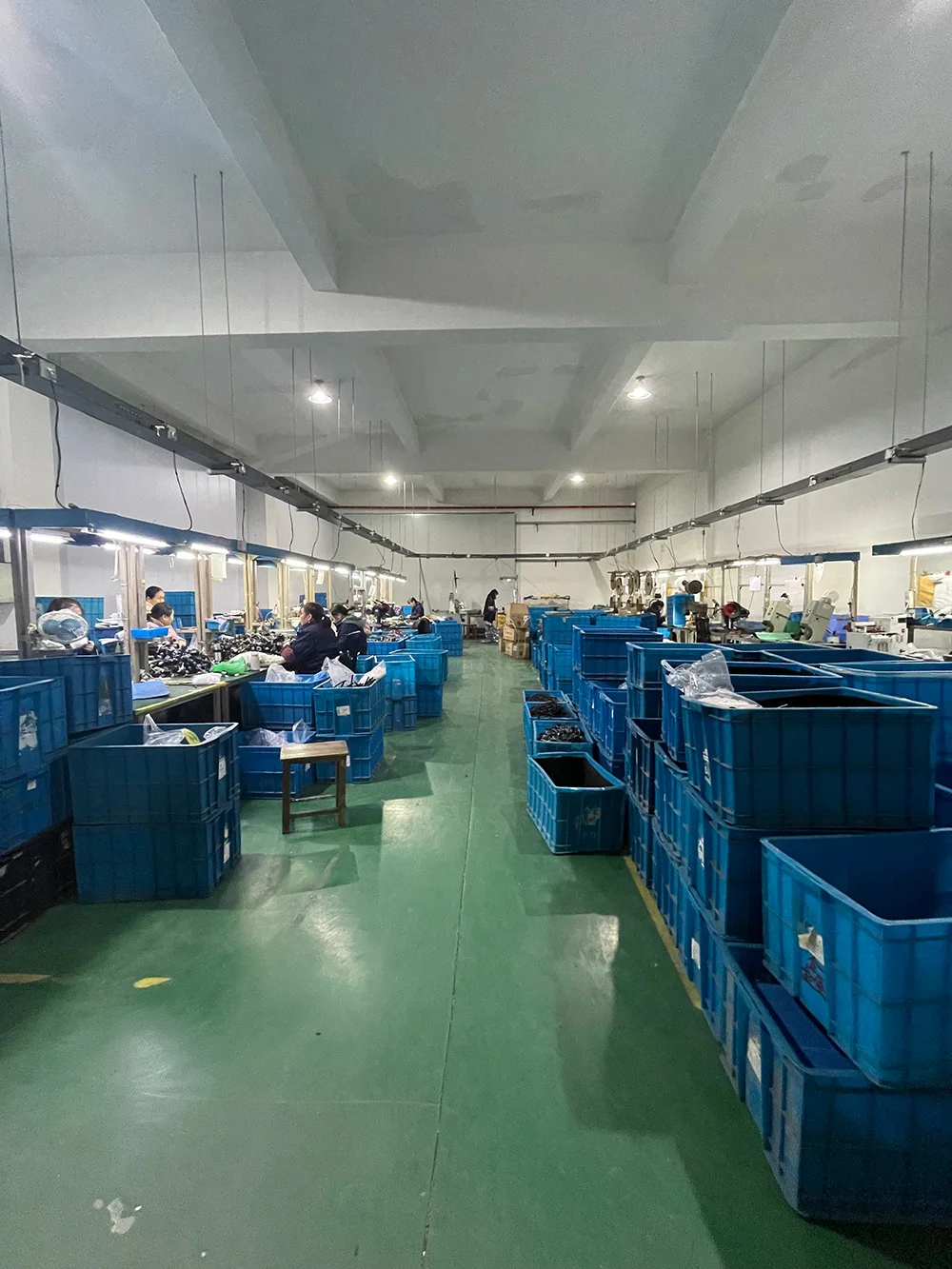
Changzhou Lubolong Trading Co., Ltd.
- Manufacturer, Trading Company
- Jiangsu, China
- Lead time30 days
- Avg. response≤ 3h
Main productsHandle bar,Air filter,Wheels,Engine guard,Light
Main marketsNorth America(50.00%), Eastern Europe(10.00%), South America(10.00%), Mid East(5.00%), Oceania(5.00%), Africa(5.00%), Southeast Asia(5.00%), South Asia(4.00%), Domestic Market(1.00%), Eastern Asia(1.00%), Southern Europe(1.00%), Northern Europe(1.00%), Central America(1.00%), Western Europe(1.00%)
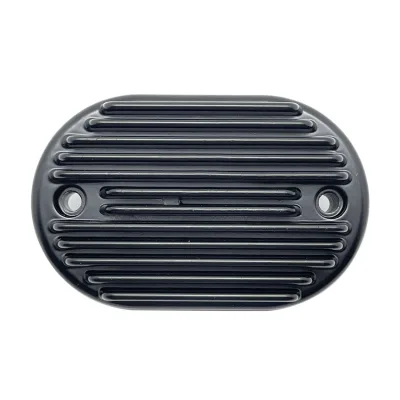
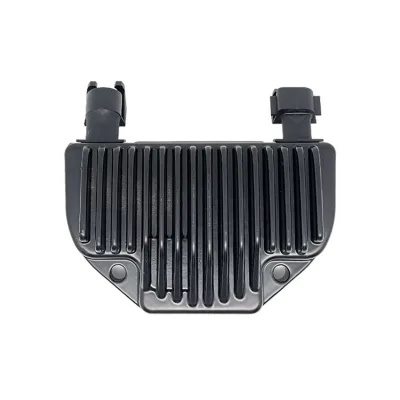
Motorcycle rectifier regulator fit for harley
$46.94 - $52.00

Qingdao ZITN Technology Co., Ltd.
- Verified by TUVRHEINLAND
- Combined
- China Shandong
- Lead time15 days
- Avg. response≤ 25h
Main productsInertial Measurement Unit, Mwd/Lwd Directional Sensor, Directional Sensor for Logging Tools, Acceleration Sensor/Quartz Accelerometer, High Temperature Flash Memory, Thick Film Integrated Circuit, Linear Voltage Regulator, Dcdc Power Converter, Downhole Electronics, Downhole Telemetry Communication System
Main marketsSoutheast Asia/ Mideast,Europe

Foshan Jindacheng Import & Export Co., Ltd.
- Verified by BV
- Trading Company
- China Guangdong
- Lead time23 days
- Avg. response≤ 6h
Main productsMotorcycle Spare Parts, Electric Vehicle Accessories, Bicycle Spare Parts, Motorcycle Engine Parts, Cg Motorcycle Parts, Gn Motorcycle Parts, Electric Scooter Parts, Motorcycle Chain Sprocket, Motorcycle Cylinder Kit, Motorcycle Accessories
Main marketsSouth America,Mid East,Southeast Asia,Africa

Motorcycle Rectifier Cg125 Rectifier Motorcycle Voltage Regulator Rectifier for Honda Cg125
$1.00 - $1.50
MOQ: 200 Pieces

Motorcycle Rectifier Cg150 Rectifier Motorcycle Voltage Regulator Rectifier for Honda Cg150
$1.00 - $1.50
MOQ: 200 Pieces

Hunan Echwater Technology Co., Ltd.
- Verified by BV
- Trading Company
- China Hunan
- Lead time23 days
- Avg. response≤ 6h
Main productsHypochlorous Acid Generator, Atmosphere Water Machine, Variable Power Supplier, Pure Water System, Hydrogen Bath Generator, Hydrogen-Rich Water Generators, Sodium Hypochlorite Generator, Electrolytic Cell, Alkaline Water Generator
Main marketsSoutheast Asia/ Mideast

Shaanxi Sefon Electrical Equipment Co., Ltd
- Verified by SGS
- Combined
- China Shaanxi
- Lead time30 days
- Avg. response≤ 8h
Main productsSingle Phase Transformer, Three Phase Transformer, Voltage Regulator, Power Substation, Voltage Regulator Substation, Single Phase Automatic Voltage Regulator, Prefabricated Substation, Mobile Substations, Single Phase Automatic Voltage Regulators (AVR), 32-Step Single-Phase Voltage Regulator
Main marketsDomestic


Durable Three-Phase Voltage Regulator for Medium Voltage Applications
$8000.00 - $18000.00
MOQ: 1 Sets

Intelligent Automatic Voltage Regulator for Reliable Power Management
$8000.00 - $18000.00
MOQ: 1 Sets

Fuan Shaluo Electronic Co., Ltd.
- Verified by TUVRHEINLAND
- Trading Company,Manufacturer/Factory
- China Fujian
- Lead time15 days
- Avg. response≤ 10h
Main productsGenerator Parts & Accessories, Automatic Voltage Regulator, Solenoid, Oil Pressure Sensor, Vdo Sensor, Charging Adapter, Generator Controller, Carburetor, Carbon Brush Holder, Dual Fuel Conversion Kit
Main marketsSouth America,Eastern Europe,Mid East,North America,Southeast Asia,Eastern Asia,Oceania,Western Europe,Africa

Zhejiang Tianrun Electric Co., Ltd.
- Verified by CTI
- Combined
- China Zhejiang
- Lead time23 days
- Avg. response≤ 1h
Main productsTransformer Switchgear Substation
Main marketsDomestic

Smart Auto Voltage Regulator for Effective Voltage Management Solutions
$1896.00 - $1987.00
MOQ: 1 Pieces

Advanced Auto Voltage Regulator for Effective Voltage Management Systems
$1896.00 - $1987.00
MOQ: 1 Pieces

High Voltage Intelligent Voltage Regulator for Reliable Power Systems
$1896.00 - $1987.00
MOQ: 1 Pieces

Auto Voltage Regulator for Enhanced Voltage Stability in Power Grids
$1896.00 - $1987.00
MOQ: 1 Pieces


- Verified by SGS
- Combined
- China Zhejiang
- Lead time30 days
- Avg. response≤ 9h
Main productsPower Transformer, Ring Main Unit, Switchgear, Auto Recloser, Load Break Switch, Step Voltage Regulator, Three Phase Transformer, Oil Transformer
Main marketsSouth America,Africa,Others(foreignTradeCapacity.exportBusinessCapacityMarketOther),Southeast Asia/ Mideast,Europe,North America


Comprehensive Sourcing Guide
Motorcycle Engine Voltage Regulator Supplier Concentration and Factory Types
The available data indicates a concentration of suppliers in the Zhejiang province of China, specifically within the broader region of Zhejiang. This area appears to host a mix of trading companies and manufacturers specializing in motorcycle electrical systems, including regulators and rectifiers. Buyers observing this geographic clustering should recognize that Zhejiang often serves as a hub for mechanical hardware tools and automotive components, which supports the supply chain for motorcycle parts. When evaluating potential partners, it is essential to verify if the specific factory location aligns with the claimed origin of the products, as some listings explicitly state "Zhejiang, China" as the point of origin for items like the Wave 125 regulator.
Factory types in this sector vary, with many entities identified as trading companies rather than direct manufacturers. This distinction is critical because trading companies may source from multiple factories, potentially affecting quality control consistency and direct communication with the production line. Some suppliers list diverse main products ranging from bicycle accessories to motorcycle cylinders, suggesting a broad inventory strategy rather than deep specialization in voltage regulators alone. Buyers should investigate whether a supplier's primary focus includes the specific electrical systems required for their models, as a trading company dealing in helmets and carburetors might have less technical depth than a dedicated electrical component manufacturer.
How to Verify Motorcycle Engine Voltage Regulator Suppliers
Verification of supplier credentials requires a careful examination of the specific certifications and verification badges provided in the product data. Some listings explicitly display "TUVRHEINLAND" as a verification status, which serves as a third-party validation of the supplier's business legitimacy. Additionally, product attributes often list certifications such as "CCC" and "ISO9001: 2000" or "ISO9001: Commutation:Brush." Buyers must confirm that these certifications are current and applicable to the specific voltage regulator model being purchased, as generic certification claims do not guarantee that the specific batch of goods meets the required safety and quality standards.
Response time is another critical metric for assessing supplier reliability and operational efficiency. The observed data shows response times varying significantly, with some suppliers responding in approximately 0.37 hours while others take up to 5.60 hours. A faster response time often correlates with better communication channels and a more active sales team, which is vital when troubleshooting technical specifications or resolving order discrepancies. Buyers should prioritize suppliers with rapid response capabilities, as delays in communication can lead to production bottlenecks. It is also advisable to request proof of the stated certifications and to verify the supplier's business license directly, rather than relying solely on the platform's verification badge.
What to Compare Across Motorcycle Engine Voltage Regulator Suppliers
When comparing suppliers, the minimum order quantity (MOQ) is a primary factor that influences procurement strategy and inventory costs. The data reveals a wide range of MOQs, with some suppliers requiring as few as 100 units for specific models like the GS/Gn/En125 regulator, while others demand 200 or even 300 units for different variants. Buyers must align their order volume with these thresholds to avoid unnecessary capital tie-up or rejection of smaller orders. Additionally, lead times vary, with some suppliers indicating a standard lead time of 30 days. This duration should be factored into the overall supply chain planning to ensure timely delivery for production schedules.
Price and customization options are equally important dimensions for comparison. Unit prices for motorcycle voltage regulators can range from approximately $1.80 to over $10.90, depending on the model, voltage, and specific application such as KTM or Yamaha. Customization is frequently listed as "Available" across many listings, allowing buyers to tailor products to specific OEM requirements. However, buyers should verify if customization incurs additional costs or extends the lead time. Comparing the price-to-MOQ ratio and the flexibility of customization terms will help identify suppliers that offer the best value proposition for the specific volume and technical requirements of the buyer's project.
Common Motorcycle Engine Voltage Regulator Sourcing Risks
One significant risk involves the discrepancy between product specifications and actual performance, particularly regarding voltage ratings and material composition. Some product attributes list voltage as "DC 12V" while others specify "24V," and materials range from ABS to rubber. If a buyer orders a 12V regulator for a 24V system, the component will fail immediately. Furthermore, some listings contain conflicting data, such as labeling a product as a "Motorcycle Battery" while the title refers to a regulator. Buyers must meticulously cross-reference the technical specifications, including voltage, power type (AC or DC), and material, against their vehicle's requirements before placing an order to prevent compatibility issues.
Another risk is the potential for inconsistent quality control when dealing with trading companies that source from multiple factories. Since many suppliers are identified as trading companies, the actual manufacturing process may occur at a facility not directly managed by the seller. This lack of direct oversight can lead to variations in product quality, such as differences in weight, packing standards, or certification validity. For instance, while some products list specific packing standards like "Inner Box + Outer Box," others may use generic "Carton Box" descriptions. Buyers should request pre-shipment samples and insist on quality inspection reports to mitigate the risk of receiving substandard components that could compromise the safety and reliability of the motorcycle.
Motorcycle Engine Voltage Regulator Regional Sourcing and Logistics
The primary sourcing region identified in the data is Zhejiang, China, which serves as a central hub for motorcycle parts and electrical components. This concentration offers logistical advantages, as many suppliers in this region have established relationships with shipping carriers and experience in handling international freight. The product attributes frequently mention shipping methods such as "by Sea," which is a cost-effective option for bulk orders of heavy items like regulators. However, buyers should be aware that sea freight can involve longer transit times compared to air freight, and this must be accounted for in the overall lead time calculation.
Logistics planning also requires attention to packaging standards, which vary among suppliers. Some listings specify detailed packing dimensions, such as "1421307" or "10cm * 10cm * 3.5cm," while others provide generic descriptions. Proper packaging is essential to prevent damage during transit, especially for electronic components that may be sensitive to moisture or impact. Buyers should verify the packaging details with the supplier to ensure that the goods will be protected adequately. Additionally, understanding the origin location helps in calculating accurate shipping costs and import duties, as regulations may differ based on the specific province of origin within China.
Motorcycle Engine Voltage Regulator Commercial Terms and Order Planning
Commercial terms regarding payment and sample availability are crucial for establishing a secure transaction framework. Many suppliers indicate that samples are available, which allows buyers to test product quality before committing to a large order. This is particularly important given the technical nature of voltage regulators, where a single defective unit can cause significant issues. Buyers should clarify the cost of samples and whether these costs are deductible from the final order value. Furthermore, the acceptance of OEM orders suggests that suppliers are willing to customize products, but the terms for tooling fees and minimum order quantities for custom runs must be explicitly agreed upon in writing.
Order planning must also consider the variability in response times and lead times to ensure supply chain stability. With response times ranging from under an hour to over five hours, communication delays can impact the speed of order processing. Buyers should establish clear communication protocols and set expectations for response times early in the negotiation process. Additionally, the lead time of 30 days for some suppliers requires advance planning to avoid stockouts. Buyers should maintain a buffer stock or negotiate shorter lead times for urgent orders. By carefully managing these commercial terms and planning for potential delays, buyers can mitigate risks and ensure a smooth procurement process for motorcycle engine voltage regulators.
FAQs
What is the price range for motorcycle voltage regulators?
Prices for motorcycle voltage regulators typically range from 1.80 to 10.90 USD per unit depending on the specific model and specifications. Some standard models like the Wave 125 regulator start at 1.80 USD, while specialized units for KTM 250 models can reach up to 10.90 USD. Buyers should verify exact pricing based on their required voltage and compatibility.
What are the minimum order quantities for these parts?
Minimum order quantities vary significantly by product, ranging from 100 to 300 units. Specific items like the GS/Gn/En125 regulator require a minimum of 100 units, whereas the 250SZ regulator requires 300 units. Buyers must check the specific product listing to confirm the exact MOQ before placing an order for their intended volume.
How long does it take to receive these motorcycle parts?
Lead times for motorcycle voltage regulators are generally around 30 days for standard orders. Some suppliers may offer faster response times, with data showing response times as low as 0.37 hours for inquiries. However, the actual shipping duration depends on the specific supplier location in Zhejiang, China, and the chosen shipping method.
Are these regulators certified with ISO or CCC standards?
Many available motorcycle voltage regulators carry CCC and ISO9001:2000 certifications. Some listings also mention ISO9001 with specific commutation details like brush or brushless types. Buyers should verify the specific certification documents for their chosen model, as some products may only list ISO9001 without the CCC mark depending on the manufacturer.
Do suppliers offer customization for these voltage regulators?
Customization is available for many motorcycle voltage regulator models listed in the search results. Suppliers indicate that they can accommodate specific requests for voltage, material, or packaging. Buyers needing custom specifications should confirm details directly with the supplier to ensure the final product meets their exact engineering requirements and compatibility needs.
Where are these motorcycle parts manufactured?
The motorcycle voltage regulators are manufactured in Zhejiang, China. This region is a known hub for producing various automotive and motorcycle electrical components. Buyers sourcing these parts should expect the origin to be listed as Zhejiang, China, which may influence shipping logistics and lead times for international orders.
What voltage options are available for these regulators?
Available voltage options include 12V and 24V depending on the specific motorcycle model. Standard regulators for models like Wave 125 operate at 12V, while others for models like 250SZ or KTM 250 are rated for 24V. Buyers must select the correct voltage rating to ensure compatibility with their vehicle's electrical system.