Small Refrigerator Truck Suppliers and Manufacturers
Source 16 verified suppliers for Small Refrigerator Truck units from China. Compare key dimensions including lead times, MOQs, certifications, and pricing to identify suitable partners. Request quotes directly to evaluate options; review the available evidence before requesting comparable quotations from suitable candidates.
Suppliers List

Dibao Runli International Trade (Hubei) Co., Ltd
- Verified by TUVRHEINLAND
- Trading Company
- China Hubei
- Lead time30 days
- Avg. response≤ 6h
Main productsAerial Platform Truck, Mini Dump Truck, Refrigerated Truck, Fire Truck·, Truck Mounted Crane, Fuel Truck, Wrecker Truck, Water Truck, Garbage Truck, Medical Vehicle
Main marketsOthers(foreignTradeCapacity.exportBusinessCapacityMarketOther)


Small 138HP 4X2 4.5tons Car Type Refrigerated Van Truck Refrigerator Truck
$14800.00 - $19800.00
Moq: 1


Chengli Special Automobile Co., Ltd.
- Combined
- China Hubei
- Lead time23 days
- Avg. response≤ 9h
Main productsRefrigerator Truck, Garbage Truck, Dump Truck, Crane Truck, Fuel Tank Truck, Fire Truck, Vacuum Truck, Wrecker Truck, Water Truck, High Attitude Working Truck
Main marketsSouth America,Africa,Others(foreignTradeCapacity.exportBusinessCapacityMarketOther),Southeast Asia/ Mideast,East Asia(Japan/ South Korea),Domestic,Australia,North America


4*2 Changan Mini Refrigeration Truck, Refrigerator Van Truck, Mini Freezer Refrigerator Van Truck
$9800.00 - $10300.00
Moq: 1

Good Quality 1tons 1.5tons Cooling Freezer Control Refrigerator Mini Truck
$6000.00 - $15000.00
Moq: 1

Guangzhou Yufeng Trading Co., Ltd.
- Verified by SGS
- Trading Company
- China Guangdong
- Lead time30 days
- Avg. response≤ 7h
Main productsRefrigerated Truck Body, FRP Panel, Frezzer Truck Compartment, Refrigerated Lorry Box, Thermal Insulation Material, Meat Hanging Transport Carriage, Seafood Transport Carriage
Main marketsDomestic

Hubei Hongyu Special Automobile Co., Ltd
- Verified by CTI
- Combined
- China Hubei
- Lead time23 days
- Avg. response≤ 2h
Main productsFuel Tank Truck, Water Truck, Refrigerated Truck, Cargo Truck, Garbage Truck, Dump Truck, Electric Truck, Truck Mounted Crane, Wrecker Truck, Aerial Platform Truck
Main marketsAfrica,Southeast Asia/ Mideast,North America

Hubei Shenghang Special Automobile Co., Ltd
- Verified by TUVRHEINLAND
- Trading Company
- China Hubei
- Lead time60 days
- Avg. response≤ 2h
Main productsGarbage Truck, Water Truck, Refrigerated Truck, Ambulance, Wrecker Truck, Aerial Platform Truck, Truck Mounted Crane, Suction Sewage Truck, Dump Truck
Main marketsDomestic

Affordable Mini Refrigerator Truck for Small Business Startup Logistics Light Truck
$12000.00 - $24000.00
Moq: 1

$12000.00 - $24000.00
Moq: 1


$12000.00 - $24000.00
Moq: 1


Hubei Weiyu Special Vehicles Co., Ltd.
- Verified by TUVRHEINLAND
- Trading Company,Manufacturer/Factory,Group Corporation
- China Hubei
- Lead time45 days
- Avg. response≤ 4h
Main productsGarbage Truck, Fire Truck, LPG Tank, LED Adversiting Truck, Dump Truck, Wrecker Truck, Used Truck, Water Truck, Refrigerator Truck, Fuel Truck
Main marketsSouth America,Eastern Europe,Mid East,Southeast Asia,Eastern Asia,Oceania,Africa
Hubei Chuanchu Import And Export Co., Ltd.
- Verified by SGS Group
- Trading Company
- Lead time20 days
- Avg. response≤ 2h
Main productsFuel Tanker Truck, Iso Tank Container, Chemical Tanker Truck, Environmental Sanitation Vehicle, Refrigerated Truck
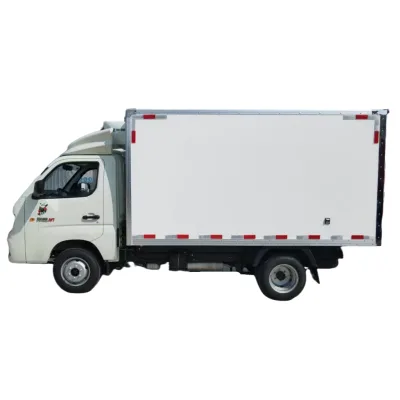
$15435.62 - $17493.70
Moq: 1
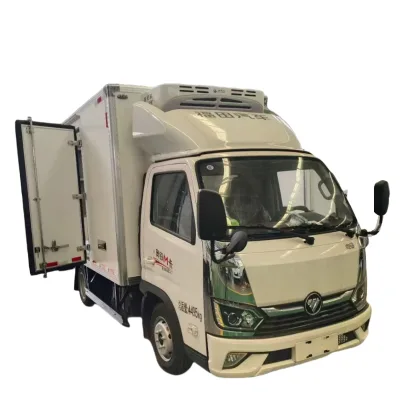
Hot Sale Truck Refrigeration Unitssmall Refrigerated Container Truck Freezing Truck
$15000.00 - $17000.00
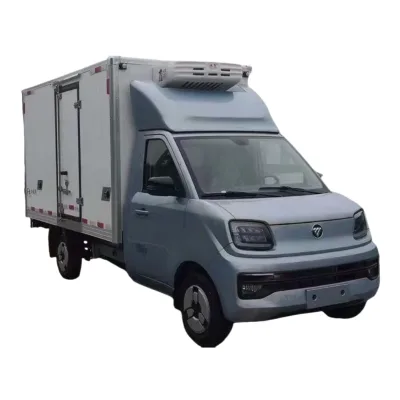
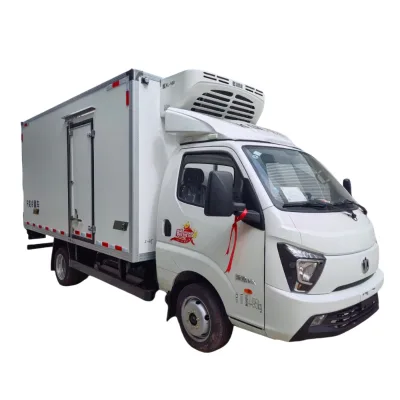
Factory Price Small Chiller Lorry 4*2 Refrigerator Refrigerated Wagon Vehicle Truck
$15000.00 - $17000.00
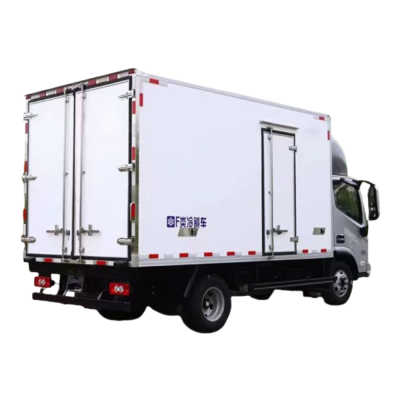

Suizhou Leshen Special Vehicle Co., Ltd.
- Verified by BV
- Manufacturer/Factory
- China Hubei
- Lead time23 days
- Avg. response≤ 16h
Main productsFuel Truck, Water Truck, Tank Trailer, Vacuum Tank Truck, Garbage Truck, Chemical Liquid Tank Truck, Sweep Truck, Fire Truck, Dump Truck, LED Advertising Truck
Main marketsSouth America,Mid East,Southeast Asia,Eastern Asia,Oceania,Africa

Henan Autoking Industry Co., Ltd.
- Verified by SGS
- Trading Company,Manufacturer/Factory
- China Henan
- Lead time15 days
- Avg. response≤ 4h
Main productsRefrigerated Trucks, Wreckers Trucks, Dump Trucks, Pickup Trucks, Ambulances, Aerial Work Platforms Trucks, Tractor Trucks, Water Trucks, Oil Tanker Trucks, Cargo Trucks
Main marketsSouth America,Mid East,Southeast Asia,Eastern Asia,Oceania,Africa

$16500.00 - $18000.00
Moq: 1

5tons Refrigerated Truck 4*2 Small Cold Room Van Truck 18cbm Freezer Trucks
$20700.00 - $20900.00
Moq: 1

Hot Sale Manual Refrigerated Cooling Refrigeration Unit for Refrigerator Box Truck
$19000.00 - $21000.00
Moq: 1

Hubei Chengyuan Special Vehicle Co., Ltd
- Verified by SGS
- Manufacturer/Factory
- China Hubei
- Lead time23 days
- Avg. response≤ 2h
Main productsGarabge Compress Truck Waste Collect Truck H
Main marketsSouth America,Mid East,Southeast Asia,Eastern Asia

Guangzhou Snowfall Refrigeration Equipment Co., Ltd.
- Combined
- China Guangdong
- Lead time30 days
- Avg. response≤ 6h
Main productsTruck Refregeration Equipment, Composite Panel, FRP Panel, Truck Kit, Truck Body, Truck Refrigeration Units, Sandwich Panel, Freezer Box, Refrigeration Truck, Truck Refregeration
Main marketsSouth America,Africa,Southeast Asia/ Mideast,East Asia(Japan/ South Korea),Europe,Australia,North America

Hubei Huate Special Equipment Co., Ltd.
- Verified by SGS
- Combined
- China Hubei
- Lead time30 days
- Avg. response≤ 8h
Main productsTank Container, Chemical Tank Truck, Tank Semi-Trailer Truck, Road Suction Truck, Electric Water Cannon, Oil Tanker Discharge Valve, Fuel Hose Reel, Manhole Cover, Mobile Fueling Machine, Fuel Truck
Main marketsSouth America,Africa,Others(foreignTradeCapacity.exportBusinessCapacityMarketOther),Southeast Asia/ Mideast,East Asia(Japan/ South Korea),Europe,Australia,North America


The Price of The Foton Small Mobile Refrigerator Truck Refrigerated Truck Body Can Be Customized
$15000.00 - $17000.00
Moq: 1

Refrigerated Box Truck Chiller Truck Refrigerator Truck Mobile Freezer Truck
$15000.00 - $17000.00
Moq: 1


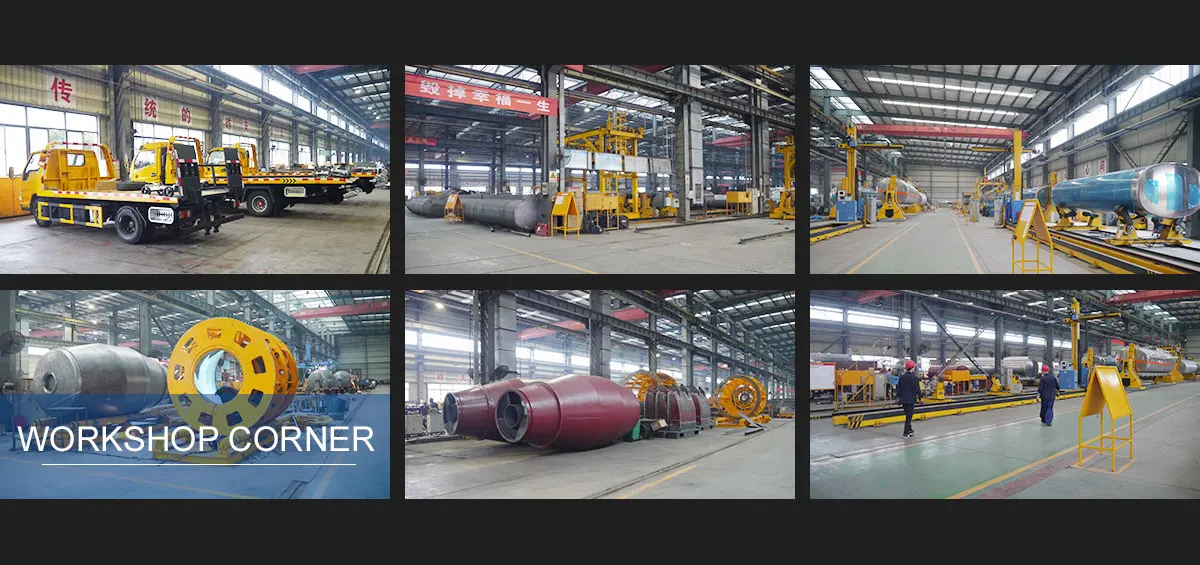
Hubei Changheng Special Automotive Sales Co., Ltd.
- Trading Company
- Hubei, China
- Lead time30 days
- Avg. response≤ 5h
Main productscompressed garbage truck,hook arm garbage truck,swing garbage truck,crane truck,asphalt distribution truck
Main marketsMid East(30.0%), Africa(30.0%), South Asia(10.0%), Eastern Asia(10.0%), Southeast Asia(10.0%), South America(10.0%)

- Verified by TUVRHEINLAND
- Manufacturer
- China Hubei
- Lead time15 days
- Avg. response≤ 10h
Main productsDump Trucks, Garbage Trucks, Firefighting Trucks, Ambulance Car, Refrigerated Trucks, Sanitation Truck Series, Sewage Suction Trucks, Oil Tanker Trucks, Truck Crane, Emergency Vehicles


Cooling Van Truck Frozen Meat Refrigerator Truck 6 Wheels Freezer Reefer Van Truck
$12688.00 - $42168.00
Moq: 1

Factory Sale Refrigerated Truck Ice Cream Refrigerated Refrigerator Truck
$12688.00 - $42168.00
Moq: 1

Food Delivery Refrigerated Truck Fridge Freezer Refrigerated Transportation Truck
$12688.00 - $42168.00
Moq: 1

for a 4× 2 Cargo Truck, Customized Refrigerated Trucks From The Factory Are Reliable
$8899.00 - $18880.00
Moq: 1

Xinxiang Coworld Refrigeration Technology Co., Ltd.
- Trading Company,Manufacturer/Factory
- China Henan
- Lead time23 days
- Avg. response≤ 1h
Main productsTruck Refrigeration Unit, Van Refrigeration Unit, Electric Refrigeration Unit, Refrigerated Truck Body, Refrigerated Truck Body Panel, Parking Air Conditioner, Truck Air Conditioner, Bus Air Conditioner, Cold Room, Cold Room Refrigeration Unit
Main marketsSouth America,Eastern Europe,Mid East,North America,Southeast Asia,Eastern Asia,Oceania,Western Europe,Africa

ZHENG ZHOU XINKE MACHINERY AND EQUIPMENT CO.,LTD
- Verified by TUVRHEINLAND
- Trading Company
- China Henan
- Lead time15 days
- Avg. response≤ 2h
Main productsFood Processing Machine, Industrial Material Producing Machine, Hardware Processing Machine, Paper Prodcut Processing Machine, Filling and Packing Machine, Farm and Agriculture Machine, Bread and Baking Machine, Fruit and Vegetable Processing Machine, Grain and Bean Peeling Machine, Meat and Seafood Equipment
Main marketsDomestic


Refrigerated Truck Commercial Refrigerated Vehicle Food Transport Refrigerated Box Truck
$2500.00 - $3500.00
Moq: 1


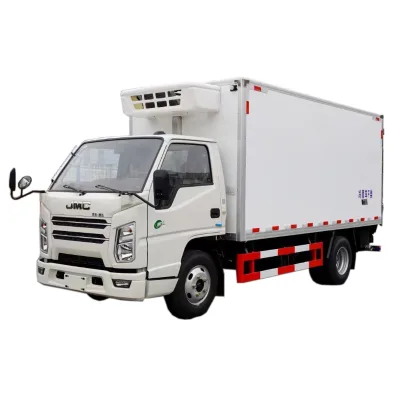
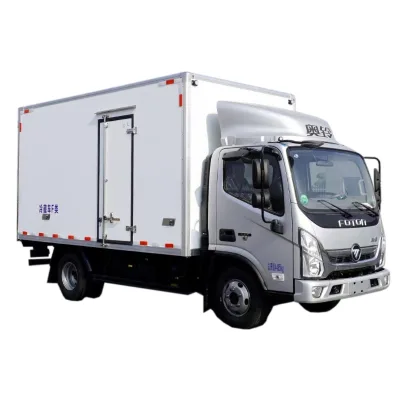


Comprehensive Sourcing Guide
Small Refrigerator Truck Supplier Concentration and Factory Types
When sourcing a Small Refrigerator Truck, understanding where suppliers cluster and how they operate gives you leverage before you ever send an inquiry. High-confidence location data on some listings shows suppliers based in China Hubei, a province widely associated with special-purpose vehicle production, and others in China Guangdong, where some vendors concentrate on refrigerated truck bodies, FRP panels, freezer compartments, thermal insulation materials, and meat or seafood transport carriages rather than complete vehicles. This distinction matters: a supplier of complete chassis-mounted refrigerator trucks and a supplier of insulated boxes serve different stages of your build, and some buyers effectively combine the two. Do not assume all listings come from the same kind of business—company type labels on the results include Trading Company and Combined operations, which signal different levels of direct factory control.
Beyond location and company type, look at the breadth of main products. Suppliers listing aerial platform trucks, fire trucks, fuel trucks, wreckers, garbage trucks, and medical vehicles alongside refrigerator trucks are typically special-purpose vehicle manufacturers or large trading houses covering many body types. Suppliers whose catalogs are dominated by refrigerated bodies and insulation panels are more specialized component makers. Also weigh verification signals such as TUV Rheinland or SGS verification marks and system certifications like ISO 9001:2015 or ISO 14001:2015 where displayed, plus R&D capability labels such as own brand, ODM, or OEM, which suggest whether customization requests will be handled in-house or brokered.
How to Verify Small Refrigerator Truck Suppliers
Verification starts with the credentials a supplier chooses to display, but it cannot end there. On the listings in this category, some suppliers show third-party verification marks such as TUV Rheinland or SGS, and some display system certifications including ISO 9001:2015 and ISO 14001:2015. These are useful screening signals, yet they describe the company at a point in time, not the specific truck you will receive. Where a listing shows product-level certification strings—for example ISO, CCC, CE, EEC, RoHS, or TSE marks on the vehicle attributes—record exactly which marks appear and confirm with the supplier which certifications apply to the exact model and to your destination market. Emission compliance deserves special attention, since listings reference Euro diesel standards for some units and gasoline fuel for others.
Practical verification steps should confirm what the listing alone cannot prove. Ask for the production license and business scope documents covering special-purpose vehicle manufacturing or trading, and cross-check the company name against the verified entity. Request photographs or video of the actual truck in production, not catalog images, including the refrigeration unit brand, insulation panel construction, and chassis stamping. If a product listing cites certifications for the box or unit, ask for the certificate documents by number. Finally, confirm who holds responsibility for the refrigeration unit warranty—the chassis maker, the body builder, or the unit brand—and get that in writing before payment, because multi-party builds create ambiguity.
What to Compare Across Small Refrigerator Truck Suppliers
Build your comparison table from the attributes suppliers actually publish, without assuming every listing shows the same data. On these results, comparable dimensions include lead time, with displayed figures of roughly 30 days for one supplier and 23 days for another; response time, where one shows about 5.98 hours and another about 8.28 hours; MOQ, where at least one listing shows a minimum order of one unit; and location, with China Hubei and China Guangdong both represented. Main products reveal focus: some suppliers list long ranges of special-purpose vehicles, while one Guangdong supplier specializes in refrigerated truck bodies, FRP panels, and meat or seafood transport carriages. Verification marks, system certifications, and R&D labels such as OEM/ODM capability add further columns.
On the product side, compare specifications that drive suitability rather than headline price alone. Listings for 4.5-ton class trucks show engine power around 102HP to 138HP, gross weights near 3,800–4,495 kg, curb weights from about 2,250–3,210 kg, wheelbases of roughly 3,100–3,360 mm, and van boxes in the four-meter range, with manual transmission and diesel fuel on several units; smaller Changan-based gasoline models appear at the micro end. Price ranges published on listings run from roughly $6,000 to nearly $20,000 depending on size and configuration. Compare condition (new), customization availability, packing methods, and which certifications are claimed, and weight every figure by whether the supplier verified it.
Common Small Refrigerator Truck Sourcing Risks
The most frequent risk in this category is specification drift between the listing and the delivered truck. Published attributes vary meaningfully even within the 4.5-ton class: one model shows a 1090 kg rated load with a 3210 kg curb weight, another shows 1420/1355 kg rated load at a 2250 kg curb weight, and van box dimensions range from about 2140×1690×1525 mm to 4080×2100×2100 mm. If your cold-chain operation depends on a specific box volume or payload, a small mismatch invalidates the purchase. Curb weight also interacts with registration and road-legal limits in your market, so confirm final weights against homologation paperwork. Similarly, engine power labels such as 102HP versus 138HP, or a 140HP variant, must be tied to the exact model code in the contract.
A second risk cluster involves credentials and build provenance. Product attribute strings may bundle many certification names together; treat them as claims to verify, not guarantees, and ask which apply to the exported configuration. Trading companies and combined-type businesses may broker from factories they do not control, which can affect quality consistency and warranty response—clarify who manufactures the chassis, who builds the insulated body, and who supplies the refrigeration unit. Additional risks include unclear packing (nude packing with wax is common), emission-standard mismatches for your market, and lead-time slippage. Mitigate with pre-shipment inspection, a written specification annex, and staged payment tied to inspection milestones.
Small Refrigerator Truck Regional Sourcing and Logistics
Regional sourcing in this category should start from the confirmed location signals. Some complete-vehicle suppliers list China Hubei as their base, and at least one product attributes its origin to Suizhou, Hubei Province—useful context when you assess whether a supplier sits inside an established special-purpose vehicle cluster rather than asserting cluster membership on your behalf. Separately, a China Guangdong supplier focuses on refrigerated truck bodies, FRP panels, freezer compartments, thermal insulation materials, and meat or seafood transport carriages. If your project needs body-only supply for mounting on local chassis, the Guangdong component route may fit; if you need turnkey trucks, the Hubei complete-vehicle route is the more natural starting point. Verify current locations directly, since company relocations and branch offices occur.
Logistics planning should reflect vehicle-scale shipping rather than parcel thinking. Packing declarations on these listings include nude packing, nude with wax, and RO-RO ship loading—RO-RO is the standard method for drivable units, while disassembled or body-only shipments may move differently. Confirm port of loading proximity, whether the truck is driven onto the vessel or crane-loaded, and destination-country requirements for used-versus-new classification, emissions, and refrigerant handling. Lead times displayed run from about 23 to 30 days before shipping, so build total transit and customs time into launch plans. For island or landlocked destinations, ask about inland haulage to port and whether the supplier has handled shipments to your market before.
Small Refrigerator Truck Commercial Terms and Order Planning
Commercial terms in this category are manageable per order because several listings show an MOQ of one unit, which suits pilot purchases and fleet trials. Published price ranges give a planning band rather than a quote: listings span roughly $6,000–$15,000 for mini gasoline and small diesel units, $9,500–$10,300 for Changan-based micro vans, and $12,800–$19,800 for 4.5-ton diesel models depending on configuration. Treat these as starting points for negotiation—refrigeration unit brand, insulation thickness, and custom box dimensions move price significantly. Ask each supplier to quote your exact specification, including the refrigeration unit, and to state what the quoted certifications cover. Confirm payment structure and whether any transaction-protection or escrow arrangement is offered through the platform you use.
Order planning should sequence customization, inspection, and shipping realistically. Where listings state customization is available, expect it to extend the displayed lead times of roughly 23–30 days; confirm the revised date in writing and tie it to a delay remedy. Schedule pre-shipment inspection after production but before balance payment, checking model codes, weights, box dimensions, refrigeration unit serial numbers, and claimed certificates. Because main-product breadth differs—some suppliers build many special-purpose vehicles while others focus on bodies—align your order with the supplier's demonstrated specialty. Finally, plan for a trial period after arrival covering pull-down temperature performance, and agree in advance on spare parts availability for the refrigeration unit and documentation for registration in your market.
FAQs
What is the price range for small refrigerator trucks?
Prices for small refrigerator trucks range from 6000 to 19800 USD depending on specifications. Some models start at 9500 USD while others reach 16800 USD. Buyers should verify specific engine power and capacity requirements to determine the exact cost for their needs.
What certifications do these trucks typically have?
Many units carry ISOCCC, CE, EEC, RoHS, and TSEPA certifications. Some suppliers also hold ISO9001:2015 and ISO14001:2015 system certificates. Buyers must confirm which specific standards apply to the selected model before finalizing any purchase agreement.
How long does delivery take for these vehicles?
Lead times vary between 23 and 30 days for most suppliers. Some manufacturers offer faster turnaround while others require the full month. Buyers should confirm the exact schedule with the seller to ensure timely arrival for their logistics operations.
What is the minimum order quantity for these trucks?
The minimum order quantity is typically one unit for most small refrigerator trucks. This allows buyers to purchase a single vehicle for immediate use without needing to buy in bulk. Verify specific terms with the supplier before placing an order.
Where are these trucks manufactured?
Manufacturing locations include Hubei and Guangdong provinces in China. Specific origins may be listed as Suizhou or general China regions. Buyers should verify the exact factory location to assess shipping costs and logistics requirements for their destination.
What engine power options are available?
Engine power options range from 102 HP to 140 HP for these small trucks. Some models feature 138 HP engines while others offer lower output. Buyers should select the power level that matches their intended load capacity and road conditions.
Can these trucks be customized for specific needs?
Customization is available for many Small Refrigerator Truck models. Buyers can request specific van sizes, colors, or equipment configurations. Contact the supplier directly to discuss available modifications and any additional costs associated with customizing the vehicle.