LED Advertising Vehicle Suppliers and Manufacturers
Explore 10 verified options for LED Advertising Vehicle from Guangdong and Hubei. Compare response times, lead times, certifications, and product specifications to find the right partner. Contact suppliers directly to request quotes; review the available evidence before requesting comparable quotations from suitable candidates.
Suppliers List

Zhongshan Bluestar Photoelectric Technology Co., Ltd.
- Verified by BV
- Manufacturer
- China Guangdong
- Lead time15 days
- Avg. response≤ 2h
Main productsLED Display for Indoor and Outdoor, Outdoor LED Screen, P10/P8/P6.67/P6/P5/P4/P3/P2.5/P3.91LED Module, P4.81 P3.91 LED Retal Stage Display, Full Color LED Cells/Panel/Module/Board, 4G LED Display/ Soft LED Display, LED Video Wall/LED Digital Signage, Stadium Perimeter LED Display, Transparent LED Display, LED Programmable Running Moving Sign

Hubei Yisheng Automobile Co., Ltd.
- Verified by SGS
- Trading Company
- China Hubei
- Lead time30 days
- Avg. response≤ 1h
Main productsAmbulance, Refrigerated Truck, Advertising Vehicle, Tow Truck, Tanker Trucks, Dump Truck, Aerial Platform Truck, Combination Sewer Cleaner, Water Truck, Garbage Compactor Truck
Main marketsDomestic

Digital LED Mobile Display Advertising Vehicle, Mobile LED Billboard Advertising Vehicle Truck
$18800.00 - $19800.00
MOQ: 1 Pieces

Versatile Color Screen LED Advertising Vehicle for Promotions LED Billboard Truck
$18800.00 - $19800.00
MOQ: 1 Pieces

LED Van Truck Outdoor Mobile Promotional Stage Vehicle Advertising Vehicle
$18800.00 - $19800.00
MOQ: 1 Pieces

FAW LED Advertising Vehicle Small LED Mobile Screen Advertising Vehicle LED Billboard Truck
$18800.00 - $19800.00
MOQ: 1 Pieces


. Versatile Mini LED Advertising Vehicle for Outdoor Campaigns LED Billboard Truck
$18800.00 - $19800.00
MOQ: 1 Pieces

Hubei Zhongbang Intelligent Automobile Co., Ltd
- Verified by SGS
- Trading Company
- China Hubei
- Lead time30 days
- Avg. response≤ 1h
Main productsRoad Sweeper Truck, Water Sprinkler Tank Truck, Garbage Truck, Refrigerator Truck, Ambulance, Dump Truck, Cargo Truck, Sewage Suction Truck, Wrecker Truck, Concrete Mixer Truck
Main marketsDomestic

Mobile Campaign Stage Truck LED Advertising Vehicle for Political Promotion
$17500.00 - $24500.00
MOQ: 1 Pieces

China LED Advertising Truck Mobile Billboard Promotion Vehicle Supplier
$18500.00 - $28500.00
MOQ: 1 Pieces

LED Promotion Truck Mobile Billboard Advertising Vehicle for Commercial Campaign
$38500.00 - $39500.00
MOQ: 1 Pieces

Mobile LED Media Advertising Truck Digital Promotion Billboard Vehicle Manufacturer
$34500.00 - $39000.00
MOQ: 1 Pieces

China Factory Mobile LED Screen Truck Advertising Media Vehicle for Export
$36500.00 - $39500.00
MOQ: 1 Pieces

High Brightness Mobile LED Advertising Truck Outdoor Media Display Vehicle
$19500.00 - $29500.00
MOQ: 1 Pieces

Chengli Special Automobile Co., Ltd.
- Verified by BV
- Combined
- China Hubei
- Lead time45 days
- Avg. response≤ 6h
Main productsTanker Truck, Refrigerated Truck, LED Advertising Truck, Garbage Truck, Road Sweeper, Aerial Work Vehicle, Truck Mounted Crane, Wrecker Truck, Ambulance, RV Caravan
Main marketsSouth America,Africa,Southeast Asia/ Mideast

Mini LED Display Stage Truck P4 Mobile LED Billboard Truck Advertising Vehicle
$15000.00 - $16000.00
MOQ: 1 units

3 Sides P4 High Brightness Dongfeng Mobile LED Advertising Vehicle for Events
$29500.00 - $33000.00
MOQ: 1 units
- Manufacturer, Trading Company
- Hubei, China
- Lead time0 days
- Avg. response≤ 2h
Main productsTanker Truck, Sewage Suction Truck, Chemical Tanker Truck, Water Sprinkler Truck, Garbage Truck
Main marketsEastern Asia(30.00%), Eastern Europe(30.00%), South America(30.00%), Domestic Market(10.00%)
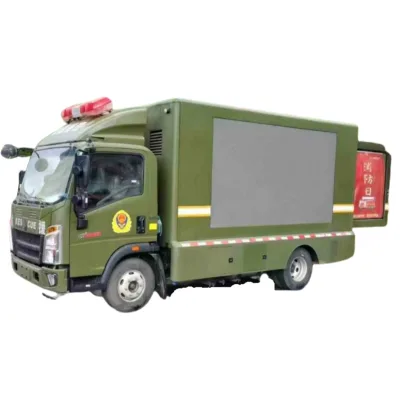
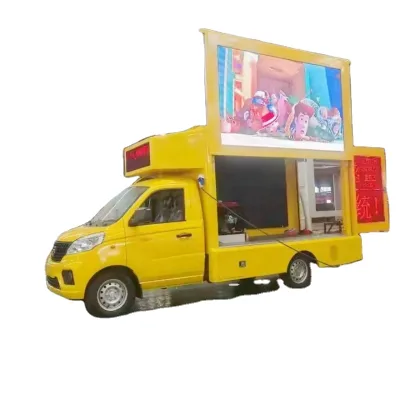
Advertising Vehicle Small Gasoline Mobile LED Color Screen TV Mini Election Propaganda Car Culture
$11477.26 - $24926.51
MOQ: 1 sets
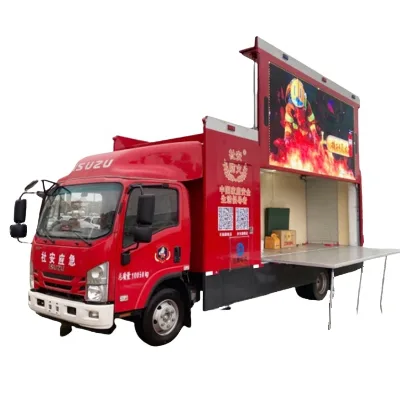
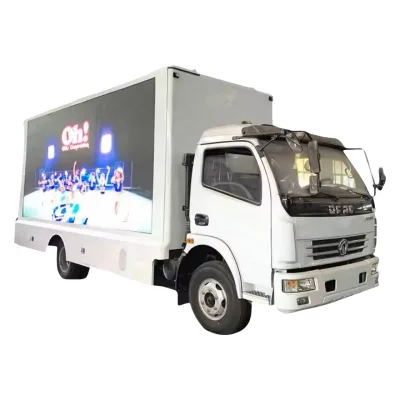

Suizhou Leshen Special Vehicle Co., Ltd.
- Verified by BV
- Manufacturer/Factory
- China Hubei
- Lead time23 days
- Avg. response≤ 15h
Main productsFuel Truck, Water Truck, Tank Trailer, Vacuum Tank Truck, Garbage Truck, Chemical Liquid Tank Truck, Sweep Truck, Fire Truck, Dump Truck, LED Advertising Truck
Main marketsSouth America,Mid East,Southeast Asia,Eastern Asia,Oceania,Africa

Small Mini One Side Light Box LED Advertisement Truck LED Stage Vehicle
$9500.00 - $13800.00
MOQ: 1 Pieces

Changan One/Two/Three Side Light Box LED Advertisement Truck LED Stage Vehicle
$9500.00 - $13900.00
MOQ: 1 Pieces

LED Display Advertising Truck, Outdoor Mobile Advertising Truck, Mini LED Screen Truck for Sale
$15000.00 - $23000.00
MOQ: 1 Pieces
Hubei Chenyang Special Vehicles Co., Ltd.
- Trading Company
- Hubei, China
- Lead time0 days
- Avg. response≤ 11h
Main productssprinkler,Garbage truck,Refrigerator car,Concrete mixer truck,oil tank truck
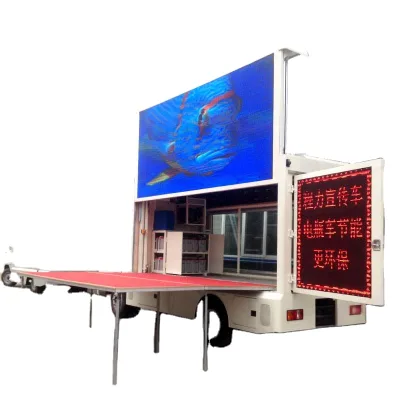
$25291.76 - $25699.69
MOQ: 1 units
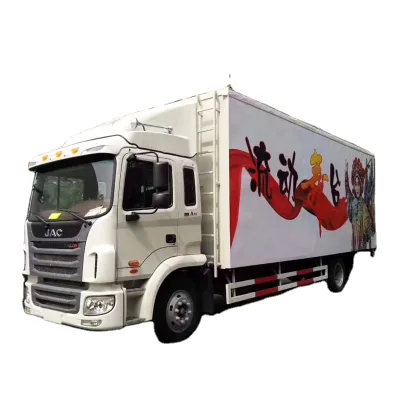
Hubei Xindongri Special Vehicle Co., Ltd.
- Verified by Intertek
- Manufacturer, Trading Company
- Lead time40 days
- Avg. response≤ 1h
Main productsFire Truck, Aerial Work Vehicle, Sanitation Vehicle
Main marketsDomestic Market(71%), Southeast Asia(10%), Africa(4%)
Taizhou Jingchuan Electronics Technology Co., Ltd.
- Verified by TüVRheinland
- Manufacturer, Trading Company
- Lead time35 days
- Avg. response≤ 2h
Main productsLED Truck, LED Trailer, Custom LED Vehicle, Portable LED Screen, LED Truck Body
Main marketsDomestic Market(30%), North America(20%), Oceania(20%)
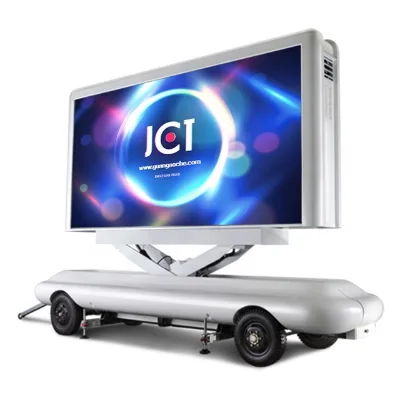
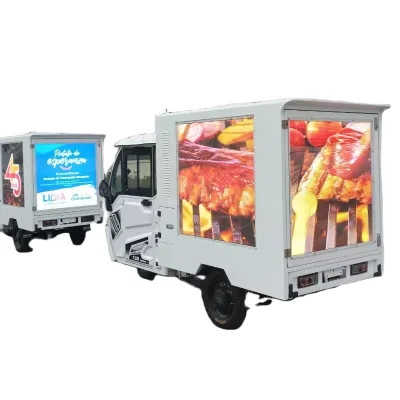
$49800.00 - $53800.00
MOQ: 1 Minimum
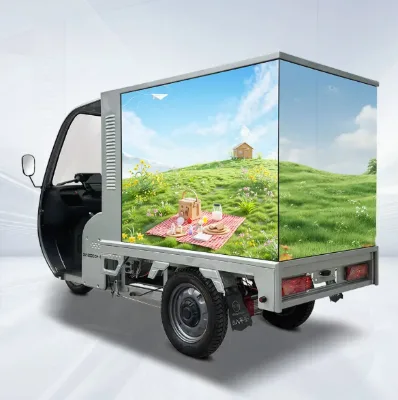
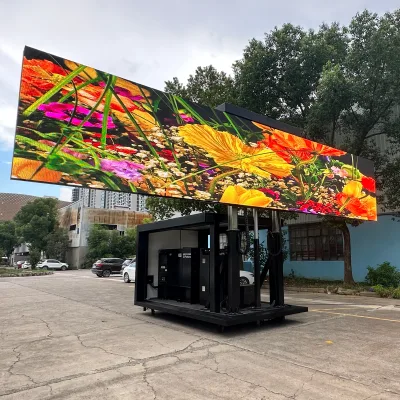
$7950.00 - $11500.00
MOQ: 1 Minimum

Hubei Sunny Special Automobile Co., Ltd
- Verified by TUVRHEINLAND
- Manufacturer/Factory,Group Corporation
- China Hubei
- Lead time23 days
- Avg. response≤ 4h
Main productsFire Truck, LED Truck, Refrigerator Truck, Sewage Truck, Aerial Platform Truck, Water Tanker Truck, Stainless Steel Tanker Truck, Road Sweeper Truck, Garbage Truck
Main marketsSouth America,Eastern Europe,Mid East,North America,Southeast Asia,Eastern Asia,Oceania,Western Europe,Africa

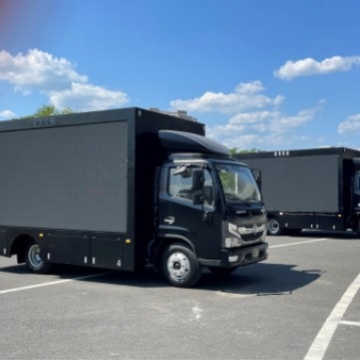
Foton Mobile Cinema Stage Display Vehicles Advertising Screen Van LED Advertising Vehicles
$20000.00 - $25000.00
MOQ: 1 Pieces

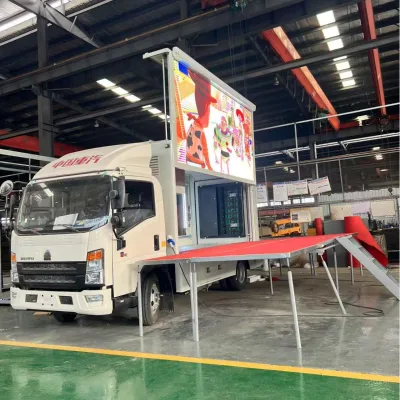
Sino HOWO High-Definition LED Advertising Vehicle with Scrolling Light
$19800.00 - $26000.00
MOQ: 1 Pieces


Comprehensive Sourcing Guide
LED Advertising Vehicle Supplier Concentration and Factory Types
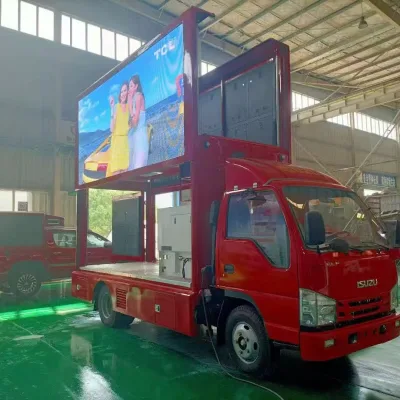
Suppliers of LED Advertising Vehicle products in current listings concentrate in two Chinese provinces with distinctly different profiles. Guangdong sources are typically manufacturers whose core catalogs center on LED display technology itself—indoor and outdoor screens, P2.5 through P10 modules, stage displays, and video walls—so the vehicle is often an integration of their own display production. Hubei sources, by contrast, are dominated by vehicle specialists, including trading companies whose main products span ambulances, refrigerated trucks, tankers, garbage compactors and aerial platform trucks, with advertising vehicles as one body type among many. Some of these operate from Suizhou, a city frequently associated with specialty truck bodybuilding.
Understanding this split matters because it determines who controls which subsystem. A display-focused manufacturer may excel at pixel pitch, brightness and screen reliability but rely on partners for the chassis and hydraulic stage structure, while a vehicle-focused supplier does the reverse. In the current results, company types include both Manufacturer and Trading Company entries, and research capacity labels include ODM, OEM and own-brand designations—useful signals of whether customization is done in-house or brokered. Buyers should treat these labels as starting questions, not conclusions: ask which party builds the trailer or truck body, which party supplies the LED modules and control system, and which party holds responsibility for warranty claims spanning both.
How to Verify LED Advertising Vehicle Suppliers
Start with the verification badges and company-type labels shown in supplier results, then go deeper than the badge. Listings on this page show third-party verification such as BV and SGS, but a verification mark confirms an audit occurred, not that the auditor assessed advertising-vehicle assembly quality specifically. Confirm the supplier's registered business scope covers special-purpose vehicle manufacturing or export, and request evidence that trailer-mounted units comply with road-legal dimensions for your destination market—several listed trailer standards fall in ranges near 5–8 meters in length and around 2.1–2.4 meters in width, which you must reconcile with local transport regulations yourself.
Next, verify the two halves of the product separately. For the display, ask for the actual certifications claimed on specific listings—examples in current data include CCC, CE, ETL and RoHS on a mobile LED screen product—and confirm certificates name the supplier or the screen manufacturer and match the model quoted. For the vehicle, request chassis documentation, engine emission standard documentation (one listing states Euro 3, which will be insufficient in many markets), and confirmation of drive configuration options such as LHD or RHD. Finally, verify operational responsiveness before committing: response-time figures in these results range from under one hour to over a day, so test each candidate with a technical question and measure the reply quality, not just speed, before shortlisting.
What to Compare Across LED Advertising Vehicle Suppliers
Compare suppliers along the attributes actually displayed, while remembering that not every listing carries every attribute. Useful dimensions visible in current results include lead time—one manufacturer-side listing indicates 15 days while a vehicle trading company indicates 30—response time in hours, company type, verification status, location, and main-product breadth. A supplier whose main products are LED displays will answer screen questions quickly but may be slow on vehicle questions; the reverse holds for truck specialists. Weigh lead time against scope: the shorter quoted lead time belongs to a display manufacturer, which may cover only the screen portion of a complete vehicle build.
Then compare product-level technical specifications line by line. Current listings show meaningful variation worth tabulating: screen dimensions ranging from roughly 2.5 x 1.6 meters to 5.7 x 3.8 meters, pixel density of 10000 dots per square meter on one model, 1/4 scan mode, 300W per square meter average power consumption, 110/220V voltage, generator options from 10kW to 30kW on vehicle-mounted units, and trailer versus truck-mounted formats. Also compare commercial flexibility: minimum order quantities of one unit appear in these listings, customization is stated as available on some products, and quoted price bands span from roughly $8,000 to $25,000 depending on configuration. Build a matrix so differences in screen size, power supply and chassis brand become explicit rather than buried in quotes.
Common LED Advertising Vehicle Sourcing Risks
The most common risk is interface ambiguity: nobody clearly owns the seam between the LED screen and the vehicle. If a display maker supplies the screen and a body builder supplies the trailer, questions about waterproofing at the mounting frame, vibration tolerance during road transport, cable routing, and generator-to-screen power matching can fall between two factories. Listings that combine everything under one model number reduce this risk, but you should still ask who performs final integration testing and who you call when the screen fails three months after delivery in another country.
Second is specification drift between listing and contract. Product pages show attributes such as IP ratings, scan modes and pixel configurations, but these describe a configuration, and customized orders may substitute components. Insist the contract lists the exact pixel pitch, module brand or equivalent specification, scan mode, power consumption, screen dimensions and generator rating you were quoted. Third is regulatory mismatch: emission standards, trailer dimensions and screen brightness rules vary by market, and a listing noting Euro 3 or a specific trailer footprint is not a guarantee of your market's compliance. Fourth is the trading-company layer: intermediaries can be excellent coordinators, especially those with fast response times, but confirm whether warranty service is performed by the intermediary, the body factory, or the screen maker, and get that in writing before paying any deposit.
LED Advertising Vehicle Regional Sourcing and Logistics
The two regions represented in current results support different logistics approaches. Guangdong offers proximity to major container ports and to the display-manufacturing supply chain, which suits buyers sourcing screens or screen-led complete units and wanting shorter component lead times; the 15-day lead time shown on a Guangdong display listing reflects that density. Hubei, and specifically Suizhou, sits inland among special-purpose vehicle factories, with deep experience shipping complete trucks; one Hubei listing explicitly lists packing and shipping methods including bulk ship, RO-RO, container and naked shipping, which matters because a fully assembled advertising vehicle rarely fits a standard container.
Ask each supplier which shipping method applies to your configuration. A trailer-mounted unit may roll onto RO-RO or be shipped disassembled in parts; a truck-mounted unit must comply with the destination market's drive-away or shipping requirements. Confirm whether customs clearance is handled FOB, CIF or DAP, and who supplies the export documentation for a special-purpose vehicle, since classification questions are more complex than for plain cargo. Also plan inland logistics at destination: a vehicle of roughly 6.3 by 2.4 by 3.2 meters, as one listing specifies, may exceed height limits on some routes or require escort. Finally, note that vehicle-mounted units with diesel generators involve fuel-system regulations in some ports, so confirm generator fuel type and tank status with your freight forwarder before booking.
LED Advertising Vehicle Commercial Terms and Order Planning
Plan orders around the two-stage cost structure typical of this category. Display-side listings show low minimum orders—a quantity of one unit appears in current data—while prices on complete vehicles or large trailer units span from roughly $8,000 for smaller trailer configurations up to the high teens or twenty-thousand-dollar range for larger truck-mounted builds. Treat listed prices as configuration anchors only: screen size, pixel pitch, chassis brand (several listings mention chassis options across major Chinese truck brands), generator capacity and drive configuration all move the final quote substantially. Request itemized quotations separating screen, vehicle, generator and packing costs so you can compare suppliers on equal terms.
On terms, align payment structure with build milestones rather than a single deposit-and-balance split: a reasonable structure ties a mid-stage payment to chassis arrival or screen integration and the balance to pre-shipment inspection. Use the response-time and lead-time figures as planning inputs—quoted lead times of 15 to 30 days are pre-production indicators, and real delivery for customized vehicles will be longer. If escrow or trade assurance is offered by your chosen platform, use it, but do not assume every supplier participates; verification status in the results reflects audits, not payment protection. Finally, confirm spare-part inclusion—extra LED modules, power supplies and control cards—and specify packing, since current listings mention wooden and honeycomb cartons for display components but say little about vehicle protection in transit.
Word count check: approximately 1,390 words total (section averages: 229, 232, 231, 233, 228, 231).
FAQs
What is the typical price range for an LED Advertising Vehicle?
Listed units in current supplier results range from about 8,000 to 25,000 USD, while some truck-mounted billboard models are quoted between 18,800 and 19,800 USD. Final pricing depends on screen size, chassis brand, generator capacity, and customization level. Request itemized quotations covering the LED screen, vehicle chassis, power system, and shipping to compare offers accurately.
What is the minimum order quantity for LED advertising vehicles?
Many listed LED screen and trailer display products show a minimum order quantity of just 1 piece, so single-unit purchases are generally possible. This suits buyers testing a market or running a single campaign. Confirm the MOQ in writing before ordering, because customized truck-mounted configurations may carry different quantity terms than standard trailer or module products.
How long does production and delivery usually take?
Supplier results show lead times ranging from roughly 15 to 30 days depending on the supplier and configuration. Vehicles combining a chassis with a customized LED screen typically need more production time than standard display modules. Always confirm the lead time for your exact specification, and ask how shipping method, such as RO-RO, bulk ship, or container, affects total delivery time.
Which certifications should an LED Advertising Vehicle have?
Listed products commonly carry CCC, CE, ETL, and RoHS certifications for the LED screen components. Certification requirements vary by destination market, so verify which marks apply to your country before ordering. Some suppliers also hold third-party verification such as BV or SGS. Ask for certificate copies and confirm they match the exact model and screen configuration you intend to purchase.
Can LED advertising vehicles be customized for my campaign?
Customization is generally available. Listed options include customized screen sizes, full color or monochrome display, custom colors and logos, left-hand or right-hand drive, and optional chassis brands. Suppliers also list ODM and OEM capabilities for display products. Provide your screen dimensions, power requirements, and branding needs early, and confirm customization terms, costs, and lead time in the purchase contract.
What screen specifications matter most when comparing vehicles?
Key specifications include pixel density, listed examples showing 10,000 dots per square meter, scanning mode such as 1/4 scan, IP rating for weather resistance, and average power consumption around 300W per square meter. Screen dimensions on listed models range widely, for example from about 2560 by 1600 mm up to 5760 by 3840 mm. Match these specs to your viewing distance and campaign environment.
Where are LED Advertising Vehicle suppliers mainly located?
Current supplier results point mainly to China, with manufacturers in Guangdong specializing in LED screens and displays, and trading companies in Hubei, particularly around Suizhou, offering truck-mounted advertising vehicles. Guangdong suppliers tend to focus on display technology while Hubei suppliers specialize in commercial vehicle bodies. Consider both regions and compare screen quality against vehicle chassis expertise before choosing.
How fast do suppliers respond to inquiries?
Response times recorded in the supplier results range from under 0.1 hours to just over 1 hour, which indicates generally fast inquiry handling among listed suppliers. Fast replies help during specification discussions and quote comparisons. Send a detailed inquiry covering screen size, chassis preference, and destination port, then compare not only reply speed but also the completeness and accuracy of each response.