Waterproof Bamboo Mattress Protector Suppliers and Manufacturers
Source 12 verified suppliers for Waterproof Bamboo Mattress Protector products. Compare key dimensions including ISO certifications, response times, and MOQs to find the right partner. Review detailed product specifications and pricing to initiate your sourcing process; review the available evidence before requesting comparable quotations from suitable candidates.
Suppliers List

Shandong Angel Home Textile Co., Ltd.
- Combined
- China Shandong
- Lead time30 days
- Avg. response≤ 9h
Main productsMattress Cover, Mattress Protector, Duvet, Comforter, Pillow, Blanket, Bedding Linen, Home Textile
Main marketsSouth America,Africa,Southeast Asia/ Mideast,East Asia(Japan/ South Korea),Domestic,Europe,Australia,North America

Hangzhou Yiying Trade Co., Ltd.
- Verified by CTI
- Trading Company,Manufacturer/Factory
- China Zhejiang
- Lead time23 days
- Avg. response≤ 19h
Main productsComforter, Bed Lines, Pillow, Mattress Topper, Mattress Protector, Blankets, Raw Material of Polyester Down Feather, Pet Bed, Down Products, Fabric
Main marketsSouth America,Eastern Europe,Mid East,North America,Southeast Asia,Eastern Asia,Oceania,Western Europe,Africa


Cooling Quilted Fitted Mattress Protector Bamboo Waterproof Mattress Protector
$10.65 - $11.30
Moq: 200


Hangzhou Mosheng Textiles Co., Ltd.
- Verified by BV
- Trading Company,Manufacturer/Factory
- China Zhejiang
- Lead time45 days
- Avg. response≤ 9h
Main productsWeighted Blanket, Comforter, Bed Sheet Set, Pillow, Mattress Topper, Mattress Pad, Mattress Protector, Fabric, Reading Pillow, Cushion
Main marketsSouth America,Eastern Europe,Mid East,North America,Southeast Asia,Eastern Asia,Oceania,Western Europe,Africa

ANHUI KINGSON HOUSEHOLD PRODUCTS CO., LTD.
- Trading Company
- China Anhui
- Lead time30 days
- Avg. response≤ 13h
Main productsWeighted Blanket, Knit Weighted Blanket, Down Comforter, Camping Blanket, Pillows, Bedding Set, Camping Mat, Sandy Blanket
Main marketsSoutheast Asia/ Mideast,East Asia(Japan/ South Korea),Europe,Australia,North America


Premium Soft Breathable Bed Mattress Cover Waterproof Bamboo Mattress Protector
$2.10 - $3.32
Moq: 300


Wuxi Tongyi Home Textile Co., Ltd.
- Verified by SGS
- Combined
- China Jiangsu
- Lead time30 days
- Avg. response≤ 1h
Main productsBedding Set, Bed Sheet, Cover
Main marketsDomestic

Cooling Bamboo Fiber Bed Cover Stretch Fitted Design Waterproof Mattress Protector
$6.90 - $13.90
Moq: 200

Custom Size Eco-Friendly Bamboo Mattress Protector Waterproof Fitted Mattress Cover
$6.90 - $13.00
Moq: 200


Hangzhou Grand Home Textile Co., Ltd.
- Combined
- China Zhejiang
- Lead time30 days
- Avg. response≤ 11h
Main productsPillow, Quilt, Blanket, Mattress, Cushion, Mattress Top, Quilt Cover Set, Down Duvet
Main marketsSouth America,Southeast Asia/ Mideast,East Asia(Japan/ South Korea),Europe,Australia,North America

- Verified by BV
- Combined
- China Shandong
- Lead time45 days
- Avg. response≤ 2h
Main productsMattress Protector, Mattress Cover, Waterprof Pad, Waterproof Mattress Fitted Sheet, Mattresss Fitted Sheet, Mattress Encasement, Mattress Pad, Lamianted Fabric, Terry Fabric, Ultrasonic Product
Main marketsSouth America,Southeast Asia/ Mideast,East Asia(Japan/ South Korea),Europe,Australia,North America

- Verified by SGS
- Manufacturer/Factory
- China Jiangsu
- Lead time45 days
- Avg. response≤ 15h
Main productsHome Textiles, Household Products, Outdoor Product, Sport, Pet, Heated Products
Main marketsSouth America,Eastern Europe,Mid East,North America,Southeast Asia,Eastern Asia,Oceania,Western Europe,Africa

Guangzhou Unique Hotel Supplies Co., Ltd.
- Verified by CTI
- Trading Company,Manufacturer/Factory
- China Guangdong
- Lead time15 days
- Avg. response≤ 14h
Main productsServing Tray, Ice Bucket, Gn Pan, Kitchenware, Water /Beer Cup, Plastic Products, Pitchers/Kettles, Food Plate Cover, Bowls, Organizer and Holder
Main marketsSouth America,Eastern Europe,Mid East,North America,Southeast Asia,Eastern Asia,Africa

Waterproof Queen Mattress Protector Bed Pad Cover Bamboo Pattern Mattress Cover
$1.50 - $16.50
Moq: 50

Breathable Mattress Protector Bamboo Viscose Waterproof Queen Size Mattress Cover
$1.50 - $16.50
Moq: 50


Shijiazhuang Yingfang Trade Co., Ltd.
- Trading Company
- Hebei, China
- Lead time30 days
- Avg. response≤ 6h
Main productspillow shell,bedding produccts,mattress protector,bedsheet,woven label
Main marketsOceania(40.0%), North America(40.0%), Western Europe(5.0%), Southern Europe(5.0%), Northern Europe(5.0%), Southeast Asia(3.0%), South America(2.0%)
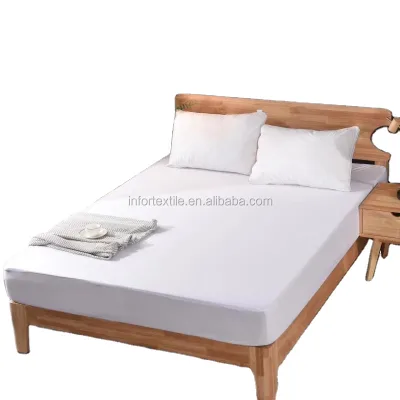
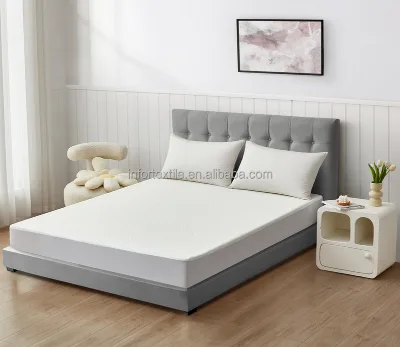
High Sales Bamboo Protector Waterproof Breathable Soft Fabric King Size Cover Protector
$5.36 - $6.49
Moq: 1000
Qingdao Etrip Smart Home Co., Ltd.
- Verified by SGS Group
- Manufacturer, Trading Company
- Lead time25 days
- Avg. response≤ 3h
Main productsMattress Covers & Protectors, Comforters, Mattress Pads & Toppers, Mattresses, Living Room Sofas
Main marketsNorth America(70%), Western Europe(15%), Eastern Europe(5%)

Qingdao Chifang Textile and Industry Co., Ltd.
- Verified by SGS
- Trading Company,Manufacturer/Factory
- China Shandong
- Lead time45 days
- Avg. response≤ 12h
Main productsHotel Bed Linen/White Fabric, Cotton Fabric, Bathrobe, Quilt Cover, Bedding, Pillow, Bath Towel/Hand Towel, Bedspread, Slippers, Carpet Floor Mats
Main marketsSouth America,Eastern Europe,Mid East,North America,Eastern Asia,Western Europe


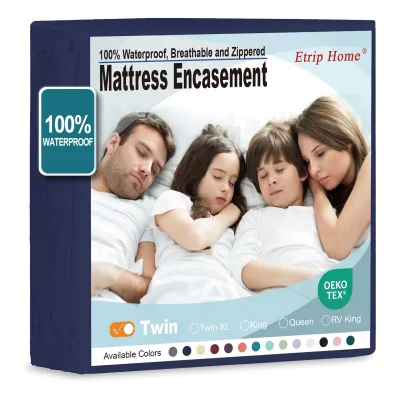
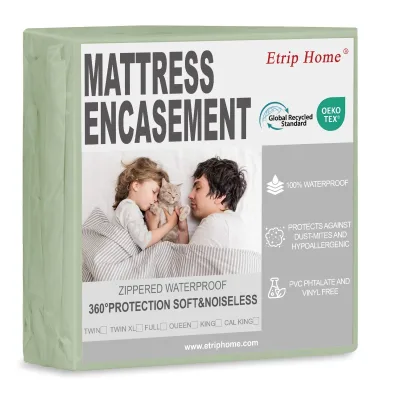
Cheap Price Soft Non-Woven Fabric Waterproof Mattress Cover Bed Mattress Protector
$5.50 - $10.00
Moq: 100


Comprehensive Sourcing Guide
Waterproof Bamboo Mattress Protector Supplier Concentration and Factory Types
Current data indicates that verified suppliers for waterproof bamboo mattress protectors are concentrated in specific Chinese provinces, with Shandong and Zhejiang emerging as primary manufacturing hubs. Factories in these regions often operate as combined entities, functioning as both manufacturers and trading companies to streamline the supply chain. This dual capability allows them to offer a broader range of home textile products, including duvets, pillows, and various bedding linens alongside their core mattress protection items. The presence of these combined company types suggests a flexible production environment capable of handling both direct manufacturing and sourcing for other clients.
When evaluating the factory type, buyers should look for evidence of in-house research and development capabilities, such as the ability to support own-brand, ODM, and OEM services. Some suppliers explicitly list their capacity to produce custom designs, which is critical for buyers seeking unique product specifications. The concentration of these facilities in Shandong and Zhejiang provides a logistical advantage, as these regions have established infrastructure for exporting home textiles. However, buyers must verify that the specific factory they engage has the actual machinery and workforce to produce bamboo fiber products, rather than relying solely on trading company networks that may outsource production to third parties without direct oversight.
How to Verify Waterproof Bamboo Mattress Protector Suppliers
Verification begins with checking for recognized system certifications that demonstrate a commitment to quality and safety standards. Available data shows that some suppliers hold ISO9001:2015, ISO14001:2015, and ISO45001:2016 certificates, which cover quality management, environmental management, and occupational health and safety respectively. Additionally, third-party verification services like CTI may be listed for specific suppliers, providing an external layer of trust regarding their factory conditions and product compliance. Buyers should request copies of these certificates and confirm their validity dates to ensure the supplier maintains current standards rather than relying on expired credentials.
Beyond certifications, buyers must assess the supplier's response time and communication reliability as indicators of operational stability. Data points suggest response times can vary significantly, with some suppliers averaging around 8.66 hours while others may take up to 18.56 hours. A faster response time often correlates with a more active sales team and better project management capabilities. Furthermore, buyers should verify the supplier's main product list to ensure they specialize in home textiles and bedding rather than being a generalist trading company. Confirming that the supplier's primary output includes mattress protectors, comforters, and related bedding linens ensures they possess the specific technical knowledge required for waterproof bamboo products.
What to Compare Across Waterproof Bamboo Mattress Protector Suppliers
When comparing suppliers, the minimum order quantity (MOQ) is a critical factor that directly impacts inventory planning and cash flow. Current product listings show MOQs ranging from 50 sets to 200 sets depending on the specific model and customization level. For instance, some standard woven polyester models may require a lower entry point of 50 sets, while knitted bamboo fiber options or custom designs might demand 100 or 200 sets. Buyers must align these thresholds with their initial order volume to avoid overstocking or incurring unnecessary per-unit costs. It is essential to clarify whether the MOQ applies per color, per size, or per total order, as this distinction can significantly alter the total investment required.
Lead time and pricing structure are equally vital dimensions for comparison across different supplier profiles. The observed lead times for production range from 23 to 30 days, which influences the overall timeline from order placement to delivery. Suppliers with shorter lead times may offer a competitive advantage for urgent orders, but buyers should verify if this speed compromises quality control processes. Pricing also varies based on material composition, with some products listed between $4.50 and $12.80 depending on features like flame retardancy or cooling technology. Buyers should compare the price-to-feature ratio, ensuring that higher costs are justified by specific attributes such as bamboo fiber content, anti-bacterial treatments, or specialized packaging like export cartons versus PVC handbags.
Common Waterproof Bamboo Mattress Protector Sourcing Risks
One significant risk involves the discrepancy between product descriptions and actual material composition, particularly regarding bamboo fiber content. While many listings advertise "Bamboo Fiber" or "Rayon from Bamboo," some products are listed as 100% Polyester with bamboo branding. This distinction is crucial because the performance characteristics, such as breathability and moisture-wicking, differ substantially between natural bamboo fibers and synthetic polyester blends. Buyers must request detailed material specifications and, if possible, third-party lab test results to confirm the actual fiber content before finalizing an order. Relying solely on marketing keywords without verifying the technical data sheet can lead to receiving products that do not meet the expected performance standards.
Another risk pertains to the consistency of product features and the reliability of customization claims. Suppliers often list features like "Anti-Bacteria," "Flame Retardant," and "Waterproof," but the durability and effectiveness of these treatments can vary. Some products are marked as disposable, while others are designed for long-term use with machine wash capabilities. Buyers need to verify the specific standards these features meet, as "waterproof" can range from water-resistant to fully impermeable. Additionally, customization options for logos and patterns must be confirmed with clear proofs before mass production begins. Failure to validate these details can result in receiving goods that fail to meet the specific requirements of the target market, leading to returns or reputational damage.
Waterproof Bamboo Mattress Protector Regional Sourcing and Logistics
Sourcing from the identified regions of Shandong and Zhejiang offers distinct logistical advantages due to their proximity to major ports and established export infrastructure. Suppliers in these provinces are accustomed to handling international shipping requirements, often utilizing standard export cartons or specialized packaging like PVC handbags to protect goods during transit. The regional concentration of manufacturers means that freight forwarders are familiar with the specific dimensions and weight profiles of bedding products, which can help optimize shipping costs. Buyers should inquire about the specific packing methods used by each supplier, as this directly impacts the number of units that can fit into a container and the overall freight expense.
However, buyers must also consider the potential for variability in lead times based on regional production schedules and seasonal demand. While some suppliers report lead times of 23 days, others may require up to 30 days, which can affect the timing of inventory replenishment. It is advisable to discuss the production schedule early in the negotiation process to ensure that the supplier can meet the required delivery date. Additionally, buyers should verify the origin of the raw materials, as some suppliers may source bamboo fibers from different regions, which could impact the final product's consistency. Understanding the supply chain flow from raw material to finished goods helps in anticipating potential delays and planning accordingly.
Waterproof Bamboo Mattress Protector Commercial Terms and Order Planning
Commercial terms regarding payment and service levels are essential for mitigating financial risk and ensuring a smooth transaction. Some suppliers offer service commitments such as 24-hour response times, which can be critical for resolving issues quickly. Buyers should clarify the payment terms, including whether escrow services are available to protect funds until the goods are verified. The availability of escrow provides a safety net, ensuring that payment is only released once the product meets the agreed-upon specifications and quality standards. It is also important to confirm the warranty or return policy for defective items, as this protects the buyer against manufacturing defects that may not be apparent until the goods are received.
Order planning must account for the specific product attributes and customization requirements to avoid production delays. Buyers should finalize all design details, including pattern, color, and logo placement, before production begins, as changes mid-stream can extend lead times. The product standard, whether it is a custom design or a standard model, should be clearly documented in the purchase order. Additionally, buyers should plan for the possibility of sample approval, as many suppliers require a pre-production sample to confirm the quality of the bamboo fiber and waterproofing treatment. By aligning the order timeline with the supplier's production capacity and response capabilities, buyers can ensure a timely delivery that meets their market demands.
FAQs
What is the price range for waterproof bamboo mattress protectors?
Prices typically range from $4.50 to $12.80 per unit depending on material composition and customization options. Basic polyester blends start around $4.50, while premium bamboo fiber versions cost up to $12.80. Buyers should verify specific pricing tiers with suppliers based on order volume and feature requirements.
What are the minimum order quantities for these products?
Minimum order quantities vary between 50 and 200 sets. Some suppliers accept orders as low as 50 sets for standard designs, while others require 100 or 200 sets for customized bamboo fiber options. Buyers must confirm the exact MOQ with the supplier before placing an order to ensure compliance.
How long does production take for these protectors?
Production lead times generally range from 23 to 30 days. Suppliers in Zhejiang Province often offer faster turnaround times around 23 days, while those in Shandong may require up to 30 days. Buyers should confirm the exact schedule with the supplier to align with their inventory needs.
What certifications do these suppliers hold?
Suppliers commonly hold ISO9001:2015, ISO14001:2015, and ISO45001:2016 certificates. Some also possess BSCI certification and undergo CTI verification. Buyers should request valid certificate copies to ensure the supplier meets international quality and environmental standards for their specific sourcing requirements.
Where are these manufacturers located?
Manufacturers are primarily located in China, specifically in Shandong and Zhejiang provinces. Shandong suppliers often focus on combined manufacturing capabilities, while Zhejiang suppliers may operate as trading companies or factories. Buyers should verify the exact location to assess logistics costs and supply chain reliability.
What materials are used in these protectors?
Materials include 100% polyester, bamboo fiber, and bamboo fabric blends. Some products feature knitted or woven technics with waterproof and anti-bacterial features. Buyers should specify their preferred material composition to ensure the product meets their comfort and durability requirements.