Source 10 Person Outboard Pontoon Boat for fishing, recreation, and luxury tours
Compare 30 listings of 10 Person Outboard Pontoon Boat options featuring aluminum hulls, CE/ISO9001 certification, and custom logo printing. Buyers can evaluate models ranging from 21ft to 30ft with varying beam widths and engine power requirements for sport fishing or recreational use.
Key considerations
Products List

6~8 Persons Pontoon Boat with Outboard Motor for Entertainment Pontoon Boat
$11880.00 - $12880.00
MOQ: 1 Pieces

Double Deck 27FT Aluminum Luxury Pontoon Boat Outboard Fishing Party Pontoon Boat
$28680.00 - $29680.00
MOQ: 1 Pieces


Multi-Color Fence Design 30FT Submarine Double Deck Pontoon Boat Aluminum Pontoon Boat
$32280.00 - $33280.00
MOQ: 1 Pieces

Outboards Motors Lake Tourism Pleasure Fishing Pontoon Boat with Bimini for Sale
$13280.00 - $14280.00
MOQ: 1 Pieces


Allsea Pontoon Boat 10 Person Customized 21FT 6.4m Aluminum Alloy Pontoon Yacht Boat for Sale
$12000.00 - $12675.00
MOQ: 1 SET/SETS


Factory Direct Aluminum Boat Double-Decker Pontoon Party Boat for Sale
$32200.00 - $33100.00
MOQ: 1 set/sets

23FT 7m 10people Family Party Pontoon Boat with Sun Lounge for Sale
$13900.00 - $15900.00
MOQ: 1 Pieces


Aluminum Pontoon Boat Freshwater Vessel Party Cruising Sport Pontoon Boat for Sale
$12500.00 - $16900.00
MOQ: 1 Pieces

7.50m Aluminum Fishing Boat Pontoon Boat Double Deck Pontoon Boat with Second Deck
$15366.00 - $19899.00
MOQ: 1 Pieces

7.50m Aluminum Fishing Boat Pontoon Boat Double Deck Pontoon Boat with Second Deck
$12000.00 - $19000.00
MOQ: 1 Pieces

$23000.00 - $28000.00
MOQ: 1 Pieces


6 - Person Pedal Boat: Factory Direct Quality Assurance Electric Amusement Boat
$1154.00 - $1250.00
MOQ: 1 Pieces

Eco Friendly Leisure Sightseeing Boat Aluminum Alloy Pontoon Party Fishing Boat
$4800.00 - $23000.00
MOQ: 1 Pieces

Luxurious Aluminum Alloy Water Boat Black Floating Bottom with Top Outboard Power
$4900.00 - $7900.00
MOQ: 1 Pieces

Eco Friendly Leisure Sightseeing Boat Aluminum Alloy Floating Party Fishing Boat
$4800.00 - $15000.00
MOQ: 1 Pieces


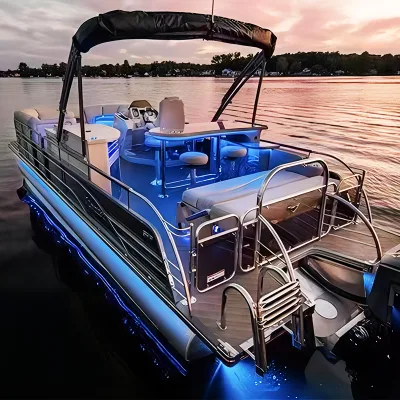
2024 Popular Styles Necessary Pontoon Boat on the Island That Can Repace Yacht Fishing Boats
$10173.82 - $11201.47
MOQ: 1 Minimum


Comprehensive Sourcing Guide
Strategic Sourcing Guide for 10-Person Outboard Pontoon Boats
Understanding the Technical Landscape of Aluminum Pontoon Vessels
When sourcing a 10-person outboard pontoon boat, buyers must first reconcile the specific terminology used in the market with the physical realities of the vessel. The core keyword often implies a recreational craft designed for leisure, yet the technical specifications available in the current supply chain reveal a complex mix of aluminum hulls and inflatable tube configurations. A critical observation from the available product data is the divergence between "Luxury Yacht" classifications and "Sport Fisherman" usage profiles. While the term "pontoon" typically suggests a flat-decked, stable platform, the observed data includes models described as having a "Fish form" hull surface profile and "Two Tubes/ Tritoon" configurations. This indicates that the market offers a spectrum of designs, ranging from traditional multi-tube pontoons to more specialized aluminum hulls that may be marketed under the broader pontoon umbrella.
The material composition is a primary differentiator. The supplied facts confirm that a significant portion of the inventory utilizes 5052 Aluminum Alloy, a material chosen for its corrosion resistance and structural integrity in marine environments. This is distinct from inflatable pontoon boats, which rely on high-pressure tubes. The data explicitly notes that some units are "Not Inflatable," suggesting a rigid aluminum construction, while other entries reference a "Tube Diameter" of 635mm or 735mm. For a buyer targeting a 10-person capacity, the distinction between a rigid aluminum hull and an inflatable tube system is paramount. A rigid aluminum hull, often with a beam width of 2.3m to 2.6m, offers a different stability profile compared to a dual-tube or tri-tube inflatable setup. The observed hull lengths vary significantly, ranging from 4.6m up to 11m, with specific models like the PB-19FT and PBD-27 indicating lengths between 7.6m and 9m.
Capacity is another area requiring precise verification. The data lists a capacity of "6~8 persons" for certain models, which falls short of the 10-person target. Buyers must be aware that a vessel marketed as a "10-person" boat may not universally meet this standard across all suppliers or models. The observed specifications for the PB-21 and PBD-30FT models suggest hull lengths of 7.6m to 11m, which are more likely to accommodate larger groups. However, the "Fish form" hull profile mentioned in the data suggests a design optimized for specific water conditions rather than a flat, stable platform typical of recreational pontoons. Therefore, the technical definition of a "10-person outboard pontoon boat" in this supply chain is not monolithic; it encompasses rigid aluminum boats, inflatable hybrids, and specialized fishing platforms, all of which must be evaluated against the specific needs of the end-user.
Compliance, Certification, and Regulatory Verification
Navigating the regulatory landscape is essential for international procurement, particularly when dealing with marine vessels that will operate in diverse jurisdictions. The supplied product facts highlight "CE/ISO9001" as a certification standard for the available inventory. The CE marking indicates conformity with health, safety, and environmental protection standards for products sold within the European Economic Area, while ISO9001 signifies that the manufacturer adheres to a quality management system. However, buyers must treat these as observations of specific listings rather than universal guarantees for every unit in the 10-person category. The presence of these certifications suggests a baseline of quality control, but they do not automatically validate the vessel for use in all markets, such as the United States, which may require additional Coast Guard compliance or specific safety standards.
The origin of the vessels is predominantly listed as Qingdao, Shandong, China, or generally "Shandong." This geographic concentration implies a specific supply chain ecosystem where manufacturers are accustomed to exporting to global markets. When verifying compliance, buyers should not assume that a CE mark on a specific model (like the PB-19FT) applies to all variations of a 10-person boat. The data also mentions a "prod_standard" of 5.8m2.3m1.5m for certain units, which serves as a dimensional benchmark but does not constitute a safety certification. Buyers must request specific documentation proving that the vessel meets the safety regulations of the destination country. This includes verifying the validity of the CE certificate, checking the scope of the ISO9001 certification, and inquiring about any marine-specific approvals required for the engine and hull construction.
Furthermore, the "Warranty" attribute of 3 Years is a significant commercial term that often correlates with the manufacturer's confidence in their compliance and build quality. A three-year warranty on an aluminum hull suggests a commitment to durability, but it is crucial to understand the terms of this warranty. Does it cover structural integrity, or only specific components? The "Customized Logo Printing" and "OEM" branding options indicate that many suppliers are willing to rebrand vessels, which can complicate compliance tracking. If a buyer orders an OEM vessel, the original manufacturer's certifications may be transferred, but the new branding must still align with local regulatory requirements. Buyers should verify that the certification documents provided are current and match the specific model number and hull serial number of the vessel being purchased.
Cost Drivers and Pricing Structure Analysis
The pricing for 10-person outboard pontoon boats in the current market exhibits a wide variance, with observed listed prices ranging from $1,154 to $400,000 USD. This broad spectrum indicates that the "10-person" category is not a single price point but a segment containing entry-level recreational boats, mid-range sport fishing vessels, and high-end luxury yachts. The lower end of the price range likely corresponds to smaller aluminum boats or basic inflatable configurations, while the upper end reflects larger, fully equipped luxury vessels with advanced features. Buyers must understand that the price is heavily influenced by the hull material, the type of engine, and the level of customization.
The "Rec. Power" of 90-150HP is a key cost driver. The inclusion of an outboard engine in this power range significantly impacts the total cost of ownership. A vessel equipped with a 150HP engine will be substantially more expensive than one with a 90HP unit, and the price difference extends to the fuel efficiency and maintenance requirements over the vessel's lifespan. Additionally, the "EVA Floor" and "Seagrass" floor options mentioned in the data represent different material choices that affect the final price. EVA flooring is generally more durable and easier to clean, potentially commanding a higher price point compared to seagrass, which may be a more traditional or aesthetic choice.
The "MOQ" (Minimum Order Quantity) is observed to be as low as 1 unit for some models, while others may have a range of 1-3 units. This flexibility is advantageous for buyers who do not require bulk procurement but must still consider the unit economics. The "prod_packing" method, listed as "Container," implies that shipping costs will be a significant factor in the total landed cost. Larger vessels, such as those with a hull length of 11m, may require specialized shipping arrangements beyond standard containerization, further influencing the overall cost. Buyers should also factor in the "Customization" availability, which, while offering flexibility, can add to the lead time and production costs. The "Brand" attribute, listing "Allhouse/OEM," suggests that branded vessels may carry a premium compared to generic or unbranded units.
Typical Applications and Operational Use Cases
The operational use cases for 10-person outboard pontoon boats vary widely based on the specific design and configuration. The data identifies "Sport Fisherman" and "Recreational" as primary usage categories. For sport fishing applications, the "Fish form" hull surface profile and the "Two Tubes/ Tritoon" configuration are particularly relevant. These designs offer enhanced stability and maneuverability, which are critical for anglers who need to cast lines and manage gear while moving. The "Aluminum" hull material is ideal for these applications due to its resistance to corrosion from saltwater and its ability to withstand the rigors of fishing activities.
In the recreational sector, the "Luxury Yacht" classification suggests a focus on comfort and aesthetics. These vessels are likely equipped with features such as "EVA Floor" for a premium feel and "Customized Logo Printing" for branding or personalization. The "White" color is a standard observation, likely chosen for its ability to reflect heat and maintain a clean appearance. The capacity of 6 to 8 persons, as noted in some models, may be insufficient for a true 10-person group, requiring buyers to specifically seek out larger models like the PB-25FT or PBD-30FT, which have hull lengths extending to 11m.
The "Folded: Unfolded" attribute indicates that some vessels may have modular or collapsible components, which could be beneficial for storage and transport. However, the "Not Inflatable" designation for certain models suggests that the primary structure is rigid, which is more suitable for permanent or semi-permanent installations. The "Tube Diameter" of 635mm or 735mm is a critical specification for inflatable pontoons, as it determines the buoyancy and stability of the vessel. For a 10-person boat, a larger tube diameter is generally preferred to ensure adequate buoyancy and safety margins. Buyers should match the application to the specific design features, ensuring that the vessel's capabilities align with the intended activities, whether it is high-speed recreation, deep-sea fishing, or leisurely cruising.
Supplier Evaluation and Quality Assurance Protocols
Evaluating suppliers for 10-person outboard pontoon boats requires a rigorous approach to quality assurance. The "ISO9001" certification is a strong indicator of a supplier's commitment to quality management, but it should be verified through direct communication and document review. Buyers should request evidence of the certification, including the scope of the audit and the validity period. The "3 Years Warranty" is another critical metric, as it reflects the supplier's confidence in their product's durability. However, the terms of the warranty must be clearly understood, including what is covered, the process for claims, and the geographic limitations of the service.
The "prod_origin" of Qingdao, Shandong, China, is a common location for these manufacturers, but it does not guarantee uniform quality across all suppliers. Buyers should conduct site visits or request third-party inspection reports to verify the manufacturing processes and material sourcing. The "5052 Aluminum Alloy" is a specific material grade, and buyers should ensure that the supplier uses genuine 5052 alloy and not a lower-grade substitute. The "Tube Dia." and "Beam" specifications should be cross-referenced with the physical dimensions of the vessel to ensure accuracy.
Quality control should also extend to the assembly and finishing processes. The "Customized Logo Printing" and "Floor" options (EVA or Seagrass) require attention to detail to ensure a high-quality finish. Buyers should request samples or photos of previous work to assess the craftsmanship. The "prod_packing" method, specifically "Container," should be evaluated for its ability to protect the vessel during transit. Proper packaging is essential to prevent damage to the hull, tubes, and interior fittings. Finally, the "Brand" attribute, whether "Allhouse" or "OEM," should be considered in the context of the supplier's reputation and track record. A supplier with a strong brand presence is often more likely to maintain consistent quality standards.
Long-Term Procurement and Lifecycle Management
Long-term procurement considerations for 10-person outboard pontoon boats extend beyond the initial purchase price to include maintenance, operational costs, and lifecycle management. The "3 Years Warranty" provides a baseline of protection, but buyers should plan for ongoing maintenance costs, including engine servicing, hull cleaning, and potential repairs. The "Rec. Power" of 90-150HP engines will require regular fuel and maintenance, which can accumulate significant costs over time. Buyers should also consider the availability of spare parts and the technical support offered by the supplier.
The "Customization" feature allows for future modifications, but it is important to ensure that any changes do not compromise the vessel's structural integrity or safety. The "EVA Floor" and "Seagrass" options have different maintenance requirements; EVA is generally easier to clean and more durable, while seagrass may require more frequent replacement or treatment. The "Hull Durface Profile" of "Fish form" may require specialized maintenance to prevent corrosion and maintain performance.
Buyers should also consider the resale value and market demand for the specific model. The "Luxury Yacht" classification may command a higher resale value compared to standard recreational boats. The "prod_standard" and "prod_model" numbers (e.g., PB-19FT, PBD-27) should be tracked to ensure that the vessel remains compatible with future upgrades or replacements. Finally, the "Capacity" of 6~8 persons versus the target of 10 persons should be re-evaluated periodically to ensure the vessel continues to meet the operational needs of the user group. By planning for these long-term factors, buyers can ensure a sustainable and cost-effective procurement strategy for their 10-person outboard pontoon boat fleet.
FAQs
What is the hull material for these boats?
The hull material is 5052 Aluminum Alloy. This material provides excellent corrosion resistance and structural integrity for marine environments, distinguishing these vessels from inflatable tube boats.
Can I get a customized logo on the boat?
Yes, customized logo printing is available for these vessels. Buyers can request OEM branding options, though they must verify that the new branding aligns with local regulatory requirements.
Which certification standards do the boats meet?
The boats carry CE and ISO9001 certifications. These indicate conformity with European safety standards and adherence to quality management systems, though buyers should verify specific model documentation.
What is the typical warranty period offered?
A 3-year warranty is standard for these aluminum hull vessels. This coverage reflects the manufacturer's confidence in durability, but buyers must clarify specific terms regarding structural integrity.
How many persons can the boat typically carry?
Capacity ranges from 6 to 8 persons for some models. Larger models with hull lengths up to 11m are required to accommodate groups closer to 10 persons safely.
Where are these boats manufactured?
The boats originate from Qingdao, Shandong, China. This geographic concentration implies a specific supply chain ecosystem accustomed to exporting marine vessels to global markets.