Source 1000bar High Pressure Test Hose for pumps, valves, and cylinders
Find 30 listings for 1000bar High Pressure Test Hose from verified Chinese suppliers. Compare rubber materials, pressure ratings, and customization options for hydraulic equipment applications.
Key considerations
Products List


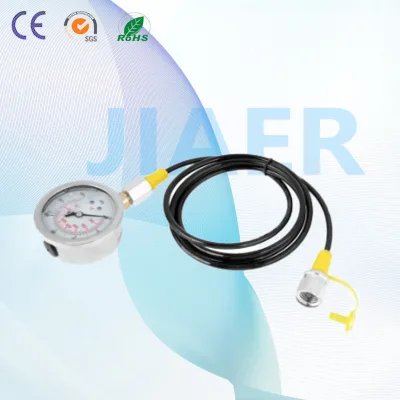
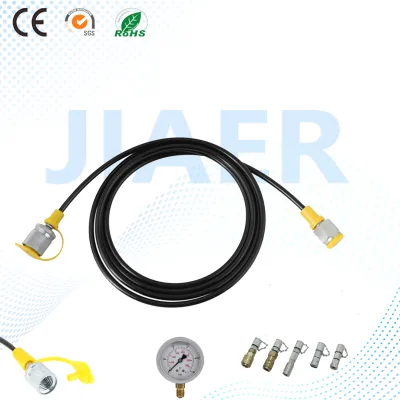


Comprehensive Sourcing Guide
Sourcing Strategy for 1000bar High Pressure Test Hoses
Procuring a 1000bar high-pressure test hose requires a rigorous approach that balances technical performance with supply chain reliability. In the industrial sector, hoses rated for pressures between 1000 and 2800 bar are critical for hydraulic testing, high-pressure cleaning, and specialized equipment operations. The market offers a diverse array of options, but the specific requirement for a 1000bar rating narrows the field to manufacturers capable of producing reinforced rubber and polymer solutions that meet stringent safety and durability standards. This guide outlines the essential factors buyers must evaluate to ensure the selection of a product that performs safely under extreme conditions.
Technical Specifications and Material Composition
The foundation of any high-pressure hose lies in its material composition and dimensional specifications. For applications demanding 1000bar resistance, the hose must be constructed from materials capable of withstanding significant internal stress without rupturing. The available market data indicates that manufacturers utilize a variety of elastomers, including Butyl rubber, EPDM, Fluorocarbon rubber, HNBR, Neoprene, Nitrile rubber, Polyurethane rubber, and Silicone rubber. Each material offers distinct advantages; for instance, Nitrile rubber is often favored for its oil resistance, while Silicone rubber provides excellent temperature stability. Buyers must verify that the specific material selected aligns with the fluid being transported and the environmental conditions of the application.
Dimensional consistency is equally critical. High-pressure hoses are available in various inner diameters (ID) and outer diameters (OD). Observed specifications in the market range from an ID of 3-6 mm up to 3-10 mm, with corresponding OD sizes varying from 6.9-18.6 mm to 6.9-36.3 mm. Larger diameter options, such as those ranging from 3mm-25mm or even up to 1200mm in specific custom configurations, are also available. The wall thickness and reinforcement layers, often implied by the high-pressure rating, must be sufficient to handle the 1000bar load. Additionally, the hose length is frequently customizable, allowing buyers to tailor the product to specific equipment setups. The processing services employed, such as cutting and moulding, play a vital role in achieving these precise dimensions and ensuring the structural integrity of the final product.
Compliance and Certification Verification
When dealing with equipment subjected to 1000bar of pressure, compliance with international safety and environmental standards is non-negotiable. While specific test data for individual units may vary, the presence of recognized certifications provides a baseline for quality assurance. Buyers should look for products that carry certifications such as CE, CB, ETL, RoHS, and UR. These marks indicate that the product has undergone testing for electrical safety, environmental compliance, and general product safety, which is particularly relevant for hoses used in conjunction with powered equipment.
The standard of the product is another key verification point. While some listings reference a "Standard" classification, buyers must ensure that the hose meets the specific industry standards required for high-pressure testing. The market data mentions standards ranging from 1/8-1" and specific model numbers like "Spirstar" or "Megajet," which may correspond to proprietary or industry-specific designations. It is essential to request documentation proving that the hose meets the relevant pressure ratings and safety protocols. The origin of the product, often listed as China with specific regions like Beijing or Hebei noted, should be verified to ensure the manufacturer adheres to the claimed standards. Buyers should not assume that a product labeled "Standard" automatically meets the rigorous demands of 1000bar testing without explicit verification of the testing protocols used.
Cost Drivers and Pricing Dynamics
The pricing of high-pressure test hoses is influenced by several variables, including material costs, manufacturing complexity, and order volume. The observed price range in the market spans from 0.2 USD to 1500 USD, reflecting the vast difference between small, single-item components and large, custom-engineered hose assemblies. The minimum order quantity (MOQ) also varies significantly, ranging from 1 to 10,000 units. This flexibility allows buyers to source small quantities for prototyping or maintenance while also accommodating large-scale industrial deployments.
Several factors drive the cost of a 1000bar hose. The choice of material is a primary driver; specialized rubbers like Fluorocarbon or HNBR typically command a higher price than standard Nitrile or EPDM. Customization is another significant cost factor. While customization is widely available, including custom sizes and lengths, it often incurs additional tooling or setup fees. The packaging method, which can range from woven bags to wooden cases, also impacts the final cost, especially for international shipping. Buyers should note that while small orders are accepted, the per-unit cost may be higher for smaller quantities. Conversely, larger orders may benefit from economies of scale but require a higher upfront commitment. Understanding these cost drivers helps buyers negotiate effectively and budget accurately for their procurement needs.
Typical Applications and Performance Requirements
High-pressure hoses rated for 1000bar are designed for demanding applications where reliability is paramount. The primary use cases include hydraulic testing, where equipment must be pressurized to verify structural integrity, and high-pressure cleaning systems that utilize water or chemical solutions at extreme pressures. The observed keyword associations, such as "Hydraulic Hose," "Rubber Hose," and "Hose Coupling," confirm the versatility of these products in industrial settings. The capability of the hose to handle "Rubber Oil Hose" applications suggests suitability for environments involving lubricants and hydraulic fluids.
Performance requirements for these hoses extend beyond pressure resistance. Features such as flame resistance, heat resistance, and tear resistance are critical for safety in industrial environments. A hose that fails under heat or flame exposure can lead to catastrophic equipment failure and safety hazards. The ability to withstand high pressure is often coupled with flexibility and durability, ensuring that the hose can be routed through complex machinery without kinking or cracking. The application is often listed as "Equipment," indicating that these hoses are integral components of larger hydraulic systems. Buyers must ensure that the hose selected not only meets the pressure rating but also possesses the necessary resistance to the specific environmental and operational stresses of their application.
Supplier Evaluation and Capability Assessment
Selecting the right supplier is as important as selecting the right product. Buyers should evaluate suppliers based on their manufacturing capabilities, supply chain stability, and reputation for quality. The market data indicates a supply ability of 20000 meters per week, suggesting that capable suppliers can handle substantial order volumes. However, buyers must verify this capacity against their own delivery schedules. The origin of the product, with mentions of locations like Hebei and Beijing, provides insight into the manufacturing base, but buyers should conduct due diligence to ensure the supplier has a proven track record in producing high-pressure hoses.
Supplier evaluation should also include an assessment of their customization capabilities. Since customization is available, suppliers should be able to provide tailored solutions for specific ID, OD, and length requirements. The presence of a "Brand Name" such as "qinglin" or "FTP" in the listings suggests that some suppliers operate under established brand identities, which can be a proxy for reliability. However, buyers should not rely solely on brand names and should instead request references, case studies, or samples to validate the supplier's ability to meet the 1000bar specification consistently. The condition of the product, typically listed as "New," is a basic requirement, but buyers should also inquire about the supplier's quality control processes to ensure that every unit meets the high standards required for high-pressure applications.
Quality Control and Long-Term Procurement Considerations
Ensuring the long-term reliability of high-pressure hoses requires a robust quality control (QC) strategy. Buyers should implement a QC plan that includes incoming inspection, random sampling, and pressure testing of delivered goods. The observed features such as "High Pressure Resistance" and "High Pressure" are claims that must be validated through testing. While specific test results are not provided in the general market data, buyers should request certification of pressure testing for each batch or lot of hoses received. The packaging details, which may include woven bags or wooden boxes, should be inspected to ensure the product arrives in undamaged condition, as physical damage can compromise the hose's integrity.
Long-term procurement considerations involve building a relationship with a supplier who can provide consistent quality and support. The availability of "Small Orders" suggests that suppliers are flexible, but buyers should also consider the lead times and the supplier's ability to scale production as their needs grow. The "Single Gross Weight" of 0.500kg for individual packages is a useful metric for logistics planning, but buyers should also consider the total weight and volume of larger orders. Furthermore, the "Selling Units" being listed as "Single Item" indicates that the market supports both bulk and individual purchases, offering flexibility in procurement strategies. By focusing on quality control and supplier reliability, buyers can mitigate the risks associated with high-pressure applications and ensure the safe and efficient operation of their equipment.
Comparative Analysis of Hose Specifications
To facilitate decision-making, buyers can compare the key specifications of available hoses. The following table summarizes the observed variations in material, dimensions, and pressure ratings found in the market.
| Feature | Specification Range | Observation |
|---|---|---|
| Material | Butyl, EPDM, Fluorocarbon, HNBR, Neoprene, Nitrile, Polyurethane, Silicone | Multiple options available; selection depends on fluid and temperature. |
| Pressure Rating | 1000-2800 bar | Includes the target 1000bar; higher ratings available for extreme needs. |
| Inner Diameter (ID) | 3-6 mm, 3-10 mm, 3mm-25mm, 3mm-1200mm | Wide range from small to large diameters; custom sizes available. |
| Outer Diameter (OD) | 6.9-18.6 mm, 6.9-36.3 mm | Correlates with ID and pressure rating; varies by model. |
| Processing Service | Cutting, Moulding | Standard services for custom length and shape. |
| Certification | CE, CB, ETL, RoHS, UR | Multiple certifications available; verify specific compliance needs. |
| Origin | China (Beijing, Hebei) | Manufacturing base located in specific Chinese regions. |
| MOQ | 1 - 10,000 | High flexibility for order quantities. |
| Packaging | Woven Bag, Wooden Box, Custom | Diverse packaging options for protection during transit. |
This comparison highlights the diversity of the market. Buyers must carefully match their specific requirements against these specifications to select the most appropriate hose. The presence of custom options for size and length allows for tailored solutions, but it also necessitates clear communication with the supplier to ensure the final product meets the exact technical demands of the 1000bar application. By adhering to the guidelines outlined in this guide, buyers can navigate the complexities of sourcing high-pressure test hoses and secure products that ensure safety and performance in their operations.
FAQs
What materials are used for 1000bar high pressure test hoses?
These hoses are constructed from various elastomers including Butyl rubber, EPDM, Nitrile rubber, and Silicone rubber. Buyers must verify that the specific material aligns with the fluid being transported and the environmental conditions of the application to ensure safety.
Can I order small quantities of high pressure rubber hoses?
Yes, small orders are accepted with minimum order quantities ranging from 1 to 10000 units. This flexibility allows buyers to source small quantities for prototyping or maintenance while also accommodating large-scale industrial deployments with varying per-unit costs.
Which certifications should I look for in high pressure hoses?
Buyers should look for products carrying certifications such as CE, CB, ETL, RoHS, and UR. These marks indicate that the product has undergone testing for electrical safety, environmental compliance, and general product safety relevant to powered equipment operations.
How are 1000bar hoses packaged for international shipping?
Packaging details include woven bags, wooden boxes, or custom solutions depending on the order. The single gross weight is typically 0.500kg per item, and wooden cases are used for larger or more delicate assemblies to ensure undamaged arrival.
What is the supply capacity for these high pressure hoses?
Capable suppliers demonstrate a supply ability of 20000 meters per week for these products. Buyers must verify this capacity against their own delivery schedules to ensure the supplier can handle substantial order volumes within the required timeframe.
Are custom sizes and lengths available for these hoses?
Customization is available for inner diameters, outer diameters, and lengths to meet specific equipment setups. While this allows for tailored solutions, buyers should note that customization often incurs additional tooling or setup fees compared to standard sizes.