Source 14k Yellow Gold Heart Necklace for Gifts, Parties, and Daily Wear
Compare 30 listings of a 14k Yellow Gold Heart Necklace featuring round and heart pendant shapes in silver or gold plating. Buyers can review customization options, materials like 925 sterling silver and alloy, and suitable occasions ranging from informal events to parties.
Key considerations
Products List


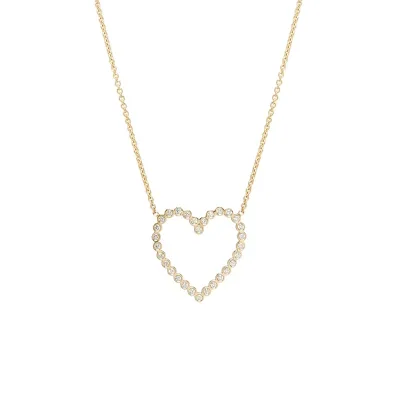
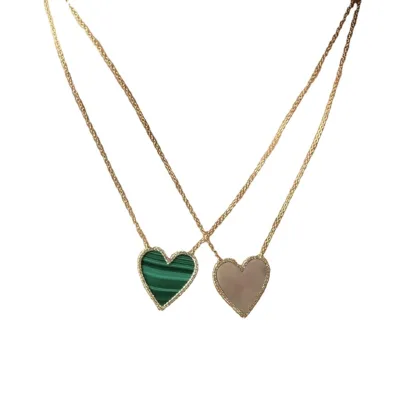


Popular Design Valentine's Day Jewelry Colorful 18K Gold Plated Heart Necklace
$0.82 - $0.92
MOQ: 1100 Pieces


Comprehensive Sourcing Guide
Strategic Sourcing Guide for 14k Yellow Gold Heart Necklaces
The procurement of 14k yellow gold heart necklaces represents a specific niche within the broader jewelry supply chain, balancing aesthetic demand with rigorous material verification. Buyers seeking this core keyword must navigate a market where "14k" is a critical specification, yet observed product data reveals a complex landscape of materials ranging from 925 Sterling Silver to various alloys. This guide provides an evidence-based framework for sourcing, emphasizing the distinction between solid gold items and plated alternatives, ensuring that procurement decisions are grounded in verified specifications rather than marketing assumptions.
Understanding Material Specifications and Alloy Composition
The primary challenge in sourcing 14k yellow gold heart necklaces lies in the variance of material definitions found in supplier listings. While the core keyword specifies 14k gold, the observed product data indicates that many items listed under similar aesthetic categories utilize 925 Sterling Silver or Alloy as the base material. A 14k gold necklace is an alloy containing 58.3% pure gold, mixed with metals like copper and silver to achieve durability and the characteristic yellow hue. In contrast, the supplied facts explicitly list "925 Sterling Silver" and "Alloy" as materials for items with similar heart or round pendant shapes.
Buyers must verify the exact gold content through independent assay or supplier-provided hallmarks. The observed data shows a standard listing of "925 SILVER, 10K and 14K Gold" as a product standard for certain models, suggesting that suppliers may offer a range of karat options. However, the presence of "Alloy" as a standard for other items indicates that some listings may refer to gold-plated base metals rather than solid gold. When evaluating a potential supplier, the procurement team must request a mill certificate or a detailed material composition sheet that explicitly confirms the 58.3% gold content. Relying solely on the product name or a generic "Gold" color attribute is insufficient, as the data shows "Color: Gold" is often paired with "Material: Alloy" or "Plating: Gold."
Plating Standards and Surface Finish Verification
Surface finish is a critical differentiator in the jewelry market, particularly when the core keyword implies solid gold but the market offers plated alternatives. The supplied facts reveal a wide array of plating options, including "Silver," "Gold," "Platinum," "Rhodium," and "Silver,Gold." For a 14k Yellow Gold Heart Necklace, the expectation is typically a solid gold finish rather than a plating. However, the data indicates that "Plating color Custom" is a recognized standard for some products, and "Plating: Gold,Silver" is common for alloy-based items.
Buyers must distinguish between solid gold construction and gold-plated items. If a supplier offers a 14k gold necklace, the gold should be throughout the piece, not merely a surface layer. The observed "prod_standard: Plating color Custom" suggests that customization of the finish is a viable service, but this is often associated with base metals. For solid 14k gold, the focus should be on the purity of the metal rather than the plating thickness. If the item is plated, the buyer must verify the micron thickness of the gold layer, as this dictates the longevity of the yellow gold appearance. The data shows that "Plating: Gold" is frequently listed alongside "Material: Alloy," which is a red flag for buyers seeking solid 14k gold.
Design Attributes and Customization Capabilities
The aesthetic requirements for a heart necklace are specific, with "Heart" listed as a distinct pendant shape in the observed data. The product attributes also highlight "Round" shapes and "Star Fashion" styles, indicating a diverse design landscape. The "Style" attribute appears as "luxury," "Fashion," and "Elegant," suggesting that the target market for 14k gold heart necklaces spans from high-end luxury to everyday fashion.
Customization is a significant factor in this sector. The facts state "Customization: Acceptable" and "Customization: Available," confirming that suppliers are generally open to modifying designs. For a 14k gold heart necklace, customization might involve adjusting the heart dimensions, chain length, or adding gemstone accents. The observed data includes specific models like "CG20P4133B" and "AS18N2722S," which serve as reference points for design variations. Buyers should leverage the "Customization" capability to ensure the heart pendant meets specific dimensional tolerances. The "prod_packing" varies from "Carton" to "Bubble Wrap+Kraft Box," indicating that packaging customization is also available, which is essential for branding and presentation.
Cost Drivers and Pricing Dynamics
The pricing for 14k gold heart necklaces is heavily influenced by the weight of the gold, the current market rate of gold, and the complexity of the design. The observed price range in the data spans from 0.82 to 408 USD, a vast disparity that reflects the difference between low-cost alloy items and high-value solid gold pieces. The lower end of this range likely corresponds to the "Alloy" and "Plating" items, while the higher end aligns with solid gold or heavy silver pieces.
When sourcing 14k gold, the cost driver is primarily the gold content. A 14k gold heart necklace will inherently cost more than a silver or alloy equivalent due to the intrinsic value of the gold. Buyers should not expect the 0.82 USD price point for a solid 14k gold item; such a price is indicative of a plated alloy product. The "Standard" of "8.3g" observed in the data suggests that weight is a documented specification for some items, which is a key metric for calculating the cost of goods. Procurement teams must request weight specifications for all 14k gold candidates to ensure the price aligns with the actual gold content.
Supplier Evaluation and Origin Verification
The origin of the product is a critical factor in supply chain reliability. The supplied facts consistently list "China" as the product origin. While China is a major hub for jewelry manufacturing, buyers must conduct due diligence on specific factories within this region. The "prod_model" codes, such as "NW006" and "AP29046," serve as unique identifiers that can be used to track production batches and verify supplier consistency.
Supplier evaluation should focus on their ability to provide documentation for 14k gold content. The presence of "Suitable for: Female,Male,Children,Elderly" in the data indicates a broad target demographic, but the "Suitable for: Male" and "Suitable for: Female" distinctions suggest that gender-specific sizing and design nuances are important. Buyers should verify if the supplier has experience with 14k gold specifically, as opposed to just silver or alloy. The "prod_standard" of "925 SILVER, 10K and 14K Gold" implies that some suppliers handle multiple karat levels, but the buyer must confirm the specific capabilities for 14k yellow gold.
Quality Control and Compliance Checks
Quality control for 14k gold heart necklaces involves verifying the alloy composition, the integrity of the heart shape, and the durability of the chain. The observed "prod_standard" includes "Plating color Custom" and "925 SILVER, 10K and 14K Gold," which are standards that must be rigorously tested. For solid gold, the primary compliance check is the karat stamp, which should be present on the clasp or the pendant.
Buyers should implement a quality control protocol that includes random sampling and third-party testing. The "Standard" of "8.3g" suggests that weight consistency is a measurable quality metric. Additionally, the "Plating" attributes like "Platinum,Gold,Rhodium,Silver" highlight the need to verify that the finish matches the order specifications. For 14k gold, the absence of plating is the norm, so any indication of plating in the product description should be scrutinized. The "prod_packing" methods, such as "OPP" or "Carton," also play a role in protecting the jewelry during transit, preventing scratches or damage to the delicate heart shape.
Long-Term Procurement and Market Considerations
Long-term procurement of 14k gold heart necklaces requires a strategic approach to inventory management and supplier relationships. The "MOQ range" of 1-1100 observed in the data indicates that suppliers are flexible, allowing for both small batch testing and large-scale production. However, the "Lead time" and "MOQ" values should be confirmed for each specific order, as they can vary based on the complexity of the 14k gold casting process.
The "Usage: Gift" and "Occasion: Party" attributes suggest that these necklaces are often purchased for special events, making timing and reliability crucial. Buyers should consider the "Customization" aspect as a long-term strategy, as personalized 14k gold heart necklaces often command higher margins. The "Style: Star Fashion" and "Style: Elegant" trends indicate that design preferences evolve, and suppliers must be agile in updating their catalog. Finally, the "Location: China" origin requires buyers to be aware of potential logistics challenges, such as shipping delays or customs regulations, and to build buffer times into their procurement schedules.
Comparative Analysis of Product Attributes
To facilitate decision-making, the following table summarizes the key attributes observed in the market data, highlighting the distinctions between solid gold and alternative materials.
| Attribute | 14k Gold Expectation | Observed Market Variance | Verification Action |
|---|---|---|---|
| Material | 14k Gold Alloy (58.3% Au) | 925 Sterling Silver, Alloy | Request Mill Certificate |
| Plating | None (Solid) | Gold, Silver, Platinum, Rhodium | Visual Inspection & Hallmark Check |
| Shape | Heart, Round | Heart, Butterfly, Circle, Star | Confirm Mold Specifications |
| Color | Yellow Gold | Gold, Silver, White, Multi-color | Verify Gold Purity |
| Standard | 14K Hallmark | 925 SILVER, 10K, 14K Gold | Check for Karat Stamp |
| Suitable For | All Ages | Female, Male, Children, Elderly | Confirm Size/Weight Tolerance |
| Packing | Luxury/Protective | Carton, Bubble Wrap, OPP | Inspect Packaging Quality |
This comparative analysis underscores the necessity of rigorous verification. The market offers a wide spectrum of products, from high-value solid gold to cost-effective plated alternatives. By focusing on the specific attributes of 14k gold and cross-referencing them with the observed data, buyers can make informed decisions that align with their quality and budget requirements. The path to successful procurement lies in the ability to distinguish between the "Gold" color attribute and the actual "14k Gold" material composition, ensuring that the final product meets the expectations of the end consumer.
FAQs
What materials are used for 14k yellow gold heart necklaces?
Products often use 925 Sterling Silver or Alloy with gold plating rather than solid 14k gold. Buyers must verify material composition through mill certificates to confirm actual gold content before purchasing.
Can I customize the plating color for these necklaces?
Yes, customization for plating color is acceptable and available for many listed models. Suppliers offer custom plating standards, allowing buyers to select specific finishes like gold or silver for their orders.
Which pendant shapes are available for this necklace type?
Heart shapes are explicitly listed alongside round, butterfly, and circle pendant options. Buyers can choose from these distinct shapes depending on the specific model and design requirements for their collection.
How is the packaging handled for these jewelry items?
Packaging varies by product and includes options like cartons, bubble wrap with kraft boxes, or OPP bags. Suppliers provide different packing methods to ensure safe transit and presentation for the final gift.
What is the origin location for these manufactured necklaces?
All observed products originate from China, which is a major hub for jewelry manufacturing. Buyers should verify specific factory details within this region to ensure supply chain reliability and quality control.
Which customization options are available for buyers?
Customization is acceptable and available for design modifications, including dimensions and finishes. Suppliers support custom requests, allowing buyers to tailor the product to specific aesthetic or branding needs.
What are the typical price ranges for these items?
Prices range widely from 0.82 to 408 USD depending on material and weight. Lower prices typically indicate alloy or plated items, while higher costs reflect solid gold or heavier silver construction.