Source Renault Truck Gearbox Repair Kit for Heavy Trucks, Buses, and Construction Vehicles
Compare 30 listings for the Renault Truck Gearbox Repair Kit from verified Chinese suppliers. Buyers can evaluate specifications like material, certifications, and lead times to find suitable options for heavy truck, bus, and construction vehicle applications.
Key considerations
Products List


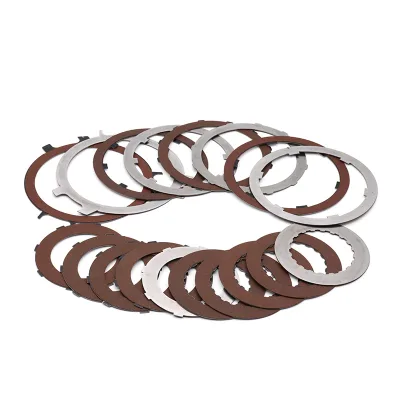


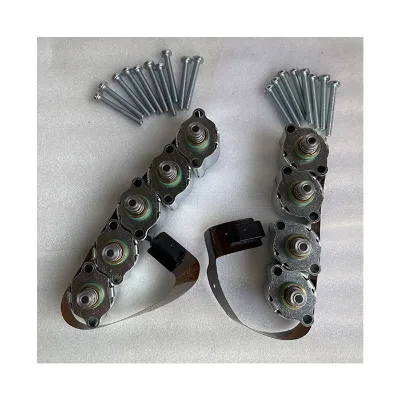


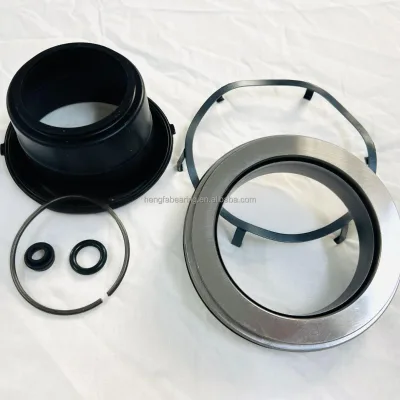


Truck Steering Gear Repair Kit 21219953 21170831 3098851 for Volvo Renault
$6.00 - $6.50
MOQ: 10 pieces


One Stop Kits for Heavy Truck Gearbox Repairs with Durable Service Seals
$18.00 - $30.00
MOQ: 20 Pieces
Comprehensive Sourcing Guide
Strategic Sourcing Guide for Renault Truck Gearbox Repair Kits
Navigating the global market for heavy-duty truck components requires a disciplined approach to verification, particularly when sourcing specific repair kits like those for Renault truck gearboxes. While the core keyword focuses on a specific vehicle brand, the broader procurement landscape for heavy truck transmission systems involves a complex matrix of compatibility, material integrity, and regulatory compliance. Buyers must distinguish between generic aftermarket offerings and components engineered to meet the rigorous demands of commercial transport. This guide outlines the essential factors for evaluating potential suppliers and products, ensuring that procurement decisions are grounded in verifiable data rather than marketing assertions.
Technical Specifications and Component Compatibility
The foundation of any successful procurement for a gearbox repair kit lies in precise technical matching. Transmission systems in heavy trucks are highly specialized, and a mismatch in part numbers or internal geometry can lead to catastrophic failure. When searching for a Renault Truck Gearbox Repair Kit, the primary verification step involves cross-referencing the original equipment manufacturer (OE) numbers against the supplier's catalog. In the observed market data, specific OE references such as 3875860035, 3873500040, and 9423502023 appear alongside models designated for Mitsubishi and Japanese trucks, indicating that suppliers often aggregate parts across multiple heavy-duty brands.
Buyers must verify that the listed product model aligns strictly with the Renault transmission architecture. The market contains listings for various specifications, including models like 5000673366, 1315298034, and 1325298007. These alphanumeric codes serve as critical identifiers. A repair kit intended for a "Japanese truck" or a "Daf" application may share similar physical dimensions but differ in material hardness or gear tooth profile, rendering it unsuitable for a Renault unit. Furthermore, the internal composition of the kit is paramount. The supply chain shows materials ranging from Steel to Aluminum, with specific processes like "Hot Forged Twice" noted for certain components. For a gearbox repair, the material must withstand high torque and thermal stress. Steel is frequently cited for durability in heavy-duty applications, whereas Aluminum may be used for housing or non-critical load-bearing parts. The buyer must confirm that the specific gears, bearings, and seals within the kit are constructed from the correct alloy to match the original design specifications of the Renault transmission.
Compliance and Certification Verification
In the B2B heavy truck sector, certification is not merely a formality but a prerequisite for liability and operational safety. The presence of ISO certifications is a standard benchmark in the current market. Data indicates that suppliers often list "ISO" and "ISO/Ts16949" as key certifications. The ISO/TS 16949 standard is particularly significant as it is specific to the automotive industry's quality management systems, ensuring that the manufacturing process meets the stringent requirements of major vehicle manufacturers. Additionally, ISO 9001 is frequently observed, representing a broader quality management framework.
However, the mere presence of a certification claim requires verification. Buyers should request valid certificates that are current and issued by accredited bodies. The distinction between a generic "ISO" label and a specific "ISO/Ts16949" is crucial; the latter implies a deeper commitment to automotive supply chain standards. When evaluating a supplier, the buyer must ensure that the certification covers the specific manufacturing facility producing the repair kit, not just the trading company. Furthermore, the "Quality" attribute is often listed as "OEM Standard" or "Original High Quality." These are descriptive terms that must be backed by the aforementioned certifications and test documentation. A supplier claiming "Original High Quality" without supporting ISO/TS 16949 documentation should be treated with caution. The buyer should also verify if the product adheres to any specific national or international standards regarding material composition and dimensional tolerances, as these are not always explicitly listed in the initial product summary.
Cost Drivers and Pricing Structures
Understanding the cost structure of a gearbox repair kit is essential for budgeting and negotiating effectively. The observed price range in the market spans from 1 USD to 14,000 USD, a variance that reflects the diversity of products available, from minor seal kits to complete overhaul assemblies. This wide range underscores the importance of defining the exact scope of the repair before requesting quotes. A kit containing only gaskets and seals will naturally be at the lower end of the spectrum, while a full gear set with bearings and synchronizers will command a higher price.
Several factors drive these costs. The material composition is a primary driver; kits utilizing high-grade steel or specialized alloys will be more expensive than those using standard materials. The manufacturing process also impacts price; components described as "Hot Forged Twice" likely involve more labor and energy-intensive processes than cast parts, justifying a higher cost point. Additionally, the packaging method influences the final price. Listings show options ranging from "Plastic Bag / Individual Box" to "Crates/Pallet/Boxes," with "Customized" packaging available. For international shipping, robust packaging like crates or pallets adds to the cost but is necessary to prevent damage during transit.
The Minimum Order Quantity (MOQ) is another critical cost factor. The market data reveals MOQs ranging from 1 piece to 300 units, with specific listings showing 20 sets or 10 sets as common thresholds. For a single repair job, a supplier with an MOQ of 1 PCS is ideal, whereas fleet operators may benefit from suppliers offering bulk pricing at an MOQ of 20 or 300 sets. Buyers must calculate the total landed cost, including the unit price, shipping, and potential inventory holding costs if the MOQ forces them to stock more than immediately needed.
Typical Applications and Vehicle Compatibility
While the core search term is "Renault Truck Gearbox Repair Kit," the actual market listings often group components by broader categories such as "Heavy Truck," "Daf," "Mitsubishi," or "Japanese truck." This aggregation can create confusion regarding compatibility. A repair kit labeled for a "Daf" application may share the same transmission family as a Renault model, but this cannot be assumed without explicit confirmation. The "Application" field in product data is a starting point, but it must be cross-referenced with the specific transmission model number of the vehicle in question.
The product attributes also highlight specific system components. Listings mention "Transmission System Parts: Drive Axle," "Brake System Parts: Transmission," and "Steering System Parts: Sliding Sleeve." These classifications indicate the functional area of the component. For a gearbox repair, the focus must be on the "Transmission System Parts." The "Product Name" in the data includes "Differential Planetary Gears," which are critical components within the transmission assembly. Buyers must ensure that the kit includes all necessary planetary gears, shafts, and bearings specific to the Renault transmission's internal architecture. The "Car Make" attribute lists "Mitsubishi," which serves as a reminder that suppliers often list multiple brands. The buyer must filter these listings to find those explicitly compatible with Renault, using the OE numbers as the definitive filter.
Supplier Evaluation and Operational Reliability
Evaluating a supplier goes beyond checking the product listing; it involves assessing their operational capabilities and reliability. The "Location" and "Country of Origin" fields provide initial context, with "China" and "Shandong, China" being common origins. While these regions are major manufacturing hubs, the specific location of the factory matters for logistics and quality control. Buyers should verify if the supplier has a physical presence or manufacturing facility in the stated location, rather than being a pure trading entity.
The "Delivery Time" is a critical metric for operational planning. The observed data shows a delivery time of "10 Days" for certain items. However, this figure can vary significantly based on the product's complexity, current inventory levels, and shipping method. For urgent repairs, a 10-day lead time might be acceptable, but for planned fleet maintenance, a more predictable schedule is preferred. Buyers should also inquire about the "Update Method," which is listed as "by Internet" in some contexts. This suggests that product information or software-related components (if applicable) may be updated digitally, but for mechanical parts, physical inspection is necessary.
Furthermore, the "Warranty" term is a strong indicator of supplier confidence. A "12 Months" warranty is a standard offering in the market, but buyers should clarify the terms of this warranty. Does it cover manufacturing defects only, or does it include installation errors? Does it apply globally or only within the country of origin? A clear, written warranty agreement is essential for risk mitigation.
Quality Control and Long-Term Procurement Considerations
Ensuring the long-term reliability of the gearbox repair requires a robust quality control (QC) strategy. The "Condition" of the product is listed as "New," which is a baseline requirement. However, "New" does not guarantee quality. Buyers should request pre-shipment inspection reports or third-party testing results, particularly for critical components like gears and bearings. The "Function" attributes listed, such as "Temperature Regulation," "Safety Improvement," and "Performance Enhancement," are claims that must be validated through performance testing.
For long-term procurement, consistency is key. A supplier that can consistently deliver parts meeting "OEM Standard" or "Original High Quality" is preferable to one that offers sporadic high-quality items. The "Customization" attribute being "Available" is a significant advantage for buyers with unique requirements or older truck models where standard parts are scarce. Customization allows for tailored solutions, but it also introduces variability. Buyers must establish strict quality protocols for customized orders to ensure they meet the same standards as standard inventory.
Finally, the "Gross Weight" and "Net Weight" of the product, such as 3.8kgs and 3.6kgs respectively, are important for logistics planning. Accurate weight data helps in calculating shipping costs and ensuring that the packaging is sufficient to protect the contents. The "Product Packing" options, ranging from "Crates/Pallet" to "Plastic Bag," should be selected based on the fragility of the components and the distance of the shipment. For international freight, robust packaging is non-negotiable to prevent damage that could render the repair kit unusable.
In conclusion, sourcing a Renault Truck Gearbox Repair Kit requires a meticulous approach that balances technical compatibility, certification verification, and supplier reliability. By focusing on the specific OE numbers, verifying ISO/TS 16949 certifications, and understanding the cost drivers related to materials and packaging, buyers can navigate the complex market effectively. The wide range of observed prices and MOQs necessitates a clear definition of needs before engaging with suppliers. Ultimately, the goal is to secure a repair kit that ensures the longevity and safety of the heavy truck, minimizing downtime and maximizing operational efficiency.
FAQs
What certifications do Renault Truck Gearbox Repair Kit suppliers have?
Suppliers typically hold ISO and ISO/Ts16949 certifications. These standards verify that the manufacturing process meets rigorous automotive quality management requirements for heavy truck components.
Which materials are used for the gearbox repair kit components?
The kits utilize Steel and Aluminum materials. Steel is often used for gears requiring high durability, while Aluminum may be found in non-critical load-bearing parts or housings.
Can I find a repair kit with a 10-day delivery time?
Yes, some suppliers offer a 10-day delivery time for these kits. This lead time allows for quick replacement of critical transmission parts to minimize vehicle downtime.
What is the minimum order quantity for purchasing these kits?
Minimum order quantities range from 1 piece to 300 sets. Specific listings show thresholds like 10 sets or 20 sets, allowing flexibility for single repairs or fleet replenishment.
How are the gearbox repair kits packaged for shipping?
Packaging options include crates, pallets, boxes, and plastic bags. Customized packaging is also available to ensure the safety of components during international transit.
Which OE numbers are compatible with the Renault truck gearbox?
Compatible OE numbers include 3875860035, 3873500040, and 9423502023. Buyers must cross-reference these codes to ensure the kit matches the specific Renault transmission architecture.
What warranty period is offered for the repair kits?
A 12-month warranty is commonly offered for these products. This coverage typically protects against manufacturing defects to ensure long-term reliability for heavy truck operations.