Source 2500v p-type semiconductor scr thyristor for Inverters, Rectifiers, Soft Start
Find 26 listings for the 2500v p-type semiconductor scr thyristor to compare specifications like voltage ratings, current capacity, and packaging options. Buyers can evaluate suppliers offering models such as KP series and Nte5557 for industrial applications including inverters and controlled rectifiers.
Key considerations
Products List


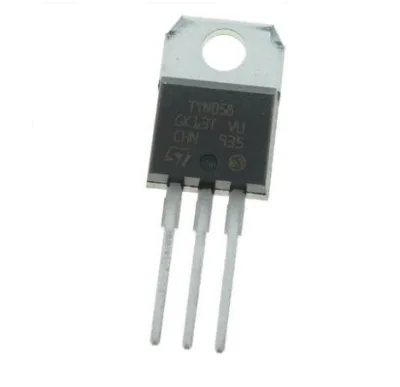
Advanced Energy Control Thyristor for Efficient Power Management Solutions
$16.00 - $143.00
MOQ: 100 Pieces

Comprehensive Sourcing Guide
Strategic Sourcing Guide for 2500V P-Type Semiconductor SCR Thyristors
Procuring high-voltage power semiconductor components requires a rigorous approach that balances technical precision with supply chain reliability. When targeting a 2500V P-Type Semiconductor SCR (Silicon Controlled Rectifier) thyristor, buyers must navigate a complex landscape of material science, manufacturing processes, and compliance standards. The following guide synthesizes available market data and technical observations to assist procurement professionals in identifying suitable components without relying on unverified claims or speculative data.
Technical Specifications and Material Architecture
The foundation of a successful procurement strategy lies in understanding the specific technical attributes of the component. The core keyword specifies a P-Type Semiconductor, which dictates the doping profile and current flow characteristics of the device. In the context of thyristors, the P-Type layer is critical for the latching behavior and the ability to block high reverse voltages. The observed market data indicates that these devices are often categorized under Discrete Devices and Compound Semiconductors, though some listings also reference Element Semiconductors and Silicon as the base material. This variation suggests that buyers must verify the specific material composition of the supplier's offering, as the performance at 2500V can vary significantly between silicon-based and compound semiconductor architectures.
Voltage rating is the primary differentiator in this category. The target specification of 2500V places this component in the high-voltage class. Market observations show a range of peak reverse voltage ratings available, including 1000V, 1200V, 1400V, 1600V, 1800V, and 2000V. While the specific 2500V tier is the target, buyers should be aware that the supply chain often clusters around the 2000V maximum observed in current listings. Consequently, a 2500V requirement may necessitate a custom order or a specific high-voltage variant that exceeds the standard 2000V ceiling. The "KP series" and specific models like "Kp2000A 2100V" or "Kk1000A/1700V" are common designations in this sector. Buyers must confirm if the "KP" designation aligns with the 2500V requirement, as some "KP" models may be rated for lower voltages.
Current handling capabilities are equally vital. The data references models such as "KP 300A/6500V" and "kp2500," indicating that current ratings can range from hundreds of amperes to thousands. The "2000AMP Control Thyristor" attribute suggests that high-current variants are available, but the specific current rating for a 2500V P-Type device must be matched to the application's load profile. The "Low on State Voltage" feature is a critical performance metric that minimizes power loss and heat generation, which is essential for high-voltage applications where thermal management is challenging.
Compliance, Certification, and Regulatory Standards
Navigating the regulatory landscape is a non-negotiable aspect of sourcing industrial-grade semiconductors. The presence of CE certification in the product data indicates that certain manufacturers in this sector adhere to European safety and environmental standards. However, the mere mention of CE does not guarantee that every unit in a specific batch meets the requirement, nor does it cover other regional standards like UL or IEC. Buyers must explicitly request current certification documentation for the specific batch number, such as "2023+" or "2021+" which are observed in the market.
Packaging standards also play a role in compliance and logistics. The data notes a standard packing size of 490330200, typically in a Carton Box. This dimension is crucial for logistics planning and ensuring that the components are protected during transit. For high-voltage devices, the integrity of the packaging is paramount to prevent physical damage to the semiconductor die. Additionally, the "Encapsulation Structure" is listed as "Plastic Sealed Transistor" in some contexts, while others mention "Alloy" structures. For a 2500V SCR, the encapsulation must provide sufficient dielectric strength and thermal conductivity. Buyers should verify that the sealing material is rated for the operating temperature and voltage stress of the application.
Cost Drivers and Pricing Dynamics
The pricing structure for high-voltage thyristors is influenced by several factors, including the voltage rating, current capacity, and the complexity of the manufacturing process. The observed price range in the market spans from 0.2 to 2000 USD, a wide variance that reflects the diversity of components from low-power diodes to high-power industrial modules. A 2500V P-Type SCR is a specialized component, and its cost will likely be at the higher end of this spectrum due to the stringent manufacturing tolerances required for high-voltage blocking.
The "Price Term" is frequently listed as Fob/CPT/CIF, indicating that the final landed cost depends heavily on the chosen Incoterm. Buyers must calculate the total cost of ownership, including freight, insurance, and import duties, rather than focusing solely on the unit price. The "Payment" terms observed include "Tt" (Telegraphic Transfer), which is standard for B2B transactions but requires careful financial planning. Minimum Order Quantities (MOQ) range from 1 to 100 units, offering flexibility for prototyping but potentially higher unit costs for small batches. For large-scale production, negotiating MOQs and volume discounts is essential, as the "Production" capacity of suppliers is noted to be up to 150,000 PCS/Year, suggesting that volume pricing tiers likely exist.
Typical Applications and Operational Context
Understanding where these components are deployed helps in defining the necessary performance specifications. The "Application" field lists "Diode," "Electronic Products," and "Controlled Rectifier," highlighting the versatility of thyristors in power conversion. Specifically, the "Usage" attributes point to "Soft Start Module" and "High Voltage Water Cooler" applications. These are critical environments where reliability is paramount. A Soft Start Module utilizes thyristors to gradually ramp up voltage, protecting motors and loads from inrush current. In this context, the 2500V rating ensures the device can handle the peak voltages encountered during startup transients.
The "Signal Processing" capability is described as "Analog Digital Composite and Function" or "Digital," suggesting that these devices may be integrated into complex control systems. The "Item" "R3182 Inverter" indicates that thyristors are also used in inverter circuits, which convert DC to AC. In such applications, the "Phase" (listed as 1) and "Frequency" (50/60Hz) are critical parameters. A 2500V P-Type SCR must be capable of switching at the required frequency without excessive heating or failure. The "SVC" (Static Var Compensator) attribute further confirms their use in power factor correction and grid stability applications, where high voltage and high current handling are standard requirements.
Supplier Evaluation and Verification Protocols
Evaluating suppliers for high-voltage components requires a deep dive into their manufacturing capabilities and quality assurance processes. The "Brand" "Sailton/Sti" and "Sailton" are observed in the market, but buyers should not assume that all products under these brands meet the 2500V specification. The "Customization" attribute being "Available" is a significant advantage, allowing buyers to tailor the component to specific voltage and current needs. However, customization introduces complexity in the supply chain, requiring clear communication of technical requirements.
The "Chip Type" is identified as "Silicon Controlled Chip," and the "Shape" is "Round," with "Color" "White." These physical attributes are useful for visual inspection upon receipt. Buyers should verify that the "Device Package" matches the expected form factor, such as the "Nte5557" or "SMD" packages observed. The "Batch Number" is a critical traceability tool; buyers should ensure that the supplier provides batch numbers for every shipment to facilitate quality tracking and recall management if necessary.
Quality Control and Long-Term Procurement Considerations
Quality control in the semiconductor industry is rigorous, involving extensive testing at various stages of production. The "Feature" of "Low on State Voltage" is a key indicator of quality, as it reflects low internal resistance and efficient power handling. Buyers should request test reports that verify this feature, as well as data on the "Luminous Intensity" if the component has optoelectronic properties, though this is less common for standard thyristors. The "Manufacturing Technology" is listed as both "Discrete Device" and "Optoelectronic Semiconductor," so buyers must clarify which technology applies to their specific 2500V P-Type order.
Long-term procurement considerations include the stability of the supply chain and the availability of spare parts. The "Production" capacity of 150,000 PCS/Year suggests that the supplier has the volume to support large orders, but buyers should verify lead times for custom or high-voltage variants. The "Origin" is listed as "China," which is a major hub for semiconductor manufacturing, but buyers should be aware of geopolitical factors that might affect supply continuity. Establishing a long-term relationship with a supplier who offers "Customization" and adheres to "CE" certification can mitigate these risks.
Comparative Analysis of Key Product Attributes
To facilitate decision-making, the following table summarizes the key attributes observed in the market for thyristor components, highlighting the specific relevance to the 2500V P-Type requirement.
| Attribute Category | Observed Market Data | Relevance to 2500V P-Type SCR |
|---|---|---|
| Voltage Rating | 1000V to 2000V (Standard); 2100V, 2500V (Target) | Critical; 2500V may require custom or high-end model. |
| Material | Silicon, Compound Semiconductor, Element Semiconductor | Must verify Silicon for standard P-Type SCR performance. |
| Type | N-Type, P-Type, Thyristor(SCR) | Must explicitly confirm P-Type for correct latching behavior. |
| Current Rating | 300A, 1000A, 2000A, 2500A | Must match application load; "kp2500" suggests high current. |
| Packaging | Carton Box (490330200), SMD, Plastic Sealed | Ensure physical protection for high-voltage die. |
| Certification | CE | Verify current validity for the specific batch. |
| Origin | China | Standard manufacturing hub; verify logistics lead times. |
| Customization | Available | Essential for achieving exact 2500V P-Type specs. |
In conclusion, sourcing a 2500V P-Type Semiconductor SCR thyristor requires a meticulous approach that prioritizes technical verification over generic product listings. Buyers must confirm the voltage rating, material composition, and certification status for every batch, while leveraging the customization options available in the market. By focusing on these evidence-based criteria, procurement professionals can secure reliable components that meet the demanding requirements of high-voltage power applications.
FAQs
What is the maximum peak reverse voltage for these thyristors?
The observed peak reverse voltage ratings range from 1000V to 2000V, with specific models like Kp2000A reaching 2100V. While 2500V is the target, buyers should verify if custom orders are needed to exceed the standard 2000V ceiling found in current listings.
Which material types are available for P-Type semiconductor SCR devices?
Products are listed as Compound Semiconductor, Element Semiconductor, and Silicon. Buyers must verify the specific material composition for their 2500V requirement, as performance varies significantly between silicon-based and compound semiconductor architectures for high-voltage blocking.
Can these thyristors be customized for specific voltage ratings?
Yes, customization is available for these discrete devices. This allows buyers to tailor components to specific voltage and current needs, though it introduces supply chain complexity requiring clear communication of technical requirements to the manufacturer.
What certifications are typically associated with these semiconductor products?
CE certification is observed in the product data for certain manufacturers. Buyers must explicitly request current certification documentation for the specific batch number, as the presence of CE does not guarantee every unit meets the requirement or covers other regional standards.
How is the packaging designed to protect high-voltage components?
Standard packaging includes a Carton Box with dimensions of 490*330*200. For high-voltage devices, the integrity of this packaging is paramount to prevent physical damage to the semiconductor die during transit and storage.
What is the typical production capacity for these semiconductor suppliers?
Suppliers report a production capacity of up to 150,000 PCS per year. This volume suggests that tiered pricing likely exists, but buyers should verify lead times for custom or high-voltage variants to ensure supply continuity.
Which payment terms are commonly accepted for these industrial components?
The observed payment term is Tt, which stands for Telegraphic Transfer. This is standard for B2B transactions, requiring careful financial planning to manage the total cost of ownership including freight and import duties alongside the unit price.