Source 3-way outlet us power cord for Home, Office, and Industrial Use
Find a diverse selection of 3-way outlet us power cord options from 30 verified suppliers. Buyers can compare specifications including plug types, wire gauges, and certifications to match requirements for computers, home appliances, and automotive applications.
Key considerations
Products List




Comprehensive Sourcing Guide
Strategic Sourcing Guide for 3-Way Outlet US Power Cord Solutions
Understanding the Technical Landscape of US Power Cords
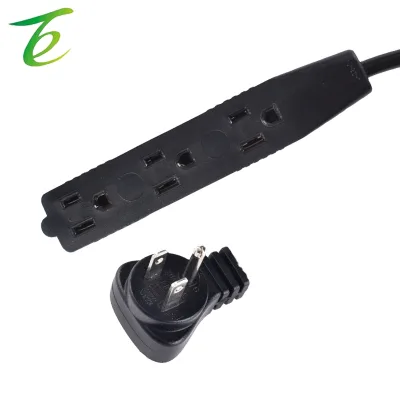
When sourcing a 3-way outlet US power cord, buyers must first distinguish between the cord itself and the outlet assembly. The core product in this category is typically a power cord assembly designed to interface with US-standard electrical infrastructure, often featuring a NEMA 5-15P plug configuration. Based on observed market data, these cords frequently utilize copper conductors, which provide the necessary conductivity and durability for general power supply applications. The conductor material is often specified as tin-plated copper wire, a detail that enhances corrosion resistance and solderability, particularly in environments where moisture or oxidation might be a concern.
The physical construction of these cords varies significantly depending on the intended application. The outer insulation materials are critical for safety and longevity. Common observations include PVC, rubber, silicone, PE, and PU. Each material offers distinct properties; for instance, PVC is widely used for its cost-effectiveness and flexibility in indoor applications, while rubber and silicone may be preferred for higher temperature resistance or outdoor durability. The wire gauge is another pivotal specification. While some listings indicate standard gauges such as 18AWG, 16AWG, or 14AWG for 2-conductor configurations, many suppliers offer customized wire gauges to meet specific current-carrying requirements. Buyers should verify the exact amperage rating, which often appears in the range of 10A/125V, 13A/125V, or 15A/125V, to ensure the cord can safely handle the load of the connected devices.
The plug type is a non-negotiable factor for US market compatibility. The standard configuration observed is the NEMA 5-15P, often paired with a 3-pin design to include a ground connection. Some product descriptions reference specific models like "US 3pin power cord" or "LCD-DYX15," indicating that while the core function is universal, the specific model numbers and internal construction can vary by manufacturer. The interface type is generally AC/DC, serving as a bridge between the wall outlet and the device, which could range from home appliances to computer equipment.
Compliance and Certification Verification
Navigating the regulatory landscape is essential for any procurement of electrical components intended for the US market. The primary certification observed in the supply chain for these products is the CCC (China Compulsory Certification). This certification is a mandatory requirement for products sold within China and is often a prerequisite for international trade involving Chinese manufacturers. However, for US importation, buyers must also consider the implications of other standards. While the CCC is a strong indicator of basic manufacturing compliance, it does not automatically equate to US safety standards like UL (Underwriters Laboratories) or ETL (Intertek).
The provided data also references ISO certifications, specifically ISOConductor Material:Copper and ISO standards in general. It is crucial to interpret these correctly. The presence of "ISO" in a certification field often relates to the management system of the factory or specific material standards rather than a direct product safety certification for the US market. Buyers should not assume that a product marked with "ISO" is automatically compliant with US electrical codes. Instead, they must explicitly request documentation proving compliance with US-specific safety standards, such as UL 817 for power cords or UL 60950 for IT equipment cords.
Additionally, the data mentions VDE and RoHS certifications. VDE is a German standard that, while respected globally, is not a substitute for US certification. RoHS (Restriction of Hazardous Substances) is a critical environmental compliance standard that limits the use of specific hazardous materials in electrical and electronic equipment. Ensuring that the power cords are RoHS compliant is vital for exporting to regions with strict environmental regulations, including the European Union and increasingly, the United States. Buyers should verify that the "CCC, ISO, RoHS, VDE" combination listed in product descriptions represents a comprehensive compliance package, but they must independently validate the specific US regulatory status of the final product before placing a large order.
Cost Drivers and Pricing Dynamics
The pricing for 3-way outlet US power cords is influenced by a complex interplay of material costs, customization levels, and order volume. The observed price range in the market spans from $0.08 to $36.00 USD. This wide variance is not indicative of a single product tier but rather reflects the diversity of specifications. The lower end of the spectrum typically corresponds to basic, non-customized cords with standard wire gauges (e.g., 18AWG) and simple PVC insulation. These are often sold in high volumes with minimal customization.
Conversely, the higher price points are driven by several factors. First, the use of premium materials such as silicone or rubber insulation increases the base cost. Second, the wire gauge plays a significant role; thicker wires (e.g., 14AWG) require more copper, a commodity with fluctuating market prices, which directly impacts the unit cost. Third, customization is a major cost driver. The data confirms that customization is available for plug types, wire gauges, lengths, and even the outer insulation material. Custom molds for unique plug shapes or specific branding on the cord sheath add to the tooling and production expenses.
Order volume is another critical determinant of cost. The observed Minimum Order Quantity (MOQ) ranges from 1 to 2,000 units. Suppliers offering low MOQs, such as 1 unit, often charge a premium per unit to cover the setup costs of small batches. As the order volume increases, the per-unit cost typically decreases due to economies of scale in material purchasing and production line efficiency. Buyers should be aware that the "Standard Carton" or "Kk Export Carton" packaging mentioned in product attributes also affects the final landed cost, especially if specialized packaging is required for export compliance.
Typical Applications and Industry Use Cases
The versatility of 3-way outlet US power cords allows them to serve a broad spectrum of industries. The primary application areas identified include computers, home appliances, and general power supply systems. In the consumer electronics sector, these cords are essential for connecting desktop computers, monitors, and peripheral devices to the mains power. The "Application" field in the data explicitly lists "Computers" and "Home Appliances," confirming their role in everyday consumer goods.
Beyond consumer electronics, these cords are integral to the automotive and industrial sectors. The data references "Automotive Wiring Harness" and "Boat Wiring Harness," indicating that similar construction principles are applied to vehicle electrical systems. In these contexts, the cords must withstand vibration, temperature fluctuations, and potential exposure to fluids. The "Signal: Low Voltage Wiring Harness" attribute suggests that these products are also used in applications where low-voltage signals are transmitted alongside power, such as in control systems or sensor networks.
The "Industry Type" field also highlights "Electronic" and "Motorcycle" applications, further expanding the scope. For motorcycle manufacturers, the power cords must be compact, flexible, and highly durable to fit within tight engine compartments. The "General Wiring Harness" attribute, which mentions "Crimping Assembling Classes," points to the manufacturing processes used to create these connections, ensuring reliable electrical continuity in high-vibration environments. Whether for a home entertainment system or a marine vessel, the selection of the correct cord depends on matching the specific environmental and electrical requirements of the application.
Supplier Evaluation and Selection Criteria
Selecting the right supplier for 3-way outlet US power cords requires a rigorous evaluation process that goes beyond price comparison. The first step is verifying the supplier's ability to meet the specific technical requirements. Buyers should request detailed product specifications that confirm the conductor material (e.g., tin-plated copper), the insulation type (e.g., PVC, silicone), and the exact wire gauge. The data indicates that "Conductor Material: Copper" and "Wire Gauge: Customized" are common attributes, but the specific implementation must be validated.
Certification verification is the second critical step. While the data lists CCC, ISO, RoHS, and VDE, buyers must ensure that the supplier can provide valid, up-to-date certificates for the specific product model being ordered. It is advisable to ask for the certificate numbers and verify them with the issuing bodies. The presence of "CCC" is a baseline requirement for Chinese manufacturers, but for US markets, the absence of UL or ETL certification should be a red flag unless the product is intended for export to other regions.
The supplier's production capacity and flexibility are also important. The data shows that "Sample Time" is typically 3-7 working days, which is a reasonable turnaround for prototyping. However, buyers should inquire about lead times for bulk orders, as the "Standard Carton" or "Customzied" packing options may affect production scheduling. The "MOQ" range of 1-2,000 suggests that suppliers are willing to accommodate both small test orders and large-scale production runs, but the buyer must confirm the specific MOQ for their desired customization level.
Finally, the supplier's reputation for quality control should be assessed. The "General Wiring Harness" attribute mentions "Crimping Assembling Classes," implying a level of manufacturing precision. Buyers should ask for quality control reports, including test results for insulation resistance, voltage withstand, and pull strength. The "Packing" options, such as "PE Bags/Carton Box," should be evaluated to ensure they meet the protection standards required for shipping, especially for international logistics.
Quality Control and Long-Term Procurement Strategy
Implementing a robust quality control (QC) strategy is essential for mitigating risks associated with electrical component procurement. The first line of defense is the incoming inspection of raw materials. Buyers should verify that the copper conductors meet the specified purity and plating standards, as substandard materials can lead to overheating and failure. The insulation materials, whether PVC, rubber, or silicone, must be tested for flexibility, tensile strength, and resistance to heat and flame.
During the production phase, in-process inspections should focus on the crimping and assembly processes. The "Crimping Assembling Classes" mentioned in the data suggest that specific standards govern how the wires are connected to the plugs. Any deviation from these standards can result in loose connections or electrical arcing. Random sampling of finished products for electrical testing, including continuity, polarity, and insulation resistance, is a standard practice that should be mandated by the buyer.
For long-term procurement, establishing a partnership with a supplier who offers consistent quality and responsive communication is key. The "Customized" nature of many of these products means that the supplier must be capable of maintaining consistency across different production batches. Buyers should negotiate clear quality agreements that define acceptable defect rates and outline the procedures for handling non-conforming products. Additionally, considering the "Sample Time" of 3-7 days, buyers should plan their inventory cycles to accommodate the lead time for new samples and bulk orders.
Comparative Analysis of Product Specifications
To facilitate decision-making, the following table summarizes the key technical and commercial attributes observed in the market for 3-way outlet US power cords. This comparison highlights the variability in specifications and helps buyers identify the features most relevant to their specific needs.
| Attribute | Standard Observation | Customization Options | Critical Verification Point |
|---|---|---|---|
| Conductor Material | Copper, Tin Plated Copper | Customized | Purity and plating thickness |
| Insulation Material | PVC, Rubber, Silicone, PE, PU | Customized | Temperature rating and flexibility |
| Plug Type | NEMA 5-15P (US Standard) | Customized | Safety certification for the region |
| Wire Gauge | 18AWG, 16AWG, 14AWG | Customized | Current carrying capacity |
| Certification | CCC, RoHS, ISO | Varies by Supplier | Validity for target market (e.g., UL) |
| Packing | Standard Carton, PE Bags | Customzied | Protection during transit |
| MOQ | 1 - 2,000 Units | Negotiable | Impact on unit cost |
| Sample Time | 3-7 Working Days | Variable | Lead time for production |
This table underscores that while the core function of the 3-way outlet US power cord remains consistent, the specific attributes can vary widely. Buyers must carefully align their requirements with the supplier's capabilities to ensure a successful procurement outcome. By focusing on these key variables, organizations can secure reliable power solutions that meet both technical and regulatory standards.
FAQs
What certifications are available for these power cords?
Available certifications include CCC, ISO, RoHS, and VDE. These indicate compliance with specific manufacturing and safety standards, though buyers must verify US-specific approvals like UL for domestic use.
Can I customize the wire gauge and length?
Yes, customization is available for wire gauge and length. Buyers can request specific AWG sizes such as 18AWG or 14AWG and choose from standard or custom lengths to match application needs.
Which plug types are supported for US applications?
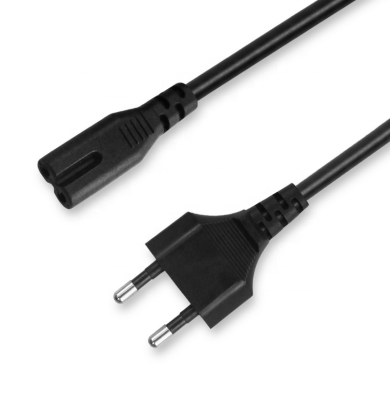
Supported plug types include US Plug, European-Standard Plug, and NEMA 5-15 configurations. The interface type is AC/DC, suitable for connecting computers and home appliances to power supplies.
What is the typical sample time for orders?
The typical sample time is 3 to 7 working days. This duration allows for the production of prototypes before committing to larger bulk orders with customized specifications.
How does the price range vary for these cords?
The price range spans from 0.08 to 36 USD per unit. Costs depend on material quality, wire gauge thickness, and the level of customization required for the specific order volume.
What conductor materials are used in the wiring?
Conductor materials include copper and tin-plated copper wire. These materials ensure high conductivity and corrosion resistance, meeting standards for automotive, electronic, and general power supply applications.
What are the minimum order quantities for suppliers?
Minimum order quantities range from 1 to 2000 units. Suppliers offer flexibility for small test batches or large-scale production runs, with pricing often adjusted based on the order volume.