Source 5-Layer Desktop Storage Box for Office, Kitchen, and Living Room
Source a 5-Layer Desktop Storage Box from 30 verified listings. Compare metal, plastic, and wooden options with custom sizes and modern styles for efficient organization in offices, kitchens, and living rooms.
Key considerations
Products List






Comprehensive Sourcing Guide
5-Layer Desktop Storage Box Sourcing Guide
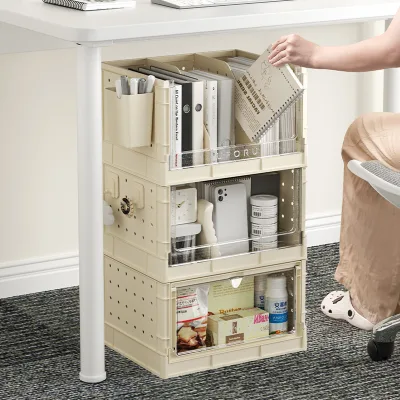
Sourcing a 5-layer desktop storage box requires a careful balance between spatial efficiency, material durability, and aesthetic integration into the workspace. These units are designed to maximize vertical storage capacity without expanding the footprint on a desk or shelf, making them ideal for organizing office supplies, kitchen condiments, or bathroom essentials. The core value proposition lies in the ability to compartmentalize small items while maintaining a clean, modern visual profile. Buyers must distinguish between fixed-frame structures and modular designs, as this distinction heavily influences assembly requirements, shipping volume, and long-term stability.
The procurement process for these items is characterized by a high degree of customization and material variability. Market listings indicate that suppliers frequently offer bespoke sizing, color options, and structural modifications to meet specific brand or functional needs. This flexibility allows buyers to tailor the storage solution to their exact inventory dimensions or interior design requirements. However, this customization capability also introduces complexity in quality control and lead time management, necessitating rigorous verification of supplier capabilities before committing to large-volume orders.
Product Scope and Observed Listing Signals
The current market landscape for 5-layer desktop storage boxes reveals a diverse range of materials, including metal, plastic, wood, and polypropylene (PP). Listings show that products are available in various colors such as black, white, and yellow, catering to different aesthetic preferences and brand identities. The observed product models, ranging from 1299 to 1691, suggest a standardized yet varied catalog where specific model numbers correspond to distinct material compositions or structural designs. Buyers should note that while some units are described as "undisassembly" or fixed, others explicitly support disassembly, which impacts both shipping logistics and end-user assembly efforts.
Commercial signals indicate a wide price range, typically spanning from $0.60 to $85.00 USD, reflecting the disparity between basic plastic organizers and premium metal or wooden units. The minimum order quantity (MOQ) generally ranges from 50 to 3,000 pieces, with a common baseline of 100 pieces for customized orders. Delivery times are consistently cited between 15 to 30 days, with some specific models indicating a 20-day turnaround. These metrics suggest that buyers should plan for moderate lead times and negotiate MOQs based on their initial trial order volume versus long-term supply chain stability.
Technical Specifications to Verify
Material selection is the primary technical differentiator for desktop storage boxes, directly influencing weight, durability, and cost. Metal units offer superior strength and a modern industrial aesthetic but may be heavier and more prone to corrosion if not properly coated. Plastic and PP variants provide lightweight, corrosion-resistant alternatives suitable for humid environments like kitchens or bathrooms, though they may lack the rigidity of metal. Wooden options add a warm, natural aesthetic but require careful handling to prevent moisture damage. Buyers must verify the specific material grade and finish quality, as generic descriptions like "metal" or "plastic" do not guarantee performance under heavy loads or frequent use.
Dimensional accuracy and structural integrity are critical for ensuring the unit fits the intended space and supports the desired load. Standard dimensions observed in listings include 13x8.5x14 cm and 17x13x15.5 cm, but many suppliers offer fully customizable sizes to match specific product lines. Buyers should request detailed technical drawings that specify the thickness of shelves, the width of support bars, and the overall weight capacity per layer. Additionally, the distinction between "large," "medium," and "multi" specifications should be clarified with precise measurements to avoid mismatches between the product’s physical size and the available desk or shelf space.
Compliance and Safety Documentation
While specific certification statuses are not universally listed for all desktop storage boxes, buyers must ensure that materials comply with relevant safety and environmental standards, particularly for products used in homes or offices. For plastic and PP components, verification of food-grade safety or low-VOC emissions may be necessary if the storage box is intended for kitchen or personal care items. Metal units should be checked for surface treatment compliance, ensuring that coatings are free from harmful substances like lead or cadmium, especially if the product is marketed for use in environments with children or sensitive users.
Documentation requirements should also cover structural safety and stability testing. Buyers should request test reports that demonstrate the unit’s ability to withstand static loads without tipping or deforming, particularly for 5-layer designs where the center of gravity shifts as items are added. For wooden products, formaldehyde emission limits and fire resistance ratings may be relevant depending on the target market’s regulations. It is essential to confirm that the supplier can provide these documents upon request, as their absence may indicate a lack of rigorous quality control or non-compliance with international trade standards.
Cost Drivers and Commercial Terms
The cost of 5-layer desktop storage boxes is driven primarily by material choice, customization complexity, and packaging efficiency. Metal and wooden units typically command higher prices due to raw material costs and more labor-intensive manufacturing processes. Customization features, such as bespoke dimensions, specific color matching, or logo printing, add to the unit cost and may increase the MOQ. Buyers should analyze the cost breakdown to understand how much of the price is attributed to materials versus labor and overhead, allowing for more effective negotiation on volume discounts or reduced customization fees.
Packaging and logistics play a significant role in the total landed cost, especially for bulk orders. Listings indicate that products are often packed in cartons, with some units designed to be stacked to optimize shipping volume. The CTN size and quantity per carton vary, with some configurations offering 48 pieces per carton and others using multi-piece stacking methods. Buyers should evaluate the packaging design to minimize damage during transit and reduce shipping costs by maximizing container utilization. Additionally, understanding the weight specifications, such as gross and net weights, is crucial for calculating accurate freight charges and handling requirements at the destination.
Supplier Qualification and Quality Control
Supplier qualification for desktop storage boxes should focus on manufacturing capability, customization experience, and quality assurance processes. Buyers should verify that the supplier has a proven track record in producing the specific material type they intend to purchase, whether it is metal, plastic, or wood. Inquiries should be made regarding the supplier’s ability to handle custom orders, including their design support, prototyping process, and tolerance for dimensional variations. Suppliers located in regions like Jiangsu, China, often have established supply chains for these materials, but buyers should still conduct due diligence on their production capacity and export experience.
Quality control measures must be clearly defined before production begins. Buyers should establish clear acceptance criteria for surface finish, structural stability, and packaging integrity. For customized orders, pre-production samples are essential to verify that the final product meets the specified dimensions, colors, and material qualities. During production, random inspections should be conducted to check for defects such as sharp edges, uneven coatings, or weak joints. Post-production, a final random inspection based on AQL standards is recommended to ensure that the shipped goods conform to the approved sample and contract specifications.
Long-Term Procurement Checks
Long-term procurement success depends on establishing a reliable supply chain that can adapt to changing market demands and maintain consistent quality. Buyers should monitor supplier performance metrics, including on-time delivery rates, defect rates, and responsiveness to issues. Regular communication and periodic audits can help identify potential problems early and foster a collaborative relationship with the supplier. For customized products, maintaining a library of approved designs and specifications ensures that future reorders can be processed efficiently without the need for repeated design approvals.
Sustainability and regulatory compliance should also be part of the long-term strategy. As environmental regulations become stricter, buyers should prioritize suppliers who use recyclable materials or eco-friendly manufacturing processes. This not only reduces environmental impact but also mitigates the risk of future compliance issues. Additionally, buyers should stay informed about changes in trade policies, tariffs, and shipping costs that could affect the total cost of ownership. By maintaining a flexible and informed procurement strategy, buyers can ensure that their 5-layer desktop storage box supply chain remains resilient and cost-effective over time.
FAQs
Can I customize the size of a 5-Layer Desktop Storage Box?
Yes, customization is available for the 5-Layer Desktop Storage Box. The product size can be tailored to specific requirements rather than being limited to standard dimensions. This allows buyers to ensure the storage unit fits their exact desktop space and organizational needs effectively.
What materials are used for 5 layer desktop storage boxes?
These storage boxes are manufactured using various materials including metal, plastic, wood, and PP. The specific material choice depends on the model and intended use, such as kitchen or living room storage. Buyers can select from these durable options based on their aesthetic and functional preferences.
What is the typical delivery time for these storage boxes?
The standard delivery time ranges from 15 to 30 days. Some specific models may have a delivery time of approximately 20 days. This timeframe applies to new condition items and allows for production and shipping logistics to be completed before the goods reach the buyer.
What is the minimum order quantity for these products?
The minimum order quantity is generally 100 pieces. However, observed MOQs can range from 50 to 3000 pieces depending on the specific supplier and product model. Buyers should verify the exact MOQ with the supplier before placing an order to ensure it meets their procurement volume.
Where are these 5 layer desktop storage boxes manufactured?
These products originate from Jiangsu, China. The manufacturing location indicates the regional supply chain source for these storage solutions. Buyers sourcing from this region can expect products that meet the specified modern style and functional requirements for desktop organization.
Are these storage boxes designed for disassembly?
Disassembly features vary by model. Some units are designed as undisassembly types, while others allow for disassembly. This distinction affects shipping volume and potential reconfiguration. Buyers should check the specific product attributes to determine if the unit requires permanent assembly or allows for modular adjustments.