Source AAR Standard Side Bearer Liners for Mining, Railway, and Heavy Equipment
Find 30 verified listings for AAR Standard Side Bearer Liners suitable for mining equipment, railway systems, and heavy industrial machinery. Buyers can compare specifications, certifications, and pricing from suppliers in China to identify the right components for their operations.
Key considerations
Products List

Tarpaulin Side Curtain Pulley Plastic Pulley Roller
$0.72 - $0.90
MOQ: 1000 Pieces
Xinyuan Metal Products of Dongqian Lake Tourist Resot Co., Ltd


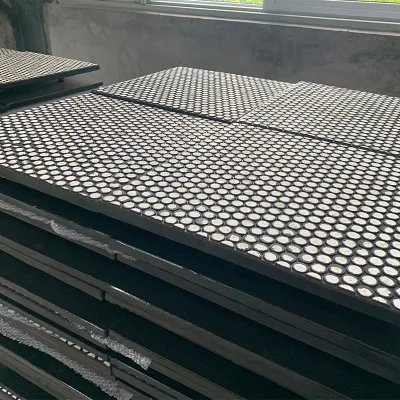
Totem OEM Large Metal Fabrication High-Quality Spare Parts Wear-Resistant Bearing Liner
$380.00 - $3880.00
MOQ: 1 Pieces


Comprehensive Sourcing Guide
Strategic Sourcing Guide for AAR Standard Side Bearer Liners
The procurement of AAR Standard Side Bearer Liners represents a critical decision point for railway operators and maintenance facilities. These components serve as the interface between the car body and the truck assembly, managing vertical loads, lateral forces, and rotational moments during train operation. Sourcing these parts requires a disciplined approach that balances technical compliance with operational reliability. The following guide outlines the essential factors buyers must evaluate to ensure the acquisition of high-quality side bearer liners that meet the rigorous demands of North American rail transport.
Technical Specifications and Material Performance
When evaluating side bearer liners, the primary focus must be on the material composition and mechanical properties that define their performance under dynamic loads. The core function of these liners is to provide wear resistance while maintaining structural integrity. Buyers should verify that the product attributes explicitly state "Wear-resistant" capabilities, as this is the fundamental requirement for minimizing maintenance intervals. The material must also possess the ability to withstand the specific friction and shear forces generated during train negotiation of curves and braking events.
In the context of the available market data, specific product attributes highlight the importance of bearing characteristics. While side bearer liners are distinct from standard bearings, the underlying principles of load distribution and lubrication often overlap in engineering design. Some suppliers offer components with "Self-Lubrication" bushing materials or "Hydrodynamic Bearing" classifications, which can influence the friction coefficient and heat generation within the assembly. Buyers must confirm whether the liner design incorporates "Maintenance-Free Bearing" features or relies on specific lubrication regimes to prevent premature failure.
The physical dimensions and standardization are equally critical. The supply chain often references specific dimensional standards, such as those found in truck brake systems or bearing housings, where dimensions like "195×162×13/16" or "234×222×9/17" are common. For side bearer liners, the buyer must ensure the dimensions align precisely with the AAR (Association of American Railroads) specifications for the specific car type. The "International" standard mentioned in general industrial contexts serves as a baseline, but the AAR standard is the governing authority for North American rail applications. Any deviation from these precise measurements can lead to improper load transfer, potentially causing derailment risks or excessive wear on the truck frame.
Compliance and Certification Verification
Certification is the backbone of trust in the railway supply chain. For side bearer liners, the presence of recognized certifications is non-negotiable. The market data indicates that products often carry "CE" certification and "ISO/TSIATF-Classification" standards. While CE is a European conformity mark, its presence suggests a manufacturer's adherence to strict quality management systems. However, for AAR compliance, buyers must specifically look for documentation that verifies the product meets the AAR M-1001 or M-1002 standards, which govern the mechanical properties of side bearing materials.
The "IATF-Classification: Drum" mentioned in the data refers to automotive brake systems, but it highlights a broader trend where manufacturers use similar quality frameworks across different sectors. Buyers should not assume that an IATF certification automatically validates a product for railway use; instead, they must request specific test reports confirming AAR compliance. The "Standard: International" attribute suggests a baseline of quality, but the buyer must verify that the specific product batch has been tested against the AAR M-1001 standard for friction material properties, including coefficient of friction, compressive strength, and thermal stability.
Furthermore, the "Customization: Available" and "Customized: Customized" attributes indicate that many suppliers offer tailored solutions. While customization is valuable for retrofitting older fleets, it introduces a compliance risk. Any custom modification must be reviewed and approved by the railway operator's engineering department to ensure it does not void the AAR certification of the vehicle. Buyers should demand a "Design Support" service that includes "Engineering Drawing Review and Optimization" to validate that the custom dimensions and material properties remain within the safety margins defined by the AAR.
Cost Drivers and Pricing Structure
Understanding the cost structure of side bearer liners is essential for budgeting and total cost of ownership (TCO) analysis. The observed price range in the general industrial market spans from $0.20 to $5,900, a vast disparity that reflects the difference between simple bushings and complete, certified truck assemblies. For side bearer liners specifically, the price is driven by the raw material cost, the complexity of the molding or machining process, and the certification overhead.
The "Weight (KG): 55" attribute for a single item suggests that heavy-duty components are common, and shipping costs will be a significant factor in the final landed cost. Buyers should not focus solely on the unit price but must calculate the cost per mile of service life. A cheaper liner that requires replacement every 6 months is far more expensive than a premium liner lasting 24 months. The "Warranty: 6 Month" term observed in the data provides a baseline for supplier confidence, but railway operators often seek extended warranties that cover specific mileage or operating hours.
Minimum Order Quantity (MOQ) is another critical cost driver. The data shows an MOQ range of 1 to 2,000 units. For a single car repair, an MOQ of 1 is ideal, but for a fleet-wide retrofit, a higher MOQ may be necessary to achieve volume discounts. However, buyers must be wary of suppliers demanding high MOQs without offering the flexibility to mix SKUs or provide partial shipments. The "Selling Units: Single item" attribute indicates that some suppliers are willing to accommodate small orders, which is crucial for maintenance teams with limited storage space.
Typical Applications and Operational Context
Side bearer liners are primarily applied in freight car maintenance, specifically within the truck assembly of hopper cars, gondolas, and boxcars. The "Application: Mining Equipment" and "Application: Truck Brake System" attributes in the data highlight the versatility of the manufacturing base, but the specific application for side bearer liners is railway rolling stock. These liners are installed in the side bearing pockets of the truck frame, supporting the car body and allowing for rotation.
The "Main Market" data lists a global reach, including "South America," "North America," "Eastern Europe," and "Africa." This indicates that while the AAR standard is specific to North America, the manufacturing expertise is global. Buyers in other regions may source these liners for export or for use in mixed-fleet operations. The "Position: Front" and "Position: Rear" attributes suggest that some suppliers differentiate liners based on their location in the truck assembly, as front and rear side bearers may experience different load distributions.
In the context of the "Bearing Direction: Radial" and "Lubricating Way: Maintenance-Free Bearing," it is important to note that side bearer liners often function as a dry bearing interface. Unlike the "Oil-Lubricated Bearing" mentioned in the data, side bearers typically rely on the self-lubricating properties of the composite material to reduce friction. Buyers must ensure that the liner material is compatible with the specific operating environment, including exposure to moisture, dust, and temperature extremes common in rail yards.
Supplier Evaluation and Capability Assessment
Selecting the right supplier requires a deep dive into their manufacturing capabilities and quality assurance processes. The "Place of Origin: Henan, China" and "Zhejiang, China" locations indicate that the majority of the supply chain is concentrated in these industrial hubs. Buyers should verify the specific factory location, as different facilities may have varying levels of quality control. The "Video outgoing-inspection: Provided" attribute is a strong positive indicator, suggesting that the supplier is transparent and willing to share real-time evidence of their production quality.
The "Customization Service: OEM/ODM Supported" and "Customized Per Drawing or Sampl" attributes demonstrate that suppliers are capable of working with specific engineering requirements. However, buyers must evaluate the supplier's "Design Support" capabilities. Do they have in-house engineering teams that can review drawings and optimize designs? The ability to "Provide Engineering Drawing Review and Optimization" is a key differentiator between a simple manufacturer and a true engineering partner.
Additionally, the "Brand Compatibility: Can Replace or Match Parts of Mainstream Market" attribute suggests that the supplier's products are designed to be direct replacements for existing AAR-standard parts. This is crucial for minimizing downtime and ensuring compatibility with existing truck assemblies. Buyers should request a "Brand Compatibility" matrix that lists the specific AAR part numbers and car types that the supplier's liners can replace.
Quality Control and Long-Term Procurement
Quality control is the final gatekeeper before a product enters service. The "Process: Heat Treatment: Normalizing, Tempering, Induction Harden" attributes highlight the metallurgical processes involved in manufacturing. While these processes are common for steel components, the liner material itself must undergo rigorous testing for wear resistance and compressive strength. Buyers should request third-party test reports that verify the "Wear-resistant" claim and confirm that the material meets the AAR M-1001 standard.
The "Lead Time: 25~40days" observed in the data provides a realistic expectation for delivery. However, buyers must consider the impact of supply chain disruptions and the need for buffer stock. For critical maintenance items like side bearer liners, a "Delivery Time" of 25 to 40 days may be acceptable for planned maintenance, but emergency repairs may require expedited shipping options.
Long-term procurement considerations include the availability of spare parts and the supplier's commitment to continuous improvement. The "Warranty: 6 Month" term is a starting point, but buyers should negotiate terms that cover the expected service life of the liner. The "Customization: Available" feature allows for future-proofing, as suppliers can adapt their products to new AAR standards or car designs.
| Evaluation Factor | Key Verification Point | Risk of Non-Compliance |
|---|---|---|
| Material Standard | AAR M-1001 Compliance | Premature wear, derailment risk |
| Dimensions | Exact AAR Dimensional Tolerance | Improper load transfer, truck instability |
| Certification | Valid Test Reports for Railway Use | Liability issues, regulatory fines |
| Supplier Capability | OEM/ODM Support & Engineering Review | Design errors, fitment issues |
| Quality Control | Heat Treatment & Wear Test Data | Inconsistent performance, high failure rate |
In conclusion, sourcing AAR Standard Side Bearer Liners requires a meticulous approach that prioritizes technical compliance, supplier transparency, and long-term reliability. By focusing on the specific attributes of wear resistance, dimensional accuracy, and certification validity, buyers can ensure that their procurement decisions support the safety and efficiency of their rail operations. The integration of customization services and rigorous quality control measures will further enhance the value proposition of the selected suppliers, ensuring a robust supply chain for critical railway components.
FAQs
How are AAR Standard Side Bearer Liners certified for safety?
Products often carry CE certification and ISO standards as a baseline for quality. Buyers must verify specific AAR M-1001 compliance through test reports rather than assuming general certifications validate railway use.
What is the typical lead time for ordering these liners?
The standard delivery time ranges from 25 to 40 days for production and shipping. This timeline applies to standard orders, though emergency repairs may require expedited shipping options from the supplier.
Can suppliers provide customization for specific engineering drawings?
Yes, customization is available with OEM and ODM support for custom drawings or samples. Buyers should request engineering drawing review and optimization services to ensure the custom design meets safety margins.
Which certifications are required for railway side bearer liners?
While CE and IATF classifications exist, AAR M-1001 compliance is the governing authority for North American rail. Buyers must request specific test reports confirming friction material properties and compressive strength.
How does the minimum order quantity affect procurement costs?
The MOQ ranges from 1 to 2000 units depending on the supplier and order type. Small orders allow for single-item purchases, while fleet-wide retrofits may require higher volumes to achieve discounts.
Where are the manufacturers of these liners primarily located?
Major manufacturing hubs are located in Henan and Zhejiang, China. Buyers should verify specific factory locations to ensure consistent quality control and transparent production processes.